Cancer in Golden Retrievers

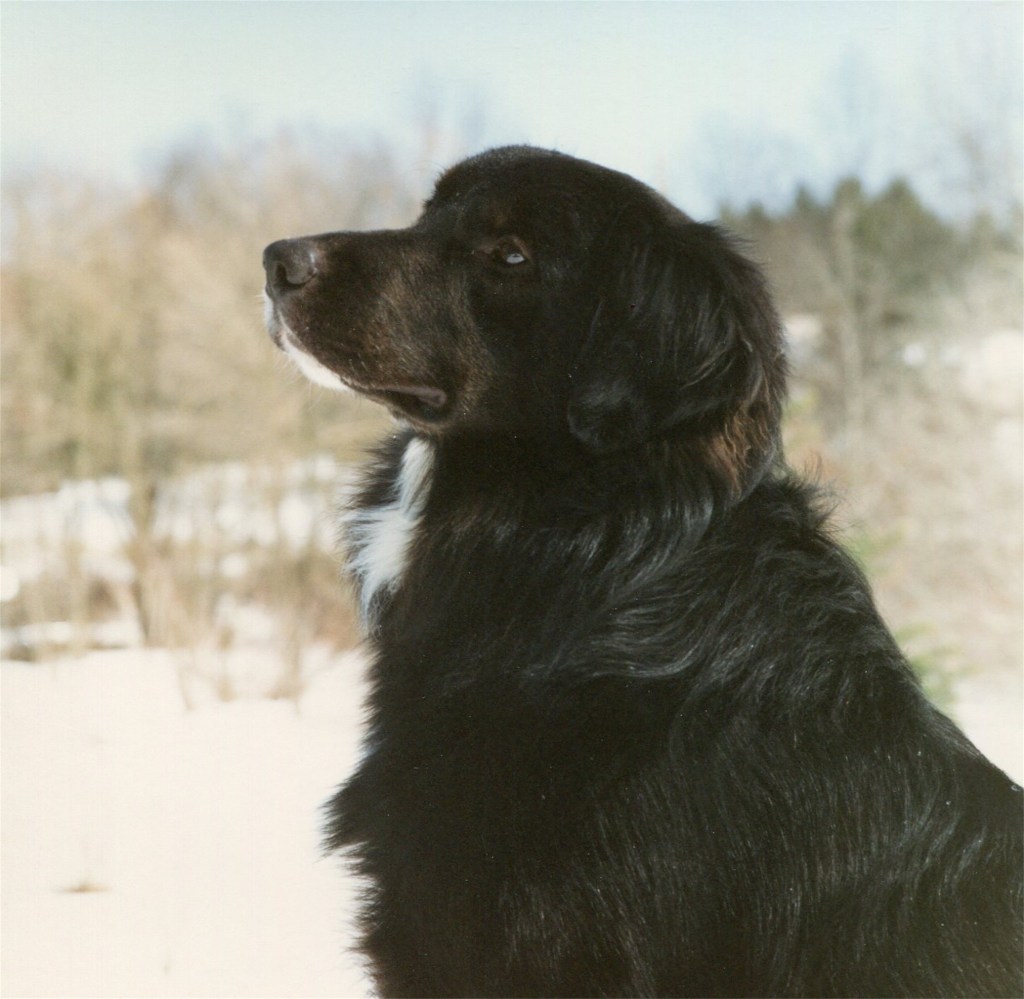
Researchers at the University of California, Davis have conducted a study to determine why some Golden Retrievers live longer when 65% of Golden Retrievers die at a younger age from cancer.

By studying dogs that lived longer rather than studying the cancer itself, they found a gene in the family of proteins that increased the life of Goldens by two years. This gene is also important in human cancer.

The researchers studied dogs that were alive at 14 years of age and those that died before 12 years of age. This finding is just one piece of the puzzle and more research needs to be done, but like many studies that involve animals, it will benefit people as well. It may also help other breeds of dogs who develop cancer.

Journal Reference:

  1. Robert B. Rebhun, Daniel York, Flora M. D. De Graaf, Paula Yoon, Kevin L. Batcher, Madison E. Luker, Stephanie Ryan, Jamie Peyton, Michael S. Kent, Joshua A. Stern, Danika L. Bannasch. A variant in the 5′UTR of ERBB4 is associated with lifespan in Golden Retrievers. GeroScience, 2023; DOI: 10.1007/s11357-023-00968-2

Cite This Page:

University of California – Davis. “Can golden retrievers live longer?.” ScienceDaily. ScienceDaily, 19 October 2023. <www.sciencedaily.com/releases/2023/10/231019151809.htm>.

Scent and Memory

According to a study done by researchers at the UCI Center for the Neurobiology of Learning & Memory at the University of California, adults who were ages 60 – 85 who were suffering from some sort of mental impairment partook of the scent therapy test.  

The subjects of the study were given a diffuser and seven cartridges, each with a natural oil. The subjects used the diffuser each night when going to bed. The diffuser ran for two hours. The results showed that the group with the full-strength diffusers improved their cognitive skills by 226%.

Imagining showed that there was better integrity in the brain pathway called the left uncinate fasciculus, which connects the medial temporal lobe to the decision-making prefrontal cortex.

In addition to having better memory, the subjects said that they slept better, more soundly.

Sue’s Comments:  We know that essential oils have numerous benefits when smelled. For example, lavender is known for its calming properties. What this study brings to mind for me is the possible connection with scent work in dogs. There are many accounts of animals, dogs, elephants, and other animals, who recognize a person that they have not seen in years. Scent is one of the keys for this, indicating that there may be a connection similar to the findings in this study. Previous studies have shown that in dogs, scent is linked to sight, they are not separate in the dog’s brain. I would love to see further studies that involve this finding and how it might apply to animals. Would it be possible to help elderly animals in the same way. Dogs and other animals suffer from dementia the same as people.

Journal Reference:

  1. Cynthia C. Woo, Blake Miranda, Mithra Sathishkumar, Farideh Dehkordi-Vakil, Michael A. Yassa, Michael Leon. Overnight olfactory enrichment using an odorant diffuser improves memory and modifies the uncinate fasciculus in older adults. Frontiers in Neuroscience, 2023; 17 DOI: 10.3389/fnins.2023.1200448

Cite This Page:

University of California – Irvine. “Sweet smell of success: Simple fragrance method produces major memory boost.” ScienceDaily. ScienceDaily, 1 August 2023. <www.sciencedaily.com/releases/2023/08/230801131700.htm>.

Plants are smarter than you think

The concept of plants “thinking” and “communicating” are mind boggling to some people. The field of plant neurobiology is a fascinating subject that can stretch the imagination. While I normally do not post article of this nature, I wanted to share some of the research on this topic.

One of the latest articles that deal with plants has shown that plants feel pressure as well as a lack of pressure, and know the difference. Although they do not have nerves as we do, they still have a system that lets them know when something touches them and when the pressure is relieved.

Plants also communicate and support each other. For example, the mother tree will feed its saplings through the roots. This is how young saplings in deep forests survive. They are often in shaded areas where they cannot photosynthesize due to a lack of sunlight and depend on the parent tree to feed them.

If that is not enough, studies have shown that some plants (and perhaps all) have the ability to “hear” sounds. They detect certain frequencies and respond to them, yet ignore other frequencies.

When plants detect danger, such as a disease, they send out a signal to the plants around them who respond by preparing their own defense as a response.  

If you think about all of this, it expands the concept of communication and even relationships beyond what we experience. For me, it opens my mind to what animals can do, and that we have just scratched the surface in understanding the depth of their world.

I hope my readers have enjoyed my musings.

https://www.smithsonianmag.com/science-nature/the-whispering-trees-180968084/#:~:text=For%20young%20saplings%20in%20a,their%20roots%20through%20the%20network.

https://now.northropgrumman.com/can-plants-hear-the-science-of-sound-sensing-flora

https://www.ncbi.nlm.nih.gov/pmc/articles/PMC3405699/#:~:text=Plants%20emit%20volatile%20organic%20compounds,own%20defense%20weapons%20in%20response.

Journal Reference:

  1. Alexander H. Howell, Carsten Völkner, Patrick McGreevy, Kaare H. Jensen, Rainer Waadt, Simon Gilroy, Hans-Henning Kunz, Winfried S. Peters, Michael Knoblauch. Pavement cells distinguish touch from letting go. Nature Plants, 2023; DOI: 10.1038/s41477-023-01418-9

Cite This Page:

Washington State University. “Plants can distinguish when touch starts and stops, study suggests.” ScienceDaily. ScienceDaily, 31 May 2023. <www.sciencedaily.com/releases/2023/05/230531101953.htm>.

Gene therapy to prevent pregnancy in dogs and cats

A Research team led by David Pépin, PhD, Associate Director of the Pediatric Surgical Research Laboratories at Massachusetts General Hospital, and an Associate Professor at Harvard Medical School has developed a gene therapy as an alternate to spaying and neutering animals. They are hopeful that this method will eventually be available to be able to control outdoor pet populations.

While this discovery is promising, the researchers have yet to develop the infrastructure to treat thousands of unowned feral cats. This will also give pet owners an alternative to traditional spay and neuter programs to prevent pregnancy in their pets.

What is interesting is this gene therapy was first used in people. Typically discoveries in animals help humans, in this case it is the reverse.

Journal Reference:

  1. Vansandt, L.M., Meinsohn, MC., Godin, P. et al. Durable contraception in the female domestic cat using viral-vectored delivery of a feline anti-Müllerian hormone transgene. Nat Commun, 2023 DOI: 10.1038/s41467-023-38721-0

Cite This Page:

Massachusetts General Hospital. “Gene therapy produces long-term contraception in female domestic cats.” ScienceDaily. ScienceDaily, 6 June 2023. <www.sciencedaily.com/releases/2023/06/230606111636.htm>.

Those amazing whiskers

A study at Northwestern University has shown that rats determine the direction of the wind with their whiskers. Since many other animals such as dogs, foxes, coyotes and cats also have whiskers that are similar to those of a rat, is it possible that they also use their whiskers to determine the direction of the wind?

All wild animals also have to be aware of the direction of the wind to either find food or avoid being detected by predators. Therefore, the ability to determine the direction of the wind or even a slight breeze is a life and death skill. It seems reasonable that that they would use their whiskers as well as the movement of their fur to detect the direction of air movement.

Sue’s Note: As a person who has trained many working dogs, I have seen dogs learn how to use the direction of the wind to find scent. It is quite an amazing thing to watch, and another example of how intelligent animals are.

Journal References:

Mitra J. Z. Hartmann et al. Whiskers aid anemotaxis in rats. Science Advances, August 2016 DOI: 10.1126/sciadv.1600716

Yan S. W. Yu, Matthew M. Graff, Mitra J. Z. Hartmann. Mechanical responses of rat vibrissae to airflow. The Journal of Experimental Biology, 2016; 219 (7): 937 DOI: 10.1242/jeb.126896


Cite This Page:

Northwestern University. (2016, August 24). Whiskers help animals sense the direction of the wind: First-ever study shows that rats use whiskers to locate source of airflow. ScienceDaily. http://www.sciencedaily.com/releases/2016/08/160824160248.htm

Brain connectivity in animals and people

In a first of its kind study, researchers at the American Friends of Tel Aviv University studied the MRIs of 130 mammals of different species to determine if there is a difference between brain size and its ability to transfer information through the neural network. This information was compared with the MRI of 32 human brains. The size of the mammals ranged from tiny bats to large mammals. The report stated that no animal was killed for the study.

Professor Assaf explained that many scientists assumed that human brains were superior due to greater brain connectivity, explaining a human’s greater abilities. However, no difference was found between species. However, there were differences between individual animals of the same species.

Brain connectivity involves the transfer of information from one part of the brain to another. The researchers found that different brains use different strategies to preserve an equal measure of overall connectivity.

“Our study revealed a universal law: Conservation of Brain Connectivity,” Prof. Assaf concludes. “This law denotes that the efficiency of information transfer in the brain’s neural network is equal in all mammals, including humans. We also discovered a compensation mechanism which balances the connectivity in every mammalian brain. This mechanism ensures that high connectivity in a specific area of the brain, possibly manifested through some special talent (e.g. sports or music) is always countered by relatively low connectivity in another part of the brain. In future projects we will investigate how the brain compensates for the enhanced connectivity associated with specific capabilities and learning processes.”

This study was conducted by researchers at Tel Aviv University, led by Prof. Yaniv Assaf of the School of Neurobiology, Biochemistry and Biophysics and the Sagol School of Neuroscience and Prof. Yossi Yovel of the School of Zoology, the Sagol School of Neuroscience, and the Steinhardt Museum of Natural History.

Journal Reference:

  1. Yaniv Assaf, Arieli Bouznach, Omri Zomet, Assaf Marom, Yossi Yovel. Conservation of brain connectivity and wiring across the mammalian class. Nature Neuroscience, 2020; 23 (7): 805 DOI: 10.1038/s41593-020-0641-7

Cite This Page:

American Friends of Tel Aviv University. “MRI scans of the brains of 130 mammals, including humans, indicate equal connectivity.” ScienceDaily. ScienceDaily, 20 July 2020. <www.sciencedaily.com/releases/2020/07/200720112216.htm>.

A new use for dog and human hair

Researchers at the University of Technology Sydney found that mats made from dog fur collected from groomers and human hair collected from salons were better at cleaning up crude oil spills. Currently non-biodegradable plastic waste is used as well as loose peat moss are used but hair works better is less harmful to the environment. The researchers recommend that peat moss should not be used anymore since it is a limited resource. Peat is not useful on sandy soils such as beaches but polypropylene sorbents are the best substance for sandy environments. For all hard land surfaces mats of hair and fur work the best.

This is a fantastic use of material that would otherwise be discarded.

Journal Reference:

  1. Megan L. Murray, Soeren M. Poulsen, Brad R. Murray. Decontaminating Terrestrial Oil Spills: A Comparative Assessment of Dog Fur, Human Hair, Peat Moss and Polypropylene Sorbents. Environments, 2020; 7 (7): 52 DOI: 10.3390/environments7070052
  2.  

Cite This Page:

University of Technology Sydney. “Oil spill clean-up gets doggone hairy: First comparison of natural-origin sorbent materials for land-based oil spills.” ScienceDaily. ScienceDaily, 15 July 2020. <www.sciencedaily.com/releases/2020/07/200710100938.htm>.

Early spay and neutering in dogs

A study conducted at the University of California – Davis researched the data of 35 breeds of dogs collected over fifteen years from thousands of dogs to determine if neutering, the age of neutering, the differences in the sex of the dog had any relationship to certain cancers and joint disorders such as hip dysplasia, cranial cruciate ligament tears, elbow dysplasia, lymphoma, cancer of the blood vessel walls, mast cell tumors and bone cancer.

They found that the occurrence of joint disorders was related to body size. Smaller breeds have less issues while the majority of larger breeds did. The surprising exception to this were Great Danes and Irish Wolfhounds which showed no problem regardless of what age they were neutered.

Small dogs had a low rate of cancer regardless of what age they were neutered or not. The exceptions were Boston Terries and Shih Tzu’s who had a significant increase of cancers if neutered.

They also found that the sex of the dog sometimes made a difference in health risks. For example, female Boston Terriers who were neutered at six months had no risk of joint disorders or cancer, yet male Boston Terriers neutered before a year of age had significantly more risks.

Another finding was that neutering or spaying female Golden Retrievers at any age increased the risk of one or more of the cancers from five to fifteen percent.

Sue’s Note: Many working dog people, especially in the herding breeds, claim that neutering a dog before full physical and mental maturity hinders the mental and working ability of the dog.

Journal Reference:

  1. Benjamin L. Hart, Lynette A. Hart, Abigail P. Thigpen, Neil H. Willits. Assisting Decision-Making on Age of Neutering for 35 Breeds of Dogs: Associated Joint Disorders, Cancers, and Urinary Incontinence. Frontiers in Veterinary Science, 2020; 7 DOI: 10.3389/fvets.2020.00388

Cite This Page:

University of California – Davis. “When should you neuter your dog to avoid health risks? Comprehensive study lays out guidelines for 35 dog breeds.” ScienceDaily. ScienceDaily, 15 July 2020. <www.sciencedaily.com/releases/2020/07/200715160008.htm>.

Can animals predict earthquakes?

People often claim that they notice animals acting differently before an earthquake. To study this, with the hope of using animals to predict earthquakes, a group of researchers from the Max Planck Institute of Animal Behavior in Konstanz/Radolfzell and the Cluster of Excellence Centre for the Advanced Study of Collective Behaviour at the University of Konstanz, have investigated whether cows, sheep, and dogs can actually detect early signs of earthquakes.

The researchers put sensors on the animals in an earthquake prone area of Northern Italy and studied their movements over several months. They found that the animals were unusually restless hours before an earthquake. They also noted that the closer the animal was to the epicenter the sooner they showed unusual behavior. In some cases, the animals showed unusual behavior up to 20 hours before the quake.

The researchers found that during the months they studied the animals there were, officially reported, 18,000 earthquakes in the region which included small hardly noticeable quakes to 12 with a strength of 4 or higher on the Richter scale.

The data implies that animals can predict earthquakes and the researchers are considering a global study to help develop an early warning system using a chip located on animals.

Journal Reference:

  1. Martin Wikelski, Uschi Mueller, Paola Scocco, Andrea Catorci, Lev V. Desinov, Mikhail Y. Belyaev, Daniel Keim, Winfried Pohlmeier, Gerhard Fechteler, P. Martin Mai. Potential short‐term earthquake forecasting by farm animal monitoring. Ethology, 2020; DOI: 10.1111/eth.13078

Cite This Page:

Max-Planck-Gesellschaft. “The sixth sense of animals: An early warning system for earthquakes?.” ScienceDaily. ScienceDaily, 6 July 2020. <www.sciencedaily.com/releases/2020/07/200706101837.htm>.

War Dogs of World War II

I am excited to announce that my latest book is now available. You can order it from my website at http://www.sbulanda.com for $24.98 + $4.75 shipping

Please check with me if you want to order the book from out of the U.S.A. the shipping rate above only applies to orders within the U.S.A.

I am very impressed with the publisher’s quality of printing this book. Casemate was a great team to work with.

Summary

Crawling through steaming jungles in the Pacific or hunkering down in frozen trenches, the loyal dogs of World War II stayed by their soldier’s side, no matter what. They saved lives, delivered messages when all forms of communication failed, they brought supplies when no one else could get through. These are the stories of the brave, loyal dogs who served. All armies had them, the Germans, Japanese, British, Russia and the United States. Civil Defense dogs in England searched for the victims of bombings, Coast Guard dogs watched the shores for enemies, some dogs guarded storehouses and equipment, some were taken prisoner and lived in POW camps, some were mascots, but all were loved. Some dogs gave all and some returned home. The War Dogs of WWII is their story.