Limber Tail in Dogs

Limber tail primarily affects large working breeds of dogs, and especially Labrador Retrievers. It is a painful condition where the tail goes limp. It was initially thought to be a result of swimming, also known as “swimmers tail.” However, the researchers found that dogs who did not swim also suffered from this condition.

jeff lab 2

Another thought was that the condition resulted from exposure to the cold. Since many of the dogs studied lived in colder regions, it lends support to this theory. However, what researchers did find was that many of the dogs who suffered from limber tail were related, making genetics a strong suspect.

ron lab 2

The researchers hope to expand the study to learn what genetic connection there is to this painful condition in dogs. By doing so it will help breeders avoid breeding dogs that carry the gene.

Fortunately, the condition only lasts from a few days to a few weeks. But that means that many cases are not reported.

The study was conducted by Dr. Carys Pugh, at the University’s Roslin Institute and Royal (Dick) School of Veterinary Studies in Edinburgh. This was the first large-scale study of limber tail, using over 6000 Labrador Retrievers across the UK.

The study was published in the Veterinary Record and was funded by the Kennel Club Charitable Trust. The Roslin Institute receives strategic funding from the Biotechnology and Biological Sciences Research Council.

(thank you to Ron Hix and Jeff Dentler for letting me use photos of their dogs)

Canine aggression to family members and familiar dogs

A recent study by researchers at Nationwide Children’s Hospital showed that there are about 12 genes associated with canine aggression toward an owner or a familiar dog. They concluded that these genetic traits are distinct from the genetic predisposition toward aggression to unfamiliar people and dogs.

It has been found that the genetics involved are common to all breeds of dogs making it easier to study.

DSCN1776

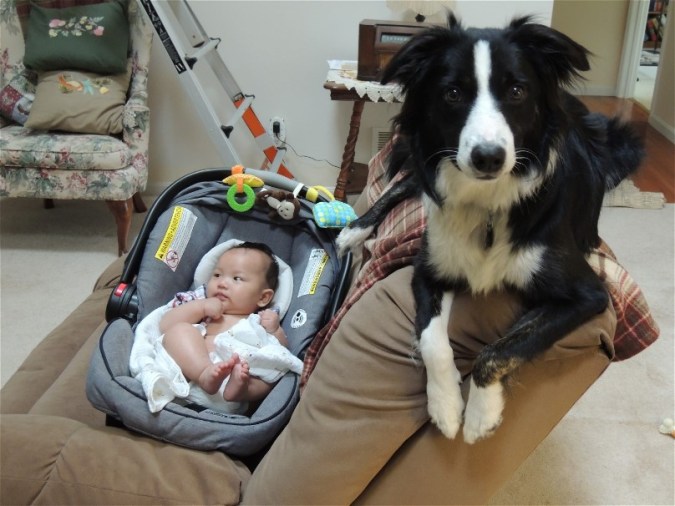
Photo: Babs watching over baby William

Carlos Alvarez, PhD, who is the main researcher at the Center for Molecular and Human Genetics in The Research Institute at Nationwide Children’s Hospital, feels that the genes are consistent with the neural pathway known as the amygdala to the hypothalamic-pituitary-adrenal axis.

Researchers feel that this genetic element is related to anxiety disorders in humans and hope that further research will show what kinds of medications will help both dogs and people.

This is an on-going research project. The fact that this type of aggression is genetically based is a good reason for people who plan to purchase a dog to investigate thoroughly the ethics of the breeder and the lines of the dog. If a person adopts a dog who shows this type of behavior they should immediately consult with a certified canine behavior consultant. You can find one at www.iaac.org. If my readers would like my brochure about how to find a good breeder and a quality dog, please emails me at sbulanda@gmail.com. There is no charge for the brochure.

Heartworms in dogs and cats

Some people feel it is safe to stop their pets (dog and cat) monthly heartworm preventative medicine in the fall and winter. This is not a good idea. Heartworms are transmitted by mosquitoes. The mosquito will bite an infected animal and ingest the heartworm microfilaria. It only takes 10-14 days for the larvae to develop. At that point if the mosquito bites an unaffected animal, it will transmit the larvae to that animal. What makes heartworm risky is that they can live in a dog for up to seven years and a cat for three.

Heartworm is a dangerous condition that can cause severe lung disease, heart failure and damage other organs in the host’s body.

heartworms Photo from Google images

At one-time heartworm was found only in the warmer states, but now it has been detected in all states. The warmer wetter environments that support mosquitoes have the most risk.

The symptoms for dogs include a mild but constant cough, a decrease in activity, fatigue, loss of appetite and weight loss.

Fortunately the medications for treating heartworms have become safer. They are an arsenic-based product called Immiticide. Before treating a dog for heartworm, it is necessary to do a thorough pre-treatment program. This will include x-rays, blood work and perhaps other tests to determine how much damage has been done to the dog’s organs. This way the veterinarian will know what to expect and what to look for which will help with the post-treatment care of the dog.

The post-treatment care is critical in saving the dog’s life. Although the treatment will kill the adult heartworms, their bodies will break up and the pieces can block the pulmonary vessels and/or lodge in the lungs. This is why a dog that has been treated for heartworm must be kept quiet for months after the treatment. This is also why pre-treatment tests can be critical for the dog’s survival.

Unfortunately there is no approved treatment for treating heartworm in cats. Some veterinarians have used a drug approved for dogs on cats, but with major side effects which include sudden lung failure and death. The other risk in treating cats is that they are more likely to die from a reaction to the dead pieces of heartworm in their heart and lungs.

One of the choices is to treat the symptoms from heartworm and hope that the cat outlives the worms. Heartworms only live in a cat for two or three years.

If a cat is treated for heartworms, it will need veterinarian supervision for several months. Often, they need oxygen, cortisone and sometimes a diuretic to remove fluid from the lungs. When they are stable, cats will continue to need corticosteroids either continuously or periodically. There is always a risk of sudden death.

The good news is that in some parts of Europe and Japan, veterinarians have been surgically removing the heartworms, however, the technique has yet to be improved and approved.

In the case of both dogs and cats, prevention is the better way to go. This is easily done with monthly heartworm preventative medicine for both dogs and cats.

Because heartworms can live in a dog or a cat for years, it is imperative that the pet be tested first before giving heartworm medicine. By giving the pet a monthly preventative year-round, you are doing the best you can to avoid these deadly worms.

Separation Anxiety in Dogs

The old saying that “an ounce of prevention is worth a pound of cure” is true when dealing with separation anxiety in dogs. The best thing an owner can do is prevent it from developing.

Most cases of separation anxiety occur in dogs that have a genetic predisposition for it and is enhanced or caused by the owner. This is why two dogs can live in the same home and one will suffer from this anxiety and another will not.

dscn1417

The genetic predisposition for separation anxiety is not limited to any breed, type or sex of dog. Preventing it is almost the same as the method to cure it. So we will talk about it in general.

Whether you get a puppy or adopt a dog, the procedure is the same. Although it is hard to resist a new puppy or cute older dog, the new dog should be left alone while at home. Puppies need lots of down time to rest and sleep.

A dog’s growth rate is much faster than humans and puppies need to sleep a lot. A new adopted or older dog needs time to adjust to their new home. The stress of a new home can tire them so they may need a bit more down time as well.  The best rule of thumb is to let the dog solicit interaction rather than force it on the dog. This is especially important if there are youngsters in the home.

Do not hold, carry or dote on the dog. Let the dog be a dog, no matter what size it is. A dog can become addicted to too much tactile stimulation. Like any addiction, the craving can be there but at the same time it is not a pleasant experience. This explains why a dog may solicit interaction from the owner and then bite the owner for responding. This is especially true for small dogs where the owner likes to cuddle and carry the dog around.

Do not make a fuss over the dog when you leave home or return. Dramatic arrivals and departures only arouse the dog and build stress. Simply leave and return home without saying or doing anything.

Leave soft music on when you leave home. Classical music works best or easy listening music. No other kind is good for dogs. Along with the music leave a chew toy for the dog. Only use the kind that you stuff with treats where the dog must work to get them out. Stuffed Kong toys or cube toys work very well. Never give your dog greenies, rawhide, pig ears, cow hooves or bones. They can seriously injure or kill your dog.

Make sure that your dog gets a good walk or exercise before you leave and is taken out when you return to “do his business.” If the dog has to relieve himself after you leave it will cause stress. If the dog has to have an accident while you are gone it can also cause stress, as well as if the dog has to wait to be taken out when you come home.

Feed your dog twice a day with a high quality dog food such as Wysong or Annamaet. Nothing that you buy in the super market or discount store is good for your dog. Poor quality food can contribute to stress in your dog. Some foods are loaded with sugar, dyes and roughage that can raise your dog’s stress level and act as a diuretic and laxative .

If your dog is already showing signs of separation anxiety then work with the dog over a few days when you will be home. Start by leaving the dog for a few minutes and quickly returning. You can do this every fifteen minutes to a half an hour.

As the dog adjusts, you can leave the dog for five minutes, six minutes and work up to fifteen minutes. You may have to drive away from the house since some dogs will figure out that you are standing on the other side of the door or nearby.  If you can devote a whole weekend to this procedure you may be able to leave him for a normal work day.

Make sure that you change your routine for leaving the house. The dog will learn your routine and become anxious as soon as they see the signs that you are leaving. Dogs notice things such as when you brush your teeth, comb your hair, take a shower, pick out clothes and lastly, picking up your car keys. Examine the order you do things before you leave and change the order. This way the dog cannot determine when you are going to leave. An example would be picking up your car keys before you eat breakfast.

If your dog is destructive you may have to teach the dog to stay in a very large crate for his own protection. If this is not possible because the dog tries to get out to the point where he hurts himself it is time to call a certified canine behavior consultant. The behavior consultant will determine if the dog needs to see a veterinarian for medications and will develop a plan to work with the problem. You can find a behavior consultant at www.iaabc.org.

Last of all and equally important, if your dog does something you do not like, do not yell or punish the dog. This will only elevate his stress levels and make his separation anxiety worse. Ignore any damage the dog has done. He will not know that you are angry at what he did awhile ago but associate your anger as part of your return.

With a little understanding, work and help if necessary, you can make your dog’s life much less stressful.

Road-Tripping With Dogs: How to Keep Your Pooch Safe and Active on the Road by guest blogger Cindy Aldridge

road

Your dog is always up for an adventure, whether it’s a quick walk around the block or a trip to the park. But planning a road trip with your four-legged friend requires a little extra preparation. Here’s what you need to do to keep your pup safe, happy, and active on the road.

See Your Vet

Before any trip, make sure your dog’s microchip information and ID tag are up to date. You can print a new ID tag at most pet stores, but changing microchip information  is a little more complicated. Your vet can help you retrieve microchip data so you can update your information with the manufacturer.

If you plan to board your dog at any point during your trip, he’ll need up-to-date rabies, DHPP, and Bordetella vaccinations. Check with your vet to see if your dog is due for shots and request a copy of his records.

Buy Safe Seating

It may be common to leave dogs loose in the car, but it’s far from safe. Your dog could get hurt in a crash or become a projectile that injures you and your passengers. The safest way for your dog to ride is restrained in the back seat. Put him in the front seat, and he could get hurt by airbags; place him in the cargo area, and he’ll be directly in the crumple zone.

There are two options for safe canine seating. For maximum peace of mind, choose a product certified  by the Center for Pet Safety. These options are:

A crate: A sturdy crate secured to your vehicle keeps your dog in place and protects him in an accident.

  • A harness seat belt: A harness seat belt connects to car seat belts so your dog doesn’t go flying during a crash.

Train Your Travel Companion

In addition to brushing up on basic obedience,  spend time building your dog’s car confidence before your trip. He’ll need help getting used to his new harness or crate and learning how to behave in the car.

Start by introducing the crate or harness at home, not in the car. When your dog is in the restraint, praise him and give treats to encourage a positive association. Then, start using it in the car. Go on short drives at first and gradually build up to longer trips. Make your destinations somewhere fun so he looks forward to car rides. Provide a toy to keep him happy in the back seat and use the quiet command to stop excited whining. If he’s whining out of anxiety, take your training back a step.

Exercise on the Go

Roadside rest stops aren’t enough to keep your dog happy on long trips—and even if they were, what fun is that? One of the best parts of road tripping with your dog is finding fun places to explore along the way. Here’s are a few ideas for outdoor activities  you can do on the road:

Plan a pet-friendly route. Green spaces are few and far between on major highways. Rather than trying to cover the most ground each day, plan a route that provides plenty of stopping points.

  • Go on a hike. Roadtrippers is a travel planning platform that makes it easy to find state parks and forests along your route. Carve out a couple of hours for a fun hike or trail run with your pooch.
  • Find a dog park. If your dog is a social butterfly or crazy to play fetch, check out BringFido.com to locate dog parks so you can play without risking an escape.
  • Go for a run. A morning run tires your dog out so he’s well-behaved in the car. Look for multiuse trails or high schools that open their tracks to the public outside of school hours.

Having an adventure companion is one the best parts of being dog owner. But while you may have visions of your pooch with his head out the window and wind in his fur, that’s not the safest option for you or your dog. However, that doesn’t mean you can’t find excitement on the road. Focus on safety while your car is in motion and make lots of stops for fun and bonding along the journey.

Image via Unsplash  

New research says dogs are smarter than cats!

A recent comparison of the number of cortical neurons in the brains of various carnivores found two things: First, the size of the brain does not necessarily coordinate with the level of intelligence as was previously thought and, Second, dogs have over twice the neurons than cats.

scan0023

For example, raccoons have as many neurons as a primate but in the brain about the size of a cat while bears have the same number of neurons as a cat but in a much larger brain.

The research was conducted by Associate Professor of Psychology and Biological Sciences Suzana Herculano-Houzel, who developed the method for accurately measuring the number of neurons in brains.

Herculano-Houzel is convinced that the number of neurons an animal has determines their ability to predict what is about to happen in their environment based on their experience. What that may mean is that dogs are biologically capable of doing more complex and flexible things with their lives than cats.

The study also found that there was no difference between wild and domestic animals or predators or prey. It was always thought that predators were smarter than prey.

My comments: This is an interesting study that adds more fuel to the debate about who is smarter, dogs or cats. One thing to keep in mind is that intelligence varies from individual to individual (human or animal) and having greater intelligence does not necessarily mean it is used to its fullest capability.  In the case of animals, there is no accurate way to measure their true intelligence or their willingness to do what humans want, also known as being biddable.

FMI: www.sciencedaily.com/releases/2017/11/171129131341.htm

Adopting is the Best Choice

Adopting is the Best Choice  by guest blogger, Mary Nielsen

With all the dogs in the world it can be difficult to choose just one. However, there is one choice that should be quite clear; where you go to get your new best friend. Some people might go to a pet store or answer an ad in a paper. Neither of those is very good unless the pet store in question is working hand in hand with the local animal shelter. You want to get a dog from a shelter for various reasons.  Here are just a few:

You don’t want to support puppy mills.

You just don’t. The puppy mills are all about profit rather than animal welfare. Dogs and puppies are almost continually locked in cages with minimal food and little to no comfort. This cruelty leads to sickly puppies and mother dogs in constant agony. Please don’t support animal abuse. Not only is adopting the humane choice, it’s less expensive. Another good reason to consider adoption rather than buying a purebred is that mixed-breed dogs tend to be more robust than purebreds. They have the best traits of every breed they’re related to!

Shelter dogs are safe and healthy.

Some people might be a bit wary about taking in a dog with an unknown background. That worry is groundless. Occasionally, an owner might relinquish a pet be re-homed due to moving, allergies or other unexpected lifestyle changes. No matter what reason the animal is in a shelter, it’s never their fault. All a dog wants to do is find a loving family to belong to. The first thing a shelter does with a dog that is brought to them is screen for health and behavior problems. If the dog has any, the shelter will do all they can to solve the problem so that the dog will be fit to be a loving companion. This may take the form of extra grooming, veterinary care or remedial training. A lot of work goes into making a dog adoptable.

petey

So many dogs, so little time (and space) 

Shelters have plenty of puppies, and there’s more coming in every year. In just six years, one dog and her offspring could have 67,000 puppies if breeding goes unchecked. Some shelters are forced to euthanize dogs to make room for these puppies. Even no-kill shelters can only take in so many. Please make things easier on everyone by adopting.

Note from Sue Bulanda: Also consider adopting other pets from your local shelter. They often have a variety of animals and birds for adoption.

For more information, please consult this infographic.  https://www.felineliving.net/10-reasons-adopt-pet/

Amazing Cowbirds

Many birds and animals imprint on what they see and hear at birth. Cowbird females lay their eggs in another bird’s nest and let the host bird raise their young. Yet the Cowbird fledglings do not imprint on the host bird.

DSCN1699

Interestingly, they sneak out at night and return to the nest in the morning. The mother cowbird stays near the nest and will call to her baby. The mother’s pay close attention to whether or not their young survive. If the host mother kicks the Cowbird egg out of her nest, sometimes the mother Cowbird will destroy that host bird’s nest.

What is still a mystery is how the Cowbird babies find their way into a Cowbird flock and survive to mate. They must learn how to eat what a Cowbird eats and behave like a Cowbird to survive. This is the opposite behavior of many other birds.

www.sciencedaily.com/releases/2015/11/151102152607.htm

K9 Search and Rescue Troubleshooting

K9 Search and Rescue Troubleshooting: Practical Solutions to Common Search Dog Training Problems by Susan Bulanda, publisher, Brush Education, ISBN: 978-1-55059-736-3 Autographed copies available at www.sbulanda.com also available on Amazon and Barnes & Noble.

9781550597363

My new book is now available! This book will help both the seasoned and inexperienced K9 handler. Many SAR units use a one-size-fits-all training method. When it does not work, they often do not know how to solve the training problem. This book explains how to fix those problems. Every dog is unique and what works for one dog may not work for another. Sometimes a small change in technique is all that is needed. Other times the handler is sending the wrong signal to the dog.

Getting the right dog or puppy is critical to the dog’s success. The book explains how to find the right breeder and puppy for SAR work. The way the puppy is handled during its stages of development can influence how the adult dog will react to training. If a handler is training an older dog, its early experiences can explain some of the training issues that a handler may have.

The book also explains the intelligence of dogs including the latest research about how they perceive life, their emotions and how they react to their owners. This knowledge will help a handler relate to their dog and recognize the message that they send to their dog. Although this book is written for SAR dogs, the information in it applies to all types of dog training, especially for working dogs.

The chapters include:

Finding a good SAR dog; Why dogs have training problems; What is scent; The uncontaminated scent article; Cross train a dog; SAR dog training methods; SAR dog training problems; and an appendix about the nature of scent.

Please Spread the Word!