Cats love secret hiding places

Cats enjoy boxes and other “secret” hiding places. But why? While no one knows for sure, some studies have shown when cats have boxes to hide in they have lower stress levels, especially cats in rescues or shelters.

Cats generally enjoy going behind, into, under and on top of things. It provides a way to explore, satisfy their curiosity, provide exercise and practice hunting skills. Anyone who has watched cats play have seen them hide behind something and then pounce on anything, (dog, cat or you) that goes by. This can be great fun for the cat. It is especially funny to see kittens do this and after they pounce on their victim, bounce away on their toes, as kittens do. Cats enjoy paper bags, especially if you make scratching noises with your finger nails on the outside of the bag and slowly move your finger along the bag.

Cats may enjoy going in small places such as boxes, to keep warm or bury themselves in something soft such as blankets or clothes in an open hamper. Some cats learn to head for the clothes that have just come out of the dryer and if they can, settle down for a long, warm nap.
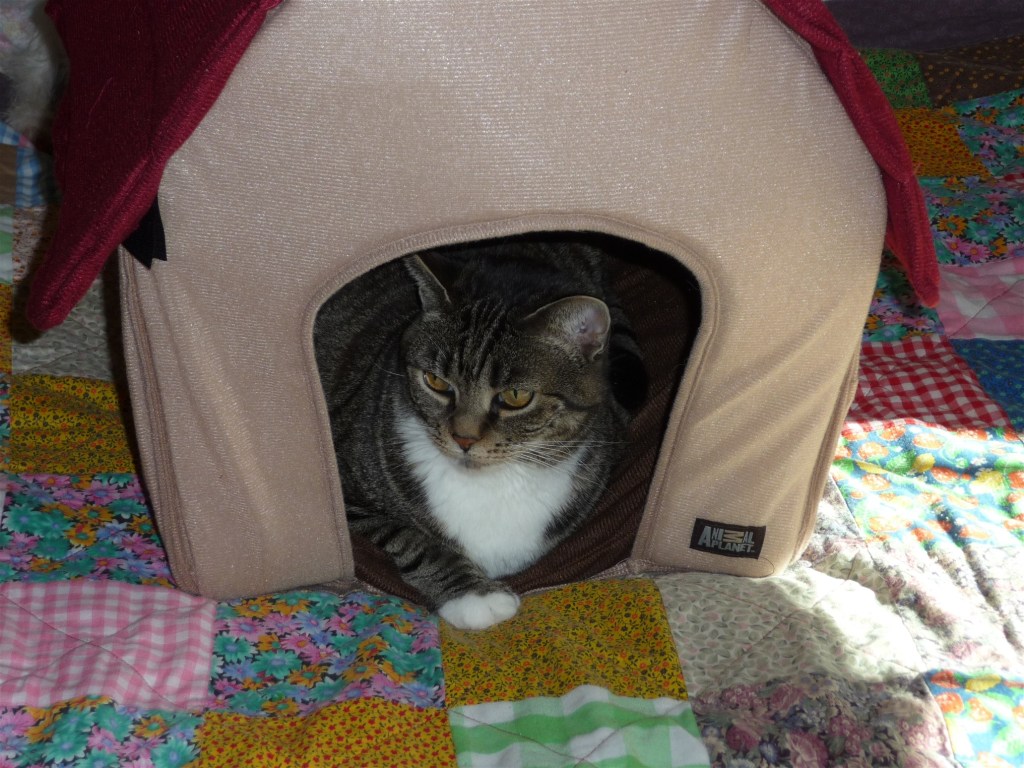
A careful cat owner will keep their cat’s safety in mind as they play. This is especially true around holidays, birthdays and other events where there can be empty boxes, wrapping paper, plastic wrap around the house. Children may not see a cat hiding and step on them, especially a young kitten.

Cats can also chew boxes, wrappings, paper, ribbons, strings and other tempting non-cat toys which can result in a trip to the veterinarian. While it is fun to watch a cat or kitten play with these things, they should never have access to anything that can harm them. Even if the owner is there to supervise the cat/kitten, things can happen so fast that you cannot prevent them.

So instead of spending a lot of money on cat toys, once in awhile give your cat a box to play in or a paper or reusable shopping bag to hide in. Your cats will love you for it.

http://phys.org/news/2015-02-cat-stress-access.html

Feeding a Finicky Feline

If cat food stayed the same, it would not be a problem feeding a finicky cat, but unfortunately brands change, specific varieties may be discontinued, or you may have to change your cat’s food for health reasons. If your cat is a finicky eater, this can be a huge challenge. There are a few things that may work to help.

The best thing to do is prevent the cat from becoming finicky. This is easily accomplished while the cat is a kitten. Do not feed your kitten only one brand and flavor of food. Offer the kitten many different brands of food and flavors as well as textures.

Most cat owners do not consider the texture of the food, how the food feels in the cat’s mouth is important. Cats are aware of the appearance, smell, taste and feel of the food. With so many aspects to consider, it makes substituting one brand of food for another more difficult.

If you must change the cat’s food, offer the new food in a separate dish next to the cat’s normal food at feeding time. Another method that can work is to mix a small amount of the new food with the food that the cat likes. Gradually add more of the new food until the cat will eat the new food exclusively.

There are a few other feeding tips that can help a cat. I like to feed my cat both dry and wet food. Feeding dry food will not harm the cat as some people believe, nor will it cause dehydration. If your cat is on a self-feed system, the dry food will stay fresh longer. It often works well to leave a dish of dry food out and twice a day offer wet food.

Each meal does not have to be the same amount of food. For example, the cat may get a smaller amount of dry food in the morning with a larger portion of wet food, and then in the evening, more dry food and less wet food, or more of both at one feeding and a less amount of both at the next feeding.

Cats may enjoy food puzzles because they satisfy their hunting instinct. Food puzzles also encourage the cat to exercise as they work the food out of the puzzle. If food puzzles are new to the cat, offer them on a quiet day at mealtime. Put their normal amount of food in the puzzle and offer the puzzle as close to their normal eating area as you can. Be sure to thoroughly wash the food puzzle with hot water and soap after the cat is finished with it. Because of a cat’s very good sense of smell, be sure to thoroughly rinse the puzzle so that the cat cannot smell the soap.

If the cat will not use a food puzzle, dry food can be hidden in and on a cat tree if the cat uses one. For example, my cat is blind so a food puzzle will not work with her. I have a three-tiered cat tree that has a “den” in the middle of it. I scatter her treats on the cat tree in different places. She loves to jump on it and using her sense of smell, find the treats. If you do not have a cat tree, you can hide treats around a room. Let the cat see you place one treat and show the cat where it is. You can tell the cat to find the treat as you do this. As the cat gets the idea hide the treat in a place near where you started and tell the cat to find the treat, gradually expand the area. Most cats will get the idea quickly and enjoy the game. This too satisfies their hunting instinct.

The bottom line is do not give up trying different foods and puzzles to keep your cat healthy and happy.

How cats show affection


People who do not own cats have a hard time understanding the deep affection that cats have for humans and that humans have for cats. In many ways, cats are not much different then dogs. Granted, you cannot do the same things with cats that you can do with dogs, but the relationship is a deep, quiet one. There is something special about the love that cats have for people, it is hard to put into words. The best way to describe it is to imagine sitting quietly with your closest friend, no words needed, but knowing that you are there for each other no matter what. Imagine the feeling of security, peace, and understanding that you and your friend share. This is what cat love is like.

 Some cats are very demonstrative and easily show their affection while other cats are more like the best friend experience described above. This does not mean that they are not bonded or don’t love their owners, they simply show it differently. Just like dogs and people, cats have different personalities. Some are cuddly and others like to share from a distance.

 Many people recognize canine displays of affection, but do not recognize feline displays of affection. While each cat has their own special way of demonstrating their love for their owner, some types of body language and behavior are common with all cats.

 Here is a list of the most common ways cats show affection:

 1. The most recognized sign of affection is when a cat purrs, however, not all purring is a sign of affection. For example a cat who is in pain or stressed will often purr. It is thought to be a way to relieve stress. However almost without a doubt if a cat is near a human and purrs along with a contented face, it is a sign of affection.  Cat purrs can range from soft and subtle to very loud. Kittens can purr from the time they are two days old. There have been a number of studies about how and why cats purr, it is considered the equivalent of a cat smile, a healing mechanism and a form of communication, but by and large, it is still a mystery.

 2. Tails are another indication of affection. Kittens will greet their mother with their tail straight up and the end tipped over just a little.  When the cat gets close to his favorite person, the tail will stay up with the end slightly tipped and the cat will raise their butt, sort of like walking on their hind toes. This is an invitation to scratch them above the tail. Happy cats usually have their tails raised and the tip of the tail in a slight hook.

 3. Cats can show affection by the location they choose to sleep.  This is because a cat sleeps up to 16 hours a day and they are the most vulnerable while sleeping. Therefore if a cat sleeps near, on or next to his person, it is a way the cat tells you that he trusts and feels safe near you. When an owner is not at home, the cat may choose to sleep on their person’s bed, chair or pillow.


4. Much to the dismay of some cat owners, cat gifting is another sign of affection.  I does not matter if the gift is a dead critter, a bug, or a toy, cats only give gifts to the people they love.

 5. Rolling is another sign of affection. If your cat throws himself down in front of you or near you, it is a sign that they love you and often that they want to play. Cats will only do this to engage you to play with them. It does not mean that they want their belly rubbed or scratched. Some cats do not mind belly rubs but most do not care for it.

 6. Scratching is another signal that a cat feels that you are theirs. When cats do this, they leave their scent from scent glands that are located between their pads and toes. They will do this to say that the object of their scratching is theirs. Much the same as family members feel that their family is theirs.

 7. Bumping or bunting is a term that is used when a cat will cheek rub, head butt or wrap themselves or their tail around you. This is a very high complement from a cat.  A cat will do this to other cats, dogs and their favorite human.

 8. Kneading is another sign that the cat is very happy and contented. They often do this while purring.  The behavior goes back to kitten hood when the kitten would knead the mother’s breast to help milk production. Cats only do this with people they hold in high regard.

A very happy Mimi

 9. Playing is an engaging behavior that a cat will only do with someone they feel safe with and love. Often a cat will bring a toy to their person and drop it just out of reach. This way you have to go to them. Playing is also a form of gifting.

 10. Cat eyes are very large in proportion to their heads. This makes them easy to read, cats use their eyes as a form of communication. When a cat puts his face near yours, with wide soft eyes, it is a sign of love. If the cat is across the room and gives you a slow blink, it is sort of the cat’s way of throwing kisses to you.  Often if you blink slowly to your cat, the cat will blink back.

 11. Nose nibbles are one of the most flattering things your cat can do to show affection. Often a cat will do it while you are asleep. It is not a bite and does not hurt, but is a gentle nibble on the tip of your nose.

 The next time you interact with your cat, pay close attention to what your cat is telling you, it may be a pleasant surprise.


How Pets Heal Hearts and Brighten Lives: The Science of Their Amazing Impact

By Guest Blogger, Cindy Aldridge

cindy@ourdogfriends.org

Pet ownership is more than just a source of joy—it’s a gateway to better health and a more fulfilling life. From reducing stress levels to promoting physical activity, the bond between humans and their pets profoundly impacts overall well-being. This article explores how pets contribute to a healthier, happier lifestyle, showcasing their unique role in enriching our lives.

The Mutual Benefits of Pet Interaction

Spending time with pets like dogs and cats can be a delightful way to unwind and reduce stress. Engaging in regular playtime and maintaining a consistent routine with your furry friend can help lower cortisol levels, a key stress hormone. This benefits your health and positively impacts your pet’s well-being, as your stress can affect them, too. Consider working from home occasionally or arranging for a pet sitter if your pet shows signs of stress. These steps can create a more harmonious environment, enhancing your and your pet’s health and happiness.

Boosting Your Immune System with Pet Companionship

Owning a pet can be a delightful way to boost your immune system. Sharing your home with a pet, especially a dog, exposes you to various microbes that can strengthen your body’s defenses. Research indicates that children raised with pets often develop a more diverse gut microbiome, which is associated with a lower risk of asthma and allergies. This aligns with the hygiene hypothesis, suggesting that early exposure to microbes can help the immune system manage allergens more effectively.

The Mental Health Benefits of Pet Care Routines

Establishing a routine through feeding, grooming, and exercising your pet provides structure and instills a sense of purpose and accomplishment. This routine can be particularly beneficial for those facing mental health challenges, as it encourages regular physical activity and fosters a stable environment. The bond you form with your pet through non-verbal communication can uplift your mood and alleviate anxiety. Studies suggest that over 60% of dog owners achieve recommended exercise levels, highlighting the physical benefits of pet ownership.

How Therapy Animals Help with Mental Health

Therapy animals have increasingly become a vital component of mental health care, offering comfort and support to individuals facing challenges such as PTSD and autism. Their calming presence can significantly enhance social skills, reduce anxiety, and promote emotional stability across diverse groups. For example, equine-assisted therapy involves interactions with horses and is particularly effective in building trust and facilitating emotional healing. Additionally, service dogs are trained to address specific needs, such as providing mobility support or detecting health issues like low blood sugar, enhancing independence and quality of life.

The Health Benefits of Pet Ownership

Delving into the science of the human-animal bond reveals its significant impact on health and well-being. Engaging with pets can lower blood pressure and ease anxiety, mainly due to releasing hormones like oxytocin and dopamine, which foster happiness and relaxation. The companionship of a pet can alleviate loneliness and depression, enhancing your overall quality of life. Understanding these dynamics lets you appreciate how pets contribute to a healthier, more fulfilling life.  

freepik

Pets are more than just companions; they are catalysts for improved health and happiness. Their presence can transform daily routines, offering emotional support and fostering a sense of purpose. As we continue to explore the profound connections between humans and animals, it becomes clear that pets play an integral role in enhancing our lives. Embrace the unique benefits they bring, and let these bonds enrich your journey toward well-being.

Discover the fascinating world of canine intelligence and groundbreaking research at Susan Bulanda’s Blog, (website) sbulanda.com where passion for pets meets scientific exploration!

New research about overeating

UCLA psychologists have discovered a circuit in the brain of mice that makes them crave food and seek it out, even when they are not hungry. What is interesting about this discovery is that when the group of cells is stimulated, the mice seek fatty and pleasurable foods such as chocolate instead of healthier foods such as carrots.

The area of the brain where the cells are located is called the periaqueductal gray which is in the brainstem. When these cells are stimulated, the mice are so driven to eat that they will endure foot shocks to get to the food. The opposite occurs when the researchers inject a virus that produces a protein that reduces the cells activity even hungry mice foraged less.

“Like mice, humans also possess vgat PAG cells in the brainstem. It could be that if this circuit is overactive in a person, they might feel more rewarded by eating or crave food when not hungry. Conversely, if this circuit is not active enough, they could have less pleasure associated with eating, potentially contributing to anorexia. If found in humans, the food-seeking circuit could become the treatment target for some kinds of eating disorders.”

Sue’s Note: If mice have this cluster of cells, it stands to reason that other animals have it as well. Could this be why some of our pets overeat and some have low appetites?

Journal Reference:

  1. Fernando M. C. V. Reis, Sandra Maesta-Pereira, Matthias Ollivier, Peter J. Schuette, Ekayana Sethi, Blake A. Miranda, Emily Iniguez, Meghmik Chakerian, Eric Vaughn, Megha Sehgal, Darren C. T. Nguyen, Faith T. H. Yuan, Anita Torossian, Juliane M. Ikebara, Alexandre H. Kihara, Alcino J. Silva, Jonathan C. Kao, Baljit S. Khakh, Avishek Adhikari. Control of feeding by a bottom-up midbrain-subthalamic pathwayNature Communications, 2024; 15 (1) DOI: 10.1038/s41467-024-46430-5

Cite This Page:

University of California – Los Angeles. “Craving snacks after a meal? It might be food-seeking neurons, not an overactive appetite.” ScienceDaily. ScienceDaily, 20 March 2024. <www.sciencedaily.com/releases/2024/03/240320122517.htm>.

God’s Creatures a Biblical View of Animals

As a Christian and an animal behavior consultant, I am always asked questions about God’s relationship with animals. Does God care about them? Does God talk to them? Can they be evil? Surprisingly, the Bible gives us the answers to these and many more questions. Often people are surprised to learn that animals have been part of Biblical miracles. God’s Creatures covers fifteen different topics that involve animals, all questions that I have been asked.

Everything in this book is backed by Scripture and has been reviewed by two theologians for accuracy. When I wrote this book, I compared critical English words with the original Greek to ensure that the translation was accurate to the English meaning. And of course, the most often and the most controversial question that I have been asked is, do animals go to Heaven? This question is covered in the book. Even if you are not a Christian, I am sure you will find the references to scientific studies and the topics in God’s Creatures interesting. God’s Creatures is a great Bible study for churches or Sunday school. It is written so that children can read and understand what it says. Offering a Bible study about animals is a good way to reach out to the members of your community. You can order the book from my website, www.sbulanda.com, on Amazon or from the publisher, www.Caladach.com.

Dogs help people relieve stress

Researchers at the University of South Korea have studied the benefits people have from interacting with dogs. Although is this not new information, they researched further to see if different activities produced a different reaction in people. They had people play, walk, groom and massage dogs while studying their brainwaves. They found that the people who walked or played with dogs had an increase in relaxed wakefulness. The participants who groomed, played and massaged a dog had a heightened level of concentration. They also observed that the subjects felt a significant drop in the feeling of fatigue, depression and stress after interacting with dogs.

Sue’s Note: I would think that the same results would be found when people interact with other animals that they enjoy. This study supports the use of therapy animals in all situations.

Journal Reference:

  1. Onyoo Yoo, YuTong Wu, Jin Soo Han, Sin-Ae Park. Psychophysiological and emotional effects of human–Dog interactions by activity type: An electroencephalogram studyPLOS ONE, 2024; 19 (3): e0298384 DOI: 10.1371/journal.pone.0298384

Cite This Page:

PLOS. “Interactions with dogs can increase brainwaves associated with stress relief and heightened concentration.” ScienceDaily. ScienceDaily, 13 March 2024. <www.sciencedaily.com/releases/2024/03/240313185025.htm>.

A new cancer treatment for dogs and cats

Researchers have found a new way to extend the life of terminally ill dogs who have cancer. This new form of chemoimmunotherapy repurposes stem cells that uses a non-viral gene delivery treatment instead of the usual virus treatment. The new method is safe has had great results.

The researchers treated 65 dogs and two cats who had either adenoma, lung metastasis or sarcoma. After three to eight weeks of treatment, 55 showed signs of positive response. Of that 14 had a full recovery. Two animals remained cancer free for at least 30 months and 46 enjoyed a good quality of life for 32 months. None of the animals treated had significant side effects.

The research team are conducting further studies and plan to research the possibility of using this treatment on humans.

Journal Reference:

  1. Yoon Khei Ho, Kin Man Loke, Jun Yung Woo, Yee Lin Lee, Heng-Phon Too. Cryopreservation does not change the performance and characteristics of allogenic mesenchymal stem cells highly over-expressing a cytoplasmic therapeutic transgene for cancer treatmentStem Cell Research & Therapy, 2022; 13 (1) DOI: 10.1186/s13287-022-03198-z

Cite This Page:

National University of Singapore, Yong Loo Lin School of Medicine. “Novel cancer therapy extends lives of terminally ill dogs.” ScienceDaily. ScienceDaily, 30 January 2023. <www.sciencedaily.com/releases/2023/01/230130112405.htm>.

Stress causes overeating in pets

Researcher Sora Shin, an assistant professor at the Fralin Biomedical Research Institute at Virginia Tech has discovered a molecule that triggers the need to eat high fat foods in mice 24 hours after being exposed stress in the form of the scent of cats.

This molecule is found in the hypothalamus section of the brain which is the part of the brain that is connected to changes in the brain that lead to emotional overeating.

 The same molecule is found in people as well as animals. This discovery may lead to treatment methods that can help people who react to the emotionally driven need to overeat, even when they are not hungry.

Sue’s Note: There are many animals, particularly dogs and cats that tend to overeat which result in them becoming obese. Pet owners who have pets that have this problem should consider stress as a factor that causes their pets to overeat. First be sure that the family or friends are not over feeding the pets. If this is not the case the pet owner should evaluate the possibility that stress may be a cause. Since the study showed that the effects of stress can cause overeating 24 hours later, the pet owner should consider events that happened in the last 24 hours. An example would be someone or something that passes the pet’s home when the owner is not home that causes high stress in the pet. In situations where stress is a factor, reducing the amount of food that the pet has access to may cause a greater amount of stress. In this case over the counter calming remedies may help the pet. If not a visit to your veterinarian would be in order explaining to the veterinarian that you suspect stress is a cause of the overeating. Print a copy of the article in the link below to show your veterinarian if necessary.

Journal Reference:

  1. In-Jee You, Yeeun Bae, Alec R. Beck, Sora Shin. Lateral hypothalamic proenkephalin neurons drive threat-induced overeating associated with a negative emotional stateNature Communications, 2023; 14 (1) DOI: 10.1038/s41467-023-42623-6

Cite This Page:

Virginia Tech. “Scientist discovers potential brain link between stress, emotional eating.” ScienceDaily. ScienceDaily, 27 November 2023. <www.sciencedaily.com/releases/2023/11/231127180702.htm>.

Unlock the Healing Power of Animal Companionship in Overcoming Addiction

by guest blogger Cindy Aldridge

Embarking on the path to overcoming addiction, you might discover solace and support in unexpected places. Among these, the companionship of pets stands out as a source of unconditional love and understanding. These furry friends offer companionship and become critical pillars in the journey toward sobriety, providing a unique form of support that nurtures emotional and physical well-being. Susan Bulanda shares more:

Providing Companionship and Sense of Purpose

In the throes of addiction recovery, the presence of a pet can imbue your life with a newfound sense of purpose and belonging. The unconditional love and unwavering companionship pets offer can fill the void of loneliness, giving you a reason to push forward. 

Their dependence on you for care and affection instills a routine and responsibility that can be incredibly grounding. This bond is crucial to the recovery process, offering a comforting presence that reassures and motivates you to continue healing.

Navigating Through Inpatient Treatment

When grappling with the complexities of addiction recovery, acknowledging the potential for relapse becomes pivotal. In such instances, opting for inpatient treatment emerges as a decisive choice, offering a structured and supportive setting for individuals navigating the trials of recovery. While concerns about the expense of rehabilitation may arise, it’s reassuring that numerous treatment centers readily accept health insurance from major providers. 

Mitigating financial worries requires proactive engagement with insurance companies to ascertain the extent of coverage. Selecting the right inpatient facility involves a multifaceted approach; start with this list of best rehab centers in the US. Take into account accommodations, accreditations, treatment approaches, location, and the testimonials of former patients. 

In parallel to choosing a rehabilitation center, it’s crucial to ensure your pet’s well-being by arranging temporary housing. Research local pet boarding facilities or consider pet-sitting services that can offer personalized care in your absence. Engaging with a trusted provider early on will give you peace of mind, knowing your furry friend is in safe hands while you focus on your recovery.

Alleviating Stress Through Pet Interaction

Petting or simply being near an animal has been shown to reduce stress and significantly lower cortisol levels. This interaction promotes a sense of calm and well-being, which is particularly beneficial during the unpredictability of addiction recovery. 

The routine of caring for a pet provides a distraction from stressors and a way to channel energy positively. This natural form of stress relief can make a significant difference in managing recovery’s emotional ups and downs, offering a peaceful respite in moments of turmoil.

Overcoming Loneliness with the Company of Pets

The companionship of a pet combats the loneliness and isolation felt during addiction recovery, offering comfort and a sense of security that diminishes the risk of relapse. Their simple, unwavering support lightens the complexities in human relationships, making the path to sobriety feel less intimidating. This bond is a constant reminder that you are never truly alone in your journey toward healing.

Fostering Emotional Healing Through Pet Bonding

Pets provide a unique outlet for emotional expression, offering a safe space to express feelings without fear of judgment or reprisal. This aspect of pet ownership can be particularly therapeutic during addiction recovery, where emotional vulnerability is often a key part of the healing process. Caring for an animal can help redirect focus from personal struggles to the well-being of another, facilitating a form of emotional healing that is both subtle and profound.

Promoting Physical Health and Activity

Engaging in physical activities with a pet, such as walking or playing, strengthens your bond and promotes your own physical health. This routine encourages regular exercise, which is an essential component of a healthy recovery process. The physical benefits of activity and the emotional support of pet companionship contribute to a holistic approach to overcoming addiction, enhancing mental and physical resilience.

Encouraging Mindfulness and Presence

Caring for a pet requires mindfulness and presence which can be incredibly beneficial during addiction recovery. This responsibility encourages you to live in the moment, focusing on your pet’s needs rather than dwelling on past mistakes or future anxieties. This mindfulness practice fosters a sense of peace and connection, grounding you in the present and supporting a more mindful, purposeful approach to recovery.

In the challenging journey of overcoming addiction, the companionship of pets offers a powerful source of healing and support. Beyond mere companionship, they provide love, purpose, and a unique form of unconditional support that can significantly impact your recovery process. As you navigate the path to sobriety, consider embracing the therapeutic power of pets to find strength, resilience, and comfort in their presence.