Some people believe that a dog’s ability to understand what a person means when they point at something is learned in adulthood through interaction with people. However, a group of researchers at the University of Arizona School of Anthropology in the College of Social and Behavioral Sciences has illustrated that this is not true.
istock
What they did find out is that while puppies are born with an understanding of human physical and verbal cues, they were not able to initiate help from people for unsolvable problems. This ability comes with experience after interacting with people.
The lead researcher, Emily Bray has spent the last decade studying the puppies bred for service dog work at Canine Companions. Bray feels that if they can understand how dogs think and solve problems, they will be able to better identify those puppies that will make better service dogs.
The researchers noted that the dogs who become successful service dogs respond to people differently than those who are not successful. Because the researchers are able to study the genetics of the puppies in the test, they hope to identify the genes that cause these traits in puppies. This will enable them to predict the potential for service work even before the puppies are born.
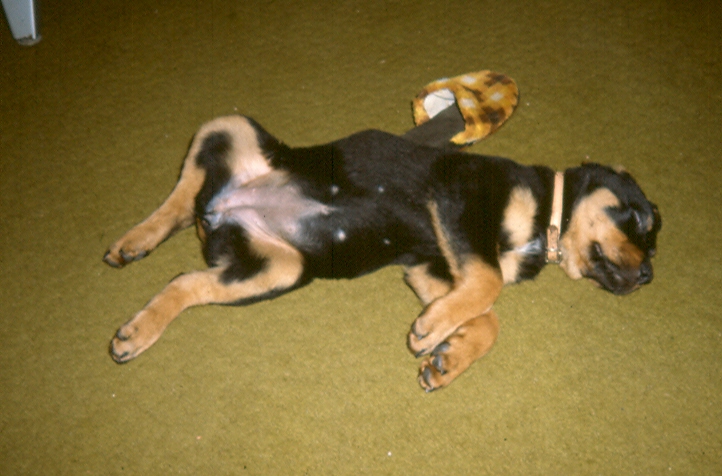
Researchers from the University of Helsinki and the Folkhalsan Research Center have located the variant in the LOXHD1 gene that causes deafness in Rottweilers. This type of deafness starts in puppyhood and progresses until the puppy is a few months old. The gene plays a key role in the function of the cilia of the cochlear sensory cells. Both humans and mice suffer from the same type of deafness.
The researchers also found deafness in mixed breed dogs that were part Rottweiler. The availability to test for the defect will help breeders avoid spreading this inherited deafness. Since this is a recessive issue, it will only occur in puppies if both the dam and sire have the gene.
Eradicating the defect will take the cooperation of all Rottie breeders. Those dogs that are mixed bred should not be used for breeding.
Author’s Note: It can be difficult to determine if a puppy can hear or not. Realize that dogs can feel sound, so it is important to carefully observe your puppy to determine if he is deaf. Especially if the puppy reacts to sound before he becomes totally deaf. To help dog owners determine if their puppy is deaf watch for a few signs. First, note if the puppy/dog only responds when he sees you. Do not assume if your puppy does not obey that he is being stubborn. Try clapping your hands behind the puppy when he cannot see you. If he does not react in any way, he may be deaf. A deaf dog will bark but usually only if he sees something. Watch to see if your dog looks at you or watches you more than usual. Remember that a deaf dog will rely on his other senses to navigate his world. You can successfully train a deaf dog but when they are in an unconfined area, they must be on a leash. A deaf dog is just as tempted to chase things, wander and stray as any other dog. Find a dog trainer that has experience training a deaf dog for help. If you suspect that your puppy is deaf, make an appointment with a veterinarian neurologist to have your dog tested so that you will know for sure if your dog is deaf or not. But most important, understand that a deaf dog can have a very safe and happy life.
A study at Washington State University focused on college students, especially those students who may be at risk due to mental health issues or learning issues. The researchers developed a four-week program where students interacted with dogs for ten minutes a day. They found that the decreased stress levels lasted for six weeks.
Petting the dogs improved the student’s ability to plan, organize, concentrate, memorize and increased their motivation. The results showed that the students who were most at risk had the most improvements.
free photo from Google Images
Author’s note: I believe that as researchers continue to refine their studies on the benefits that pets in general have on all people, they will be able to recommend the use of therapy animals in more specific ways.
Jacquelyn Evans and Elaine Ostrander, researchers at the National Human Genome Research Institute have identified two regions of the canine genome that cause 1/3 of the risk of hematological cancer in Flat-Coated Retrievers.
While this type of cancer is rare in humans, it does affect one-in-five Flat-coated Retrievers. This research overlaps with two loci that have been associated with other blood cancers in Golden Retrievers.
Image from Pixabay
As is often the case, the results of this study may allow researchers to identify candidate genes that will help develop new diagnostics and therapeutics for humans as well as dogs.
The researchers are Linköping University have determined that the stress level in a dog’s owner has an affect on their dogs. However, they took this study a step further than previous studies to see if the link between dogs and their owners was different for different breeds of dogs.
The first group of dogs were from hunting breeds that were bred to be independent. The second group were from ancient breeds such as the Shiba Inu, Basenji and Siberian Husky. They compared their recent study to a previous study of herding breeds.
They found that long-term stress was least likely to influence the ancient breeds. The hunting breeds showed links between the personality of the owner and their relationship to their dogs. The herding breeds had a unique synchronization with long term stress in their owners.
Author’s note: Research of this nature will help us explain and understand behavior and training issues that may arise between dogs and their owners. It is also worth considering when matching the right breed for a family or individual person. Not all people are a good match with each other, not all dogs are right for each person either.
A recent study at the University of Helsinki showed that aggression in dogs toward humans can be attributed to the following:
Fearfulness
Age
Breed
The company of other dogs
Owners previous experience with dogs
They determined that fearfulness had a strong influence on aggressive behavior. They found that older dogs were more likely to be aggressive than younger ones. They attribute this partly to age related pain or discomfort and impairment of their senses such as hearing and sight.
They found that small dogs were more aggressive than medium or large dogs. However, because of their small size people are less likely to feel threatened by a small dog’s aggressive behavior and thus not take measures to cure or prevent it.
The researchers found that males were more aggressive than females and that neutering and spaying had no effect on aggressiveness.
Not surprisingly, the researchers found that first time dog owners with less dog experience were more likely to have aggressive dogs. They also found that dogs who lived with other dogs were less likely to show aggressive behavior. Even though previous research has shown that multiple dog households have less aggression, it is unclear why.
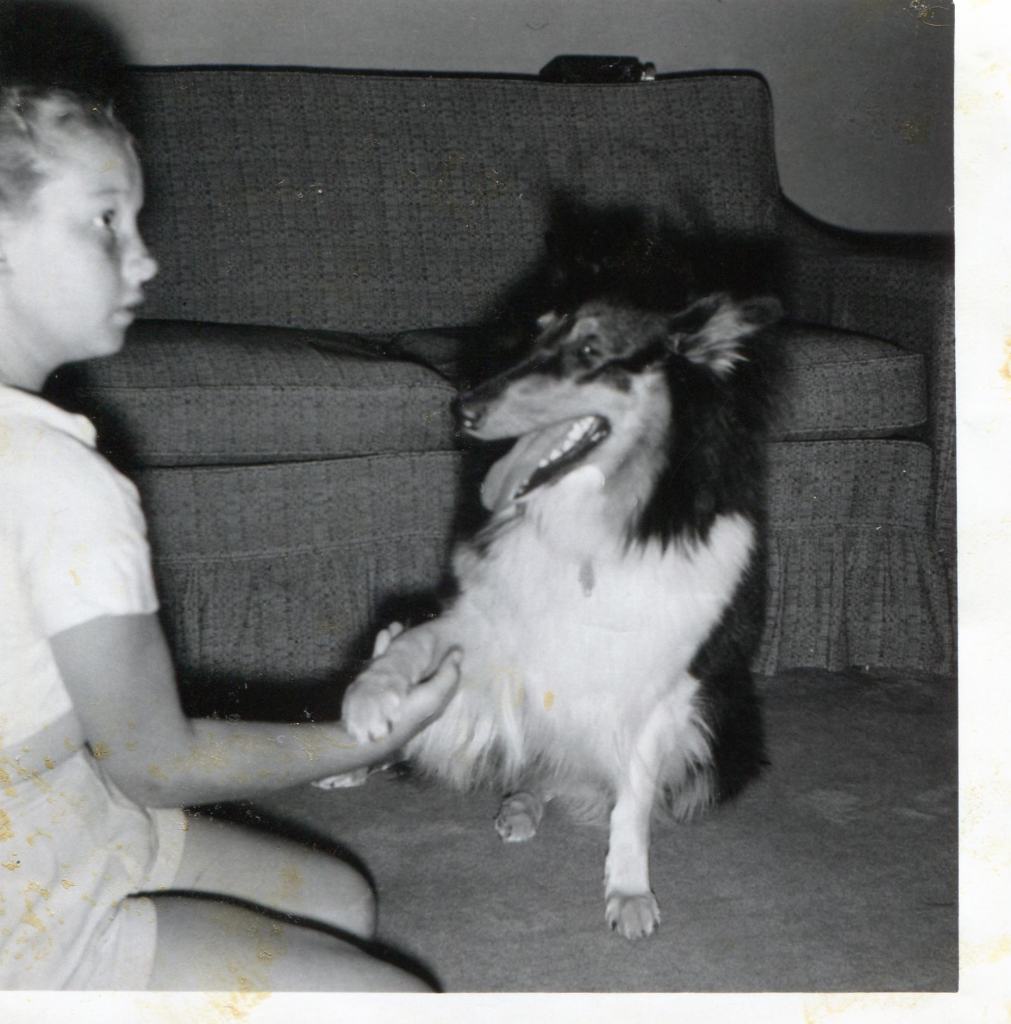
Interestingly, the researchers found that the Long-haired Collie (Lassie type), Poodle (all sizes) and Miniature Schnauzers were the most aggressive breeds leading to the consideration that this is related to genetics. I would like to point out that it seems that the researchers focused on the common pet breeds and did not consider the breeds that are by nature aggressive, but not common pets.
The bottom line is that anyone who is considering getting a dog should thoroughly research the breed and the lines that are available to them in their area. The temperament of a breed can vary from area to area based on the local breeding practices. I offer an informative brochure at no cost about how to select the right dog and the right breeder. Email me at sbulanda@gmail.com for a copy with “brochure” in the subject line.
Almost every dog owner has experienced jealousy in their dogs. This is manifested by vocalizations, agitated behavior and pulling on a leash. What researchers have discovered is that a dog acts jealous when they imagine that their owners are interacting with a rival. What is important about this study is that when a dog acts jealous, it shows that the dog has self-awareness. The study also showed that dogs act in a similar manner as children who are jealous. Dogs are one of the few animals that have this human-like behavior.
What further illustrated the intelligence of dogs is that the dogs in the experiment only reacted to a perceived social rival and not an inanimate object. This shows that they are capable of analyzing the situation.
Riley trying to sneak up on the cat
It is exciting to learn more about the mind of a dog. It is too bad that similar experiments cannot be conducted on cats. I personally feel that cats are at least as smart as dogs.
Although this article is not specifically about animals, I thought it was important enough to include on my blog site.
A research team from the University of Georgia has conducted a study about how sugar affects the brain. I have quoted part of the article below. Based on this research I would caution pet owners, especially those people who have puppies that are slated to be working dogs, to watch the dog’s sugar intake. We do not know how this finding affects other animals. People who have younger children should be especially careful since they tend to share their treats with their pets which could significantly raise the pet’s sugar level.
“New research led by a University of Georgia faculty member in collaboration with a University of Southern California research group has shown in a rodent model that daily consumption of sugar-sweetened beverages during adolescence impairs performance on a learning and memory task during adulthood. The group further showed that changes in the bacteria in the gut may be the key to the sugar-induced memory impairment.”
You’ve decided to take some big steps in your life, pursuing your home business dreams and welcoming a new pet into the fold. It can be difficult to balance the needs of a new pet with those of a new business, but with the right knowledge, it can be done. This blog post, presented courtesy of Susan Bulanda, presents some resources and tips that you need to keep in mind.
Establish a Schedule
Pets, like humans, thrive with a regular schedule. Especially when your attention will often need to be on your business, it is important that your pet knows when to be able to expect to interact with you, exercise, and eat.
Depending on the kind of pet you have, your schedule might have to work around it. If your dog requires regular trips outside to use the bathroom, for example, you have to prioritize those when developing your daily routine. In the beginning, you may need to devote extra time in the day to train your pet on bathroom habits. Use one of the many time management apps to help give your business and pet the attention they deserve.
Keep in mind that if you decide to get a puppy, you’ll need to devote a lot of time to training them. According to the American Kennel Club, there are five basic cues that you need to teach your puppy, including how to come when called and how to walk on a loose leash. Positive reinforcement is the key here, so get some of their favorite treats and reward your pup throughout the training process. Getting the basics down will definitely help when you’re trying to establish a great work/pet life balance.
Utilize Technology
Time isn’t the only thing apps can help you manage. There are apps designed to help you keep track of your pet’s medications and veterinarian appointments and apps to help you train them. If you find yourself in need of a caretaker, the right app can connect you with pre-screened pet-sitters and walkers to ensure your pet is safe and taken care of while you tend to business.
If you have to be away and don’t require a sitter for your pet but would still like to check in, dozens of excellent pet camera systems are on the market. These allow you to check on your animal while you are otherwise engaged.
Protect Yourself and Your Business
As technology has progressed, so has the ability to treat animals experiencing medical issues. This has caused a steep rise in costs for veterinary care, as the equipment and expertise necessary to treat advanced issues can be expensive. It may be in your interest to purchase pet insurance to ensure medical expenses won’t be an unexpected burden on you and your business.
Another way to protect you and your assets is by forming a limited liability company. By doing so, you create an extra layer of protection between your business and your personal property. An LLC also has tax advantages and affords you more flexibility than other business setups. You can file for yourself online using an online formation service, saving you the expense of hiring a lawyer. Rules vary between states, so check out your state’s regulations before filing.
Give Yourself Time
Like starting a new business, getting a new pet is a big undertaking. Each animal is different, with personality and needs different from one to the next. Schedules and other tricks help, but it will take time to build trust and love between you and your pet.
Big changes require time and effort, but they can pay off big-time when done correctly. Embrace scheduling and technology, protect yourself and your pet, and give you and your animal some grace. Having the newest member of your family beside you when your business succeeds will make it all worthwhile.
I was given an article to use for my blog site by Your Dog Advisor and it think it is a great article. Unfortunately, it is too long for my blog. I urge you to go to their link and read the whole article. It is very informative.
Global Positioning System or GPS made for dogs is a way to track your dog’s activity, and/or location. There are many kinds of GPS devices and this article explains, with excellent photos, the types available. Many people in K9 SAR use them to show where their dog has searched in an area.
The canine GPS system is critical if your dog gets lost. The GPS can locate your dog for you. Many times, a dog that is lost will wander or will hide if they are frightened. A small dog can be hidden under debris or brush within a few feet of where you are looking. If they are frightened, they may not come out even for their owner.
In all environments, rural, suburban and urban, it is almost impossible to search every place where a dog could go. It is time consuming and manpower intensive. The GPS tracker will allow you to find your dog quickly.
Here is a list of topics that the article covers. I strongly urge you to click on the link and read their article.
What is a Dog GPS Tracker?
How Does a Dog GPS Tracker Work?
Are There Different Types of Dog GPS Trackers Available?
Which Types of Dogs Should Have a Dog GPS Tracker?
Top 6 Dog GPS Tracker Products We Love
Whistle Go & Go Explore Dog GPS and Health Tracker
Tractive LTE GTPS Dog Tracker
PetFon Pet GPS Tracker
Link AKC Smart Dog Collar
4 Pack Smart Pet Finder GPS Tag
Black and Decker 2-Way Audio GPS Dog Tracker
Does a Dog GPS Tracker Take Place of a Microchip?
Other Tips for Keeping Your Dog Safe
Sue’s Note: A GPS tracker may also work for a cat if it is small enough.




 A Blog by Susan Bulanda