Hearing loss in dogs

People often think that if a dog is not born deaf, the dog will be OK. Certain breeds of dogs, those with the merle, piebald and harlequin coat colors, such as Dalmatians, Shetland Sheepdogs, Australian Cattle Dogs and Great Danes for example, have a high instance being born deaf. The Baer test on puppies born in these breeds can determine if a dog is deaf or not. However, dogs can suffer from hearing loss, much the same as people.

A dog can lose its hearing if the hair cells in the cochlea or if the eardrum and the small bones are damaged. Dr. Kari Foss, a veterinarian neurologist/professor at the University of Illinois at Urbana-Champaign, studied a gun dog, sniffer dog and a police dog and found that they had a hearing loss.

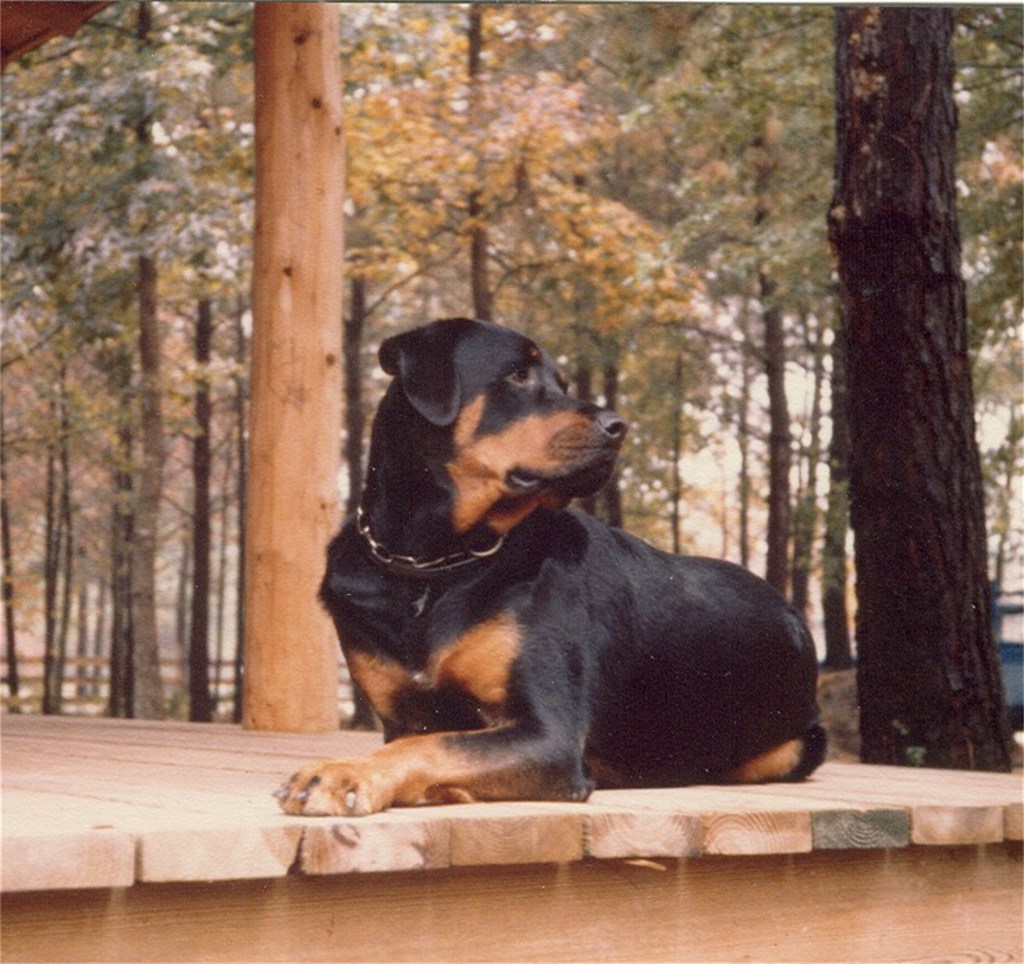
My deaf collie and I many years ago

Hearing loss can result from being exposed to loud noises, illness and old age. In some cases, the hearing loss can be cured, such as those due to infections or illness.

Dr. Foss stresses that many people miss the signs that their dog is suffering from hearing loss. Dog owners should take note if their dog fails to respond when called, sleeping through sounds that they would normally respond to, being startled at loud noise that did not bother them before, barking excessively or making unusual vocal sounds. If a dog is deaf in one ear, they may have trouble locating the source of sounds.

If you suspect that your dog has a hearing loss, do not hesitate to make an appointment with your veterinarian. There is a chance that the problem can be corrected. However, if the loss is permanent, you can ensure that your dog stays safe by taking precautions. Dogs can live a safe and happy life even if they are deaf, or partially deaf.
Canine coat color, surprising genetics

If a purebred dog is born with a coat color that it is not supposed to have, it may be due to hidden genes. Kari Ekenstedt, DVM, Ph.D. who is the assistant professor of anatomy and genetics, along with Dayna Dreger, Ph.D., lead researchers in Ekenstedt’s canine genetics research laboratory studied 212 different dog breeds and found that gene variants caused breeds to have traits that the breed standard did not allow. These included coat color, and other traits. For example, they found that 48 different breeds had the tailless gene variant, such as the Dachshund. Although the variant was low, it is possible that a Dachshund could be born tailless.  

One of the “fault” alleles allows the brown color. This allele produces the chocolate Labrador Retriever, yet the researchers found the same allele in breeds that do not allow the brown color, such as the German Shepherd and Rottweiler.

The lesson learned from this study is that if a puppy is born that is not what the breed standard calls for, it is not necessarily due to “bad” breeding, but the expression of a trait that was hidden and has surfaced.

Hearing loss in dogs

A number of breeds of dogs, mostly those breeds that have the merle, piebald or white coats, are prone to deafness. However, dogs that are subjected to frequent loud noise can suffer from hearing loss the same as people. This is referred to as noise-induced hearing loss.

A study conducted at the University of Illinois at Urbana-Champaign by Dr. Kari Foss, found that working dogs such as police, sniffer and gun dogs are a strong candidate to suffer from hearing loss. According to Foss,

“Most commonly, noise-induced hearing loss results from damage to the hair cells in the cochlea that vibrate in response to sound waves,” Foss said. “However, extreme noise may also damage the eardrum and the small bones within the inner ear, called the ossicles.”

         The most common signs that a dog is losing his ability to hear are when the dog fails to respond to commands, or they sleep through noise that would normally wake them up. They may bark excessively or make unusual sounds. Sometimes a dog may have a hearing loss in one ear only. If that is the situation, the dog may hear sounds but not be able to tell where it came from.  

         The researchers recommended that dogs who must work around loud noise wear hearing protection that is designed for dogs. It is also possible that dogs can lose hearing from ear infections and illnesses and as they age.

         If a potential dog owner is going to purchase a breed where deafness is a problem, they must be sure that the breeder has done a BAER test to determine if the puppy is deaf or not.

Unwanted behavior in dogs – surprising findings

In a study of 14,000 dogs, fully 73% of the dogs studied had unwanted behavior. One-third of the dogs studied had noise sensitivity. The other behaviors included fearfulness of people, other dogs and unfamiliar locations, fear of surfaces and heights, inattention and impulsivity, compulsive behavior, aggressiveness and separation anxiety. The most common were noise sensitivity, fear of surfaces and heights and general fearfulness.  

Professor Hannes Lohi’s research group from the University of Helsinki conducted the study and found that fearfulness and aggressive behavior were linked to each other as well as impulsivity, compulsive behavior and separation anxiety. The researchers also discovered that many unwanted behaviors are inherited. Their hope is that better breeding may help eliminate these behaviors.

Author’s Note: The article states, “The problems appear to be quite breed-specific. For example, in Border Collies we observed more compulsive staring and light/shadow chasing, behaviours that occurred more rarely in all other breeds.” Studies such as this are interesting, however, it should be considered what the breed traits are, the excessive staring could actually be the Border Collie “eye.” Since Border Collies herd livestock, they may have a tendency to chase light and shadows if their instinctive herding needs are not met.

Dog’s eyes are different than wolves

Dr Kaminski and co-author, evolutionary psychologist Professor Bridget Waller, also at the University of Portsmouth conducted an interesting research project which found that dogs have a small muscle above their eyes that allow them to noticeably raise their inner eyebrow. Wolves do not have this ability. The purpose of this muscle is to allow dogs to better communicate with people. The expression that results makes the dog’s eyes appear larger and resembles the movement that people produce when they are sad. It also makes the dog’s eyes appear more infant like. People seem to want to look after dogs more when they exhibit this expression.

The researchers found that dogs will raise their eyebrows more when people are looking at them indicating that dogs are trying to communicate with people. This study illustrates how important and powerful facial expressions are in social interaction.

Managing aggressive behavior in dogs

Dr. Emma Williams, from the School of Psychological Science at the University of Bristol has conducted a study about managing aggressive dog behavior. According to her research, aggression in dogs is a worldwide problem.

She found that animal behaviorists need to focus on helping dog owners feel confident that the rehabilitation program prescribed will work. Behaviorists must also ensure that the dog owner is capable of initiating and following through with the program. Behaviorists should not only focus on the behavior of the dogs, but also the behavior of the owner when developing a rehabilitation program. They found that when a dog acts badly toward a person or another dog, the dog’s owner may react with extreme negative feelings.

What they also found was that positive reinforcement-based behavior modification techniques were very effective in rehabilitating aggressive dogs while punishment-based methods were detrimental for the dog and led to increased aggression.       

Sue’s note: At the first sign of aggression, even in a puppy, the dog owner must consult with a certified canine behavior consultant. Too often dog owners feel that the dog will out-grow the aggression when in reality it always gets worse if not addressed immediately.

Working with animals can cause mental issues

It may be surprising to learn that veterinarians and people who volunteer to help animals may be at a higher risk for mental health issues such as depression, anxiety and suicide.

Katherine Goldberg, DVM, LMSW, community consultation and intervention specialist at Cornell Health and Founder of Whole Animal Veterinary Geriatrics and Palliative Care Services has conducted a study to determine how and why this exists. She found that people who volunteer with animals are often confronted with the results of cruelty, and while they want to help animals, they are often faced with having to euthanize healthy animals due to a shortage of homes.

Veterinarians are faced with the same circumstances as well as high college debts, lower income and clients who may question the cost of care for their pets and be suspicious that their veterinarian is trying to push services that their pet doesn’t need.     

Goldberg feels that veterinarian colleges should include courses to help veterinary students deal with the pressures of caring for animals.

Author’s Note: With the advances in veterinary care, at times it has become more difficult to determine how much intervention a pet owner should do for their pet. Like human doctors, veterinarians want to save the life of a pet and will offer all of the options available. What helps the pet owner decide is to evaluate what quality of life the pet will have after treatments. Veterinarians will help make that decision.  

Human breast cancer drug helps dogs with lung cancer

The HER2 gene which is found in women with breast cancer, has been linked with canine pulmonary adenocarcinoma (CPAC) in dogs. Researchers at the Translational Genomics Research Institute (TGen) which is an affiliate of the City of Hope and Ohio State University found that a drug, neratinib, can help the over 40,000 dogs who develop CPAC each year.

CPAC is an aggressive cancer that is similar to the type of human lung cancer that non-smokers develop. This study has given researchers more information about the genetics of this disease and treatment options that can help both dogs and humans.

Raw meat diet in dogs associated with antibiotic-resistant bacteria

No matter what age the dog is, eating a raw meat diet causes them to pass antibiotic resistant Escherichia coli (E.coli) in their feces which can be transmitted to humans.

Researchers from the University of Bristol conducted an in-depth study of 823 dogs of all ages.

They found that dogs who lived in the country had a strong risk factor in passing antibiotic resistant E.coli but dogs who live in the city had more complicated risk factors that may be linked to the variety of lifestyles and exposure to other dogs.

E. coli is found in the intestines of both humans and animals and is a common cause of various diseases including urinary tract infection and can cause sepsis in other parts of the body.

The bottom line is that feeding raw meat to dogs is not safe for both the dog and humans. If a dog owner insists on feeding raw meat to their dog, they must be very careful of infection.

A link between a dog’s sense of smell and vision

Researchers at Cornell University have found that there is a neurological link between a dog’s sense of smell and their vision. This study shows that a dog perceives his environment using both vision and scent. This is the first time that scientists have found a neurological connection of this nature in any animal.

In addition, scientists have found that dogs have connections between areas in the brain that process memory and emotion which are similar to humans but that they also have connections between the spinal cord and the occipital lobe which are not found in humans.

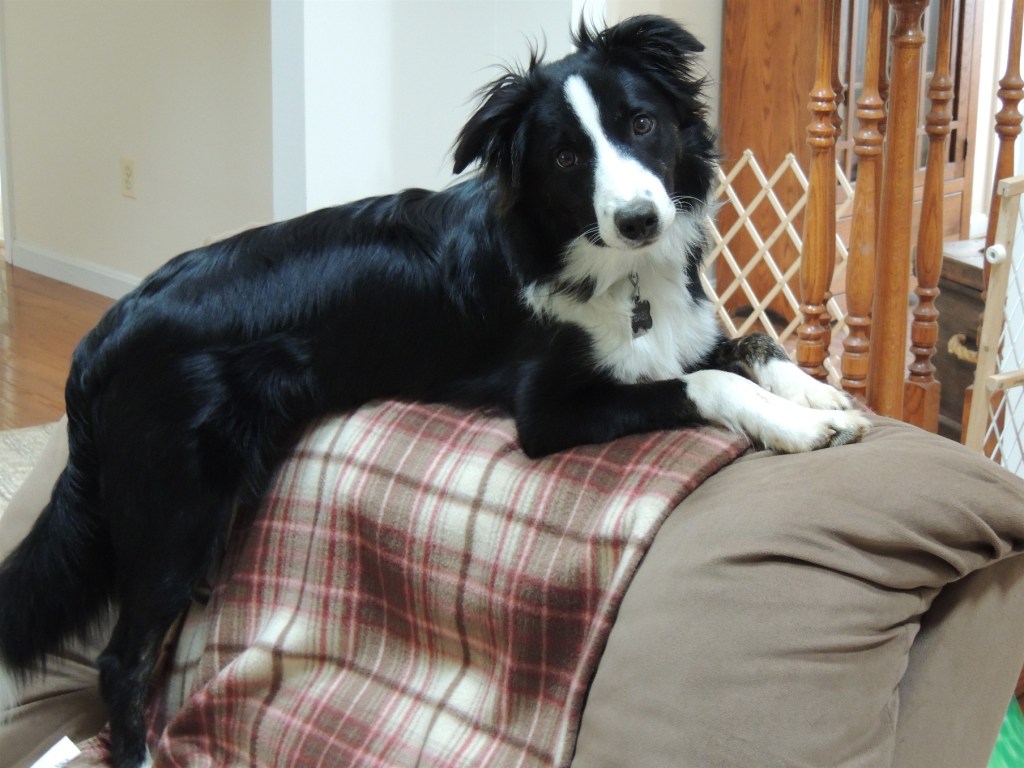
Riley

This finding explains why blind dogs are able to function, being able to play fetch and navigate their surroundings much better than people with similar blindness. That is comforting for people who own dogs who are blind or have gone blind.

Author’s Note: Although blind dogs can find their way around better than people, it is still a good idea to not move furniture around. If you have to move or add furniture, you can put a unique gentle scent on the corners of the furniture at the dog’s level to help the dog locate and identify the new or moved object.

We also have to think about how the relationship between scent and vision affects dogs in terms of training and their reaction to the environment, taking into consideration personality traits such as friendliness, fear, aggression etc. While we know that many of the personality traits of dogs are inherited, is it possible that these findings might explain further exactly how and what is inherited. Many people do not realize how complex dogs and perhaps other animals are.