Pet Toys

Note: This article is my opinion, based on my experiences with many dogs, cats and birds.

Pet owners spend a considerable amount of money on toys for their pets. Toys are important for pets; they give pets something to do and, in some cases, build the bond between the pet and owner. While I will refer mostly to dogs, this article applies to all pets.
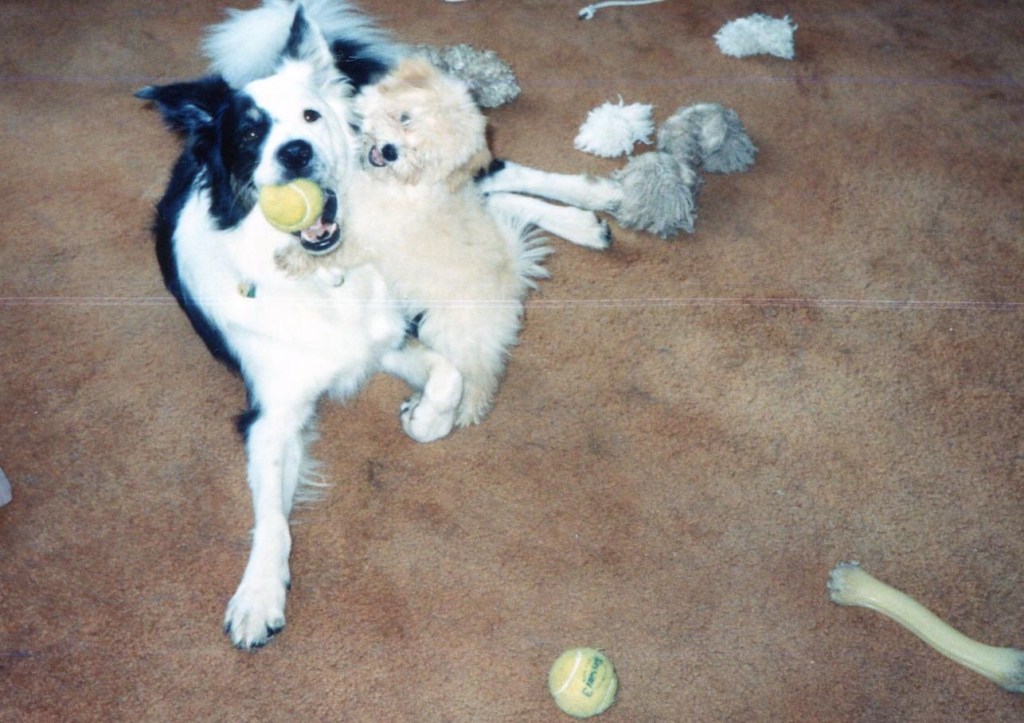
It is important to realize that there is no regulatory body for pet toys. What that means is that manufacturers can use whatever material they choose to make pet toys. Unfortunately, many of the products that are available are not safe, either because of a chewing or a toxic substance risk.

When picking a toy for your pet, you should consider the type of animal it is and what it likes to do. Dogs like to fetch, toss and chew and shred toys. This satisfies their natural hunting instinct. Cats like to chase, pounce, carry and sometimes tear up toys.

Birds generally like to tear apart, peck and toss toys. Although many birds play with toys in various ways. I had a budgie who liked to “herd” plastic balls into a tight group.

When considering a toy for a pet, keep in mind that if there is a risk associated with the toy, the risk increases if the pet is small. This is because it takes less material to block their intestines and less toxins to make them sick or kill them. This is why a pet owner should carefully evaluate what toy they give their pet.

I feel that toys for dogs pose the most risks because dogs tend to chew and eat pieces of their toys more than other pets. Know how your dog likes to play with a toy before you pick one out for him. Some dogs will totally destroy a stuffed toy or a plastic one. Other dogs like to carry a toy around and will not destroy it. Many dogs are obsessed with getting the squeaker out of a toy that has one. My terrier is a squeaker killer. He will work on a toy almost endlessly until he gets the squeaker out. Then for the most part, he loses interest in the toy.

Puppies almost always chew a toy until it is destroyed and they are more likely to eat the pieces of the toy. For this reason, plastic toys are a higher risk for puppies. Regardless if your dog is a puppy or an adult, plastic toys in general are the highest risk.

Because dogs like to chew and destroy toys, they are less likely to play with the chew-proof variety of toy. Some of the hard nylon toys are coated with a scent and when the coating wears off, the dog loses interest in the toy. Stuffed toys pose a problem because the stuffing, which can be ingested and not digested. The stuffing in most dog and cat toys are fiber fill which is a form of plastic and can block intestines.

If a dog owner is going to give their dog one of the many products on the market designed to clean the dog’s teeth while they chew the toy, be sure to check the ingredients. Most dental chews for dogs are only 96% digestible. What is the other 4%? Some of these products have plastic in them to make them last longer.

Those chew products that are designed to be eaten, should break down in five to ten minutes when placed in water, if not, it is a high risk for your dog. These types of products can block a dog’s intestines. Because of a dog’s short digestive tract, these products do not have enough time to break down if they can break down at all.

This is also true of any rawhide product. I personally do not approve of any animal product such as cow hooves, pig’s ears and rawhide. These products are often treated with formaldehyde as a preservative and cured in arsenic. Many people think that rawhide comes from a butcher, but in reality, rawhide comes from a tannery. Also, keep in mind that any wild domestic canine does not eat bones, skin or hooves.

This is evident when you see a dead deer along the roadside. After everything, animal, bird and insect are finished feeding on the carcass, the things left are hide, hooves and bones. The main risks for letting a dog eat rawhide are contamination, choking hazard, and intestinal blockage. A number of pet related organization discourage giving dogs rawhide.

(https://m.facebook.com/PlanetPawsMedia/photos/a.114414471966777/883417478399802/?type=3&p=30)

Rope toys are acceptable if your dog does not chew them and swallow the threads. The safest rope toy is one made of cotton instead of nylon. Cotton has a better chance of breaking down if it is ingested whereas the nylon will not.

It is never a good idea to give a dog old shoes or slippers because of the chemicals used to make them. It is especially difficult for a puppy to understand that old shoes and slippers are OK to play with, but new shoes and slippers are not. If you insist on giving your dog rawhide remember that rawhide comes from a tannery and dogs have a very sophisticated sense of smell. Therefore, a dog of any age can smell the similarity between rawhide and other leather products, which include furniture, gloves, jackets and briefcases.

Bones are not a good choice for dogs either. Again, it is not natural for dogs to eat bones. Many of the “natural” bones have bacteria on them that can harm both dogs and people who handle them. Some of the stuffed bones that are treated can be safer for a dog who likes bones. The danger associated with bones are splinters from the bone and bacteria.

The bottom line is to know your dog. If a toy becomes small enough to swallow it should be taken away from the dog. By knowing your dog’s play habits you will be able to decide what toy is safe for them to play with. The best toy is one that allows you to interact with your dog, playing fetch games, chase games or whatever your dog likes. If you understand your dog’s breed, it will guide you to selecting the right toy for your dog. All dogs and cats can benefit from puzzle toys and treat dispensing toys. The main thing is to keep your pet safe and happy.

New research about overeating

UCLA psychologists have discovered a circuit in the brain of mice that makes them crave food and seek it out, even when they are not hungry. What is interesting about this discovery is that when the group of cells is stimulated, the mice seek fatty and pleasurable foods such as chocolate instead of healthier foods such as carrots.

The area of the brain where the cells are located is called the periaqueductal gray which is in the brainstem. When these cells are stimulated, the mice are so driven to eat that they will endure foot shocks to get to the food. The opposite occurs when the researchers inject a virus that produces a protein that reduces the cells activity even hungry mice foraged less.

“Like mice, humans also possess vgat PAG cells in the brainstem. It could be that if this circuit is overactive in a person, they might feel more rewarded by eating or crave food when not hungry. Conversely, if this circuit is not active enough, they could have less pleasure associated with eating, potentially contributing to anorexia. If found in humans, the food-seeking circuit could become the treatment target for some kinds of eating disorders.”

Sue’s Note: If mice have this cluster of cells, it stands to reason that other animals have it as well. Could this be why some of our pets overeat and some have low appetites?

Journal Reference:

  1. Fernando M. C. V. Reis, Sandra Maesta-Pereira, Matthias Ollivier, Peter J. Schuette, Ekayana Sethi, Blake A. Miranda, Emily Iniguez, Meghmik Chakerian, Eric Vaughn, Megha Sehgal, Darren C. T. Nguyen, Faith T. H. Yuan, Anita Torossian, Juliane M. Ikebara, Alexandre H. Kihara, Alcino J. Silva, Jonathan C. Kao, Baljit S. Khakh, Avishek Adhikari. Control of feeding by a bottom-up midbrain-subthalamic pathwayNature Communications, 2024; 15 (1) DOI: 10.1038/s41467-024-46430-5

Cite This Page:

University of California – Los Angeles. “Craving snacks after a meal? It might be food-seeking neurons, not an overactive appetite.” ScienceDaily. ScienceDaily, 20 March 2024. <www.sciencedaily.com/releases/2024/03/240320122517.htm>.

Heart murmurs in dogs

Researchers at the University of Cambridge have perfected an algorithm that can accurately detect heart murmurs in dogs. A heart murmur is the main indicator of cardiac disease such as mitral valve disease. About one in thirty dogs develop this, especially small dogs such as the King Charles Spaniels. The algorithm was originally designed for use on humans, but the team was able to adjust the program to detect and grade heart murmurs in dogs.

In humans, mitral valve disease can only be corrected by surgery, but medication is available for dogs. This program will allow the general practitioner veterinarian to accurately determine if a dog has heart disease earlier and treat the dog, increasing its quality of life and longevity.   

Journal Reference:

  1. Andrew McDonald, Jose Novo Matos, Joel Silva, Catheryn Partington, Eve J. Y. Lo, Virginia Luis Fuentes, Lara Barron, Penny Watson, Anurag Agarwal. A machine‐learning algorithm to grade heart murmurs and stage preclinical myxomatous mitral valve disease in dogsJournal of Veterinary Internal Medicine, 2024; DOI: 10.1111/jvim.17224

Cite This Page:

University of Cambridge. “AI algorithm accurately detects heart disease in dogs.” ScienceDaily. ScienceDaily, 28 October 2024. <www.sciencedaily.com/releases/2024/10/241028211501.htm>.

Cancer in dogs

This article is loaded with a lot of important information, therefore I suggest that my readers click on the link and read the whole article.

Researchers at the University of California, Riverside have found that medium sized dogs have a higher risk of getting cancer than very large or small breeds of dogs. For example, the smallest dogs, including Pomeranians, Miniature Pinschers, Shih Tzus and Chihuahuas have about a 10% chance of dying from cancer.

On the other hand, large dogs, such as Burmese Mountain dogs, have more than a 40% chance of death from cancer. Yet the largest breeds such as the Great Dane have a less chance of getting cancer.

The article points out that scientists do not understand why the life expectancy of dogs decreases with size. “For every pound increase in typical breed size you lose about two weeks of life.”

What is interesting, is that this article points out that the ratio of cancer to size only applies to the same species, in this case dogs. The same correlation does not apply to size difference between other species.

Journal Reference:

Leonard Nunney. The effect of body size and inbreeding on cancer mortality in breeds of the domestic dog: a test of the multi-stage model of carcinogenesisRoyal Society Open Science, 2024; 11 (1) DOI: 10.1098/rsos.231356

Cite This Page:

University of California – Riverside. “Study reveals cancer vulnerabilities in popular dog breeds.” ScienceDaily. ScienceDaily, 29 April 2024. <www.sciencedaily.com/releases/2024/04/240429103104.htm>.

A new cancer treatment for dogs and cats

Researchers have found a new way to extend the life of terminally ill dogs who have cancer. This new form of chemoimmunotherapy repurposes stem cells that uses a non-viral gene delivery treatment instead of the usual virus treatment. The new method is safe has had great results.

The researchers treated 65 dogs and two cats who had either adenoma, lung metastasis or sarcoma. After three to eight weeks of treatment, 55 showed signs of positive response. Of that 14 had a full recovery. Two animals remained cancer free for at least 30 months and 46 enjoyed a good quality of life for 32 months. None of the animals treated had significant side effects.

The research team are conducting further studies and plan to research the possibility of using this treatment on humans.

Journal Reference:

  1. Yoon Khei Ho, Kin Man Loke, Jun Yung Woo, Yee Lin Lee, Heng-Phon Too. Cryopreservation does not change the performance and characteristics of allogenic mesenchymal stem cells highly over-expressing a cytoplasmic therapeutic transgene for cancer treatmentStem Cell Research & Therapy, 2022; 13 (1) DOI: 10.1186/s13287-022-03198-z

Cite This Page:

National University of Singapore, Yong Loo Lin School of Medicine. “Novel cancer therapy extends lives of terminally ill dogs.” ScienceDaily. ScienceDaily, 30 January 2023. <www.sciencedaily.com/releases/2023/01/230130112405.htm>.

Sleep apnea in dogs

Many people may not be aware that brachycephalic dogs breeds such as French Bulldogs, Pugs and other breeds with short, flat noses can suffer from sleep apnea. It has been found that these dogs suffer from disordered breathing that is similar to human obstructive sleep apnea which is caused by upper airway obstruction. The result is daytime fatigue and interruptions in sleep.

Researchers at the University of Helsinki Lung Insight group found that a neckband system that is used in people, was successful in determining if dogs suffered from sleep apnea.  

Their research showed that brachycephalic dogs snore and suffer from sleep disorders more than dogs with long snouts. Sleep apnea causes health issues in humans such as hypertension and cardiovascular disease. It affects the body’s immune system, hormone secretion and metabolism. Since dogs and humans share similar health issues, it is important to monitor your dog’s sleep habits and if you think that your dog has sleep apnea contact your veterinarian.   

Journal Reference:

  1. Iida Niinikoski, Sari‐Leena Himanen, Mirja Tenhunen, Liisa Lilja‐Maula, Minna M. Rajamäki. Description of a novel method for detection of sleep‐disordered breathing in brachycephalic dogsJournal of Veterinary Internal Medicine, 2023; DOI: 10.1111/jvim.16783

Cite This Page:

University of Helsinki. “A short snout predisposes dogs to sleep apnea.” ScienceDaily. ScienceDaily, 13 June 2023. <www.sciencedaily.com/releases/2023/06/230613110050.htm>.

Stress causes overeating in pets

Researcher Sora Shin, an assistant professor at the Fralin Biomedical Research Institute at Virginia Tech has discovered a molecule that triggers the need to eat high fat foods in mice 24 hours after being exposed stress in the form of the scent of cats.

This molecule is found in the hypothalamus section of the brain which is the part of the brain that is connected to changes in the brain that lead to emotional overeating.

 The same molecule is found in people as well as animals. This discovery may lead to treatment methods that can help people who react to the emotionally driven need to overeat, even when they are not hungry.

Sue’s Note: There are many animals, particularly dogs and cats that tend to overeat which result in them becoming obese. Pet owners who have pets that have this problem should consider stress as a factor that causes their pets to overeat. First be sure that the family or friends are not over feeding the pets. If this is not the case the pet owner should evaluate the possibility that stress may be a cause. Since the study showed that the effects of stress can cause overeating 24 hours later, the pet owner should consider events that happened in the last 24 hours. An example would be someone or something that passes the pet’s home when the owner is not home that causes high stress in the pet. In situations where stress is a factor, reducing the amount of food that the pet has access to may cause a greater amount of stress. In this case over the counter calming remedies may help the pet. If not a visit to your veterinarian would be in order explaining to the veterinarian that you suspect stress is a cause of the overeating. Print a copy of the article in the link below to show your veterinarian if necessary.

Journal Reference:

  1. In-Jee You, Yeeun Bae, Alec R. Beck, Sora Shin. Lateral hypothalamic proenkephalin neurons drive threat-induced overeating associated with a negative emotional stateNature Communications, 2023; 14 (1) DOI: 10.1038/s41467-023-42623-6

Cite This Page:

Virginia Tech. “Scientist discovers potential brain link between stress, emotional eating.” ScienceDaily. ScienceDaily, 27 November 2023. <www.sciencedaily.com/releases/2023/11/231127180702.htm>.

Diseases in small vs large dogs

Researchers at the University of Washington in the US, studied the difference between diseases in large and small dogs. Although small dogs tend to live longer than large dogs, small vs large dogs do not differ in the amount of health conditions that they get, but they do differ in the types of health conditions.

The study compared 25,000 dogs of 238 different breeds. Although they did find trends, the researchers stressed that the study does not confirm any causal relationship between a dog’s size, age and disease.

They found that large dogs are more likely to develop cancer, bone-related disease, gastrointestinal problems, ear/nose/throat issues, neurological and endocrine conditions and infectious diseases. Smaller dogs were more likely to have ocular, cardiac, liver/pancreas and respiratory diseases. Both large and small breeds experienced kidney/urinary disease.

“For many types of conditions — including cancer, ocular, cardiac, orthopedic, and ear/nose/throat conditions — different dog sizes were associated with differing patterns of risk over the course of a dog’s lifespan.

The results held up even after the researchers statistically accounted for the dogs’ sex, where they lived, and whether they were purebred or mixed-breed.”

Journal Reference:

  1. Yunbi Nam, Michelle White, Elinor K. Karlsson, Kate E. Creevy, Daniel E. L. Promislow, Robyn L. McClelland. Dog size and patterns of disease history across the canine age spectrum: Results from the Dog Aging ProjectPLOS ONE, 2024; 19 (1): e0295840 DOI: 10.1371/journal.pone.0295840

Cite This Page:

PLOS. “Big dogs versus small dogs: Which sizes face higher risks of which diseases?.” ScienceDaily. ScienceDaily, 17 January 2024. <www.sciencedaily.com/releases/2024/01/240117141009.htm>.

Sue’s Note: This information can be used to help dog owners test their dogs for the diseases that they are most likely to get. Your veterinarian can help you keep abreast of potential diseases. This study did not track the illnesses/diseases that are predominant in specific breeds of dogs. It is important to know this information about your dog. For example, certain large breeds are more prone to develop hip dysplasia.

Nurture Your Senior Pet with These Essential Care Strategies

by guest blogger Cindy Aldridge

As your furry companion advances into their senior years, adapting your care approach becomes crucial for their well-being. This stage in their life calls for special attention to health, comfort, and happiness. This detailed guide, courtesy of Susan Bulanda, covers essential strategies to ensure your aging pet enjoys their later years to the fullest.  

Maximize Health with Regular Veterinary Check-Ups

Regular veterinary visits are crucial for senior pets. These appointments allow for early detection of common age-related issues such as arthritis, kidney problems, and vision loss. Timely intervention can significantly improve your pet’s quality of life. Additionally, veterinarians can offer advice on diet and exercise tailored to your senior pet’s specific needs, ensuring they remain healthy and active.

Safeguard Your Pet in the Great Outdoors

Creating a safe outdoor environment is essential for the well-being of senior pets. Installing a robust fence prevents your pet from wandering off and keeps unwanted animals out. Also, consider adding ramps for easy access, which are especially beneficial for pets with mobility issues. 

It’s also wise to document any improvements made to your outdoor space. If you plan to sell your home, taking before-and-after photos and retaining receipts can help demonstrate the added value these enhancements bring to your property. Keeping a close eye on your pet when they are outdoors is crucial too, as older pets may not be as alert to potential dangers, heightening their risk of accidents or getting lost.

Prioritize Dental Health

Effective dental care is a cornerstone of senior pet health. In addition to brushing and dental treats, regular professional cleanings can prevent serious dental issues. Neglecting dental health can lead to complications like heart disease or infections. Integrating dental care into your routine demonstrates your commitment to their overall health.

Maintain Grooming and Hygiene

Grooming is crucial for aesthetics and maintaining your senior pet’s health. Regular grooming sessions allow for the early detection of lumps, bumps, or skin conditions, which are more prevalent in older pets. It also serves as a bonding activity, offering comfort and reassurance. 

Further, these sessions are essential for ensuring your pet’s coat remains free from parasites and matting, which can cause discomfort and skin issues. Grooming is also a great time to check the flexibility and condition of your pet’s skin, which can indicate their overall health.

Ensure Adequate Hydration

Maintaining proper hydration is crucial in supporting kidney function and preventing urinary tract issues in senior pets. Placing multiple water bowls around your home encourages them to drink regularly. Regularly checking these bowls ensures they always have access to fresh water. 

A pet fountain can further encourage drinking by providing a continuous flow of fresh water, making it more appealing. Additionally, monitoring your pet’s water intake can indicate their overall health and alert you to potential issues.

Image via Freepik 

Stimulate Their Minds

Cognitive health is as crucial as physical health in senior pets. Engaging them in regular mental exercises can help delay the onset of cognitive dysfunction, similar to dementia in humans. Training sessions, learning new tricks, or engaging in scent games help keep their minds active and alert. 

These activities stimulate their brains and strengthen their bond with them. Consistent mental stimulation can also help maintain their senses and reflexes, which are vital for their overall well-being and quality of life.

Create a Comfortable Environment

Adapting your home to suit your senior pet’s needs is vital to their comfort. This includes providing orthopedic bedding to support their joints, ensuring easy access to their favorite spots, and maintaining a consistent indoor temperature. Remember that their tolerance for extreme weather conditions diminishes with age, so keeping them comfortable shows your deep understanding and care.

Wrapping Up

Caring for a senior pet means adapting to their changing needs with empathy and understanding. By focusing on these essential care strategies, you can ensure that your beloved companion enjoys their golden years in comfort and happiness. 

Your commitment to their well-being reflects the depth of your bond, making every moment you share even more precious. Remember that the love and care you provide during these years are invaluable, creating a nurturing environment for your senior pet to thrive.

Cancer in Golden Retrievers

Researchers at the University of California, Davis have conducted a study to determine why some Golden Retrievers live longer when 65% of Golden Retrievers die at a younger age from cancer.

By studying dogs that lived longer rather than studying the cancer itself, they found a gene in the family of proteins that increased the life of Goldens by two years. This gene is also important in human cancer.

The researchers studied dogs that were alive at 14 years of age and those that died before 12 years of age. This finding is just one piece of the puzzle and more research needs to be done, but like many studies that involve animals, it will benefit people as well. It may also help other breeds of dogs who develop cancer.

Journal Reference:

  1. Robert B. Rebhun, Daniel York, Flora M. D. De Graaf, Paula Yoon, Kevin L. Batcher, Madison E. Luker, Stephanie Ryan, Jamie Peyton, Michael S. Kent, Joshua A. Stern, Danika L. Bannasch. A variant in the 5′UTR of ERBB4 is associated with lifespan in Golden RetrieversGeroScience, 2023; DOI: 10.1007/s11357-023-00968-2

Cite This Page:

University of California – Davis. “Can golden retrievers live longer?.” ScienceDaily. ScienceDaily, 19 October 2023. <www.sciencedaily.com/releases/2023/10/231019151809.htm>.