How Pets Heal Hearts and Brighten Lives: The Science of Their Amazing Impact

By Guest Blogger, Cindy Aldridge

cindy@ourdogfriends.org

Pet ownership is more than just a source of joy—it’s a gateway to better health and a more fulfilling life. From reducing stress levels to promoting physical activity, the bond between humans and their pets profoundly impacts overall well-being. This article explores how pets contribute to a healthier, happier lifestyle, showcasing their unique role in enriching our lives.

The Mutual Benefits of Pet Interaction

Spending time with pets like dogs and cats can be a delightful way to unwind and reduce stress. Engaging in regular playtime and maintaining a consistent routine with your furry friend can help lower cortisol levels, a key stress hormone. This benefits your health and positively impacts your pet’s well-being, as your stress can affect them, too. Consider working from home occasionally or arranging for a pet sitter if your pet shows signs of stress. These steps can create a more harmonious environment, enhancing your and your pet’s health and happiness.

Boosting Your Immune System with Pet Companionship

Owning a pet can be a delightful way to boost your immune system. Sharing your home with a pet, especially a dog, exposes you to various microbes that can strengthen your body’s defenses. Research indicates that children raised with pets often develop a more diverse gut microbiome, which is associated with a lower risk of asthma and allergies. This aligns with the hygiene hypothesis, suggesting that early exposure to microbes can help the immune system manage allergens more effectively.

The Mental Health Benefits of Pet Care Routines

Establishing a routine through feeding, grooming, and exercising your pet provides structure and instills a sense of purpose and accomplishment. This routine can be particularly beneficial for those facing mental health challenges, as it encourages regular physical activity and fosters a stable environment. The bond you form with your pet through non-verbal communication can uplift your mood and alleviate anxiety. Studies suggest that over 60% of dog owners achieve recommended exercise levels, highlighting the physical benefits of pet ownership.

How Therapy Animals Help with Mental Health

Therapy animals have increasingly become a vital component of mental health care, offering comfort and support to individuals facing challenges such as PTSD and autism. Their calming presence can significantly enhance social skills, reduce anxiety, and promote emotional stability across diverse groups. For example, equine-assisted therapy involves interactions with horses and is particularly effective in building trust and facilitating emotional healing. Additionally, service dogs are trained to address specific needs, such as providing mobility support or detecting health issues like low blood sugar, enhancing independence and quality of life.

The Health Benefits of Pet Ownership

Delving into the science of the human-animal bond reveals its significant impact on health and well-being. Engaging with pets can lower blood pressure and ease anxiety, mainly due to releasing hormones like oxytocin and dopamine, which foster happiness and relaxation. The companionship of a pet can alleviate loneliness and depression, enhancing your overall quality of life. Understanding these dynamics lets you appreciate how pets contribute to a healthier, more fulfilling life.  

freepik

Pets are more than just companions; they are catalysts for improved health and happiness. Their presence can transform daily routines, offering emotional support and fostering a sense of purpose. As we continue to explore the profound connections between humans and animals, it becomes clear that pets play an integral role in enhancing our lives. Embrace the unique benefits they bring, and let these bonds enrich your journey toward well-being.

Discover the fascinating world of canine intelligence and groundbreaking research at Susan Bulanda’s Blog, (website) sbulanda.com where passion for pets meets scientific exploration!


Dogs understand words from a soundboard

A new study investigated whether dogs understand the words on a soundboard or if they were responding to cues from their owners. The study was conducted by researchers at the University of California San Diego as well as other institutions and have proven that dogs who are trained with soundboard buttons can comprehend specific words and will perform contextually appropriate responses. The study was led by Federico Rossano who is an associate professor in the Department of Cognitive Science at UC San Diego and is head of the comparative Cognition Lab. This study was the first empirical study from the world’s largest longitudinal or panel study of button-trained pets.

The way the study was conducted removed bias, owner cues, and showed that the dogs truly did understand the words on the sound board. One of the more important findings is that it shows the complexities of dog cognition and communication.

Sue’s Note: Since I first started training dogs and working as a behaviorist, we have come a long way in understanding how intelligent dogs (and other animals) are. One of the key lessons that we as pet owners must keep in mind, is that dogs are much smarter than previously thought and understand much more than most people give them credit for. This is important to keep in mind when training any animal. What you do and how you do it is critical in building your relationship with your dog or other pet and having them understand what you are teaching them or want them to do. This is why it is very important to use the same word for a specific command. For example, do not use the word DOWN to tell your dog to get off you or furniture and then say the same word to tell your dog to lie down.

Journal Reference:

  1. Amalia P. M. Bastos, Ashley Evenson, Patrick M. Wood, Zachary N. Houghton, Lucas Naranjo, Gabriella E. Smith, Alexandria Cairo-Evans, Lisa Korpos, Jack Terwilliger, Sarita Raghunath, Cassandra Paul, Hairou Hou, Federico Rossano. How do soundboard-trained dogs respond to human button presses? An investigation into word comprehensionPLOS ONE, 2024; 19 (8): e0307189 DOI: 10.1371/journal.pone.0307189

Cite This Page:

University of California – San Diego. “Dogs understand words from soundboard buttons.” ScienceDaily. ScienceDaily, 28 August 2024. <www.sciencedaily.com/releases/2024/08/240828154926.htm>.

A worthy product to promote health

I do not often post articles about products but I feel this is important. So please forgive the departure from purely animal topics. Years ago, I purchased an Ecoquest air purifier. I ran it 24/7 for about 15 years before it quit, so no complaints on that part. When I told a few people about the difference it made in my house, I was surprised to learn that most of the people I talked to had no idea what this type of air purifier was.

It is not an air filter, this product does so much more. It kills germs, bacteria and odors in the house. It takes care of dust, dust mites, mold, mildew, and pollen, just to name a few things. No one has ever walked into my house and smelled what I had cooked, or that I had dogs, cats and birds. My husband and I rarely catch colds or other airborne illnesses and the house smells springtime fresh all of the time. Since I suffered for years with allergies and now asthma (I am even allergic to my cat) I find that this air purifier lessens my symptoms and often eliminates them. I feel that this product will also help animals that have airborne allergies and help to keep birds healthy.

You can google the air purifier but I highly recommend that you contact Don Coon, who can help you select the right model and save you quite a bit of money from the on-line prices. His contact information is: adcoon99@gmail.com or phone in the U.S. 406-360-0956. I do not get any credit for recommending him but offer this because it is a great product and he is a great guy.

The loss of a pet

Love runs deep, no matter if it is the love of a person or a pet. When we lose a beloved pet, no matter what species, it leaves a huge hole in our heart and life. For some people, getting a new pet right away helps ease the pain. Other people can never get another pet. I have owned many dogs, cats and birds, each one holds a special place in my heart. When my search dog Scout died suddenly from undetected cancer, I was numb for two weeks. I had other search dogs and pets since losing him, but I could never get another dog of his breed.

Unfortunately, many people do not understand how someone could feel so deeply about an animal. They do not offer the support that they would give if a family member passed, but the person who is heartbroken needs that support just as much.

People handle grief differently and it helps to understand their needs. A pet owner will handle their grief in the same way that someone who has lost person would. Some people need to talk about the lost pet. Others avoid talking about the pet because it is too painful. Almost everyone feels comfort by getting a sympathy card or a hand written note. In this case a hard copy is best because they may want to save it.

As a certified animal behavior consultant, I have had many clients call to tell me about the loss of their pet. They do this because they know that I will understand. Letting a friend who has lost a pet know that you understand is very important. Let them talk and be willing to listen, even if they talk about the pet frequently as they go through the grieving process.

Both the Old and New Testament have a lot to say about animals and how important they are to God. In the book of Matthew 10:29 it says that God knows even if a sparrow falls. Animals are mentioned many times in the Old Testament, illustrating how important they are to God. Knowing this may bring comfort to someone who is grieving the loss of a pet. The big question that people often have is whether or not they go to Heaven. I have explored this and many other questions regarding animals and their importance to God in my book God’s Creatures A Biblical View of Animals. Please feel free to order it on Amazon or directly through my website for an autographed copy. www.sbulanda.com This book has brought comfort to many people, especially when a beloved pet has passed.

The Animals In Our Lives

I had the honor of contributing to this book. Please spread the word.

Stories of Companionship and Awe

by Catherine Lawton (with Cladach Authors and Friends)

The wonderfully varied stories recount experiences with dogs and cats, sheep and horses, backyard birds and woodland deer, and other surprising creatures. The encounters and adventures of people and animals include childhood memories, individual and family experiences, and wilderness adventures. They all celebrate the companionship we have with animals both domestic and wild, in good times and bad, in times of celebration and times of challenge.

As fellow creatures, we give animals attention and care, and they give us so much in return. If we listen and observe, they teach us about God and about ourselves. This inspirational volume will evoke laughter, tears, and the experience of awe.

Animals entertain us, help us, teach us, play with us, mourn with us, even work with us. They help us experience God’s presence in our lives.

Publication date: August 20, 2021

ISBN: 9781945099274, 5.5″ x 8.5″, 15 Black/White Photos

$17.99 Pre-order Now: https://cladach.com/the-animals-in-our-lives/

Cockatoos are very smart

An international team of scientists, Barbara Klump and Lucy Aplin from the Max Planck Institute of Animal Behavior, John Martin from the Taronga Conservation Society and Richard Major from the Australian Museum have made an interesting discovery.The sulphur-crested cockatoo, native to Australia, has been observed lifting the lids off of garbage bins to gain access to food. The team of researchers have determined beyond any doubt, that this behavior has been taught through social interaction from bird group to bird group. In one case a lone bird reinvented the technique of opening the trash bin and it was quickly copied and spread to other bird groups. The researchers have determined that this “taught/copied” behavior illustrates regional subcultures.     

cockatoo opening a trash bin – Max Planck photo

Not all of the cockatoos use the technique to open trash bins, but will wait for another bird, typically a male, to open the bin and then they scavenge for food.

Sulphur crested cockatoos are very smart. They are also persistent and in the wild as well as as pets, have adapted very well to living with people.

Dog training tips 5 Communication with the dog

Teach and Show!

Today we have wonderful methods to teach young puppies. The best method is clicker training. This is a way to communicate exactly what you want the puppy (or older dog) to learn. It is also fun and a great way to motivate a dog to want to work with you. Clicker training is a successful, positive training method. Unfortunately, many people do not understand the technique. Note: although I refer to dogs, clicker training applies to almost all animals. I have clicker trained birds and cats.

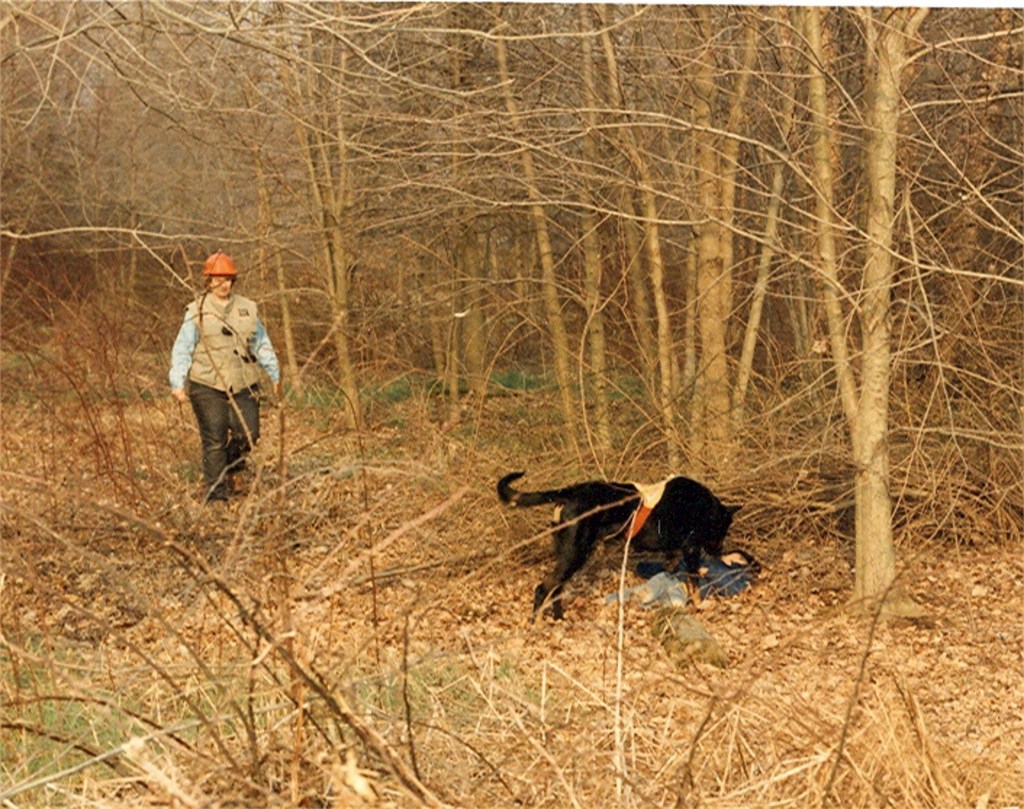
Scout finding the missing child (training)

It is very sad that many trainers still use harsh punishment methods that cause pain. Imagine if an instructor gave you a complex mathematical problem and told you to solve it. The teaching method was to jerk a rope around your neck or shock you every time you got it wrong. Eventually you would either get it right or have a complete mental breakdown from fear and frustration. Whether you got it right or wrong, how would feel about mathematics? How willing would you be to do the next problem even if you were rewarded for finally getting it right? How well would you like your instructor?

Because people are deeply bonded to their dogs, they forget that dogs do not speak our language. They have an amazing ability to watch our body language, couple it with what we say and seem to understand. But in reality, they interpret what we do based on canine language and meaning first, even though they can learn what our body and spoken language means.

Dogs love to do things with us. They want to understand us, but we can make it difficult for them. When training a dog, you must teach and show them what you want. You cannot tell them. You must not expect your dog to “get it” immediately. Puppies can be especially frustrating because they may seem to learn quickly but in a short time, sometimes hours, they act as though they forgot the lesson entirely. In reality they have not completely forgotten, they have not had enough time to practice the lesson to have it go from short term memory to long term memory. Life for a puppy and a young dog is fascinating, everything is new, exciting and distracting. It can be hard for them to focus on a lesson. This is no different than it is for young children. Like us, the more a dog learns the easier it is for them to learn new lessons. This is because the young dog has not had enough life experience to relate the new lesson to something he already knows, but the older dog has learned how to learn. They can relate it to other lessons. This is no different than the way people learn. 

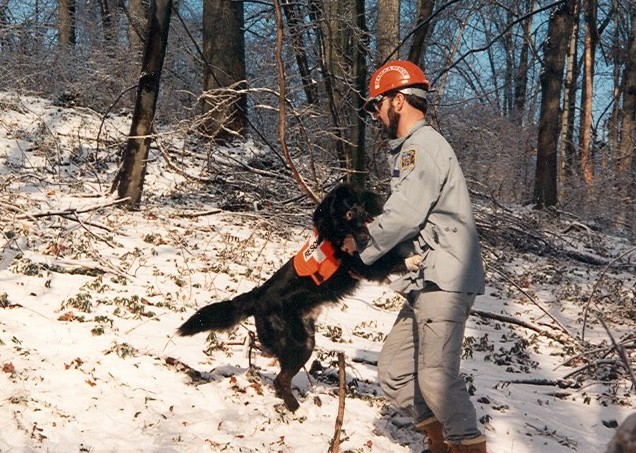
Jib alerting that he found someone

If you show your dog what you want and then reward him for doing it, he will be willing and happy to work with you. Most dogs try very hard to do what we want them to do. Each dog has a different personality and drive to obey. Some breeds are not as willing to obey (being biddable) as others. It is important to recognize this. Before you train your dog, be sure to understand the dynamics of his breed. If he is a mixed breed a DNA test will help you understand the genetics that are dictating his behavior.

For example, if there were a flock of sheep in a pasture and a rabbit hidden in the brush. A Border Collie would focus on the sheep even though he knows the rabbit is there. On the other hand, if a Beagle were taken to the field, he would ignore the sheep and focus on the rabbit. This is a simple example of how genetics affects behavior.

Clicker training is a way to communicate to your dog what you want him to do. The click only says “Yes, that is correct.” What is very important to remember about obedience is this: Once a dog is trained and knows what the command is, the ability to obey depends entirely on how well the dog can exercise self-control, not on how well he knows the exercise. Even people have difficulty with self-control. Think about it.

In conclusion keep these points in mind.

  1. Understand the genetics that drive your dog.
  2. Teach and show your dog what you want.
  3. Do not use harsh methods.
  4. Give your dog time to learn what you want.
  5. Obedience depends on self-control–no one is 100%.
  6. Self-control comes with practice.
  7. Puppies need more time to relate to the lessons.
  8. Reliable obedience depends on positive motivation, not fear.

What to know before bringing home your first pet

by guest Blogger Brandon Butler

After falling in love at your local animal shelter, you’re thinking about adopting your first pet. Whether it has four legs or two, fur or feathers, a pet is a great addition to any home — but it’s not a decision to take lightly. Pet ownership is a big responsibility, so it’s important to prepare!

image via unsplash

How Do I Know If a Pet Is Right for Me?

Instead of paying attention to how a pet looks, think about how its needs fit into your lifestyle.

Small Mammals

Small pets such as hamsters and guinea pigs are a great choice for people with limited space. Since many small pets tend to get stressed if they live alone, it’s usually best to adopt small mammals in pairs. Keep in mind, however, that not all small mammals like to be handled — luckily, they’re very entertaining to watch!

Birds

Birds are beautiful, bright, and exotic. They’re also high maintenance.  Birds need a lot of interaction and some species live 20 to 30 years or more, making a pet bird a major commitment! Birds aren’t the best choice for first-time pet owners, but if you’re set on a feathered companion, consider a budgie or even backyard chickens.

Cats

Cats have a reputation as low-maintenance pets, but don’t be fooled: Cats like to exercise, play, and even go outdoors with a leash or catio! If you want a companion but can’t keep up with the exercise needs of a dog, a cat may be the right choice for you.

Dogs

Dogs are the most popular pet: 38 percent of all households in the US own a dog. However, dog ownership can be difficult for people with full-time jobs. If you do have the time and energy to devote to a dog, you’ll never have a more loyal companion!

What Does a Pet Cost? Do I Need Pet Insurance?

Between adoption fees, vaccinations, and spay or neuter, the first year of pet ownership is expensive. However, the costs don’t stop there. Cats cost $92.98 a month on average, while dogs run $139.80 monthly. Pet insurance defrays costs in veterinary emergencies, but most policies don’t cover routine care. For that reason, every pet owner should have a pet fund.

You should also factor the costs of pet sitting into your budget. A trusted sitter is a great resource when traveling, but the costs can be hard to swallow if you don’t budget for it. Research local pet sitters and learn their costs to estimate what you’ll pay for pet care.

What Type of Veterinary Care Does My New Pet Need?

New pet owners should schedule a vet appointment within a week of adoption. Your pet’s first vet visit is an opportunity to meet your vet, get vaccines, and make sure your pet is healthy. If your pet isn’t spayed or neutered and microchipped, schedule those services too. Spaying and neutering not only prevent unwanted puppies and kittens, but it’s also good for your pet’s health.

How Can I Protect My Home from Pet Damage?

Some first-time pet owners wonder if they should declaw their cat or keep their dog outdoors, but there are more humane ways to protect your home from damage.

  • Provide cats with some appropriate scratching surfaces such as cat trees, scratching posts, and cardboard scratches.
  • Clean furniture regularly to prevent fur and odor build-up. If you don’t want to tackle this job yourself, outsource to a professional upholstery cleaner who will typically charge  $150 to $200 for this service.
  • Groom pets regularly. A shedding brush is a dog owner’s best friend!
  • Keep cleaning supplies handy. Even well-trained pets have occasional house accidents. Keep pet stain remover on hand and always blot, don’t rub, when cleaning urine out of furniture and carpets.

These tips will help you be the best pet parent you can be, but there’s one more thing you can do to be a responsible pet owner: Adopt, don’t shop! Adopting a pet isn’t just cheaper than buying, it also saves lives, reduces pet overpopulation, and improves your local community. The Humane Society of Tampa Bay saves 87% of the more than 10,000 animals it intakes every year. By choosing to adopt love, you can help save even more!

NOTE: An excellent article, thank you Brandon. Before getting a dog, cat or bird, it is a good idea to locate a competent dog trainer and/or cat and bird behavior consultant in the event that you need help. You can find one at iaabc.org It is also important to select the veterinary hospital in your area and establish yourself with them. Various clinics handle a variety of pets from dogs, cats, birds and exotics.

Is it time to say “Goodbye” to your pet?

This is a tough topic for many people to deal with. It is charged with emotions that often cloud our ability to decide what to do. With veterinarian medicine as advanced as it is, we can keep our pets alive much longer than we could years ago, but to what end?

IMG_0507

There are a few things that you need to consider when trying to decide if it is time to euthanize your pet or not.

  1. Is your pet in pain? This is not always easy to determine since animals in general do not show pain until it is severe. The signs may be subtle and come on gradually as age and illnesses increase. Your veterinarian can help you determine what illnesses your pet may have, and how it impacts their life, but that will be a generalization because every animal is different. Some tolerate pain much better than others. In the case of birds they may not show signs of illness until they are very sick.


It helps if you pay attention to your pet’s behavior. Do you notice that your pet does not move as well as before? Does your pet refuse to jump onto things whereas before they would fly through the air? Do they walk slower, run less, and are less active in general? Has their appetite and water consumption changed? Has their breathing changed, for example they pant more or sooner than before? Do they seem to hold part of their body still when they breathe? These are all signs of pain and/or illness.

  1. Does your pet have difficulty keeping food or water down? Has their overall appetite decreased? Is your pet eating a normal amount of food but losing or gaining weight?
  1. If your veterinarian suggests treatments you have to determine what the outcome will be for your pet. Will the treatment cause pain and suffering? How long can you expect your pet to live after the treatments? Will your pet be hindered for the rest of its life because of the treatments? If the treatments are painful or cause suffering such as a loss of appetite or physical difficulties is it worth it for your pet? You also must consider the cost of treatments and weigh if they will help your pet or just prolong his suffering.
  1. Has your pet’s toilet habits changed? A change in toilet habits can be a sign of dementia in a pet. A pet who cannot get up to go out or cannot control his bowels and bladder and will eliminate and lay in it, is a good sign that it is time to let them go. A pet that has abnormal eliminations, such as blood in either stools or urine, weak or strong urine, or who has trouble eliminating is a candidate for a serious evaluation. Has your pet’s stools and urine decreased or increased yet they eat and drink the same amount? This of course depends on what your veterinarian determines the problem is.
  1. Does your pet act as if they are lost? Some will cry out as if they are calling, “Where are you?” Some pets may stand with their face in a corner and not be able to find their way out. Some will stare at walls or have a blank look in their eyes. Some may not recognize their family members. Some may wander around the house or yard and not seem to know where they are. A pet may not respond to commands that they always responded to before, even though they hear you. These can be signs of mental degeneration.
  1. After all the considerations are evaluated, you must determine if the quality of your pet’s life is going to be better, tolerable or only prolong suffering.
  1. The most difficult part of the decision and perhaps the most important is determining how much of your own emotions are playing a part in your decision making. Are you trying to keep your pet alive because you cannot tolerate the thought of losing your pet? Are you keeping your pet’s well being as the main decision maker? This is the most difficult part of the decision-making process, separating your emotions and feelings from what is good for your pet. The biggest fear that many people have is that they are not making the right decision. Or they feel that they are letting their pet down by giving up, that something more can be done. This is why it is important to go over the points in this article. We all hope for a miracle, but they rarely happen. Letting a pet go is sometimes the kindest thing we can do for them. It helps if you have a friend who is not emotionally involved that you can go over the situation with, to help you see what is going on.

I know that sometimes it is hard for me to make that decision. For this reason I talk to my veterinarian before my pets age and let them know what I want to do in the event that my pets get a terminal illness or injury. Even though we cannot foresee the future, it helps my veterinarian guide me when the time comes. This helped me with a 17 year old cat that I dearly loved. When I took her to the veterinarian, she was having a cardiac arrest. I could not say the words to tell my veterinarian to put her down. But he knew my wishes ahead of time. It made it just a bit easier for me to not have to say it.

Deciding to let a pet go is never easy. No one wants the grief and loss that it brings. We all know that it may take a long time to heal and get over the pain. I know because I have had to go through it many times. For me, I take comfort in knowing that my pets will be in Heaven waiting for me, that they are going to a better place. This is one reason why I wrote my book God’s Creatures which you can see on my website, www.sbulanda.com

AnimalsFrontCover72

We all must deal with the loss of a beloved pet in our own way. As our pets come into our lives and then leave us, one after the other, the loss- and decision-making process never gets easier. But as good stewards of our pets, it is up to us to do what is right for them, even if it means our loss. Doing this is the deepest and most unselfish kind of love.

Once we lose our pets we have to deal with the grief. Everyone handles it in their own way. In the case of a pet who has suffered a prolonged illness, some people grieve for awhile before the pet dies. In those cases it can make the actual loss less painful. If there was no time before losing a pet to grieve, the full emotion of grief will come on right away. The pain can at times feel like physical pain. There are many ways to handle your feelings. Talking to someone who understands how much a pet can mean to you is one way. Attending a grief counseling group can also help. Some people find that volunteering at a shelter or rescue group helps.

If you know that your pet is getting on in years, getting a new pet before the pet passes can help ease the loss for some people. Providing of course that the new pet isn’t going to stress or harm the resident pet. Some people find that writing about the lost pet helps or designing a photo album dedicated to the pet. These are just a few ideas about how to go through the grief. The main thing to keep in mind is that time does heal. We may never fully get over the loss of a pet, one particular pet means more to us than any others, but we can enjoy the fond memories and love that the pet has given us.

Canine genetics and behavior

Dog owners and breeders know that certain behaviors dominate certain breeds. For example herding dogs have the instinct to herd. Hounds have the instinct to hunt with their nose, some breeds are better guard dogs and the list goes on. This is what makes breed traits what they are. But it has been somewhat of a mystery about how this happens genetically because not all dogs in a particular breed have the same strength of the trait for that breed and some lack it entirely.

scout full body

In a new study, James A Serpell of the University of Pennsylvania and colleagues Evan L. MacLean of the University of Arizona, Noah Snyder-Mackler of the University of Washington, and Bridgett M. vonHoldt of Princeton University conducted a study to try to unravel how genetics affect breed trait behavior.

Their study concluded that genes do play a large part in breed behavior, and those gene most affect the brain rather than other bodily tissues. However, they stressed that there is a large margin to allow for the differences between individual animals.

What this means to the dog owner, and especially the potential dog owner, is that getting a dog from a reliable, ethical and trusted breeder is critical to your dog’s behavior. The genetic tendencies can and do vary from line to line. It also means that if you adopt a mixed breed or purebred dog, you will have no idea what it’s genetically controlled behavior will be.

This is important to understand because if behavior issues arise, you will have to allow for the possibility that it is genetically influenced. The method that you use to alter any unwanted behavior that is genetically influence will be different than simple training methods. Always consult a certified behavior consultant. You can find one at www.iaabc.org.

Also keep in mind that genetically influenced behavior is not limited to dogs but is a part of the makeup of all living beings. Yes, environment and learning also comes into play.