Breast Cancer in Dogs

Mammary tumors in dogs can manifest itself the same way as it does in humans. According to Karin Sorenmo, a veterinary oncologist at Penn’s School of Veterinary Medicine, Mammary gland carcinomas are the most common in intact dogs. Yet veterinarians have not had a reliable way to determine which dogs are fine with surgical treatment only, which dogs might need chemotherapy or hormonal treatment.

Dr. Sorenmo has developed a new “bio-scoring” system that gives veterinarians a more reliable prognosticating method. The work has been published in the journal Veterinary and Comparative Oncology.

The beauty of this system is that it is easy for veterinarians to use, taking much of the guess work out of evaluating dogs with breast cancer. This method was developed by a team of veterinarians, coauthors were Amy C. Durham, Michael C. Goldschmidt, and Darko Stefanovski of Penn Vet; Veronica Kristiansen of the Norwegian University of Life Sciences; and Laura Pena of Complutense University of Madrid.

beagle pups

Homemade cat food

In an attempt to give cats a healthier lifestyle many cat owners have opted to make their own cat food. A search on the internet will turn up many recipes. But is homemade cat food good for your cat?

1pluskat

A first of its kind study by researchers at the University of California, Davis, have determined that most homemade diets do not provide cats all of their essential nutrients. Not surprising, some recipes may contain ingredients that are potentially toxic to cats.

Even recipes that were written by veterinarians lacked nutrients and/or were deficient in meeting the nutritional needs of cats. For example, some recipes lacked up to 19 essential nutrients.

The study suggests that if you want to make your own cat food that you should consult a board certified veterinarian nutritionist to design a diet that will meet your individual cat’s needs. Keep in mind that age and health issues will change a cat’s nutritional needs.

It is a good idea to check with some online sites that evaluate cat and dog food. http://catfooddb.com/blog/cat-food-advisor

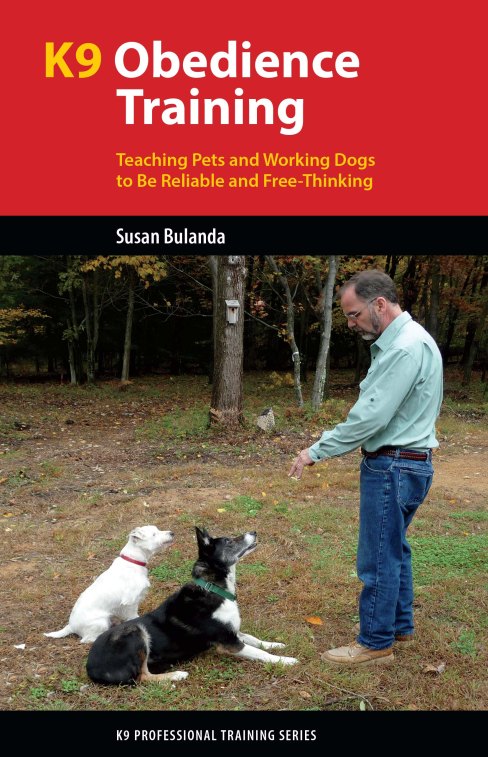
K9 Obedience Training: Teaching Pets and Working Dogs to be Reliable and Free-Thinking by Susan Bulanda

I am very excited to announce that my latest book is now available. If you would like an autographed copy please go to my website and order one, http://www.sbulanda.com.

If you live outside of the USA the postage may cost more than the book, but if you still want a copy please email me at: sbulanda@gmail.com and I will check how much the postage will cost. The book is also available as an Ebook. Below is a summary of what is in the book. As always, if after you read the book you can email me with any questions that you may have.

K9 OBEDIENCE TRAINING COVER PRINT

Obedience is the foundation for any reliable, well-trained dog. Without obedience, working dogs are ineffective in operations and pet dogs can be annoying and possibly a danger to themselves or others.

In K9 Obedience Training, you will learn the techniques that I have developed during my career as a dog trainer and then certified animal behavior consultant. The methods outlined in my book will let your dog be free-thinking as well as obedient. I also cover the latest research about how a dog thinks, what they understand and what they are capable of solving.

What is free-thinking? This is when a dog can apply what he has been taught to situations that he has not encountered before. His training allows him to solve problems and even perform obedient disobedience. An example of obedient disobedience is when a person directs a dog to do something, but the dog knows that it is not safe to do it. For example, if you toss a ball and it drops over a ledge that is unsafe, the dog will not retrieve it even though you have told him to “fetch.” This allows the dog to make decisions. It does not undo the training that the dog has had.

In my book I cover many topics that are part of obedience but not part of the basic obedience exercises. This includes teaching your dog to allow you to groom him, handle his body parts for things such as nail clipping, brushing the coat and teeth.

The book also covers basic manners such as not jumping, bolting in and out of doors and other safety exercises.

What is also very important is the discussion about who should train the dog and the rules that you must follow to successfully train the dog. Everything is explained in detail so that you can understand the purposes behind the rules.

I also cover food and how it affects your dog’s behavior. There is so much more in this book including some fun tricks to teach your dog. And for fun, at the end of the book is a photo gallery of some of the animals that have shared my life.

Here is a list of major topics. Many of these have sub-topics as well.

Part I Training Your Dog to Think Freely

  1. What is a Free-Thinking Dog?
  2. A Positive Training Philosophy

Part II Pre-Training Basics for The Free-Thinking Dog Trainer

  1. Talking to Your Dog
  2. Questions to Ask Before You Start Training
  3. House Training and Crate Training
  4. Handling Your Dog’s Body for Grooming and Hygiene

Part III

  1. The Equipment
  2. Setting Up for Success
  3. Basic Obedience Training
  4. Advanced Obedience for Safe Work, Sport and Play
  5. Exercises for Common Behavioral Challenges
  6. Tricks

Hemorrhagic gastroenteritis (HGE) in dogs revisited

Because so many people have clicked on my HGE article, I thought it might be a good idea to write another article about it.

As I stated in my earlier article, my Parsons Russell Terrier had it twice. Once when he was young which is when it usually manifests itself in dogs, and another time when he was about 8 years old.

What is critical to understand about this illness, is that it can kill a dog in 24 hours and must be treated by a veterinarian. While it is typically found in small dogs such as Toy Poodles and Miniature Schnauzers, it can attack any dog.

The Signs:

  1. Sudden vomiting
  2. Bloody diarrhea
  3. Low blood volume
  4. Severe concentrated blood
  5. Hypovolemic Shock
  6. Very lethargic

If your dog gets HGE, you will see three critical signs, sudden vomiting, bloody diarrhea and your dog will be very lethargic. Very small dogs cannot survive long with these symptoms.

The exact cause is unknown. However, it is suspected that an abnormal reaction to bacteria or a reaction to toxins from the bacteria is one cause of HGE. Another possibility is an extreme reaction to food. This is one reason why it is very important to only feed your dog the highest quality of food. I strongly suggest checking one of the many sites that analyze pet food. Most pet food is not safe or good for your dog. Nothing that you buy at a discount store or supermarket is the high quality that you want.

Another cause is Colostridium perfringens which is another type of bacteria. This has been found in quite a few dogs who have gotten HGE.

The articles that I have researched mention that HGE appears to be similar to canine parvovirus (CPV), making it critical that you take your dog to a veterinarian at the first signs of vomiting and diarrhea. If your dog is up to date on his shots it is not likely to be CPV. There are other illnesses that have similar signs as well which is why an immediate veterinary visit is necessary.

When my dog got it again, he started the symptoms while we were asleep. When my husband woke up early, Riley was very sick. Not knowing when the symptoms started, I immediately took him to the emergency veterinary clinic. When my regular veterinary clinic opened, we transferred Riley to them to spend the rest of the day. By evening he was recovered.

Your veterinarian will start intravenous fluids immediately and will treat the other symptoms which can last up to two days. If you take your dog to the veterinarian right away your dog will most likely survive. Only about 10% of dogs with HGE do not survive. As I experienced with my dog, and statistics show that up to 15% of dogs that get it may get it again.

In my practice as a behavior consultant, I have seen where people whose dog has gotten sick, wait a day or so to see if the dog gets better before they take their dog to the veterinarian. If your dog has HGE, this is a death sentence. Take your dog to the veterinarian at the first signs of any illness.

I hope this article has helped you understand this very dangerous illness. Riley is going on 13 and is very healthy.

DSCN1778 Rolly 2

Riley as a puppy with Mom in the background


Homemade cat food

In the first of its kind study by researchers at the University of California, Davis they found that the recipes found on-line, even those written by veterinarians, did not meet the nutritional needs of cats. Some lacked proper instructions, did not clearly identify the ingredients and some even contained products that are toxic to cats.


cat under sheets kitten

According to the article, about a decade ago toxic substances were found in cat food that was imported from China. This caused cat owners to stop using commercial cat food and switch to homemade food. (The same happened with dog food.)

The researchers point out that it is OK to feed your cat commercial foods. I suggest that you google sites that evaluate all brands of cat (or dog) foods to see which the best is. Avoid any food that is not made in the US and especially food that comes from China and possibly other countries. Since there has been contamination of produce for humans that originates from Mexico, I would be concerned if any pet food ingredients originate in Mexico as well. This is just my opinion. Keep in mind that the smaller the pet, the less toxic substances it will take to make the pet sick or cause death.

A new strain of distemper is a risk for dogs

“The new strain of canine distemper virus was identified by UNH pathologists in collaboration with colleagues at Cornell University, University of Georgia, Northeast Wildlife Disease Cooperative, N.H. Fish and Game, and Vermont Fish and Game. Over a one-year period, pathologists diagnosed canine distemper virus infection in eight largely carnivorous mammals in southeastern New Hampshire and north central Vermont. The animals included three fishers, two gray foxes, one skunk, one raccoon, and one mink.”

jib

While this new strain may not be a risk for the rest of the country, it would be diligent to alert your veterinarian to the new distemper strain. According to the report a raccoon in Rhode Island was found to have it in 2004. This indicates that it is not new and has potentially spread. There is always the chance in time, it will spread across the country.


A possible cause of endocrine disorders in older cats

Dr. Miaomiao Wang, of the California Environmental Protection Agency has published a study of older cats in Northern California that suggested a link between higher levels of per and polyfluoroalkyl (PFAS) substances in cats with hyperthyroidism.

IMG_0507

PFAS is found in chemicals that are used in industrial processes and consumer products. These chemicals are found in many household products such protective coatings for carpets, furniture and apparel, paper coatings, and  insecticide formulations, just to name a few products.

More research is needed but it is a good idea to keep this in mind. If there are health issues from this chemical in cats, we have to suspect dogs as well. Dogs are more likely to chew these products than cats are.

Sleepovers for shelter dogs

A team of researchers from the Canine Science Collaboratory have determined that if volunteers take shelter dogs home for a few days, it reduces their stress level. The benefits of this mini-vacation last for a while after they are brought back to the shelter.

img039

The researchers found that the sleepovers provided a break for the dogs from the stress of the shelter. The team found that dogs in a shelter cannot get the sleep that they need because of how busy and noisy it is in a typical shelter.

The team is also looking into other programs that allow dogs to leave shelters, such as field trips and long-term foster care. With a grant from Maddie’s Fund, they are enrolling 100 animal shelters across the country in a study to understand how foster care impacts the dogs in shelters.

Non-invasive test for liver disease in dogs

Veterinarians at the University’s Royal (Dick) School of Veterinary Studies have worked with medical doctors to develop a blood test that can detect early liver disease in dogs. They based their studies on the molecule miR-122 which is found in humans who have liver disease.

DSCN1485

Their studies showed that dogs have the same molecule as humans and the team has developed a blood test that can be used on dogs.

Professor Richard Mellanby, who is the Head of Companion Animal Sciences at The Hospital for Small Animals at the University of Edinburgh has stated that the blood test provides a safe, non-invasive way to detect liver damage in dogs. Research in dogs has helped human illnesses many times, it is exciting that human tests can now help dogs.

What is important is that the blood test is safer to use than biopsies which can cause complications and can be expensive. I hope they continue the research to develop a blood test for cats and other pets.

Cruelty to dogs

Reese and Cassie Richard, an MSU master’s of public policy student who now works for the Oregon Commission for the Blind studied who is most likely to abuse a dog and why. They found that crimes that involve animal neglect are often committed by the owner. This would involve general care such as not giving a dog food or water.

p1010978

Kicking or stabbing a dog are often committed by a family member or an intimate partner.  It is usually the dog’s owners who engage in dog fighting, often driven by money. Poisoning a dog is typically done by neighbors. Their study also found that people who are more likely to shoot another person is more likely to shoot a dog.

They stressed that one way to reduce animal cruelty is to address the human aspect of the problem. Better animal cruelty policies, education and inter-agency communication would benefit both humans and dogs.