Guard or watch geese, replacing dogs?

         Is it possible that watch geese are replacing dogs as the preferred alarm system?  In some parts of the world the answer is yes. In some areas of rural China, police are successfully using geese to protect their police station instead of dogs.

male goose guarding

         A guard goose is not a new phenomenon. Farmers have long known that their farm geese would repel an intruder, some only making noise while others attack. The geese know who lives (or in the case of the police stations) who works there and will not bother familiar people. However, people that the geese do not know had better beware. Even swans have been known to aggressively attack people who ventured into their territory.

         If a goose is sitting on a nest hatching eggs, the male will stay in the area keeping watch. They do not stay close to the nest in the event a predator comes into the area, this way the predator will be lured away from the female and the nest.

         Often if the pair nests in a suburban area or near a road, the male will refuse to get out of the way of vehicles or people. Attempting to shoo the goose away is rarely successful and can be risky. Some males will hiss, bite or attack with their wings spread.

         One of the features that make geese excellent guards is fantastic eyesight, better than dogs, (and people) both far and near. They also have sensitive hearing and can detect movement far better than humans. Geese are bold and are even being used to protect free range chicken flocks.

         Sometimes it is possible to lure a guard dog away from what he is guarding, but it is almost impossible to distract or lure away a goose. So, Fido beware, you may be replaced with a goose! Could we say that the poor guard dog is being goosed?

http://news.nationalgeographic.com/news/2013/07/130725-geese-guard-police-china/

A New discovery about humpback whales and their intelligence

The fact that humpback whales create bubble nets to trap krill has been known for a while. However, researchers at the Marine Mammal Research Program (MMRP) at UH Hawaii Institute of Marine Biology (HIMB) and Alaska Whale Foundation (AWF) made a new and exciting discovery.

Humpback whales not only create bubble nets, but they blow bubbles in patterns that have internal rings. They determine the number of rings, the size and depth of the net and even the spacing between the bubbles. By doing this they can catch up to seven times more krill in one feeding, thus allowing them to eat more and expend less energy.

photo from pixabay

This discovery has included humpback whales in a small group of animals that can both make and use their own tools for hunting.  

Sue’s Note: Consider the cognitive process each whale must use to determine how to create their bubble net. Each new discovery such as this one makes a person wonder how many other animals are not given credit for their intelligence and abilities.

Journal Reference:

A. Szabo, L. Bejder, H. Warick, M. van Aswegen, A. S. Friedlaender, J. Goldbogen, J. M. Kendall-Bar, E. M. Leunissen, M. Angot and W. T. Gough. Solitary humpback whales manufacture bubble-nets as tools to increase prey intakeRoyal Society Open Science, 2024 DOI: 10.1098/rsos.240328


Cite This Page:

University of Hawaii at Manoa. “Humpbacks are among animals who manufacture and wield tools.” ScienceDaily. ScienceDaily, 20 August 2024. <www.sciencedaily.com/releases/2024/08/240820221814.htm>.

God’s Creatures a Biblical View of Animals

As a Christian and an animal behavior consultant, I am always asked questions about God’s relationship with animals. Does God care about them? Does God talk to them? Can they be evil? Surprisingly, the Bible gives us the answers to these and many more questions. Often people are surprised to learn that animals have been part of Biblical miracles. God’s Creatures covers fifteen different topics that involve animals, all questions that I have been asked.

Everything in this book is backed by Scripture and has been reviewed by two theologians for accuracy. When I wrote this book, I compared critical English words with the original Greek to ensure that the translation was accurate to the English meaning. And of course, the most often and the most controversial question that I have been asked is, do animals go to Heaven? This question is covered in the book. Even if you are not a Christian, I am sure you will find the references to scientific studies and the topics in God’s Creatures interesting. God’s Creatures is a great Bible study for churches or Sunday school. It is written so that children can read and understand what it says. Offering a Bible study about animals is a good way to reach out to the members of your community. You can order the book from my website, www.sbulanda.com, on Amazon or from the publisher, www.Caladach.com.

Bees are smart!

Researchers at the Queen Mary University of London successfully taught bumble bees to solve a two-step problem. What was interesting was that when they allowed untrained bees to watch the trained bees, the untrained bees learned how to solve the problem by watching the trained bees.

This experiment demonstrated that bees could learn by social learning which scientists previously thought was only something that humans could do.

Free Google image

In this case the bees shared experience and taught other bees to solve a two-step problem that was beyond their individual ability.  

Sue’s Note: In many cases other animals learn from each other. However, this was previously unknown for bees.

Journal Reference:

  1. Alice D. Bridges, Amanda Royka, Tara Wilson, Charlotte Lockwood, Jasmin Richter, Mikko Juusola, Lars Chittka. Bumblebees socially learn behaviour too complex to innovate aloneNature, 2024; DOI: 10.1038/s41586-024-07126-4

Cite This Page:

Queen Mary University of London. “Bee-2-Bee influencing: Bees master complex tasks through social interaction.” ScienceDaily. ScienceDaily, 6 March 2024. <www.sciencedaily.com/releases/2024/03/240306150557.htm>.

Starfish Learn without a brain

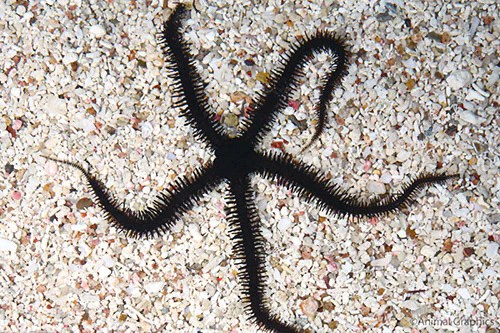
Brittle starfish are very shy, small starfish. They have no brain but they do have nerve cords that are in each of their five arms which join a nerve ring near their mouth. The lead researcher, Julia Notar, at the Sönke Johnsen’s lab at Duke University discovered that these starfish can learn using classical conditioning. Each nerve cord acts independently but work together as a committee according to Notar.

The starfish were kept in an aquarium and fed their favorite food, shrimp, only when the lights were dimmed. The starfish learned to come out of hiding as soon as the lights were dimmed, even before they were fed when there was no evidence of food in the aquarium.

Free google image Brittle starfish

Notar pointed out, “They’re potentially able to expect and avoid predators or anticipate food because they’re learning about their environment.”

Sue’s Note: The fact that they can learn about their environment means that they have the ability to remember as well as learn, if you cannot remember, you cannot learn. There has been evidence for many years that people who receive organ transplants sometimes show evidence of the behavior, likes and dislikes of the donor as a result of cell memory in the organ. This seems to be connected to learning without a brain.  (https://pubmed.ncbi.nlm.nih.gov/31739081/)

Journal Reference:

  1. Julia C. Notar, Madeline C. Go, Sönke Johnsen. Learning without a brain: classical conditioning in the ophiuroid Ophiocoma echinataBehavioral Ecology and Sociobiology, 2023; 77 (11) DOI: 10.1007/s00265-023-03402-x

Cite This Page:

Duke University. “Brittle stars can learn just fine — even without a brain.” ScienceDaily. ScienceDaily, 29 November 2023. <www.sciencedaily.com/releases/2023/11/231129174214.htm>.

Rats have the ability to imagine

Researchers at the Howard Hughes Medical Institute Janelia Research Campus have discovered that rats have the ability to imagine. There findings indicate that just like people, animals can think about places and objects that they cannot see.

To determine this, they used a Brain Machine Interface and saw that rats showed specific neural activity patterns in the hippocampus area of their brain which is related to spatial memory. The researchers have determined that this function is necessary for an animal to remember past events and imagining future scenarios even if the animal is at a different location.  

Sue’ Note: While this research is important because it gives scientific proof that animals can remember the past and think of the future, it is obvious to me because if animals cannot do this, those in the wild would not survive. Our domestic animals would not be able to learn the things we teach them. An example that many of us have observed is the dog who knows what time a person is coming home and waits at the door, long before he could hear, smell or see the person coming. This is evident when the person is late and the dog at waiting at the normal time and illustrates the dog’s ability to anticipate the future. A famous example of this is Hachikō, an Akita who lived in Japan from 1923 to 1935 and went every day to the train station to wait for his master after his master died.

Journal Reference:

  1. Chongxi Lai, Shinsuke Tanaka, Timothy D. Harris, Albert K. Lee. Volitional activation of remote place representations with a hippocampal brain–machine interfaceScience, 2023; 382 (6670): 566 DOI: 10.1126/science.adh5206

Cite This Page:

Howard Hughes Medical Institute. “Rats have an imagination, new research suggests.” ScienceDaily. ScienceDaily, 2 November 2023. <www.sciencedaily.com/releases/2023/11/231102162557.htm>.

Scent and Memory

According to a study done by researchers at the UCI Center for the Neurobiology of Learning & Memory at the University of California, adults who were ages 60 – 85 who were suffering from some sort of mental impairment partook of the scent therapy test.  

The subjects of the study were given a diffuser and seven cartridges, each with a natural oil. The subjects used the diffuser each night when going to bed. The diffuser ran for two hours. The results showed that the group with the full-strength diffusers improved their cognitive skills by 226%.

Imagining showed that there was better integrity in the brain pathway called the left uncinate fasciculus, which connects the medial temporal lobe to the decision-making prefrontal cortex.

In addition to having better memory, the subjects said that they slept better, more soundly.

Sue’s Comments:  We know that essential oils have numerous benefits when smelled. For example, lavender is known for its calming properties. What this study brings to mind for me is the possible connection with scent work in dogs. There are many accounts of animals, dogs, elephants, and other animals, who recognize a person that they have not seen in years. Scent is one of the keys for this, indicating that there may be a connection similar to the findings in this study. Previous studies have shown that in dogs, scent is linked to sight, they are not separate in the dog’s brain. I would love to see further studies that involve this finding and how it might apply to animals. Would it be possible to help elderly animals in the same way. Dogs and other animals suffer from dementia the same as people.

Journal Reference:

  1. Cynthia C. Woo, Blake Miranda, Mithra Sathishkumar, Farideh Dehkordi-Vakil, Michael A. Yassa, Michael Leon. Overnight olfactory enrichment using an odorant diffuser improves memory and modifies the uncinate fasciculus in older adultsFrontiers in Neuroscience, 2023; 17 DOI: 10.3389/fnins.2023.1200448

Cite This Page:

University of California – Irvine. “Sweet smell of success: Simple fragrance method produces major memory boost.” ScienceDaily. ScienceDaily, 1 August 2023. <www.sciencedaily.com/releases/2023/08/230801131700.htm>.

Those amazing whiskers

A study at Northwestern University has shown that rats determine the direction of the wind with their whiskers. Since many other animals such as dogs, foxes, coyotes and cats also have whiskers that are similar to those of a rat, is it possible that they also use their whiskers to determine the direction of the wind?

All wild animals also have to be aware of the direction of the wind to either find food or avoid being detected by predators. Therefore, the ability to determine the direction of the wind or even a slight breeze is a life and death skill. It seems reasonable that that they would use their whiskers as well as the movement of their fur to detect the direction of air movement.

Sue’s Note: As a person who has trained many working dogs, I have seen dogs learn how to use the direction of the wind to find scent. It is quite an amazing thing to watch, and another example of how intelligent animals are.

Journal References:

Mitra J. Z. Hartmann et al. Whiskers aid anemotaxis in ratsScience Advances, August 2016 DOI: 10.1126/sciadv.1600716

Yan S. W. Yu, Matthew M. Graff, Mitra J. Z. Hartmann. Mechanical responses of rat vibrissae to airflowThe Journal of Experimental Biology, 2016; 219 (7): 937 DOI: 10.1242/jeb.126896


Cite This Page:

Northwestern University. (2016, August 24). Whiskers help animals sense the direction of the wind: First-ever study shows that rats use whiskers to locate source of airflow. ScienceDaily. http://www.sciencedaily.com/releases/2016/08/160824160248.htm

Most wild dingos are pure, not hybrids

In a University of New South Wales study led by Dr. Kylie Cairns, a conservation biologist, they discovered that most of the dingo population is pure and not crossed with dogs as previously thought. This is important because dingo’s and dingo crosses were considered “wild dogs” an invasive species, and were allowed to be hunted.

What is interesting is that Dingoes are genetically distinct from domestic dogs but they can interbreed.

Dingo – Google free image

According to Dr. Cairns, the old method of determining the purity of dingoes only used a small number of genetic markers (only 23) which overestimated the amount of dog ancestry, being inaccurate by over 30 percent. The new test allows them to look at 195,000 points across the genome.

Dr. Cairns feels that the dingo should be protected and not subjected to lethal control measures. If the dingo is removed the area can become overrun by kangaroos, foxes and feral cats which threaten other native animals and alter the vegetation. While dingoes are a threat to some livestock, they do play a crucial role in maintaining the ecosystem and biodiversity.

Sue’s note: This sounds very similar to past issues that we have had in the United States with wolves. This study also shows that because two species can interbreed, it does not mean that they are descended one from another. Many species that are not related are interbred, such as in the feline, equine and canine families.

  1. Kylie M. Cairns, Mathew S. Crowther, Heidi G. Parker, Elaine A. Ostrander, Mike Letnic. Genome‐wide variant analyses reveal new patterns of admixture and population structure in Australian dingoesMolecular Ecology, 2023; DOI: 10.1111/mec.16998

University of New South Wales. “New DNA testing technology shows majority of wild dingoes are pure, not hybrids.” ScienceDaily. ScienceDaily, 30 May 2023. <www.sciencedaily.com/releases/2023/05/230530125449.htm>.

Indoor/outdoor cats and wildlife

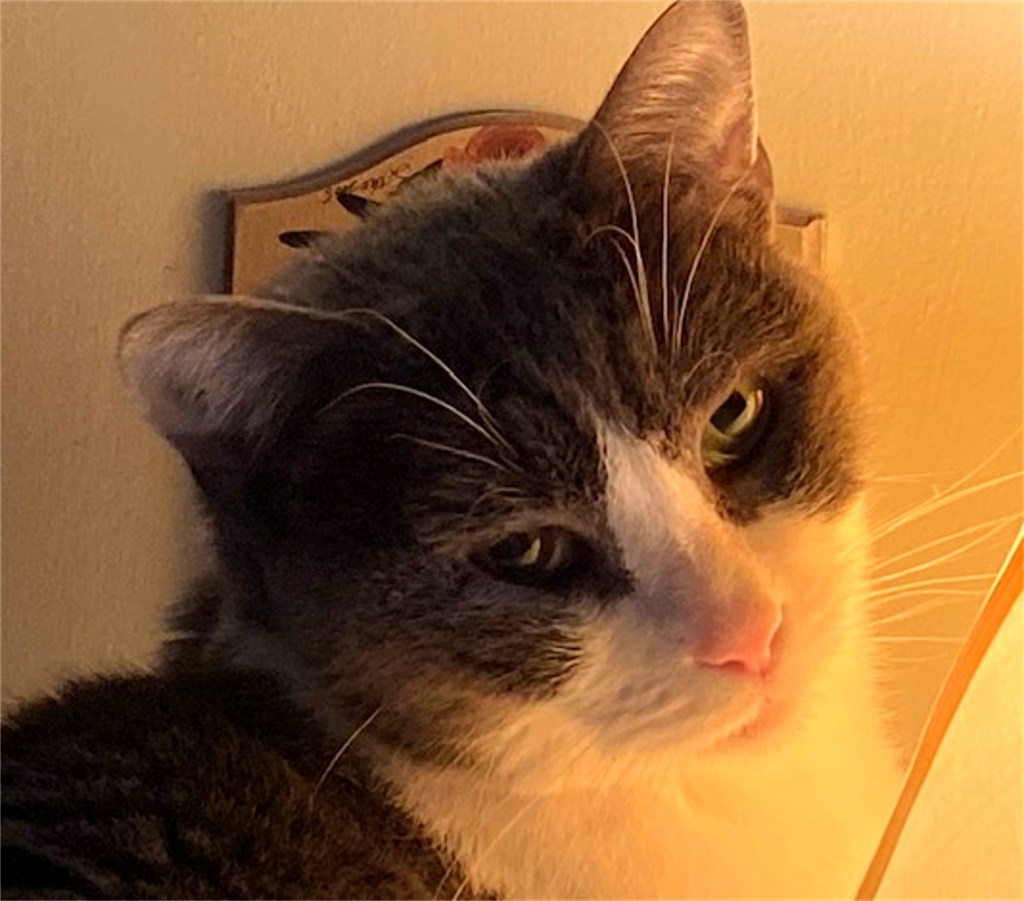
Researchers studied 935 indoor/outdoor cats to determine how their hunting habits impacted local wildlife. They found that the cat’s hunting range was small, but the impact on the wildlife in their range was two to ten time more than wild predators. This is because their hunting was limited to their own property or into neighbor’s yards. It was also interesting to note that cats do more damage to wildlife in areas that have been disturbed by housing developments.

Sue’s Note: Many people think that cats need to roam outside. This is not true. Cats can be 100% happy and satisfied as a house cat if their needs are met. Different breeds of cats have different activity levels. Since many domestic short and long-haired cats have questionable parentage, their needs may have to be determined by how the cat acts. If a cat owner feels that their cat needs to go outside, there are products on the market that can confine a cat safely outdoors or in a cat designed window box. Keep in mind a cat that is allowed to roam outside freely becomes prey for other animals such as foxes, coyotes, wolves and free roaming dogs as well as other cats. If the cat is small enough, it may be snatched by birds of prey as well. Cats that eat or come in contact with wildlife are exposed to various parasites as well. For the benefit of local wildlife and for your cat’s well-being, it is better to keep them indoors or have safe access to the outdoors. Google outdoor cat enclosures to see the many products available.