Dogs suffer from hearing loss

A recent study at the University of Illinois at Urbana-Champaign confirmed that dogs can suffer from hearing loss the same as humans. What is important about this study is it shows that dogs can suffer from hearing loss due to loud noises. This is especially important for people who use dogs to hunt, and dogs that must work around loud noise such as airports and other types law enforcement jobs.

DSCN1407

If dogs must work around loud noise, you can get them Mutt Muffs, earmuffs designed for dogs. This will help prevent deafness due to loud noise.

The other causes of hearing loss are disease, inflammation, aging and hereditary (congenital). The breeds and individuals that have the Merle, piebald, and harlequin coloration are more likely to have congenital deafness. For example about 30% of Dalmatians are born with partial to total deafness. There are about 30 breeds of dogs that suffer from deafness due to genetics.

If you plan to get a puppy from one of the breeds that have a high instance of deafness, you can get a Baer test done to determine if the puppy has a hearing problem.

Better breeding can help reduce congenital deafness in dogs. If breeders avoid breeding dogs with the Merle gene, or who are deaf already, in time the instance of deafness will be reduced. In breeds where the Merle gene is not predominant, avoid breeding dogs that have the Merle coloration.

If you notice a change in your dog’s response to your commands, have him checked by your veterinarian to determine that your dog does not have an infection which is causing a hearing loss.

Most importantly, be aware if your aging dog starts to lose hearing, you will have to watch and be careful that your dog does not become injured because he cannot hear the approach of cars and other dangers. With care, a deaf dog or a hearing-impaired dog can life a long, healthy and safe life.

Scruffy Paws Nutrition for Cats

I was contacted by Scruffy Paws Nutrition for Cats to see if I would test and review their products. After reading about the company and their philosophy as well as their attention to specific health issues for cats, I was impressed, and as my regular readers know, I am very critical.

Peachpuff_Brush_Stroke_Photography_Logo-5_360x

I was offered the opportunity to try a product of my choice on my cat. Unfortunately my cat would not eat the vitamins, she is very fussy. You don’t want to know how many brands of wet food I tried to find one that she would eat along with her Annamaet dry food.

Here is a quote from their site: “Each supplement has been specifically designed for a certain ailment. So instead of a ‘Jack of all trades’ vitamin supplement that may not do any real good… Ours laser target feline conditions to make a real difference. Using our wealth of knowledge and experience, we formulate a nutritional top up that will supercharge the organ health, and help the body heal itself.”

However, I feel that I should share these products with my followers and hopefully you will check them on the Scruffy Paws web site.

Cat scratch fever in humans

In a recent study at North Carolina State University a human adolescent who suffered from a rapid onset of schizophrenia symptoms was found to be suffering from a Bartonella henselae infection which is associated with cat scratch fever.

1baby-pluskat

This person was treated by an array of doctors for 18 months before one doctor noticed lesions that are associated with Bartonella. When tested it was found that Bartonella was the cause of the schizophrenia like symptoms.

This is an important discovery since now researchers are going to investigate other psychiatric disorders and their connection to viruses and bacteria infections. This could lead to cures for afflictions such as Alzheimer’s disease and other medically complicated issues.

Cats that have Bartonella can infect a person from scratching, biting or even licking a person. Strictly indoor cats are less likely to have it. The symptoms typically are flu-like which include:

  1. a bump or blister at the bite or scratch site.
  2. swollen lymph nodes near the bite or scratch site.
  3. fatigue
  4. headaches
  5. a low-grade fever, which is above 98.6°F (37°C) but below 100.4°F (37°C)
  6. body aches.

Australian Dingo is its own species

Dr. Bradley Smith from Central Queensland University has conducted a study that proves that the Dingo is not a variety of domestic dog, feral dog, or other wild canids such as wolves, but is its own species.

download

image from free google stock

Dr. Smith also says that “Further evidence in support of dingoes being considered a ‘wild type’ capable of surviving in the absence of human intervention and under natural selection is demonstrated by the consistent return of dog-dingo hybrids to a dingo-like canid throughout the Australian mainland and on several islands.”

He goes on to say that there is scant evidence that any canid species are interchangeable with Dingoes even though most canids can successfully interbreed with them.

This is an interesting statement to consider. How does it apply to other hybrids such as dog/wolf mixes and donkey/horse mixes? It also brings into question the theory that dogs are descended from wolves. Is it possible that the ancestor of the dog was a canid sub-species and not a wolf just as the dingo is its own species?

Raw meat diet for dogs–risky for dogs and humans

A study by the Swedish University of Agricultural Sciences and the National Veterinary Institute to determine the safety of raw meat diets for dogs found that the raw meat diets contained harmful levels of bacteria for both dogs and humans.

DSCN1648

All 60 samples tested contained Enterobacteriaceae species, which are indicators of fecal contamination as well as other contaminants.

The samples were from 10 different manufacturers, and originated in Sweden, Norway, Finland, Germany and England. The raw meat was from at least one source including: uncooked meat; edible bones and/or organs from cattle, chicken, lamb, turkeys, pigs, ducks, reindeer or salmon. Some of the products also included vegetables, vegetable fiber and minerals. For humans the various bacteria found in the raw diets are especially dangerous to infants, the elderly and those whose immune systems are weakened.

Similar studies have been done in the US with the same results and conclusions. Another report states, “Proponents of raw diets for dogs point out that dogs are biologically similar to carnivorous wolves, and claim that the benefits of this type of diet include healthier skin, coat and teeth, more energy and smaller stools, according to PetMD. However, there is very little scientific evidence to support these claims. In fact, most of the scientific research on raw meat diets for dogs shows that they could do more harm than good.”

I have said this before to my clients, dogs and other members of the wild canine family can only eat what is available to them. That does not mean that it is the best diet for them. For example, if wolves and foxes could cook their meat, or if they had other types of food available, they would eat a different diet. If a “natural” diet was that healthy they would live more than the few years that the do. Think about it.

Sperm damage in both humans and dogs due to pollutants in the home

New research by scientists at the University of Nottingham suggests that manmade contaminants found in the home and diet have the same adverse effects on male fertility in both humans and domestic dogs.

DSCN1319

This study was done to explore the cause of the declining human male fertility in recent decades with studies showing a 50% global reduction in sperm quality in the past 80 years. A previous study by the Nottingham experts showed that sperm quality in domestic dogs has also sharply declined.

The researchers found that two chemicals, the plasticizer DEHP which is in most homes, found in carpets, flooring, upholstery, clothes, wires and toys, as well as the chemical polychlorinated biphenyl 153 which is banned but still present, even in food to be at least partly to blame.

No studies have been done to see if these chemicals have the same affect on cats or other domestic household pets. What we can do is keep abreast of the latest research and hope that these chemicals will be altered or banned.

A fantastic book!

Glimpsing Glory: Poems of Living & Dying, Praying & Playing, Belonging and Longing, by Catherine Lawton, Published by Cladach Publishing, www.cladach.com ISBN: 978-1-9450991-5-1, 111 pgs.

Glory-front-cover-lowres

My first reaction after reading this book was “What a Book!” This collection of poems, which is not my regular choice for reading, brought me back to my childhood and other events in my life in a gentle way. I felt as though a loving hand was caressing my cheek, reminding me of things I had long forgotten. Ms. Lawton’s descriptions were vivid and accurate. She captured the world around her in many of her poems. Even her poems about death were gentle, for a lack of any other word. The book reflects God’s love for us and the world he created without being preachy. There are seven sections: Relating, Communing, Trusting, Living, Dying, Praying, and Word-Playing.

Although this is not a children’s book, I feel as though many of the poems would benefit children, exposing them to different aspects of life in a loving way. The book has beautiful illustrations by Breanna Slike. They are colorful yet soft in nature and appear to be done in watercolor. They fit perfectly with the overall tone of the book. Even if you are not a reader of poetry, I heartily recommend this book.

A Dog’s personality can change

According to a study done by William Chopik a professor at Michigan State University a dog’s life changes can influence their personality. His study has confirmed that dogs have moods and personality traits that shape how they react to situations.

The way you treat your dog and the activities that you do with your dog can influence the dog’s personality. He found that the sweet spot for training and shaping a dog’s personality is around six months of age.

DSCN1778 Rolly 2

Chopik plans to continue his study to see how the environment can change a dog’s personality. For example, a dog may behave one way in a shelter and if adopted into a loving home, may react differently. A previous study by Clive Wynne, professor of psychology and head of the Canine Science Collaboratory has demonstrated that letting shelter dogs do a sleepover in foster homes goes a long way to reduce their stress.

Therefore Chopik is on the right track with his planned study about how adopting a dog out of the shelter environment may change the way the dog reacts. However, canine behaviorists know that it can take three to six months for a dog to fully adjust to a new environment.

The bottom line is that this study shows that it is important to give your dog a loving home, train your dog, and properly socialize your dog to give your dog the best possible life.

Is it time to say “Goodbye” to your pet?

This is a tough topic for many people to deal with. It is charged with emotions that often cloud our ability to decide what to do. With veterinarian medicine as advanced as it is, we can keep our pets alive much longer than we could years ago, but to what end?

IMG_0507

There are a few things that you need to consider when trying to decide if it is time to euthanize your pet or not.

  1. Is your pet in pain? This is not always easy to determine since animals in general do not show pain until it is severe. The signs may be subtle and come on gradually as age and illnesses increase. Your veterinarian can help you determine what illnesses your pet may have, and how it impacts their life, but that will be a generalization because every animal is different. Some tolerate pain much better than others. In the case of birds they may not show signs of illness until they are very sick.


It helps if you pay attention to your pet’s behavior. Do you notice that your pet does not move as well as before? Does your pet refuse to jump onto things whereas before they would fly through the air? Do they walk slower, run less, and are less active in general? Has their appetite and water consumption changed? Has their breathing changed, for example they pant more or sooner than before? Do they seem to hold part of their body still when they breathe? These are all signs of pain and/or illness.

  1. Does your pet have difficulty keeping food or water down? Has their overall appetite decreased? Is your pet eating a normal amount of food but losing or gaining weight?
  1. If your veterinarian suggests treatments you have to determine what the outcome will be for your pet. Will the treatment cause pain and suffering? How long can you expect your pet to live after the treatments? Will your pet be hindered for the rest of its life because of the treatments? If the treatments are painful or cause suffering such as a loss of appetite or physical difficulties is it worth it for your pet? You also must consider the cost of treatments and weigh if they will help your pet or just prolong his suffering.
  1. Has your pet’s toilet habits changed? A change in toilet habits can be a sign of dementia in a pet. A pet who cannot get up to go out or cannot control his bowels and bladder and will eliminate and lay in it, is a good sign that it is time to let them go. A pet that has abnormal eliminations, such as blood in either stools or urine, weak or strong urine, or who has trouble eliminating is a candidate for a serious evaluation. Has your pet’s stools and urine decreased or increased yet they eat and drink the same amount? This of course depends on what your veterinarian determines the problem is.
  1. Does your pet act as if they are lost? Some will cry out as if they are calling, “Where are you?” Some pets may stand with their face in a corner and not be able to find their way out. Some will stare at walls or have a blank look in their eyes. Some may not recognize their family members. Some may wander around the house or yard and not seem to know where they are. A pet may not respond to commands that they always responded to before, even though they hear you. These can be signs of mental degeneration.
  1. After all the considerations are evaluated, you must determine if the quality of your pet’s life is going to be better, tolerable or only prolong suffering.
  1. The most difficult part of the decision and perhaps the most important is determining how much of your own emotions are playing a part in your decision making. Are you trying to keep your pet alive because you cannot tolerate the thought of losing your pet? Are you keeping your pet’s well being as the main decision maker? This is the most difficult part of the decision-making process, separating your emotions and feelings from what is good for your pet. The biggest fear that many people have is that they are not making the right decision. Or they feel that they are letting their pet down by giving up, that something more can be done. This is why it is important to go over the points in this article. We all hope for a miracle, but they rarely happen. Letting a pet go is sometimes the kindest thing we can do for them. It helps if you have a friend who is not emotionally involved that you can go over the situation with, to help you see what is going on.

I know that sometimes it is hard for me to make that decision. For this reason I talk to my veterinarian before my pets age and let them know what I want to do in the event that my pets get a terminal illness or injury. Even though we cannot foresee the future, it helps my veterinarian guide me when the time comes. This helped me with a 17 year old cat that I dearly loved. When I took her to the veterinarian, she was having a cardiac arrest. I could not say the words to tell my veterinarian to put her down. But he knew my wishes ahead of time. It made it just a bit easier for me to not have to say it.

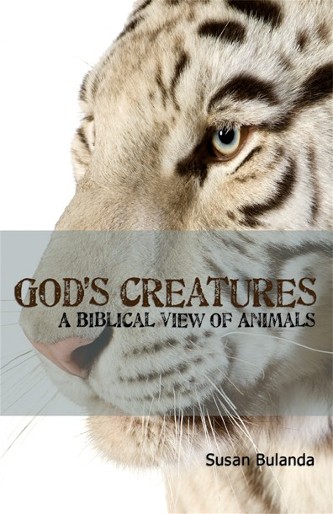
Deciding to let a pet go is never easy. No one wants the grief and loss that it brings. We all know that it may take a long time to heal and get over the pain. I know because I have had to go through it many times. For me, I take comfort in knowing that my pets will be in Heaven waiting for me, that they are going to a better place. This is one reason why I wrote my book God’s Creatures which you can see on my website, www.sbulanda.com
AnimalsFrontCover72

We all must deal with the loss of a beloved pet in our own way. As our pets come into our lives and then leave us, one after the other, the loss- and decision-making process never gets easier. But as good stewards of our pets, it is up to us to do what is right for them, even if it means our loss. Doing this is the deepest and most unselfish kind of love.

Once we lose our pets we have to deal with the grief. Everyone handles it in their own way. In the case of a pet who has suffered a prolonged illness, some people grieve for awhile before the pet dies. In those cases it can make the actual loss less painful. If there was no time before losing a pet to grieve, the full emotion of grief will come on right away. The pain can at times feel like physical pain. There are many ways to handle your feelings. Talking to someone who understands how much a pet can mean to you is one way. Attending a grief counseling group can also help. Some people find that volunteering at a shelter or rescue group helps.

If you know that your pet is getting on in years, getting a new pet before the pet passes can help ease the loss for some people. Providing of course that the new pet isn’t going to stress or harm the resident pet. Some people find that writing about the lost pet helps or designing a photo album dedicated to the pet. These are just a few ideas about how to go through the grief. The main thing to keep in mind is that time does heal. We may never fully get over the loss of a pet, one particular pet means more to us than any others, but we can enjoy the fond memories and love that the pet has given us.

Do bigger brains mean smarter dogs?

According to a study conducted by Daniel Horschler, a UA anthropology doctoral student and member of the UA’s Arizona Canine Cognition Center, dogs with bigger brains can perform certain tasks better than dogs with smaller brains. The researchers found that larger-brained breeds had better short-term memory and self-control than smaller dogs, regardless of the extent of training the dogs had received.

The tests showed that brain size did not determine a dog’s performance on tests of social intelligence such as being able to follow where a person points or with the dog’s inferential and physical reasoning ability.

What the study did not define is what is considered small and what is considered large? What the study also did not seem to take into account is the difference between the way humans relate, handle and treat small vs large dogs. As a canine behavior consultant and dog trainer I have seen a vast difference between the way owners treat and relate to large vs small dogs. For example, you do not see owners carrying their Labrador Retrievers around in backpacks or pushing them in strollers. Often small dogs are not allowed to act like dogs whereas large dogs are allowed to act like a dog should act. It is interesting to consider.