Brain connectivity in animals and people

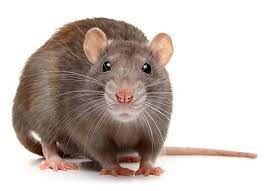
In a first of its kind study, researchers at the American Friends of Tel Aviv University studied the MRIs of 130 mammals of different species to determine if there is a difference between brain size and its ability to transfer information through the neural network. This information was compared with the MRI of 32 human brains. The size of the mammals ranged from tiny bats to large mammals. The report stated that no animal was killed for the study.

Professor Assaf explained that many scientists assumed that human brains were superior due to greater brain connectivity, explaining a human’s greater abilities. However, no difference was found between species. However, there were differences between individual animals of the same species.

Brain connectivity involves the transfer of information from one part of the brain to another. The researchers found that different brains use different strategies to preserve an equal measure of overall connectivity.

“Our study revealed a universal law: Conservation of Brain Connectivity,” Prof. Assaf concludes. “This law denotes that the efficiency of information transfer in the brain’s neural network is equal in all mammals, including humans. We also discovered a compensation mechanism which balances the connectivity in every mammalian brain. This mechanism ensures that high connectivity in a specific area of the brain, possibly manifested through some special talent (e.g. sports or music) is always countered by relatively low connectivity in another part of the brain. In future projects we will investigate how the brain compensates for the enhanced connectivity associated with specific capabilities and learning processes.”

This study was conducted by researchers at Tel Aviv University, led by Prof. Yaniv Assaf of the School of Neurobiology, Biochemistry and Biophysics and the Sagol School of Neuroscience and Prof. Yossi Yovel of the School of Zoology, the Sagol School of Neuroscience, and the Steinhardt Museum of Natural History.

Journal Reference:

  1. Yaniv Assaf, Arieli Bouznach, Omri Zomet, Assaf Marom, Yossi Yovel. Conservation of brain connectivity and wiring across the mammalian classNature Neuroscience, 2020; 23 (7): 805 DOI: 10.1038/s41593-020-0641-7

Cite This Page:

American Friends of Tel Aviv University. “MRI scans of the brains of 130 mammals, including humans, indicate equal connectivity.” ScienceDaily. ScienceDaily, 20 July 2020. <www.sciencedaily.com/releases/2020/07/200720112216.htm>.

A new use for dog and human hair

Researchers at the University of Technology Sydney found that mats made from dog fur collected from groomers and human hair collected from salons were better at cleaning up crude oil spills. Currently non-biodegradable plastic waste is used as well as loose peat moss are used but hair works better is less harmful to the environment. The researchers recommend that peat moss should not be used anymore since it is a limited resource. Peat is not useful on sandy soils such as beaches but polypropylene sorbents are the best substance for sandy environments. For all hard land surfaces mats of hair and fur work the best.

This is a fantastic use of material that would otherwise be discarded.

Journal Reference:

  1. Megan L. Murray, Soeren M. Poulsen, Brad R. Murray. Decontaminating Terrestrial Oil Spills: A Comparative Assessment of Dog Fur, Human Hair, Peat Moss and Polypropylene SorbentsEnvironments, 2020; 7 (7): 52 DOI: 10.3390/environments7070052
  2.  

Cite This Page:

University of Technology Sydney. “Oil spill clean-up gets doggone hairy: First comparison of natural-origin sorbent materials for land-based oil spills.” ScienceDaily. ScienceDaily, 15 July 2020. <www.sciencedaily.com/releases/2020/07/200710100938.htm>.

Early spay and neutering in dogs

A study conducted at the University of California – Davis researched the data of 35 breeds of dogs collected over fifteen years from thousands of dogs to determine if neutering, the age of neutering, the differences in the sex of the dog had any relationship to certain cancers and joint disorders such as hip dysplasia, cranial cruciate ligament tears, elbow dysplasia, lymphoma, cancer of the blood vessel walls, mast cell tumors and bone cancer.

They found that the occurrence of joint disorders was related to body size. Smaller breeds have less issues while the majority of larger breeds did. The surprising exception to this were Great Danes and Irish Wolfhounds which showed no problem regardless of what age they were neutered.

Small dogs had a low rate of cancer regardless of what age they were neutered or not. The exceptions were Boston Terries and Shih Tzu’s who had a significant increase of cancers if neutered.

They also found that the sex of the dog sometimes made a difference in health risks. For example, female Boston Terriers who were neutered at six months had no risk of joint disorders or cancer, yet male Boston Terriers neutered before a year of age had significantly more risks.

Another finding was that neutering or spaying female Golden Retrievers at any age increased the risk of one or more of the cancers from five to fifteen percent.

Sue’s Note: Many working dog people, especially in the herding breeds, claim that neutering a dog before full physical and mental maturity hinders the mental and working ability of the dog.

Journal Reference:

  1. Benjamin L. Hart, Lynette A. Hart, Abigail P. Thigpen, Neil H. Willits. Assisting Decision-Making on Age of Neutering for 35 Breeds of Dogs: Associated Joint Disorders, Cancers, and Urinary IncontinenceFrontiers in Veterinary Science, 2020; 7 DOI: 10.3389/fvets.2020.00388

Cite This Page:

University of California – Davis. “When should you neuter your dog to avoid health risks? Comprehensive study lays out guidelines for 35 dog breeds.” ScienceDaily. ScienceDaily, 15 July 2020. <www.sciencedaily.com/releases/2020/07/200715160008.htm>.

Can animals predict earthquakes?

People often claim that they notice animals acting differently before an earthquake. To study this, with the hope of using animals to predict earthquakes, a group of researchers from the Max Planck Institute of Animal Behavior in Konstanz/Radolfzell and the Cluster of Excellence Centre for the Advanced Study of Collective Behaviour at the University of Konstanz, have investigated whether cows, sheep, and dogs can actually detect early signs of earthquakes.

The researchers put sensors on the animals in an earthquake prone area of Northern Italy and studied their movements over several months. They found that the animals were unusually restless hours before an earthquake. They also noted that the closer the animal was to the epicenter the sooner they showed unusual behavior. In some cases, the animals showed unusual behavior up to 20 hours before the quake.

The researchers found that during the months they studied the animals there were, officially reported, 18,000 earthquakes in the region which included small hardly noticeable quakes to 12 with a strength of 4 or higher on the Richter scale.

The data implies that animals can predict earthquakes and the researchers are considering a global study to help develop an early warning system using a chip located on animals.

Journal Reference:

  1. Martin Wikelski, Uschi Mueller, Paola Scocco, Andrea Catorci, Lev V. Desinov, Mikhail Y. Belyaev, Daniel Keim, Winfried Pohlmeier, Gerhard Fechteler, P. Martin Mai. Potential short‐term earthquake forecasting by farm animal monitoringEthology, 2020; DOI: 10.1111/eth.13078

Cite This Page:

Max-Planck-Gesellschaft. “The sixth sense of animals: An early warning system for earthquakes?.” ScienceDaily. ScienceDaily, 6 July 2020. <www.sciencedaily.com/releases/2020/07/200706101837.htm>.

War Dogs of World War II

I am excited to announce that my latest book is now available. You can order it from my website at http://www.sbulanda.com for $24.98 + $4.75 shipping

Please check with me if you want to order the book from out of the U.S.A. the shipping rate above only applies to orders within the U.S.A.

I am very impressed with the publisher’s quality of printing this book. Casemate was a great team to work with.

Summary

Crawling through steaming jungles in the Pacific or hunkering down in frozen trenches, the loyal dogs of World War II stayed by their soldier’s side, no matter what. They saved lives, delivered messages when all forms of communication failed, they brought supplies when no one else could get through. These are the stories of the brave, loyal dogs who served. All armies had them, the Germans, Japanese, British, Russia and the United States. Civil Defense dogs in England searched for the victims of bombings, Coast Guard dogs watched the shores for enemies, some dogs guarded storehouses and equipment, some were taken prisoner and lived in POW camps, some were mascots, but all were loved. Some dogs gave all and some returned home. The War Dogs of WWII is their story. 

Pain sensitivity in dogs

In an interesting study conducted by researchers at North Carolina State University showed that pain sensitivity is related to the breed and a dog’s temperament.  

The researchers studied both male and female dogs from ten breeds. They picked the breeds based on how veterinarians rated the breed for pain sensitivity or tolerance. The breeds were: Chihuahua, German Shepherd, Maltese, Siberian Husky, Border Collie, Boston Terrier, Jack Russell Terrier, Golden Retriever, Pitbull, and Labrador Retriever. A total of 149 dogs were tested.

Surprisingly the breeds did not respond as the veterinarians expected. They also found that temperament played a role in the dog’s tolerance for pain. The important fact that was learned from the study is that pain tolerance has a biological basis.

Sue’s Note: When anything such as pain tolerance is common in a breed, it means that selective breeding may, in part, correct the sensitivity. This is important because it makes the dog’s life more tolerable. Also, temperament is another genetic aspect that can be improved with selective breeding. It is also important to realize how pain sensitivity can make a dog dislike training. This is why harsh training methods are never a good idea.

Cat’s can detect odors as well as a dog

Until now, no one has seriously studied a cat’s ability to detect odors. A collection of researchers found that when a cat takes in air, their nose divides it into two flow streams. One flow stream is cleansed and humidified which goes to the lungs and the other is sent quickly to the olfactory region. What the researchers found is that a cat’s nose is a highly efficient dual-purposed gas chromatograph. This makes the cat’s ability to detect odors equal with that of a dog.

The odor detection part of the cat’s nose acts very quickly so that the cat can determine what is food, foe or friend. The researchers feel that the discovery about how a cat can detect odors may inspire improvements to the gas chromatographs that are used today.

Journal Reference:

  1. Zhenxing Wu, Jianbo Jiang, Fritz W. Lischka, Scott J. McGrane, Yael Porat-Mesenco, Kai Zhao. Domestic cat nose functions as a highly efficient coiled parallel gas chromatographPLOS Computational Biology, 2023; 19 (6): e1011119 DOI: 10.1371/journal.pcbi.1011119

Cite This Page:

Ohio State University. “How the cat nose knows what it’s smelling: Study reveals function behind complex nasal structure.” ScienceDaily. ScienceDaily, 29 June 2023. <www.sciencedaily.com/releases/2023/06/230629193238.htm>.

Slow walking in older dogs could mean they have dementia

Because we cannot talk to dogs or give them the same type of cognitive tests that we give people, the latest research that shows how slow a dog walks could mean that he is suffering from dementia is a step in the right direction.

“Walking speed in people is strongly associated with cognitive decline,” says Natasha Olby, Dr. Kady M. Gjessing and Rahna M. Davidson Distinguished Chair in Gerontology at NC State and corresponding author of the study. “We hypothesized that the same might be true in dogs.”

The researchers tested 46 adult dogs (control group) and 49 senior dogs to determine if the speed that they walked corresponded with dementia. They had the dog’s owners fill out a questionnaire and in addition, the researchers did cognitive testing as well. They considered all factors that could influence the test results such as the size of the dog, possible joint pain, and the difference if the dog walked on leash or off leash.

They came to the conclusion that a senior dogs walking speed does correspond with dementia. 

Sue’s note: Since we cannot accurately give dogs mental tests, any other way to help owners recognize that their dog may be in mental decline is good. However, if you see signs of mental decline in your dog, do not assume that it is due to old age. Have your dog examined by your veterinarian since physical issues may be the culprit, not dementia or old age.

The work appears in Frontiers in Veterinary Science and was supported by the Kady M. Gjessing and Rahna M. Davidson Distinguished Chair in Gerontology. Alejandra Mondino, postdoctoral researcher at NC State, is lead author of the study.


Journal Reference:

  1. Alejandra Mondino, Michael Khan, Beth Case, Gilad Fefer, Wojciech K. Panek, Margaret E. Gruen, Natasha J. Olby. Winning the race with aging: age-related changes in gait speed and its association with cognitive performance in dogsFrontiers in Veterinary Science, 2023; 10 DOI: 10.3389/fvets.2023.1150590

Cite This Page:

North Carolina State University. (2023, June 27). Slow walking could be sign of dementia in older dogs. ScienceDaily. Retrieved June 29, 2023 from http://www.sciencedaily.com/releases/2023/06/230627123033.htm

Cats know when you are talking to them

It is commonly understood that dogs and other animals recognize when their owners talk to them but do cats? A study conducted by Charlotte de Mouzon and colleagues from Université Paris Nanterre (Nanterre, France) found that cats do recognize when their owners are talking to them. The research showed that the cats did not react to other adults who spoke to them. The study showed that a one-to-one relationship with their owners is important for the cat to develop a strong bond with their owners.

Sue’s Note: For a long time, people did not feel that cats developed a bond with their owners, that cats were independent. However, studies of feral cat colonies show that cats have a very close-knit social relationship with members of their colony. This bond is often transferred to their human family. Just like other animals, cats have different personalities and can be independent or very attached to their people.

Journal Reference:

  1. Charlotte de Mouzon, Marine Gonthier, Gérard Leboucher. Discrimination of cat-directed speech from human-directed speech in a population of indoor companion cats (Felis catus)Animal Cognition, 2022; DOI: 10.1007/s10071-022-01674-w

Cite This Page:

Springer. “Cats distinguish between speech directed at them and humans, study finds.” ScienceDaily. ScienceDaily, 25 October 2022. <www.sciencedaily.com/releases/2022/10/221025090458.htm>.

A worthy product to promote health

I do not often post articles about products but I feel this is important. So please forgive the departure from purely animal topics. Years ago, I purchased an Ecoquest air purifier. I ran it 24/7 for about 15 years before it quit, so no complaints on that part. When I told a few people about the difference it made in my house, I was surprised to learn that most of the people I talked to had no idea what this type of air purifier was.

It is not an air filter, this product does so much more. It kills germs, bacteria and odors in the house. It takes care of dust, dust mites, mold, mildew, and pollen, just to name a few things. No one has ever walked into my house and smelled what I had cooked, or that I had dogs, cats and birds. My husband and I rarely catch colds or other airborne illnesses and the house smells springtime fresh all of the time. Since I suffered for years with allergies and now asthma (I am even allergic to my cat) I find that this air purifier lessens my symptoms and often eliminates them. I feel that this product will also help animals that have airborne allergies and help to keep birds healthy.

You can google the air purifier but I highly recommend that you contact Don Coon, who can help you select the right model and save you quite a bit of money from the on-line prices. His contact information is: adcoon99@gmail.com or phone in the U.S. 406-360-0956. I do not get any credit for recommending him but offer this because it is a great product and he is a great guy.