Breeding Dogs Part 8

Understanding the breeding process will help you identify the quality of the puppy or dog that you wish to purchase. The following is the last (eighth) part in a series of eight articles about breeding dogs. Although it applies to a dog, it also applies to cats. People do not realize that there are cat mills which are like puppy mills. Note that these articles are based on my years of experience, my opinion and that I do not intend to refer to any individual. Please read the entire eight articles to glean a full understanding of breeding.

Part Eight

The Stud

As the owner of a male dog that you wish to stud, you have responsibilities as well. As stated in Part One, only the best bitches and males should be bred. The only reason to breed is to better the breed.

The male should be evaluated by an ethical breeder to determine that he is the quality to breed. This should also be reflected by wins in either the conformation show ring or as a working dog in working competitions.

The male dog must have all the medical testing that the bitch has, to include all genetic issues that the breed may have. A temperament test is also necessary.

As the owner of the stud, you may be required to board the bitch for breeding. Often when two dogs are kept for breeding, they both will cry, howl and bark day and night.

Do you know how to handle the problem bitch who does not want to be bred or the male who has not been bred before and needs help?

Are you qualified to judge a five-generation pedigree to determine if the bitch is a good match with your stud dog?

If the owner of the bitch is not experienced, are you qualified to advise the owner about whelping, raising puppies and selling them?

Do you know at what point in the bitch’s season is the correct time to breed them and how often?

What kind of guarantee will you give to the owner of the bitch? If the breeding doesn’t take, will you provide your stud in six months for a re-breeding?

Are you prepared, if the owner of the bitch cannot cope with the litter, to take the litter and be responsible for caring for and selling the puppies? It has happened where the owner of the litter dumps the entire litter on the owner of the stud.
In conclusion for both male and female dog owners. Keep in mind that there are only so many people willing to own a dog. The shelters are loaded with dogs and cats that people have given up for many reasons. Often because they got tired of caring for the pet, or an elderly family member passed away, and no one wants the pet. Some dogs and cats are put up for adoption because the owners could not deal with the level of energy or could or would not train the pet to be a well-behaved companion. Every breeder or stud dog owner who produces a puppy or kitten, potentially condemns one to death. Therefore, make sure that you have a good reason for breeding. I am not saying that you should not breed, we need different breeds to perform the many jobs that they do for us but be sure that the puppies you produce are the best and worth it.

Breeding Dogs Part Seven

Understanding the breeding process will help you identify the quality of the puppy or dog that you wish to purchase. The following is the seventh part in a series of eight articles about breeding dogs. Although it applies to a dog, it also applies to cats. People do not realize that there are cat mills which are like puppy mills. Note that these articles are based on my years of experience, my opinion and that I do not intend to refer to any individual. Please read the entire eight articles to glean a full understanding of breeding.

Part Seven

Now that your puppies are ready to sell, are priced according to their quality you are ready to advertise your puppies. If you are lucky and have worked with an ethical breeder, they may be able to refer potential buyers to you. Keep in mind that you are the breeder, the expert in the eyes of your potential clients. This means that as an ethical breeder you must give some sort of guarantee with your puppies. You are the go-to person if your puppy buyers have questions about grooming, training, feeding, housebreaking, and whatever comes up throughout the puppy’s life. Do you have all the paperwork for the puppies in order? This means that you registered the litter at the time of birth so that you have the papers to give with your puppies.

Are you going to have a puppy buyers’ contract that requires that non-breeding quality puppies must be spayed or neutered? How will you enforce this? Will you have nonbreeding stock neutered or spayed before they are sold? Are you willing to take a puppy back at any time in the puppy’s life if the owner cannot keep it? This should be part of the puppy buyer’s contract that you offer.

Breeding Dogs Part 6

Understanding the breeding process will help you identify the quality of the puppy or dog that you wish to purchase. The following is the sixth part in a series of eight articles about breeding dogs. Although it applies to a dog, it also applies to cats. People do not realize that there are cat mills which are similar to puppy mills. Note that these articles are based on my years of experience, my opinion and that I do not intend to refer to any individual. Please read the entire eight articles to glean a full understanding of breeding.

Part Six

Many people who opt to breed their bitch do not fully grasp the amount of care that a litter of puppies requires. Once the litter is more than two weeks old, the real work starts. First, the litter must be kept in a place in your home that is easy to access and to clean. It is usually a whelping box and then a confined area in the home.

Typically, puppies will dump their food and water. They also eliminate in their area which needs to be cleaned and disinfected continually. If you do not clean the area quickly, the puppies will walk, roll or lay in their messes. If that happens then you will have to clean the puppies as well as their area. If their area is not disinfected the area and possibly your house will start to have an unpleasant odor and be unhealthy for the puppies. Even if you have an exercise pen outside to put the puppies for an hour or so, that area must be cleaned as well.

The breeder must be home for the puppies most of the day. Young, weaned puppies must be fed four times a day.

By the time the puppies are six weeks old they will need a veterinarian visit to check for worms and get their first shots. Remember, this cost will be times the number of puppies in the litter.

When the puppies are eight weeks old it is time to bring the litter to the breeder that is your mentor for evaluation. You need to do this so that you can price your puppies fairly. Not all puppies in a litter are show quality or working quality. A male puppy may only have one testicle descended; another puppy may not have the correct structure or have an improper bite. Another may have a bad topline or is cow hocked, and the rest may not be bad but are not outstanding either. If you are lucky, one puppy in the litter may be show quality.

Breeding dogs, fourth installment

Understanding the breeding process will help you identify the quality of the puppy or dog that you wish to purchase.The following is the fourth part in a series of eight articles about breeding dogs. Although it applies to a dog, it also applies to cats. People do not realize that there are cat mills which are similar to puppy mills. Note that these articles are based on my years of experience, my opinion and that I do not intend to refer to any individual. Please read the entire eight articles to glean a full understanding of breeding.

Part Four

If after careful thought you decide to breed your bitch, the process has just begun. First, if you purchased your dog from an ethical breeder, you should go back to your breeder to find out if your bitch is breeding quality. This will involve studying her pedigree or family tree. It is a good idea to consult with a few breeders. Find out what your dog’s good points and faults are.

You want to find out what inherited problems are associated with your breed. Next you want to consult with your veterinarian to arrange for any tests that are available to evaluate your dog. This could mean having your dog X-rayed for hip dysplasia and then registered with the Orthopedic Foundation for Animals (OFA). If your breed has a tendency for eye problems, you will need to have a canine ophthalmologist examine your dog and then register your dog with the Canine Eye Registration Foundation. You may also want your dog temperament tested by the American Temperament Test Society, Inc. These are just three examples of the type of tests that are required for ethical breeding. 

Your veterinarian should also check your dog for worms including heartworms (if your dog has not been on a monthly preventative), and any other disease that may cause problems with breeding or the puppies.

If a number of breeders have determined that your bitch is worthy to breed, you want to further prove your bitch by entering and winning a few conformation shows or working competitions even if it is only an obedience competition.

Next on the recommendation of the breeders that you have consulted, you want to seek out a decent stud dog. The stud dog should have had all the tests necessary for the breed. If possible, you want to match the lines of the stud dog so that they are compatible with the lines of your bitch. The stud dog should have been proven in several ways, such as having sired quality litters before, won dog shows or working trials. The stud dog should have at least the same qualifications as your bitch, ideally more. 

When your bitch comes in season let the owner of the stud dog know. There will be a stud fee and if necessary, a boarding fee while your bitch stays with the breeder of the stud dog. It is important that you have written contracts between you and the owner of the stud that outline what guarantees you are entitled to for the stud fee. In some cases, artificial insemination may be required. If this method is used, the litter is usually small.

Stud fees vary from a cash payment and/or first pick of the litter. If your breed is not known for having more than one or two puppies in a litter, this could mean you will only have one or no puppies to sell yourself.

Be prepared to make several trips to the stud dog for the breeding. It does not happen with one breeding.

Breeding Dogs Part Two – Registries

The following is the second part in a series of eight articles about breeding dogs. Although it applies to a dog, it also applies to cats. People do not realize that there are cat mills which are similar to puppy mills. Note that these articles are based on my years of experience, my opinion and that I do not intend to refer to any individual. Please read the entire eight articles to glean a full understanding of breeding.

Part Two

Understanding registries is important because who a dog is registered with will give you a clue as to its legitimacy. There are a few types of registries.

  1. Nationally recognized registries. These are established organizations that register purebred dogs. In the United States it would be the American Kennel Club and the United Kennel Club. In some cases, there are breed registries that are legitimate. The way to determine if a registry is recognized is if other countries or registries accept a dog registered with the organization.
  • Non-recognized registries are those that anyone can establish. In the United States there are registries that cater to puppy mill breeders so that the AKC cannot shut down puppy mill operations.
  • Breed registries are those that are recognized but are designed to register certain types of working dogs. An example would be some of the working stock dog registries.
  • Anything goes registry are those that will register any type of animal for any reason.

Most people who own a pet dog feel that their dog is worth more if it is registered. They only understand that the dog has “papers.” They do not understand the value or uselessness of the papers. The non-recognized registries have used this lack of understanding to legitimize dogs by giving them “papers” that are not recognized by any national or international recognized registry.  

It is important to note that no registry can guarantee the quality of a dog or puppy. They can only guarantee that as reported to them the records have been accurately kept. If the breeder owns both the sire and dam, they can list any dog as the sire and dam of a litter. For example, I had a client who made an appointment for training and told me that he had a Rottweiler. When I questioned him, he assured me that he had AKC papers. When his breeder found out that he was coming to me for training, he admitted that the dog was a Rottweiler/German Shepherd cross, the result of an accidental breeding. Yet the dog had recognized registration papers because the breeder owned both the male and female. The real ethics depends on the honesty of the breeder.

Ethical breeders will only register their dogs with recognized registries.

Breeding dogs (and cats)

The following is the first part in a series of eight articles about breeding dogs. Although it applies to dogs, it also applies to cats. People do not realize that there are cat mills which are similar to puppy mills. Note that these articles are based on my years of experience, my opinion and that I do not intend to refer to any individual. Please read the entire eight articles to glean a full understanding of breeding.

Dempsey

Part One: The Bitch

First it must be said that only the best bitches and males should be bred. The only reason to breed is to better the breed.

Often in my career I have had clients tell me that they wanted to breed their pet dog. In most cases, they have no idea what is involved. It is much more than simply introducing a male and female.

Here are some of the reasons why they feel they want to breed their dog.

  1. To make a lot of money. Often people will pay a substantial amount of money for a puppy. They feel that if they breed their bitch, they will earn eight to ten times that money.
  • It will be good for the children to watch. Whelping puppies is pretty gory and most children cannot handle what is involved. In some cases, it can traumatize a child and if the child is a girl, make her afraid to have children of her own.

If you still want a child to see this, it is better to find a breeder who will let your child get up in the middle of the night to watch the birthing of a litter.

  • We love our dog so much we want another like him/her.  The chances of reproducing your dog are slim to nothing. Genetics is not an exact science and if breeders could control how a dog turns out there would be many more champions and exceptional dogs.
  • Everyone who meets my dog wants a puppy like him/her.  As soon as the litter is born most people find that all of those friends who said they wanted a puppy have excuses as to why they cannot get one now. Breeders who have dogs that are breeding quality have waiting lists for a reason. A home bred or backyard bred dog has no special qualities to warrant the cost.
  • We really love puppies. Raising a litter of puppies is a lot of work and if done right, is very costly.

English Bulldog one of the unhealthiest breeds in the world

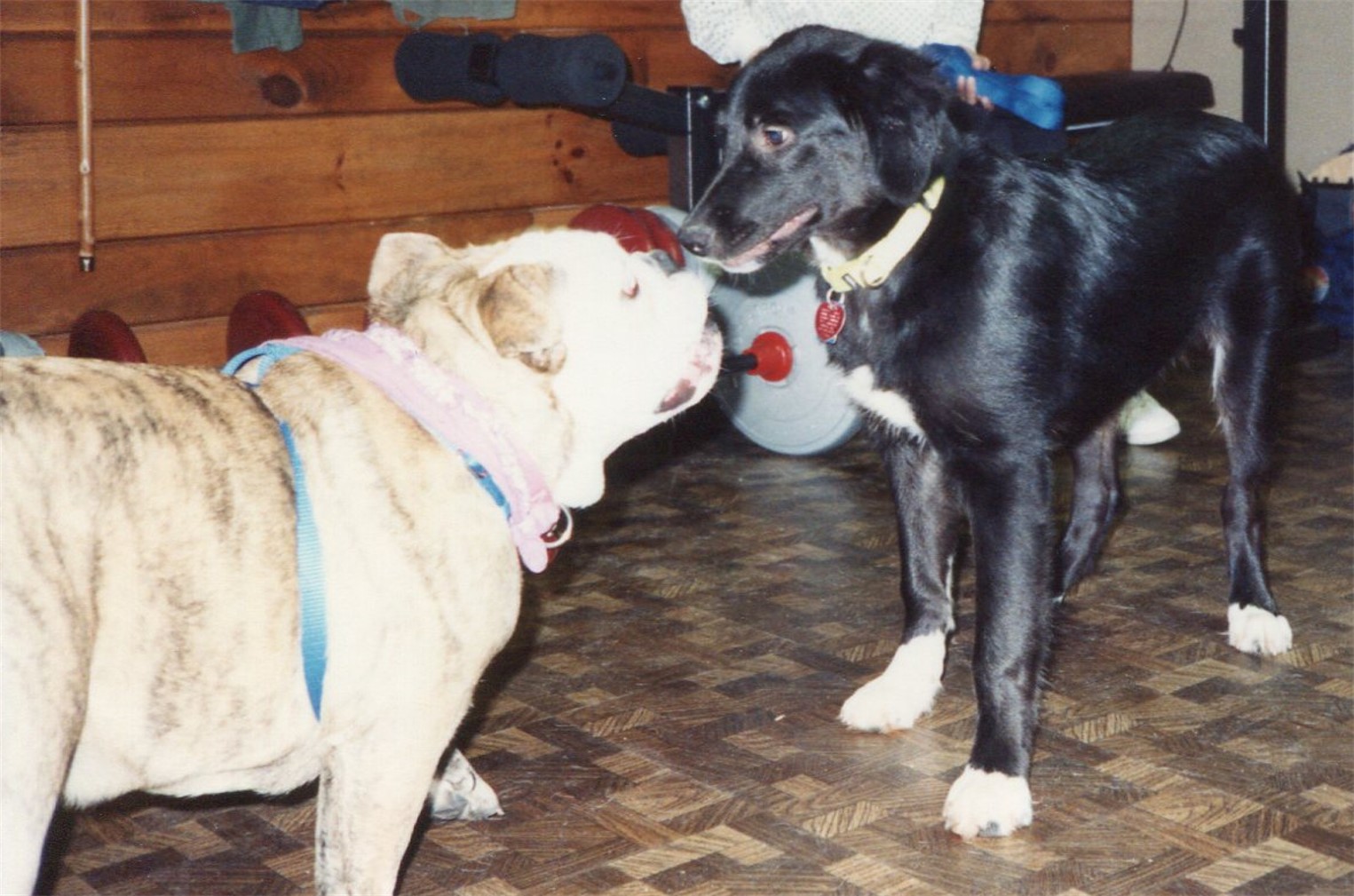
There is little hope that breeders can create a healthier English Bulldog from the existing gene pool. Years of breeding for specific physical traits has caused the English Bulldog to become one of the unhealthiest breeds in the world.

img115

One of the reasons for the health issues in this breed is that people in general are more concerned about the dog’s appearance rather than its health. Researchers have used DNA to study the breed and found that there is not enough genetic diversity within the breed to make the needed improvements. When this happens outcrossing the breed to introduce genetic diversity is often the answer.

To this end, many Swiss breeders have out-crossed the English Bulldog with the Olde English Bulldogge, which is an American breed, to improve the English Bulldog’s health. Unfortunately, many English Bulldog breeders do not approve of this and feel that the resulting out-cross is not a true English Bulldog.

The English Bulldog as a breed started around 1835 with about 68 individuals. Since that time the breed lost popularity a few times which further limited the gene pool. In recent years the surge in the breed’s popularity has further caused genetic problems in the breed.

It seems that the only hope for the English Bulldog is to out-cross them as the breeders in Switzerland have done. It would not take many generations to breed the results of the out-cross to resemble the original bulldog.

Anyone who is considering owning an English Bulldog should research the health issues and life-span of this breed before purchasing one. The health issues can result in costly veterinarian bills. It also goes without saying that a puppy should only be purchased from a reputable breeder to help minimize the potential for health issues. For a free copy of my brochure about how to select the right dog and breeder, email me at sbulanda@gmail.com with brochure in the subject line.