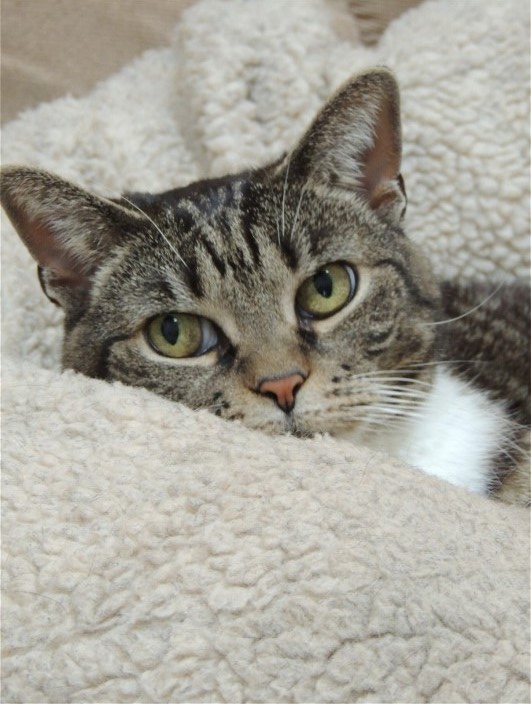
Can humans identify the emotions of all air-breathing animals?

A study by researchers at Vrije Universiteit Brussel and Ruhr-Universität Bochum, in collaboration with colleagues from Alberta, Canada, and Vienna, Austria, say yes!

Humans are capable of identifying the emotions of all air-breathing beings via the sounds that they make.

frame011

The research team headed by Dr Piera Filippi, currently at the University of Aix-Marseille and the Max Planck Institute for Psycholinguistics in the Netherlands, included, among others, three academics from Bochum: philosophy scholar Prof. Dr. Albert Newen, biopsychologist Prof. Dr. Dr. h. c. Onur Güntürkün and assistant professor Dr Sebastian Ocklenburg.

To test their theory, they used 75 people whose native language was English, German or Mandarin. The participants listened to audio recordings of nine different species of land-living vertebrates to include, mammals, amphibians and reptiles, and birds.

The participants were able to identify both high and low levels of arousal in all species. This suggests that there is a universal ability to communicate emotions. If humans can identify the emotions of other animals, it stands to reason that this ability is not unique to humans and that all animals have the ability.

Of course, pet owners have seen this to be true with their pets. They always seem to know how we feel and we know how they feel.

Indoor dogs and cats have a higher rate of certain diseases

Keeping a dog mostly indoors and cats exclusively indoors typically benefits the pet by reducing their exposure to communicable diseases that can be caught from other animals and insects. Yet researchers have found that dogs and cats kept indoors suffer from a higher rate of diabetes, kidney disease and hypothyroidism compared with pets that are kept outdoors.

DSCN1407

The researchers tested 58 varieties of dog and cat food as well as 60 urine samples from dogs and cats and found certain parabens, which are a preservative, in the food and urine samples. They discovered that the highest level of parabens were methyl paraben and the metabolite called 4-hydroxybenzoic acid (4-HB). Parabens are used as preservatives both in human and pet food as well as cosmetics. The use of them is regulated by the FDA.

The researchers found that there were higher levels in dry dog food and less in wet food. Cat food had the highest levels. The researchers also determined that dogs are exposed to parabens through non-food sources as well as food, whereas a cat’s exposure was only from food.

This is the first study to consider the affects of paraben on diseases in dogs and cats. More research is needed to further examine the initial findings.

Female cats react differently to unrelated distressed kittens than male cats

Wiebke Konerding the lead researcher at the Hannover Medical School and the University of Veterinary Medicine Hannover, Germany studied the reaction of male vs female cats to distress calls of unrelated kittens.

1pluskat

Interestingly, the more distressed the kittens were, the more the female cats reacted, even if they had not raised kittens themselves. The researchers found that there was no difference between the response of male or female cats to low arousal calls from kittens. But there was a difference to high arousal calls. Only female cats reacted differently.

The study implies that the ability of adult cats to react differently to emotional cues from kittens is ingrained and not due to experience. The kittens used in the experiment were not related to either the male or female cats.

Further research is needed to determine if adult cats react differently to their own kittens then they do to unrelated kittens.

http://www.sciencedaily.com/releases/2016/08/160812073702.htm

Heartworms in dogs and cats

Some people feel it is safe to stop their pets (dog and cat) monthly heartworm preventative medicine in the fall and winter. This is not a good idea. Heartworms are transmitted by mosquitoes. The mosquito will bite an infected animal and ingest the heartworm microfilaria. It only takes 10-14 days for the larvae to develop. At that point if the mosquito bites an unaffected animal, it will transmit the larvae to that animal. What makes heartworm risky is that they can live in a dog for up to seven years and a cat for three.

Heartworm is a dangerous condition that can cause severe lung disease, heart failure and damage other organs in the host’s body.

heartworms Photo from Google images

At one-time heartworm was found only in the warmer states, but now it has been detected in all states. The warmer wetter environments that support mosquitoes have the most risk.

The symptoms for dogs include a mild but constant cough, a decrease in activity, fatigue, loss of appetite and weight loss.

Fortunately the medications for treating heartworms have become safer. They are an arsenic-based product called Immiticide. Before treating a dog for heartworm, it is necessary to do a thorough pre-treatment program. This will include x-rays, blood work and perhaps other tests to determine how much damage has been done to the dog’s organs. This way the veterinarian will know what to expect and what to look for which will help with the post-treatment care of the dog.

The post-treatment care is critical in saving the dog’s life. Although the treatment will kill the adult heartworms, their bodies will break up and the pieces can block the pulmonary vessels and/or lodge in the lungs. This is why a dog that has been treated for heartworm must be kept quiet for months after the treatment. This is also why pre-treatment tests can be critical for the dog’s survival.

Unfortunately there is no approved treatment for treating heartworm in cats. Some veterinarians have used a drug approved for dogs on cats, but with major side effects which include sudden lung failure and death. The other risk in treating cats is that they are more likely to die from a reaction to the dead pieces of heartworm in their heart and lungs.

One of the choices is to treat the symptoms from heartworm and hope that the cat outlives the worms. Heartworms only live in a cat for two or three years.

If a cat is treated for heartworms, it will need veterinarian supervision for several months. Often, they need oxygen, cortisone and sometimes a diuretic to remove fluid from the lungs. When they are stable, cats will continue to need corticosteroids either continuously or periodically. There is always a risk of sudden death.

The good news is that in some parts of Europe and Japan, veterinarians have been surgically removing the heartworms, however, the technique has yet to be improved and approved.

In the case of both dogs and cats, prevention is the better way to go. This is easily done with monthly heartworm preventative medicine for both dogs and cats.

Because heartworms can live in a dog or a cat for years, it is imperative that the pet be tested first before giving heartworm medicine. By giving the pet a monthly preventative year-round, you are doing the best you can to avoid these deadly worms.

New research says dogs are smarter than cats!

A recent comparison of the number of cortical neurons in the brains of various carnivores found two things: First, the size of the brain does not necessarily coordinate with the level of intelligence as was previously thought and, Second, dogs have over twice the neurons than cats.

scan0023

For example, raccoons have as many neurons as a primate but in the brain about the size of a cat while bears have the same number of neurons as a cat but in a much larger brain.

The research was conducted by Associate Professor of Psychology and Biological Sciences Suzana Herculano-Houzel, who developed the method for accurately measuring the number of neurons in brains.

Herculano-Houzel is convinced that the number of neurons an animal has determines their ability to predict what is about to happen in their environment based on their experience. What that may mean is that dogs are biologically capable of doing more complex and flexible things with their lives than cats.

The study also found that there was no difference between wild and domestic animals or predators or prey. It was always thought that predators were smarter than prey.

My comments: This is an interesting study that adds more fuel to the debate about who is smarter, dogs or cats. One thing to keep in mind is that intelligence varies from individual to individual (human or animal) and having greater intelligence does not necessarily mean it is used to its fullest capability.  In the case of animals, there is no accurate way to measure their true intelligence or their willingness to do what humans want, also known as being biddable.

FMI: www.sciencedaily.com/releases/2017/11/171129131341.htm

Probiotics for humans and pets

Probiotics are a hot topic in both humans and pets. The gastrointestinal (GI) tract in both humans and animals is responsible for overall health.

DSCN0046

It is the largest immune organ in the body. It is also the home of trillions of microorganisms. The ratio of these microorganisms and their relationship to each other is what makes us healthy or unhealthy.

Probiotics are a supplement that both animals and humans can take to make sure that the balance as well as the presence of these microorganisms is correct. Although there is not enough conclusive research about the benefits for humans and animals, there are enough positive results to warrant taking them.

We do know more about how they work in humans than animals, but since animals often have the same results as humans, it is safe to assume that they help in the same ways. So let’s look at how they help in humans to understand the benefits of probiotics.

Mainly they help with diarrhea that is a result of taking antibiotics and they may help with traveler’s diarrhea.  People with ulcerative colitis sometimes benefit from the VSL#3 blend of probiotics. Interestingly there is also evidence that probiotics may help with depression and anxiety, and last but not least, they may reduce the risk of blood infections known as sepsis.

When purchasing probiotics is it important to consider the cost, since many are expensive. Also, certain groups of people such as the very young, elderly, those whose systems are immune-compromised because of health conditions (autoimmune disease, severe burns, on chemotherapy, or on immune suppressants) may experience gas and bloating if they take probiotics too quickly.

It is important to talk to your doctor, (or veterinarian for your pet), about the amount of probiotics needed to bring the results necessary. Research indicates that people may need from one to ten million daily.


Declawing a cat

Some people feel that they must declaw a cat in order to save their furniture, rugs and curtains. However, they fail to realize that declawing a cat is not the same a trimming their nails. It involves removing the end bone and claw on each of the cat’s toes. This is a painful procedure and the cat will need care and pain medications to recover. Many veterinarians will not declaw a cat.

OLYMPUS DIGITAL CAMERA

Declawing a cat will also take away the cat’s main defense mechanism. While you may feel that your cat will be an indoor cat, during the cat’s lifetime, he may accidently get outside and will be almost defenseless.

Scratching is a normal behavior for a cat. They mark their territory and sharpen their nails by scratching. It seems that they also enjoy the activity.

Rather than declaw a cat, you can teach a cat to use a scratching post. Provide a scratching post in the places the cat likes to scratch. If the cat starts to scratch furniture, simply say no and move the cat to a scratching post. They are capable of learning where to scratch. Clicker training can help a cat learn to use a scratching post.

There are different types of scratching posts for cats. Experiment with them to see which one appeals to your cat. Some of the types of scratching posts are ones made from rug, natural wood and cardboard like substance.

It is easier to train a young cat than an older cat, but the main thing is to not give up. With the right scratching post and encouragement, your cat will learn.

If you do consider declawing, consult with your veterinarian first to see what is involved in the procedure as well as the care that the cat will need after. It is always easier to declaw a young cat. Declawing an older cat or one that has medical issues can be riskier and cause health problems.

Understanding your cat can be easier than you think

Cats communicate in many ways. They use vocalizations, body language and spatial position to communicate.

For example, a cat will gently paw you to get your attention. While batting things around is a form of play, a hard swat without their claws out can be a warning. A swat with the claws out is a much more aggressive act, either in defense or as an attack. Of course there is the kneading action with their paws that cats do when they are happy.

cat on cage

(my cat who was taught not to bother the bird, note the bird is not afraid of the cat)

When a cat vocalizes a short meow is like a greeting, or a friendly “how are you doing?” A meow that is a bit louder and perhaps longer typically is a request for something, such as dinner or to get to a place that is inaccessible. A longer meow is a more demanding request, typically if you ignored the cat’s earlier request. A high pitch meow is a protest, such as if the cat does not like to be groomed or have its nails clipped. Then there is a long, almost sad meow that sounds as if the cat is confused.

If an old cat does this and seems to be lost or confused, it is time for an examination by your veterinarian. The cat may be suffering from or starting to get dementia. A hiss is usually a warning to move away from the cat. Purring is usually a sign of contentment but a cat that is in pain or stress will purr.

Facial expressions are important, including the ear set, eyes as well as the mouth. Flattened ears show that the cat is angry or frightened. Large dark eyes also can mean anger or fear. An opened mouth with a hiss is anger or fear and it can be difficult for a cat owner to tell the difference between anger and fear.

A cat’s tail is just as expressive as vocalizations. A happy cat will have its tail up and often with a small hook at the end. A swishing tail is a sign of annoyance and sometimes anger. Of course there are many positions in between the upright tail and the swishing tail. Some cats will appear to be contented but the tips of their tail flicks up and down or back and forth, it can mean that the cat is irritated. When some cats are very happy their tail will stand upright and shake with the hair at the base of the tail puffed out.

As most people know, when a cat is angry or frightened they will arch their back and raise the hair on their back and tail. The tail will usually be erect or curved down and sometimes tucked between their legs.

To help our cats understand us, we need to be consistent in our body language and tone of voice. You can train a cat if you are careful not to give the cat mixed signals. A treat with a happy face and voice will show a cat that you are pleased with their behavior. A firm no and a serious face will let them know that you do not approve of their actions.

Cats sometimes do not recognize our space. Therefore, if a cat gets on you, near you or goes where you do not want them to go, such as on the table at dinner time, you can give the cat a stern “no” and point to the floor while you gently push them away. It may take a few times but the cat will learn.

For behavior that you want, you can smile, tell the cat that it is good and give the cat a treat. The cat will learn that this is acceptable behavior. Of course, you can clicker train a cat. https://clickertraining.com/cat-training

With a little thought, planning, and careful observation, it is not as difficult to communicate with a cat or understand what they are trying to tell us as a person may think. Your cat will love you more for the effort and you will understand your cat better.
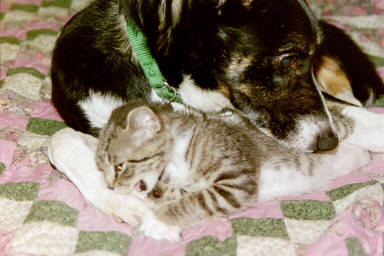

Cats can catch canine influenza from dogs

A group of cats in a shelter in Northwest Indiana have tested positive for the canine influenza H3N2 virus. This was confirmed by Sandra Newbury the clinical assistant professor and also the director of the Shelter Medicine Program at the University of Wisconsin School of Veterinary Medicine in collaboration with Kathy Toohey-Kurth, virology section head at the Wisconsin Veterinary Diagnostic Laboratory.

scan0023

Although cases have been reported in South Korea, only a single case showed up in the United States in 2015. The cats that are infected shared a shelter with dogs that were also infected.

Tests have shown that the virus can reproduce in cats and spread from cat to cat, as well as from dog to cat. This means that dogs and cats must be housed separate from each other in shelters.

Cats exhibit upper respiratory symptoms such as runny nose, congestion and general malaise, as well as lip smacking and excessive salivation. Fortunately, the symptoms do not last long and so far, have not caused death in cats.

Dogs that have the virus often develop a persistent cough, runny nose and fever, although some dogs show no symptoms and some can get very sick. Canine flu has caused death in dogs but most recover if taken to a veterinarian and given the proper care.

Although there is a flu shot for dogs, there is no shot for cats. So far the canine virus has not infected a large number of cats. However, if a potential cat owner goes to a shelter and adopts a cat or visits a shelter and already owns a cat, they should be cautious when handling cats by using hand sanitizer before and after handling each individual cat or dog.
If your dog or cat shows flu symptoms, a trip to the veterinarian is in order. However, be sure to tell the receptionist when making an appointment that you suspect that your dog or cat has the canine influenza virus so that they make take proper precautions.

Proper treatment, care and handling of pets who may have the canine influenza virus, will go a long way to preventing it from spreading. Be sure not to make contact with other pets until your veterinarian says the virus is no longer contagious.