Heart murmurs in dogs

Researchers at the University of Cambridge have perfected an algorithm that can accurately detect heart murmurs in dogs. A heart murmur is the main indicator of cardiac disease such as mitral valve disease. About one in thirty dogs develop this, especially small dogs such as the King Charles Spaniels. The algorithm was originally designed for use on humans, but the team was able to adjust the program to detect and grade heart murmurs in dogs.
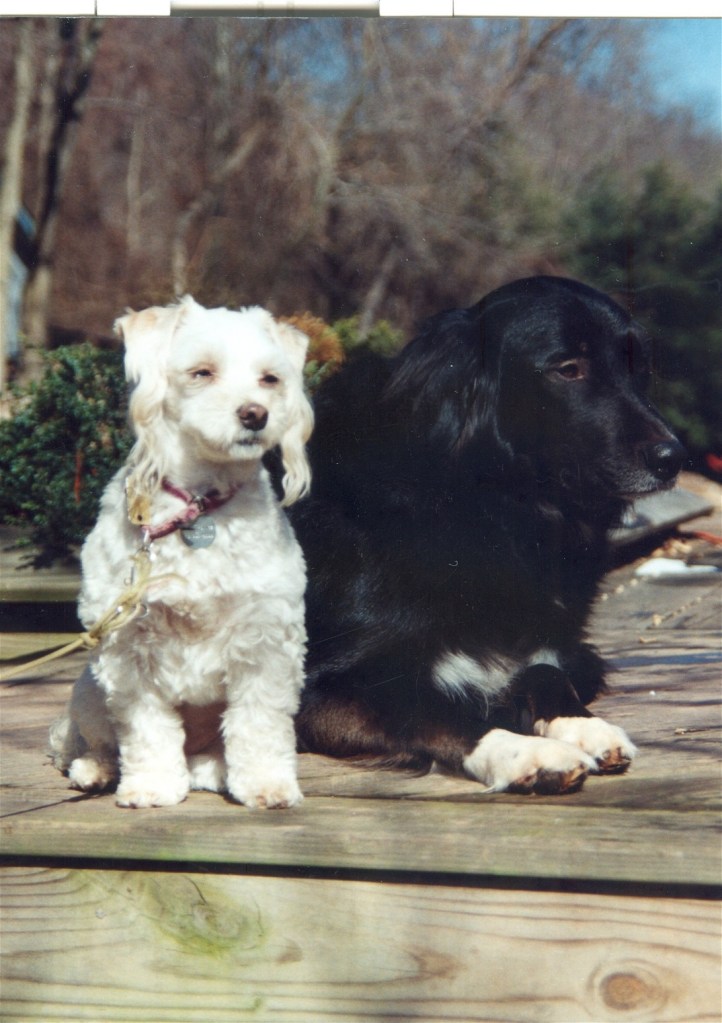
In humans, mitral valve disease can only be corrected by surgery, but medication is available for dogs. This program will allow the general practitioner veterinarian to accurately determine if a dog has heart disease earlier and treat the dog, increasing its quality of life and longevity.   

Journal Reference:

  1. Andrew McDonald, Jose Novo Matos, Joel Silva, Catheryn Partington, Eve J. Y. Lo, Virginia Luis Fuentes, Lara Barron, Penny Watson, Anurag Agarwal. A machine‐learning algorithm to grade heart murmurs and stage preclinical myxomatous mitral valve disease in dogsJournal of Veterinary Internal Medicine, 2024; DOI: 10.1111/jvim.17224

Cite This Page:

University of Cambridge. “AI algorithm accurately detects heart disease in dogs.” ScienceDaily. ScienceDaily, 28 October 2024. <www.sciencedaily.com/releases/2024/10/241028211501.htm>.

Dogs understand words from a soundboard

A new study investigated whether dogs understand the words on a soundboard or if they were responding to cues from their owners. The study was conducted by researchers at the University of California San Diego as well as other institutions and have proven that dogs who are trained with soundboard buttons can comprehend specific words and will perform contextually appropriate responses. The study was led by Federico Rossano who is an associate professor in the Department of Cognitive Science at UC San Diego and is head of the comparative Cognition Lab. This study was the first empirical study from the world’s largest longitudinal or panel study of button-trained pets.

The way the study was conducted removed bias, owner cues, and showed that the dogs truly did understand the words on the sound board. One of the more important findings is that it shows the complexities of dog cognition and communication.

Sue’s Note: Since I first started training dogs and working as a behaviorist, we have come a long way in understanding how intelligent dogs (and other animals) are. One of the key lessons that we as pet owners must keep in mind, is that dogs are much smarter than previously thought and understand much more than most people give them credit for. This is important to keep in mind when training any animal. What you do and how you do it is critical in building your relationship with your dog or other pet and having them understand what you are teaching them or want them to do. This is why it is very important to use the same word for a specific command. For example, do not use the word DOWN to tell your dog to get off you or furniture and then say the same word to tell your dog to lie down.

Journal Reference:

  1. Amalia P. M. Bastos, Ashley Evenson, Patrick M. Wood, Zachary N. Houghton, Lucas Naranjo, Gabriella E. Smith, Alexandria Cairo-Evans, Lisa Korpos, Jack Terwilliger, Sarita Raghunath, Cassandra Paul, Hairou Hou, Federico Rossano. How do soundboard-trained dogs respond to human button presses? An investigation into word comprehensionPLOS ONE, 2024; 19 (8): e0307189 DOI: 10.1371/journal.pone.0307189

Cite This Page:

University of California – San Diego. “Dogs understand words from soundboard buttons.” ScienceDaily. ScienceDaily, 28 August 2024. <www.sciencedaily.com/releases/2024/08/240828154926.htm>.

Dogs help people relieve stress

Researchers at the University of South Korea have studied the benefits people have from interacting with dogs. Although is this not new information, they researched further to see if different activities produced a different reaction in people. They had people play, walk, groom and massage dogs while studying their brainwaves. They found that the people who walked or played with dogs had an increase in relaxed wakefulness. The participants who groomed, played and massaged a dog had a heightened level of concentration. They also observed that the subjects felt a significant drop in the feeling of fatigue, depression and stress after interacting with dogs.

Sue’s Note: I would think that the same results would be found when people interact with other animals that they enjoy. This study supports the use of therapy animals in all situations.

Journal Reference:

  1. Onyoo Yoo, YuTong Wu, Jin Soo Han, Sin-Ae Park. Psychophysiological and emotional effects of human–Dog interactions by activity type: An electroencephalogram studyPLOS ONE, 2024; 19 (3): e0298384 DOI: 10.1371/journal.pone.0298384

Cite This Page:

PLOS. “Interactions with dogs can increase brainwaves associated with stress relief and heightened concentration.” ScienceDaily. ScienceDaily, 13 March 2024. <www.sciencedaily.com/releases/2024/03/240313185025.htm>.

Brain connectivity in animals and people

In a first of its kind study, researchers at the American Friends of Tel Aviv University studied the MRIs of 130 mammals of different species to determine if there is a difference between brain size and its ability to transfer information through the neural network. This information was compared with the MRI of 32 human brains. The size of the mammals ranged from tiny bats to large mammals. The report stated that no animal was killed for the study.

Professor Assaf explained that many scientists assumed that human brains were superior due to greater brain connectivity, explaining a human’s greater abilities. However, no difference was found between species. However, there were differences between individual animals of the same species.

Brain connectivity involves the transfer of information from one part of the brain to another. The researchers found that different brains use different strategies to preserve an equal measure of overall connectivity.

“Our study revealed a universal law: Conservation of Brain Connectivity,” Prof. Assaf concludes. “This law denotes that the efficiency of information transfer in the brain’s neural network is equal in all mammals, including humans. We also discovered a compensation mechanism which balances the connectivity in every mammalian brain. This mechanism ensures that high connectivity in a specific area of the brain, possibly manifested through some special talent (e.g. sports or music) is always countered by relatively low connectivity in another part of the brain. In future projects we will investigate how the brain compensates for the enhanced connectivity associated with specific capabilities and learning processes.”

This study was conducted by researchers at Tel Aviv University, led by Prof. Yaniv Assaf of the School of Neurobiology, Biochemistry and Biophysics and the Sagol School of Neuroscience and Prof. Yossi Yovel of the School of Zoology, the Sagol School of Neuroscience, and the Steinhardt Museum of Natural History.

Journal Reference:

  1. Yaniv Assaf, Arieli Bouznach, Omri Zomet, Assaf Marom, Yossi Yovel. Conservation of brain connectivity and wiring across the mammalian classNature Neuroscience, 2020; 23 (7): 805 DOI: 10.1038/s41593-020-0641-7

Cite This Page:

American Friends of Tel Aviv University. “MRI scans of the brains of 130 mammals, including humans, indicate equal connectivity.” ScienceDaily. ScienceDaily, 20 July 2020. <www.sciencedaily.com/releases/2020/07/200720112216.htm>.