Susan Bulanda’s books

The Business of Dog Training: How to Succeed as a Successful Dog Trainer – will guide you through every aspect of running dog training business from what kind of trainer you want to be to how to deal with clients. This is a must have book for those people who want to become dog trainers as well as those who already have a business.     2024 First Place Dog Writers Association of America – Maxwell Award

Miitary Dogs of WWII – covers all the countries involved in WWII. It names famous dogs as well as mascots. It covers the dogs that served as SAR dogs in England, helping to find buried people in bombed buildings. It explains training methods as well as the missions that the dogs went on and how they saved lives. There are about 100 photos included in the book.      2023 First Place Dog Writers Association of America- Maxwell Award

K9 Obedience Training: Teaching Pets and Working Dogs to be Reliable and Free-Thinking.  This explains how to teach a dog the basic obedience that is the foundation for all other training. The methods used in this book allow the dog the freedom to think for themselves rather than perform robotically where creativity is discouraged. Free-Thinking is necessary for all working dogs. Obedient disobedience is also covered. The book explains what not to do and why. Some fun tricks are included.

K9 Search and Rescue Troubleshooting: Practical Solutions to Common Search-Dog Training Problems – explains the typical SAR dog training problems and offers solutions for the SAR dog handler. The solutions apply to all disciplines in canine search and rescue. It explains how the puppy stages of development can have lasting effects on the behavior and training of a dog. Often people adopt an older dog to train and do not understand why the dog behaves the way it does, this book gives insight to those issues. Although K9 Search and Rescue Troubleshooting: Practical Solutions to Common Search-Dog Training Problems is written for the SAR dog handler, the information contained in it applies to many training issues that are not related to SAR.      2020, Certificate of Excellence, Dog Writers Association of America.      2018, First Place, National League of American Pen Woman.

Soldiers in Fur and Feathers: The Animals That Served in WWI – Allied Forces: A unique, collection of accounts about many different animals that served in WWI. There are many rare photos. What is especially interesting about this book is that it includes many of the mascots that the soldiers kept. Some went into the trenches with the men. For example, there is an account about how a cat saved the life of a soldier, how a pair of geese slated to be Christmas dinner wound up being kept as mascots, and one soldier had a huge Golden Eagle as a pet. WWI was a transitional war from animal power to mechanization, therefore many species of animals served, such as oxen, horses, mules, camels, pigeons, and dogs in many capacities. 2012: Second Place Winner, National League of American Pen Women, Finalist for the Alliance of Purebred Dog Writers Arthur Award,      Certificate of Excellence for the Cat Writers Association of America.

Faithful Friends: Holocaust Survivors Stories of the Pets Who Gave Them Comfort, Suffered Alongside Them and Waited for Their Return: The only book written about the animals of the Holocaust victims, recording a part of history that has been overlooked. Some of the stories are sad and some joyous, but all are a part of history. Learn about Nicholas the French Bulldog owned by a woman who was part of the French resistance, and how he came to tour with the German army. Also, the dogs who somehow survived the war and were reunited with their owners and many other stories about dogs and cats.      2012: Dog Writers Association of America, Maxwell Award,     Certificate of Excellence Cat Writers Association, 2012; National League of American Pen Woman 2nd place  

God’s Creatures: A Biblical View of Animals explains the role that animals play in the Bible and how God uses them. It explores the nature of animals and miracles that involve them. It answers questions such as, do animals go to heaven, do they know and obey God, can they be evil?

Boston Terriers, a book all about this wonderful breed of dog. Learn about their care, training and personality. The book has fun sidebars that give personal accounts of Boston terriers.        2002 – First Place Maxwell Award for the Dog Writers Association of America (only available on Amazon)

Ready: The Training of the Search and Rescue Dog: Adopted worldwide as the training book for SAR dogs. This book has been in print since 1994 and is in its second edition. It gives the SAR dog handler a training plan for all disciplines of canine search and rescue.       First place for the National League of American Pen Woman, 1996. Also nominated best book of the year, 1994 Dog Writers Association.

Scenting on the Wind: Scent Work for Hunting Dogs: helps the hunting enthusiast understand how weather, wind and terrain features affect scent. It is a great aid for people who compete in field trials or who do any kind of scent work with dogs. Only available from the author’s website http://www.sbulanda.com

Real Estate Today, Seller Beware! – explains how to save thousands of dollars when selling your house. Available on Amazon

Hypertension in Dogs

Most people are familiar with hypertension in people also known as “high blood pressure” but how many of us know that about 10% of dogs have it too? The problem is that our dogs cannot tell us if they are not feeling well. Therefore it is our responsibility to look for symptoms that could be a result of high blood pressure.

There are two types of high blood pressure in dogs, primary and secondary. Humans are more likely to have primary high blood pressure, which is when there is no underlying cause. Secondary high blood pressure is when it is a result of a disease. Secondary high blood pressure is the most common one that affects dogs.

Unfortunately the signs for high blood pressure can also be signs of other medical problems in your dog. For example, high blood pressure can affect the eyes, central nervous system, heart and kidneys.

Typically there are no early signs of high blood pressure in dogs, sometimes the signs that we see are considered part of normal aging and could be overlooked.

Like humans, being obese is a cause of high blood pressure in dogs, and this is one thing that we can control. Regular exercise and keeping your dog’s weight at a normal level can help prevent high blood pressure.

Because the symptoms can be related to other medical issues, if you notice any change in your dog’s behavior, regardless of what age your dog is, a trip to the veterinarian is in order. In older dogs, do not assume that behavior changes are due to old age.

Some of the changes to look for are excessive drinking. Sometimes a dog owner will not know if their dog is drinking more water so another clue is if the dog has to urinate more often and/or larger amounts.

Changes in the dogs movement, how he walks, if he seems dizzy, or falls is another sign. The dog’s mental state, such as does he seem forgetful? Stand in a corner or seem to get lost?

Has the dog’s appetite changed? Is he less active? Does your dog pant excessively? Does he cough or seem short of breath? These are all symptoms that warrant an immediate visit to your veterinarian.

Sometimes changes happen gradually, therefore if your dog is a senior you should have your dog checked twice a year and ideally given a geriatric profile blood test. Keep in mind that being a senior depends on the breed of dog. Some breeds can live to be 18 and some do not live past ten. Therefore check with your veterinarian to determine at what age your dog needs a twice a year check up. The good news is that high blood pressure in dogs is treatable with medications.

http://www.akcchf.org/canine-health/your-dogs-health/caring-for-your-dog/hypertension-in-dogs.html

Dog tails, often misread

Many children are taught that if a dog’s tail is wagging that it is safe to approach the dog and pet him. This is one reason why children are sometimes bitten. First, a child should be taught to never approach any animal without first asking permission to do so. If the child is alone and there is no one around to ask, they should avoid all animals.

I recall being at a dog show with my young Doberman and a young girl ran up to my dog and gave him a big hug. Fortunately my dog was safe and liked all people. I did tell the child that she should always ask first since all dogs are not safe. She looked at me, thought a minute and said, “I have a way with dogs” and left. She was at the age where she should have known better, but obviously someone had told her this and she thought that she was safe from all harm. How sad. At the same show with the same dog, an adult couple approached and started to pet my dog, giving him kisses and hugs. Being a red Doberman and young, he was rather slender. They looked up with love in their eyes and asked if he was a Vizsla. I said, “No, he’s a Doberman.” They collectively gave a gasp of horror, quickly backed away saying “I’m afraid of Dobermans!” Fortunately my dog ignored their behavior.

But the fact is that many adults think that if a dog is wagging his tail, that he is safe to approach. Some behavior consultants feel that the tail is not an indicator of a dog’s mental state at all and not a reliable means of determining how a dog feels. To a point this is true. The tail should always be included with other body language. This includes the dog’s posture, facial expressions, vocalizations and spatial proximity to the object of his interest.

What makes it difficult to determine the meaning of a dog’s tail are physical factors such as a dog who has no tail or a small stubby tail like a Doberman. Dogs whose tails are naturally carried in a certain position, such as the high tail of a Beagle, or breeds that normally carry their tails low such as a Greyhound as well as those dogs who have very curly tails such as a Husky.

However, there are some general rules that a person can use to determine if the tail is a warning rather than an invitation.

1) A slow wag that is lower than the back of the dog is often a dog that is insecure. An insecure dog may fear-bite.

2) A tail tucked between the dog’s legs or even curled between the dog’s legs and tucked all the way to the dogs stomach. This means the dog is very fearful.

3) A slow high wag is often a dog that is assertive and willing to fight. If the dog is barking he could be aggressive.

4) A tail that is very high, erect, and stiff is also a sign of high alert or aggression.

With a little bit a caution and common sense, a person can avoid being bitten or being confronted by a dog that would rather be left alone.

Breed Specific Legislation -Bully Breeds

Breed specific legislation has become a worldwide phenomenon, targeting for the most part the American Pit Bull terrier and any dog that resembles a Pit Bull or what is sometimes called a Bully breed. What is even sadder is that after over ten years of this prejudice, it continues. Many shelters will not adopt dogs that fit this description and often people who are interested in adopting a dog will avoid dogs that are labeled a Bully breed or look like one.

The fallacy of this attitude is that the behavior of an individual dog cannot be completely determined by its breed. Ironically, the Pit Bull Terrier and the Staffordshire Terrier are the only breeds that were bred not to bite their handlers in a situation where redirected aggression would likely occur.  

Because of breed specific legislation dogs that are labeled as Bully breeds often are killed or misused. The owners of these dogs are penalized if they try to get homeowners insurance or rent a place to live. The real tragedy is that dogs are often judged by how they look. A recent study has shown that veterinarians and shelter workers are often asked to identify what breed(s) a dog is, and the dog is labeled accordingly. DNA tests on the dogs classified as Bully breeds have shown that they were mislabeled up to 48% of the time. The study also showed that dogs labeled as a Bully breed often dramatically decreased their chances of being adopted.

This is very sad because most of the assessments were done by merely looking at the dog. It is often very difficult to determine what a dog is just by looking at it. For example, what would a Boxer/Labrador mix look like? Or a Boxer mixed with two or three other breeds. Consider what a Bull Terrier or even a Boston terrier mix would look like or a Bulldog mix. Even consider what a Rottweiler mix could look like.

The chances of a dog being a mix of something other than a Pit Bull is very likely.   Consider the fad of creating “designer” dogs. Keep in mind that designer dogs are a fancy name for mixed breed dogs that are usually a cross breed.

free clip art

Why then does it seem that the Bully breeds or Pit bulls have more attacks and sometimes fatal attacks on people? The answer is twofold. One it has to do with the way the dog was raised. Often the dog is purchased for protection, dog fighting, or as a status symbol. In many cases the dog’s owner does not know how, or care to properly train and socialize the dog. Two, poor breeding and improper breeding can create a litter of dogs that are more aggressive than the breed standard dictates. If you add a lack of proper socialization to that, there is a high risk that the puppies from that litter will have behavior problems, aggression being one of them. This is also true for any other breed or mixed breed of dog.

Also consider that many small dog bites are not reported because they do not do the damage that a larger dog bite does. If a small dog bites and it is reported, the media does not sensationalize it the way they do if it is a Pit Bull or Bully breed attack. What this means is that statistically there may be many more dog bites from other breeds of dogs.

Throughout history various dogs had the reputation of attacking people. There was a time that people feared the Doberman Pinscher, the German Shepherd and the Rottweiler. Today it is the Pit Bull and Bully breeds.

I recall years ago when I was showing my red Doberman that a teenage girl came up and was loving and kissing my dog, who was kissing her back and wiggling with delight. She asked me if this was a Vizsla? I said no that it was a Doberman. She gasped, quickly pulled back and said, “I’m afraid of them.”

It is interesting that in a day when we have become politically correct to the point of adnauseam, we treat our dogs the complete opposite.  

In conclusion it would seem that until we hold owners more accountable for the behavior of their dogs, and until we properly identify what a breed(s) a dog is, Pit bull and Bully breeds will continue to be a target and suffer as a result. Ironically there are other breeds of dogs that are truly unsafe, yet no one targets those breeds.  

Susan Bulanda’s The Business of Dog Training Earns Spot as DWAA Finalist

by guest blogger Anthony Raymond Michalski

Ms. Bulanda’s The Business of Dog Training Named DWAA Writing Competition Finalist

Wilkes-Barre, PA, January 8, 2025 – Kallisti Publishing is proud to announce that Susan Bulanda’s The Business of Dog Training: How to Succeed as a Professional Dog Trainer has been recognized as a finalist in the 2024 Dog Writers Association of America (DWAA) Writing Competition in the Reference category. This prestigious honor underscores the book’s value as an essential resource for professional dog trainers.

The recognition comes as the DWAA prepares to host its first in-person awards banquet in five years on February 8, 2025, at the historic Hotel New Yorker in New York City. The event, held during Westminster Week, celebrates the accomplishments of writers, journalists, and creators dedicated to the world of dogs. Finalists in each category are eligible to win the coveted Maxwell Medallion, the DWAA’s highest honor, which is awarded by an independent panel of judges.

Written by veteran dog trainer and educator Susan Bulanda, The Business of Dog Training offers readers essential insights on building and growing a successful dog training business, covering everything from business management and marketing to advanced training techniques. “I’ve dedicated my career to helping people and their dogs thrive together,” said Bulanda. “This book is my way of giving trainers the tools they need to succeed not just with dogs, but in the business world too. It’s an honor to see it recognized by the DWAA.”

Founded in 1935, the Dog Writers Association of America is the premier organization for professionals in dog-related media, recognizing excellence and fostering a community that shares a passion for canine companionship.

For more information about The Business of Dog Training or to schedule an interview with Susan Bulanda, please contact Anthony Raymond at Kallisti Publishing Inc.

Kallisti Publishing Inc. makes the “Books You Need to Succeed” — personal development, inspirational, and business books that expand the mind, generate ideas, and grow profits and is the home to prestigious authors who are leaders and experts in their field. Kallisti Publishing Inc. is located in Wilkes-Barre, Pennsylvania and sells traditional books and ebooks through distributors and retailers, direct to the reader, and in bulk to companies and organizations.

Press Contact:   

Anthony Raymond Michalski
ph (570) 825-3598 • editor@kallistipublishing.comhttp://www.KallistiPublishing.com

Sit, Stay, Prosper: How Dog Training Became a Big Business

by guest blogger, Kallisti Publishing

The next time you pass a well-behaved dog walking serenely on a leash, tail wagging in perfect harmony with its owner, take a moment to appreciate the silent partner in that picture-perfect moment: the dog trainer. Behind every happy canine and relieved pet parent, there’s likely a professional who taught Fido how to sit, stay, and maybe even stop chewing the couch cushions.

Dog training has quietly grown from a charming pastime into a booming industry that combines passion, practicality, and profit. As Americans pour billions of dollars annually into their pets, the demand for professional trainers has skyrocketed. For those who love dogs and want to make a career out of that affection, it’s never been a better time to enter the field.

“Dogs are family now,” says Susan Bulanda, a veteran trainer, internationally recognized canine behavior expert, and author of The Business of Dog Training: How to Succeed as a Professional Dog Trainer (Kallisti Publishing, 2024). “People are investing in their pets like never before, and that includes making sure they’re well-trained and happy. This shift has created incredible opportunities for trainers.”

A Pawsitively Booming Industry

Gone are the days when dog training was little more than a niche service. Today, the industry offers a dazzling array of opportunities. Trainers can specialize in everything from puppy socialization and basic obedience to advanced fields like agility sports, therapy dog certification, and service dog training.

Jessica Ramirez, a trainer based in Austin, Texas, discovered this firsthand. “When I started during the pandemic, I thought I’d stick to basic obedience classes,” she says. “But the demand kept growing—puppy owners wanted socialization, working professionals needed help with separation anxiety, and a surprising number of people wanted their dogs to learn fun tricks.”

Ramirez now runs a six-figure business with three employees, offering services that range from one-on-one consultations to group classes and even virtual training. “It’s incredible how many options there are,” she adds. “This isn’t just a job—it’s a lifestyle.”

And it’s a lucrative one. The American Pet Products Association (APPA) reports that spending on pet services, including training, reached over $11 billion in 2023. With 65 million American households owning at least one dog, this number is only expected to grow.

Why Now?

The rise of the dog training industry can be traced to several factors. For one, the pandemic prompted a nationwide “puppy boom.” Millions of Americans adopted pets, often for the first time, and quickly realized they needed help teaching their new companions how to behave.

“Pandemic puppies changed everything,” says Andrew Mitchell, a Denver-based trainer who left his corporate marketing job to pursue his passion for working with dogs. “Suddenly, people were home all day with these energetic animals and had no idea how to handle them. That’s when trainers became essential.”

Urbanization is another driver. As more people move into cities and apartments, the importance of having a well-behaved dog grows. “A barking or aggressive dog can strain relationships with neighbors,” says Bulanda. “Training ensures harmony in these close-quarters living situations.”

Moreover, dogs are no longer seen as just pets—they’re companions, family members, even emotional support systems. “Training isn’t about control anymore,” Bulanda adds. “It’s about communication. People want to connect with their dogs, and trainers help make that possible.”

The Joys and Challenges of Training

Despite the industry’s many rewards, dog training isn’t without its challenges. Trainers must master both canine behavior and human psychology. “Training a dog is often the easy part,” says Mitchell. “The harder part is teaching the owners. You need to be patient, empathetic, and a great communicator.”

For Ramirez, the emotional rewards outweigh the challenges. She recalls working with a rescue dog named Daisy who had a deep fear of loud noises. “Her owners were ready to give up,” Ramirez says. “But after weeks of gradual training, Daisy became a completely different dog—confident and calm. Seeing that transformation is why I do this.”

Bulanda agrees. “Training changes lives—for the dog and the family. It’s one of the most meaningful careers you can have.”

How to Get Started

Starting a dog training business is surprisingly accessible. Most trainers begin with a certification from organizations like the International Association of Canine Professionals or the Certification Council for Professional Dog Trainers. These programs teach foundational skills, from reading canine body language to implementing training techniques.

For those serious about building a career, resources like Bulanda’s The Business of Dog Training offer valuable guidance. The book provides practical advice on everything from understanding dog behavior to marketing services and managing a business. Drawing on decades of experience, Bulanda outlines the path to becoming a successful trainer in an increasingly competitive field.

“You don’t need a huge investment to start,” she says. “A few basic tools, some education, and a lot of dedication can go a long way.”

The Future of Dog Training

The industry’s growth shows no signs of slowing down. As more Americans embrace the human-animal bond, the demand for skilled trainers will only increase. This expansion opens the door for innovation, such as virtual training programs, mobile apps, and training packages tailored to specific breeds or behavioral issues.

“Dogs are incredibly adaptable, and so is this industry,” says Mitchell. “There’s always room for new ideas and approaches.”

For those considering a career change or looking for a side hustle, dog training offers a unique blend of profitability and purpose. It’s a career that allows people to work with animals, help others, and build a business—all while enjoying the companionship of man’s best friend.

“Dogs bring joy, loyalty, and love into our lives,” Bulanda reflects. “As trainers, we have the privilege of helping them thrive while creating lasting bonds with their owners. It’s a career filled with heart, and it’s one I’d recommend to anyone who loves dogs and wants to make a difference.”

A Career That Changes Lives

Whether you’re looking to leave behind the corporate grind or turn your passion for animals into a thriving business, dog training offers endless opportunities. With the right skills, a willingness to learn, and resources like The Business of Dog Training, you can build a career that’s not only financially rewarding but emotionally fulfilling.

So, the next time you see a dog sitting calmly at its owner’s feet or walking politely on a leash, remember: that’s the work of a trainer. And it might just be your next great career move.
New research about overeating

UCLA psychologists have discovered a circuit in the brain of mice that makes them crave food and seek it out, even when they are not hungry. What is interesting about this discovery is that when the group of cells is stimulated, the mice seek fatty and pleasurable foods such as chocolate instead of healthier foods such as carrots.

The area of the brain where the cells are located is called the periaqueductal gray which is in the brainstem. When these cells are stimulated, the mice are so driven to eat that they will endure foot shocks to get to the food. The opposite occurs when the researchers inject a virus that produces a protein that reduces the cells activity even hungry mice foraged less.

“Like mice, humans also possess vgat PAG cells in the brainstem. It could be that if this circuit is overactive in a person, they might feel more rewarded by eating or crave food when not hungry. Conversely, if this circuit is not active enough, they could have less pleasure associated with eating, potentially contributing to anorexia. If found in humans, the food-seeking circuit could become the treatment target for some kinds of eating disorders.”

Sue’s Note: If mice have this cluster of cells, it stands to reason that other animals have it as well. Could this be why some of our pets overeat and some have low appetites?

Journal Reference:

  1. Fernando M. C. V. Reis, Sandra Maesta-Pereira, Matthias Ollivier, Peter J. Schuette, Ekayana Sethi, Blake A. Miranda, Emily Iniguez, Meghmik Chakerian, Eric Vaughn, Megha Sehgal, Darren C. T. Nguyen, Faith T. H. Yuan, Anita Torossian, Juliane M. Ikebara, Alexandre H. Kihara, Alcino J. Silva, Jonathan C. Kao, Baljit S. Khakh, Avishek Adhikari. Control of feeding by a bottom-up midbrain-subthalamic pathwayNature Communications, 2024; 15 (1) DOI: 10.1038/s41467-024-46430-5

Cite This Page:

University of California – Los Angeles. “Craving snacks after a meal? It might be food-seeking neurons, not an overactive appetite.” ScienceDaily. ScienceDaily, 20 March 2024. <www.sciencedaily.com/releases/2024/03/240320122517.htm>.

Dogs understand words from a soundboard

A new study investigated whether dogs understand the words on a soundboard or if they were responding to cues from their owners. The study was conducted by researchers at the University of California San Diego as well as other institutions and have proven that dogs who are trained with soundboard buttons can comprehend specific words and will perform contextually appropriate responses. The study was led by Federico Rossano who is an associate professor in the Department of Cognitive Science at UC San Diego and is head of the comparative Cognition Lab. This study was the first empirical study from the world’s largest longitudinal or panel study of button-trained pets.

The way the study was conducted removed bias, owner cues, and showed that the dogs truly did understand the words on the sound board. One of the more important findings is that it shows the complexities of dog cognition and communication.

Sue’s Note: Since I first started training dogs and working as a behaviorist, we have come a long way in understanding how intelligent dogs (and other animals) are. One of the key lessons that we as pet owners must keep in mind, is that dogs are much smarter than previously thought and understand much more than most people give them credit for. This is important to keep in mind when training any animal. What you do and how you do it is critical in building your relationship with your dog or other pet and having them understand what you are teaching them or want them to do. This is why it is very important to use the same word for a specific command. For example, do not use the word DOWN to tell your dog to get off you or furniture and then say the same word to tell your dog to lie down.

Journal Reference:

  1. Amalia P. M. Bastos, Ashley Evenson, Patrick M. Wood, Zachary N. Houghton, Lucas Naranjo, Gabriella E. Smith, Alexandria Cairo-Evans, Lisa Korpos, Jack Terwilliger, Sarita Raghunath, Cassandra Paul, Hairou Hou, Federico Rossano. How do soundboard-trained dogs respond to human button presses? An investigation into word comprehensionPLOS ONE, 2024; 19 (8): e0307189 DOI: 10.1371/journal.pone.0307189

Cite This Page:

University of California – San Diego. “Dogs understand words from soundboard buttons.” ScienceDaily. ScienceDaily, 28 August 2024. <www.sciencedaily.com/releases/2024/08/240828154926.htm>.

Dogs understand and visualize objects words

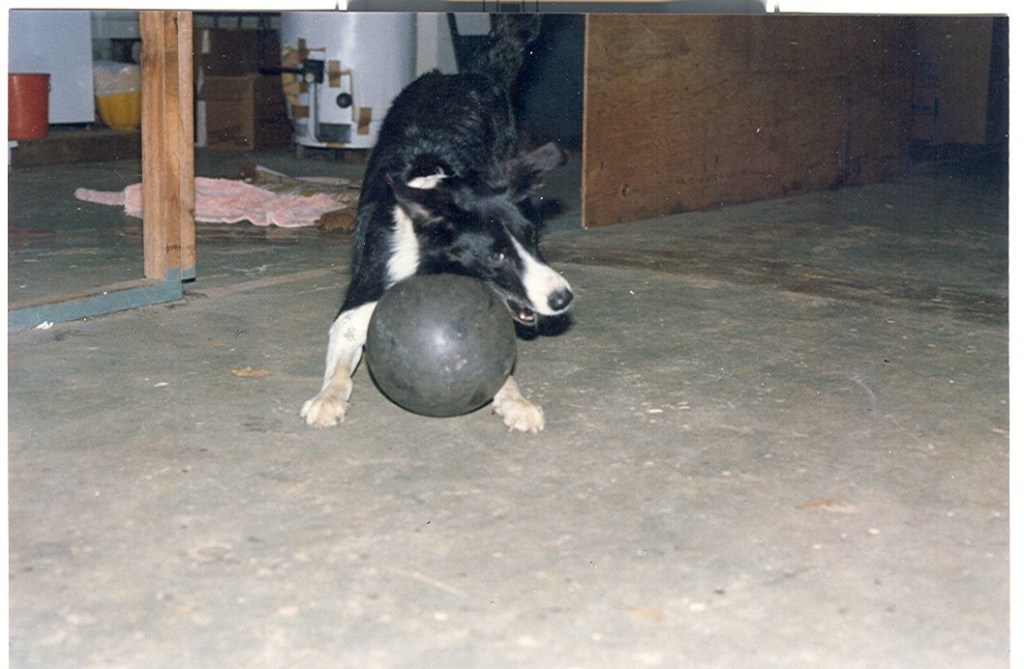
A very important study has illustrated that dogs understand instructional words as well as well as object words. An instructional word is what people commonly referred to as a command, such as sit. Object words are when a dog knows that the word represents an object. They can visualize the object when it is named whether the object is present or not. What this means is that dogs understand the meaning of some words the same as people do. Now researchers want to learn if other animals have the same capability. For an interesting video that shows a Border Collie named Chaser who illustrates this ability by identifying an object that he was told to fetch but was not taught the name of. He was able to identify all the other objects and pick out the one he was not taught the name of.  

Sue’s Note: Consider people who cannot speak, such as infants, who illustrate that they recognize objects even though they cannot say the name of the object.

Chaser finds “Darwin”

Journal Reference:

  1. Marianna Boros, Lilla Magyari, Boglárka Morvai, Raúl Hernández-Pérez, Shany Dror, Attila Andics. Neural evidence for referential understanding of object words in dogsCurrent Biology, 2024; DOI: 10.1016/j.cub.2024.02.029

Cite This Page:

Cell Press. “Your dog understands that some words ‘stand for’ objects.” ScienceDaily. ScienceDaily, 22 March 2024. <www.sciencedaily.com/releases/2024/03/240322145438.htm>.

Stress causes overeating in pets

Researcher Sora Shin, an assistant professor at the Fralin Biomedical Research Institute at Virginia Tech has discovered a molecule that triggers the need to eat high fat foods in mice 24 hours after being exposed stress in the form of the scent of cats.

This molecule is found in the hypothalamus section of the brain which is the part of the brain that is connected to changes in the brain that lead to emotional overeating.

 The same molecule is found in people as well as animals. This discovery may lead to treatment methods that can help people who react to the emotionally driven need to overeat, even when they are not hungry.

Sue’s Note: There are many animals, particularly dogs and cats that tend to overeat which result in them becoming obese. Pet owners who have pets that have this problem should consider stress as a factor that causes their pets to overeat. First be sure that the family or friends are not over feeding the pets. If this is not the case the pet owner should evaluate the possibility that stress may be a cause. Since the study showed that the effects of stress can cause overeating 24 hours later, the pet owner should consider events that happened in the last 24 hours. An example would be someone or something that passes the pet’s home when the owner is not home that causes high stress in the pet. In situations where stress is a factor, reducing the amount of food that the pet has access to may cause a greater amount of stress. In this case over the counter calming remedies may help the pet. If not a visit to your veterinarian would be in order explaining to the veterinarian that you suspect stress is a cause of the overeating. Print a copy of the article in the link below to show your veterinarian if necessary.

Journal Reference:

  1. In-Jee You, Yeeun Bae, Alec R. Beck, Sora Shin. Lateral hypothalamic proenkephalin neurons drive threat-induced overeating associated with a negative emotional stateNature Communications, 2023; 14 (1) DOI: 10.1038/s41467-023-42623-6

Cite This Page:

Virginia Tech. “Scientist discovers potential brain link between stress, emotional eating.” ScienceDaily. ScienceDaily, 27 November 2023. <www.sciencedaily.com/releases/2023/11/231127180702.htm>.