Dogs help children with a rare and severe form of epilepsy

Although Lafora disease only affects about 50 children worldwide, it is a deadly form of epilepsy that is common in Wirehaired Dachshunds.

DSCN1407

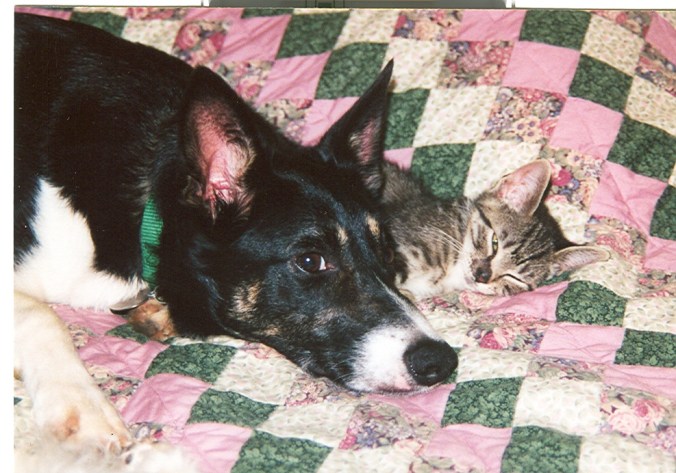
(photo is not a Wirehaired Dachshund but it is cute!)

Many Wirehaired Dachshunds suffer from Lafora, and because the disease is the same in children as it is in dogs, veterinarians and human neurologists have teamed up to study the disease.

Dr. Clare Rusbridge, Reader in Veterinary Neurology at the University of Surrey and Chief Neurologist at Fitzpatrick Referrals, have been working with specialists of Lafora in children at The Hospital for Sick Children in Toronto and have identified a canine gene mutation that causes Lafora in dogs.

They were able to study the progression of the disease in dogs so that they could identify its early stages in children. By understanding the progression of the disease, scientists will be better able to identify it sooner in children and eventually find a cure.

The plus side of these studies is that over the past five years, with the help of the Wirehaired Dachshund Club and Dachshund Breed Council, breeders have tested breeding stock and as a result, have reduced the number of litters that are at risk of having Lafora from 55% to under 5%. Hopefully the continued research will benefit humans as well.

Almost half of Pugs, French Bulldogs and Bulldogs suffer from Brachycephalic Obstructive Airway Syndrome (BOAS)

Short nosed or Brachycephalic dogs such as Pugs, French Bulldogs and Bulldogs suffer from Brachycephalic Obstructive Airway Syndrome (BOAS) which can cause health problems, breathing difficulties and even death. Veterinarians have conducted research to try to determine if there is a way to predict which dogs will suffer from BOAS, (almost half the dogs in these breeds are affected). By determining which dogs will have BOAS, breeders can try to eradicate it from the breeds that suffer from it.

tumblr_l5o8w9V7Cl1qaa766

This photo shows a dog with closed nostrils making it difficult to breathe

In 2015 researchers at the Royal Veterinary College, University of London determined that dogs whose muzzles were less than half of their cranial length and dogs with thicker necks were more likely to have BOAS. However, they did not feel that this was a reliable way for breeders to select dogs for breeding.

More recently a new study by researchers at the University of Cambridge tried to compare neck girth with chest girth and muzzle length to see if that could predict BOAS. However, they found that it was not easy to measure dogs and it was not reliable. They did suggest that breeders should not use dog with very short muzzles, wide faces and thick necks for breeding.

Dr. Nai-Chieh Liu one of the researchers suggested that breeding for open nostrils is most likely the best and easiest way to improve these breeds. Researchers are going to try to find a genetic marker for BOAS to help improve  Brachycephalic dogs to improve breeding programs.

People who own one of these breeds should have their dogs checked yearly for difficulty breathing even if the dog appears to be OK.

www.sciencedaily.com/releases/2017/08/170801140548.htm

Study shows that breeding practices for the past decades has caused health problems in German Shepherd Dogs

According to the latest research in the UK, GSD’s are most likely to die from complications due to musculosketetal disorders.  Almost a half a million GSD’s were studied by the VetCompass™ Programme at the Royal Veterinary College.

img096

The dogs surveyed came from 430 veterinary clinics. They found a total of 263 disorders, the most common were, inflammation of the ear canal (7.89% of dogs), osteoarthritis (5.54%), diarrhea (5.24%), overweight and obesity (5.18%), and aggression (4.76%).

According to Dr. Dan O’Neill, from the Royal Veterinary College, GSD’s have the second highest number of health disorders, with Great Danes being the first.  According to the report, GSD’s suffer from an abnormal formation of the hip joint, cancer, and degenerative spinal disorders which he feels is a result of breeding for cosmetic features such as a sloping back and lower hindquarters.

This is the first study, which included 17 different breeds, whose goal is to help breeders improve the health of their dogs.

It would be interesting to see how the study compares with the health of GSD’s in other countries.

www.sciencedaily.com/releases/2017/07/170727221255.htm


High cholesterol in dogs may help fight bone cancer

In a recent study at Oregon State University by Haley Leeper, a veterinary oncology resident at the OSU College of Veterinary Medicine as well as Craig Ruaux and Shay Bracha, colleagues of Leeper in the Department of Veterinary Clinical Sciences, and Austin Viall of the Department of Veterinary Pathology at the Iowa State University College of Veterinary Medicine showed that higher cholesterol seemed to help dogs survive bone cancer longer.

dempsey

They found that dogs with the malignant tumor, osteosarcoma, which is also diagnosed in humans, typically afflicting teenagers and young adults, that had high serum cholesterol lived on the average of 200 days longer than dogs who did not have high cholesterol.

Researchers plan to study why the high cholesterol helped dogs survive longer and perhaps learn ways to cure this type of cancer in dogs and humans alike.

I personally hope they come up with a cure for bone cancer, I lost my beloved Rottweiler to bone cancer many years ago.

www.sciencedaily.com/releases/2017/07/170725122245.htm

The gene that causes epidermolysis bullosa in the Central Asian Shepherd Dog and Humans has been identified

The genetic defect that causes hereditary blistering disorders of the skin, known as epidermolysis bullosa, in both humans and the Central Asian Shepherd Dog has been identified as being the same. The defective gene causes the skin to be easily damaged resulting in abrasion and blistering. There are four different types of the disorder, simplex, junctional, dystrophic and Kindler syndrome.

The defective gene causes a lack of collagen between two layers of skin.  Without the collagen, the skin will blister.

Thanks to the gene researchers at the University of Helsinki, Marjo Hytönen, a member of the research group led by Professor Hannes Lohi and pathological tests conducted by the Finnish Food Safety Authority Evira, the defective gene was confirmed.

As a result, tests can be conducted on members of the Central Asian Shepherd Dog allowing breeders to select only those dogs that do not have the defective gene as part of a breeding program. Hopefully, researchers will be able to find a cure for humans.

www.sciencedaily.com/releases/2017/06/170601124155.htm

New discovery may help cure dogs and humans with heart disease

Myxomatous mitral valve disease (MMVD) and congestive heart failure in older dogs is age related and often affects small dogs. MMVD is the most common cardiac disease in dogs. Once a dog has congestive heart failure they are only expected to live between one and nine months.

img092

Researchers at the Cummings School of Veterinary Medicine at Tufts University have discovered biomarkers in the extracellular vesicles of dogs with MMVD in the form of microRNA (miRNA) which circulate in the blood and urine. What is exciting is that this is the first biomarker based on extracellular vesicles in a veterinary disease.

MMVD is similar to mitral valve prolapse in humans, so this finding can eventually benefit humans with heart disease. While further research is needed, this is a wonderful finding that has potential to help monitor the progression of the disease as well as lead the way to developing treatment for both humans and dogs.

www.sciencedaily.com/releases/2017/07/170714140437.htm

http://www.acvim.org/Portals/0/PDF/Animal%20Owner%20Fact%20Sheets/Cardiology/Cardio%20Myxomatous%20Mitral%20Valve%20Degeneration.pdf

https://www.ncbi.nlm.nih.gov/pmc/articles/PMC4048944/


A new study about co-sleeping with your pets

A recent study examined the practice of sharing a bedroom or bed with a dog. While the authors suggest that more research is needed, they compared sleeping with a dog to the practice of sharing a bed or bedroom with a child.

scan0022

The current concern about co-sleeping with a child focuses on the child suffering from poor health, impaired functioning, developing problematic behavior and sexual dysfunction. However, there is not enough evidence to determine if there are negative effects of co-sleeping with dogs or other pets.

According to the study, the benefit of co-sleeping with both pets and children are saving resources, keeping warm, and feeling safe. It is a practice that has been going on for many years.

When it comes to sharing a bedroom with a dog, as an animal behavior consultant, I recommend letting a puppy sleep in a crate in the bedroom to help the puppy bond with the family and feel safer in a new environment. After the dog is trained and under control, it can be allowed to sleep on the bed with a family member. However, if the dog is not trained it can become possessive of the bed or other furniture to the point of becoming aggressive if a family member wants to move the dog. Whether it is good or not depends on many factors, including the dog’s temperament and the owners ability to train and control the dog.

www.sciencedaily.com/releases/2017/06/170622104001.htm


Rat lungworm can cause meningitis in humans and animals

Rat lungworm, a parasitic nematode, has been found in five Florida counties so far. The lungworm depends on rat and snail hosts to complete its life-cycle. To become infected, both humans and animals must eat the snails or infected frogs or crustaceans.

Although the fatality rate in infected humans is low, the parasite can cause eosinophilic meningitis if it dies in a person’s brain which can lead to a coma and/or death.

Adults who become infected suffer from headaches, stiff neck, fever, vomiting, nausea, and paralysis. Children suffer from nausea, vomiting and fever.

Animals that are infected can get meningitis, weakness in their limbs or even paralysis, neck pain and central nervous system problems.

Prevention involves washing produce since snails can be very small. Children should be taught not to handle or eat snails. If they handle a snail they must wash their hands. To prevent infection in pets, check their living area including watering troughs or dishes, and watch to make sure that your animals do not eat snails.

www.sciencedaily.com/releases/2017/06/170628131625.htm

Why do dogs chase their tail?

Seeing a dog chase his tail can be very funny. But why do they do it? There are a couple of theories, although until dogs can talk and tell us, we will never know for sure.

Puppies most often are the ones who chase their tail. It is almost as if they see it for the first time realize it is there and decide it is a toy to be caught. If their tail is long enough, they may catch it, but if it is short they will whirl around until they are tired, never actually catching their tail. When a puppy realizes that the tail is theirs, or they cannot catch it, they will often give up the game. In some cases, they will chase the tail of other puppies. This can be a way for them to expend their energy.

smiling-riley

If a dog has never chased his tail and suddenly starts to and does not have a playful attitude, a trip to the veterinarian is in order. A dog may chase their tail due to skin problems, eye problems or neurological issues.

Some dogs chase their tail because the owners think it is funny and laugh. Dogs know when you are laughing at or with them, and yes, dog do laugh. https://www.psychologytoday.com/blog/canine-corner/200911/do-dogs-laugh

A happy response from an owner is a form of reward or encouragement for a dog and a dog will use what works to get attention from the owner. An example of this is a young Collie pup who was deaf and used to get underfoot. Family members would accidently step on her front paw. When this happened the person who stepped on the dog’s foot would bend down and fuss over the dog, rubbing her foot. After a while the dog learned to limp to get people to rub her foot, even though no one stepped on her.

It is possible that a dog will chase his tail because he is anxious. Physical exertion does relieve anxiety and chasing a tail may be one way a dog deals with anxiety. If this is a possibility the owner should look for other signs that the dog is anxious, such as trembling, panting, hiding, or looking generally upset. Owners are good at reading their dogs and can tell when the dog is happy or not.

Although it is not that common, some dogs suffer from a form of compulsive disorder which is really compulsive behavior http://www.petmd.com/dog/behavior/evr_dog_behavior_compulsive_disorder

and may chase their tail until they are exhausted. If this is the case the owner must consult a certified animal behavior consultant to help cure or control the problem. Left untreated the behavior can escalate and become a danger to the dog. To find a good behavior consultant go to: http://www.iaabc.org

The best thing a dog owner can do is to provide enough exercise for their dog so that they expend their energy in a healthy manner. Some dog owners have difficulty determining how much is enough. This depends on the type and breed of dog. Little dogs do not need as much room to run to satisfy their needs. The larger the dog the more room they need. Dogs that are bred to work typically need to cover a few miles in order to have enough exercise. The age and health of the dog is a factor as well. For a healthy dog, enough exercise is when they flop down and want to sleep. They may need this type of exercise a few times a day. Typically, the morning and evening are the times of day most dogs want to be active. With some planning and research, we can keep our dogs happy and healthy.

Dog Bites

All dogs bite at one time or another. However, most people do not realize that there are different types of bites. Unfortunately, many dogs have lost their homes, lives or been restricted due to the misunderstanding and misinformation about dog bites.
img092

Dogs used their mouths the same as we use our hands. Puppies mouth the same way that human babies will put everything in their mouths. The mouth is a very sensitive part of the body, perhaps the most sensitive. The mouth can taste, feel texture, heat, cold, size and shape. The mouth and tongue are so sensitive that the smallest bump or lump in a person’s mouth often feels like a boulder or a cracked tooth feels like a canyon. We have to assume that dogs have the same or similar capabilities. However, dogs do not have the same capability to taste as humans do. They have about 1,706 taste buds compared to a human’s 9,000. A dog’s taste buds are located at the tip of their tongue. They can taste bitter, sweet, sour and salty. Their choice of what they eat depends more on their sense of smell than taste.

Dogs use their mouths to manipulate objects, carry objects, groom themselves and/or companions, to show affection, to play, as a means of correcting another dog, as a way to get another animal or person away from them (distance increasing), and to vocalize. One of the most affectionate things a dog may do is nibble the object of their affection. This is a very gentle nibbling using the small front teeth.

Sometimes dogs will grab a person to try and lead them somewhere, such as a door if they have to go out. This is like a person taking another person by the hand to guide them.

Bites often happen in a few seconds. It may be difficult for an untrained person to analyze a bite because you must consider the rest of the dog’s body language and the circumstances that happened just before and after the bite as well as the breed or type of dog. Dogs also can give mixed signals. For example, a dog can act aggressively and at the same time fearfully. The dog’s life experience including training will influence what and how they bite. However, below is a general explanation of dog bites.

Dog bites follow a progression if, as a puppy, the dog has been allowed to learn how to properly act socially with other dogs. An adult dog will first give the puppy, other animal or person warning looks. If that does not work, next are warning growls or vocalizations. (Never correct a dog for growling, you will remove an important warning, forcing the dog to go directly to a bite.) If a puppy does not heed the body language and then the vocal warning of an older dog, the dog may give the puppy an open mouth correction. This is when the older dog will “hit” the puppy with his mouth open but does not bite.

The next level of bite is the nip. In human terms, it would be equal to a pinch. It is typically done with the little front teeth. It is a corrective measure used to stop the unwanted behavior or to communicate the message to get away or back off.

If the nip does not work the next bite will be a full mouth bite but a quick release and often not bearing down hard. This type of bite may result in a bruise or small puncture. This is also a request to back off or get away. The dog is trying to increase the distance between himself and who he bit. It is also the type of bite that a fearful dog may employ. It could also be a defensive or corrective bite.

If that does no work the next bite may have increased pressure resulting in a deeper puncture or larger bruise. It is also a distance increasing bite or a fear bite.

The aggressive bite that the enraged dog or the dog who is aggressive will use is a bite and hold or a bite, hold and shake. These are the bites that are dangerous where the dog typically intends to hurt.

A dog that has developed strong bite inhibition, may put his mouth on a person if he is in pain. Often that is a reflex and when the dog realizes that his mouth is on a person will either stop before making contact or not put any pressure in the bite. Other times a dog who is in pain may bite. This should not be held against the dog. Also, a dog that is enraged or upset about something may do what is called redirected aggression. This also a reflex where the dog will bite whatever is near him when he cannot get to the object of his anger. The other situation where a dog will bite because of reflex is if the dog is engaged in a fight with another animal and a person tries to grab the dog to pull him away. The dog will bite not realizing that it is not the animal he is fighting but a person. This also should not be held against the dog. In these cases of reflex biting, the humans that are working with the dog should expect it and take precautions to avoid being bitten. The only breed of dog that has been bred not to bite a human when engaged in a fight are the bully breeds, such as Pitbull Terriers.

How likely a dog will bite depends on the breed (or mix) of the dog, the lines of the breed, how well the breeder and then the owner socialized the dog and the dog’s training. Some breeds of dog are less tolerant and quicker to bite than others.

Children are often bitten in the face because they are at face level with dogs. Children of all ages should be taught how to interact with dogs and carefully monitored, always. A dog that bites a child due to a reflex action is rarely forgiven even though in most cases the dog is not an aggressive dog by nature.

It would do the dogs and dog owners a great service if dog owners studied canine body language and learned to understand their dogs. Children should be taught how to interact with dogs. Studies have shown that children can recognize when a dog is angry but not when they are fearful.

There are two excellent resources that help the dog owner learn how to read dog body language.

  1. What is My Dog Saying? By Carol A. Byrnes, diamonsintheruff.com
  2. The Language of Dogs by Sarah Kalnajs bluedogtraining.com