K9 Obedience Training: Teaching Pets and Working Dogs to be Reliable and Free Thinking – by Susan Bulanda

Obedience is the foundation for any reliable, well-trained dog. Without obedience, working dogs are ineffective in operations and pet dogs can be annoying and possibly a danger to themselves or others.

K9 OBEDIENCE TRAINING COVER PRINT

In K9 Obedience Training, veteran search and rescue (SAR) dog handler and trainer Susan Bulanda, M.A., C.A.B.C. (certified animal behavior consultant) shares the secrets of building an effective obedience training program. SAR dogs need “thinking” obedience: they sometimes need to exercise intelligent disobedience in the field. You can use the same training program for any working or pet dog. For trainers who demand the best obedience training for future working dogs, Susan’s techniques lay the groundwork for success.

And pet owners who want to help their dog be easy to be around will find lots of training tips and exercises too, along with straightforward advice on proper handling, grooming and teaching simple tricks.

My new book will be out by the end of June, 2019. You can order it from my web site, www.sbulanda.com  You will receive an autographed copy. Please note that the shipping cost is for the US only. If you live outside the US please email me at sbulanda@gmail.com for postal rates.  Unfortunately it often cost more to ship the book than the book cost. You can also order it on line as an ebook through Amazon or from the publisher at www.dogtrainingpress.com 
PTSD in dogs

Recently canine behaviorists and veterinarians have seen what appears to be a canine version of Post Traumatic Stress Syndrome in dogs (PTSD).

Some of the dogs are combat veterans and police dogs. However, it is possible that pet dogs who experience a traumatic event can also suffer from PTSD.

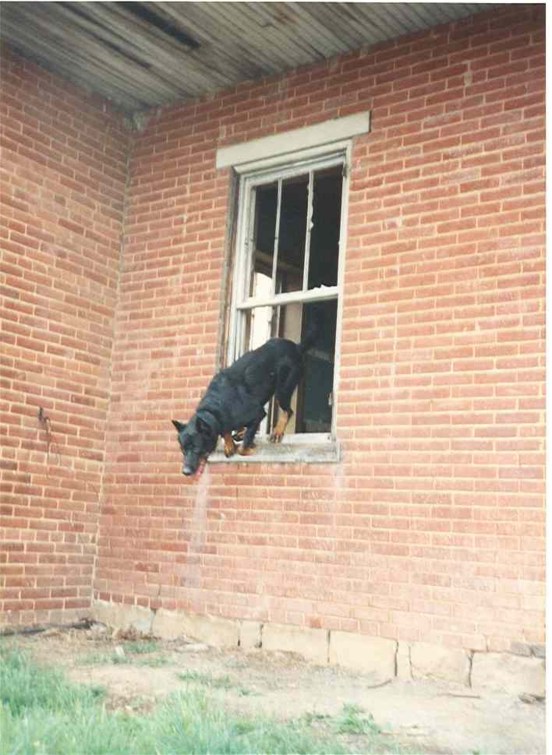
Scout SAR training window

Pet dogs who suffer from PTSD can include dogs that have been frightened by fireworks, are noise sensitive, or have been injured in some way. The symptoms usually vary from case to case. Some dogs will be over-responsive, showing extreme fear for example, while others change the way they interact with their owner/handler such as becoming aggressive or over clingy or timid.

Other symptoms can include attempting to escape certain environments or avoid those environments. In some cases, the dog in question who was a good working dog will suddenly fail to complete his tasks or shut down entirely.

Treatment for each case will vary. Sometimes a veterinarian will suggest an anti-anxiety medication to be used for the short term. This must be coupled with retraining, desensitizing to the environmental elements and situations that cause the problem and counter-conditioning to build the dog’s confidence. People who own or work with these dogs must understand that it takes time to work through the issues and that there is no magic pill to fix the problem.

Fortunately, there are certified canine behavior consultants who can help these dogs. There are also organizations dedicated to saving the dogs and finding suitable homes for them when necessary. One organization is Combat Canines: The DDoc Foundation.

It is important to keep in mind that rehabilitating these dogs takes time. No one knows for sure if they actually suffer from PTSD because the dogs cannot tell us. However, the symptoms strongly suggest that they do. Many of these dogs have served our country faithfully and deserve a second chance for a happy life.