Early spay or neuter in dogs

There is an on-going debate over spaying or neutering dogs before they reach maturity. In the United States, most veterinarians, shelters and rescue groups encourage dog owners to spay or neuter their dogs before or by six months of age, before a first heat for females. The AKC Health Foundation has been researching the pro’s and con’s of early spay/neuter in Golden Retrievers.

They have compared dogs that were spay/neutered before one year of age and after one year of age. What they have found so far is that the timing of spay/neutering had a significant effect on the health of the dogs. They found that early neutering of male dogs more than doubled the risk of Hip Dysplasia but did not have the same affect on female dogs.

Early spay/neuter increased the risk of cruciat ligament tear (CCL) and lymphosarcoma (LSA) in both sexes. Late spaying in females increased the risk of hemangiosarcoma (HAS) and mast cell tumor (MCT). Intact female dogs had no mast cell tumors.
As a result of this study, the AKC CHF is extending its research to include German Shepherd Dogs, Labrador Retrievers, Dachshunds, Rottweiler’s, Chihuahua’s, Standard and Miniature Poodles. 

The question remains, what should a dog owner do? No one wants to increase the risk of health issues in their pet.

First and foremost is talk to your veterinarian and ask them if he/she is aware of the most recent studies concerning the effects of early spay/neuter. After researching the facts, the dog owner must evaluate their ability to handle a dog that is not spayed or neutered. How the dog will behave depends in part on how well it is trained and its breed as well as its individual personality.

Some considerations are:

Should I wait until my dog reaches sexual maturity and then have the dog spayed/neutered?

If I have a female dog can I keep the dog safe from being bred until it reaches or passes sexual maturity?

Can I deal with the discharge that comes with the “heat” cycle?

Do I have a prevention plan with my veterinarian to take care of an unwanted, accidental breeding with my female dog?

Do I have a plan to deal with an unwanted litter of puppies?

Can I keep my dog, male or female under control to prevent them from wandering/escaping during a heat cycle?  Females will wander to spread their scent to try to lure a male and a male will run away to find a female when he picks up her scent.

Can I control my male dog to keep him from marking?

If my male dog has a tendency to be aggressive, can I handle the aggression (toward humans and other animals) that sometimes manifests itself in un-neutered male dogs?

These are just a few of the important decisions a dog owner should consider when deciding if they should have their dog spayed or neutered before sexual maturity or at all.

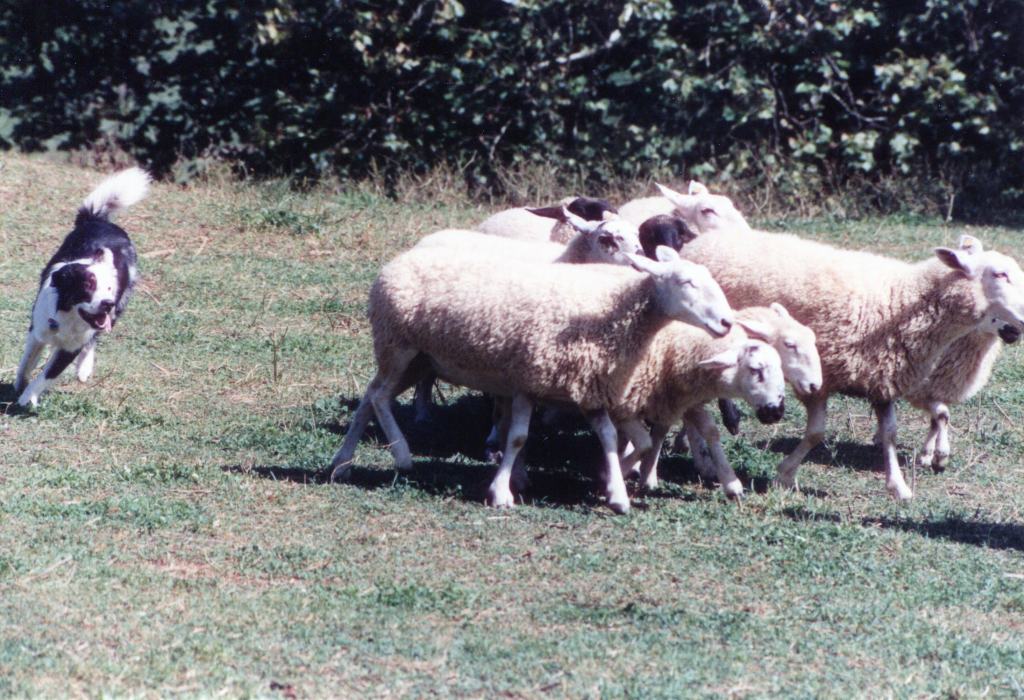
Sue’s Note: For many years people who own working dogs, such as Border Collies that are used for herding have said that if a dog is spayed/neutered before maturity that they do not work as well. Some people feel that the dog does not fully mature mentally if they are spayed before a first heat for females.
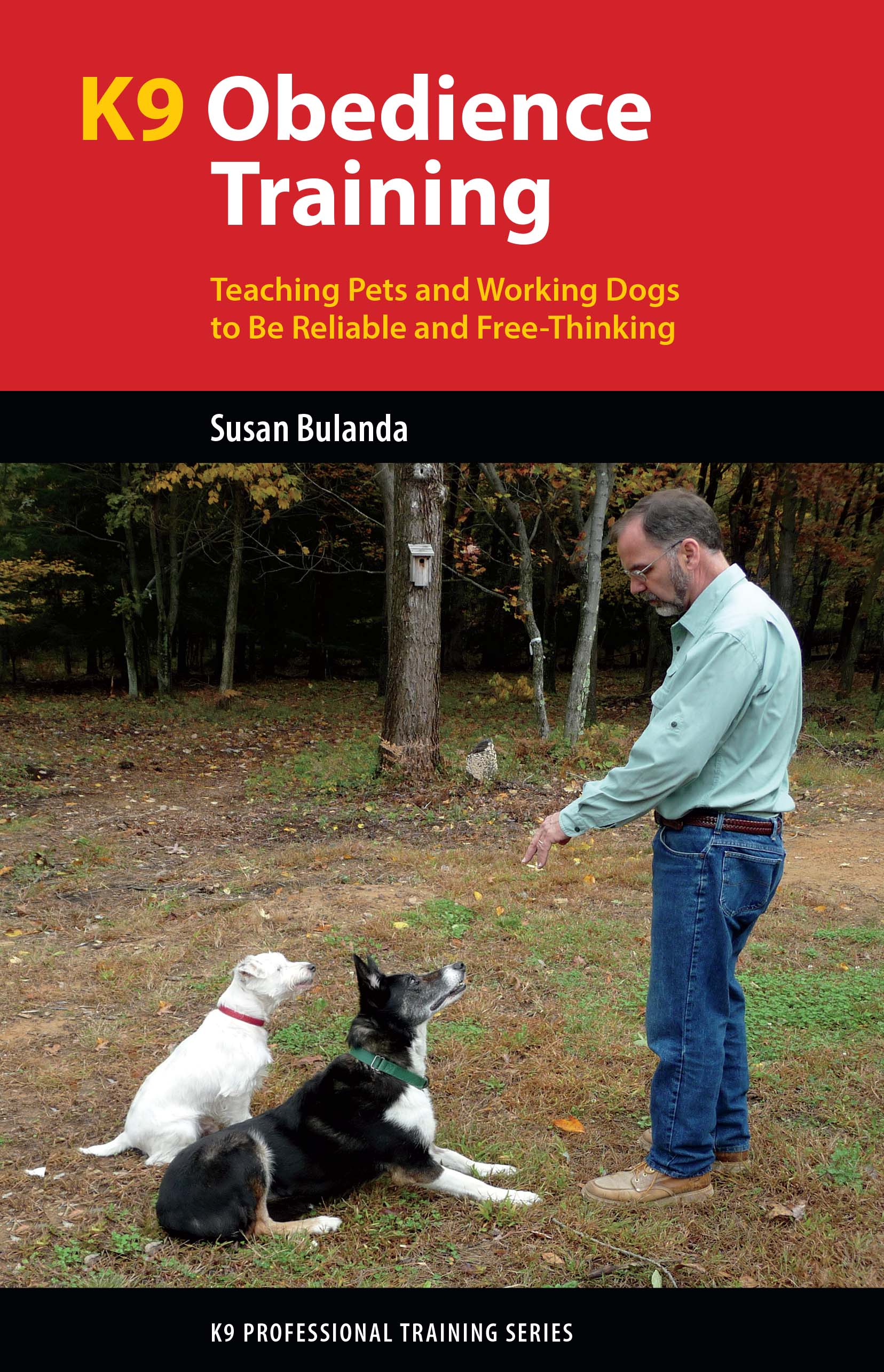
K9 Obedience Training: Teaching Pets and Working Dogs to be Reliable and Free-Thinking by Susan Bulanda

I am very excited to announce that my latest book is now available. If you would like an autographed copy please go to my website and order one, http://www.sbulanda.com.

If you live outside of the USA the postage may cost more than the book, but if you still want a copy please email me at: sbulanda@gmail.com and I will check how much the postage will cost. The book is also available as an Ebook. Below is a summary of what is in the book. As always, if after you read the book you can email me with any questions that you may have.

K9 OBEDIENCE TRAINING COVER PRINT

Obedience is the foundation for any reliable, well-trained dog. Without obedience, working dogs are ineffective in operations and pet dogs can be annoying and possibly a danger to themselves or others.

In K9 Obedience Training, you will learn the techniques that I have developed during my career as a dog trainer and then certified animal behavior consultant. The methods outlined in my book will let your dog be free-thinking as well as obedient. I also cover the latest research about how a dog thinks, what they understand and what they are capable of solving.

What is free-thinking? This is when a dog can apply what he has been taught to situations that he has not encountered before. His training allows him to solve problems and even perform obedient disobedience. An example of obedient disobedience is when a person directs a dog to do something, but the dog knows that it is not safe to do it. For example, if you toss a ball and it drops over a ledge that is unsafe, the dog will not retrieve it even though you have told him to “fetch.” This allows the dog to make decisions. It does not undo the training that the dog has had.

In my book I cover many topics that are part of obedience but not part of the basic obedience exercises. This includes teaching your dog to allow you to groom him, handle his body parts for things such as nail clipping, brushing the coat and teeth.

The book also covers basic manners such as not jumping, bolting in and out of doors and other safety exercises.

What is also very important is the discussion about who should train the dog and the rules that you must follow to successfully train the dog. Everything is explained in detail so that you can understand the purposes behind the rules.

I also cover food and how it affects your dog’s behavior. There is so much more in this book including some fun tricks to teach your dog. And for fun, at the end of the book is a photo gallery of some of the animals that have shared my life.

Here is a list of major topics. Many of these have sub-topics as well.

Part I Training Your Dog to Think Freely

  1. What is a Free-Thinking Dog?
  2. A Positive Training Philosophy

Part II Pre-Training Basics for The Free-Thinking Dog Trainer

  1. Talking to Your Dog
  2. Questions to Ask Before You Start Training
  3. House Training and Crate Training
  4. Handling Your Dog’s Body for Grooming and Hygiene

Part III

  1. The Equipment
  2. Setting Up for Success
  3. Basic Obedience Training
  4. Advanced Obedience for Safe Work, Sport and Play
  5. Exercises for Common Behavioral Challenges
  6. Tricks

Hydrating Working Dogs

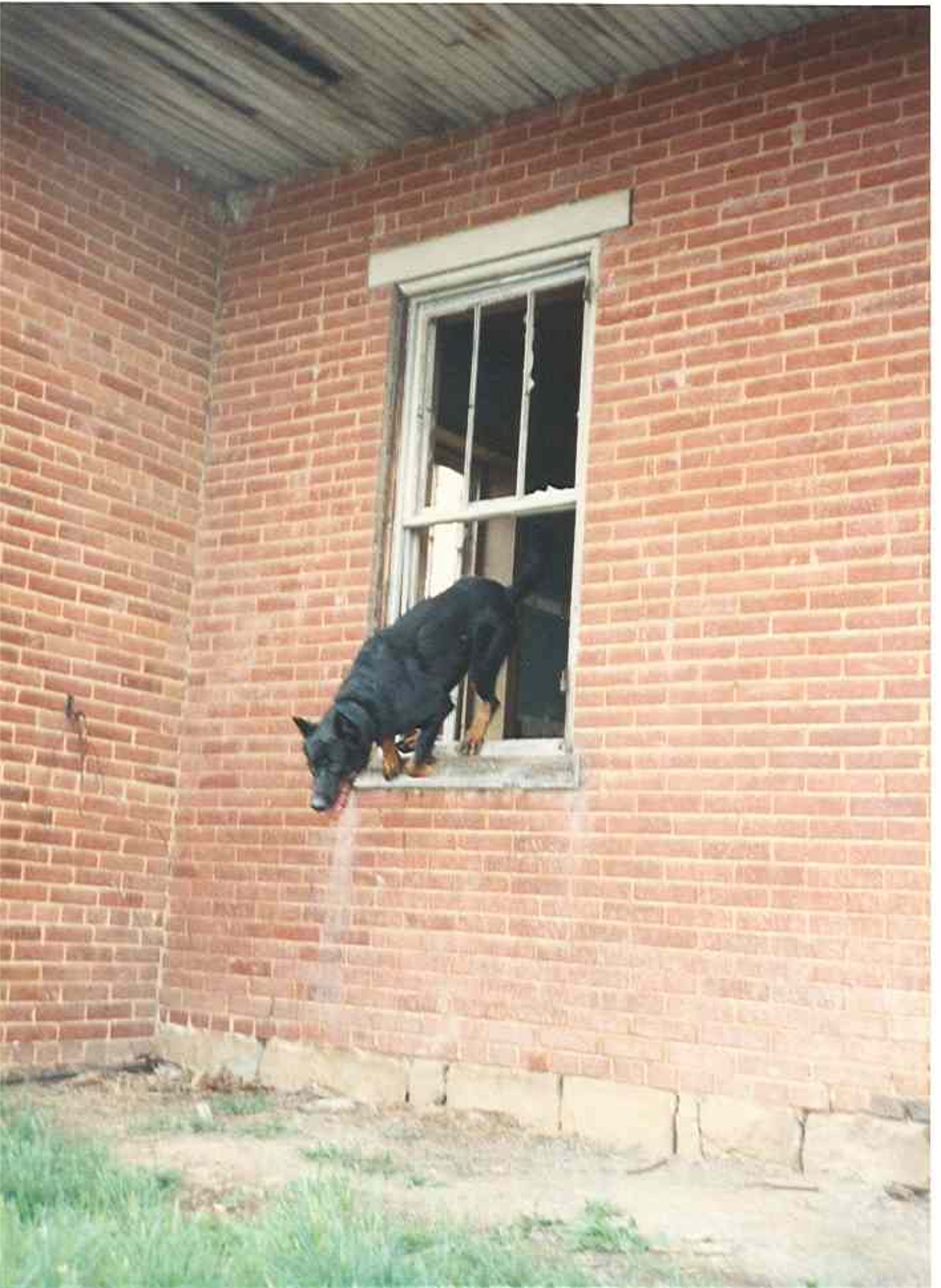
Dogs who work in hot weather such as border patrol dogs, search and rescue dogs as well as military dogs often become dehydrated when they work in hot environments.

Scout SAR training window

Handlers of these dogs do not agree about how to hydrate their dogs to prevent heat stroke and dehydration. There are three major ways that handlers hydrate their dogs.

  1. Free access to drinking water
  2. Subcutaneous hydration (a needle under the skin) of water and electrolytes
  3. Drinks containing electrolytes

Researchers studied all three methods and found that they all worked. However, they found that by using a chicken flavored electrolyte drink, even dogs who were reluctant to drink, would drink more liquid.

The researchers tested the dog’s urine and found that they passed the sodium and therefore did not have a buildup of sodium in their body which had been a concern about using electrolyte drinks. Thus, drinking a chicken flavored electrolyte drink did not have any negative effects on the dogs.

A new job for dogs

Dogs are increasingly being trained to detect unusual things. The latest job is detecting the very difficult to find, Hermit beetle and its larva which live for up to three years hidden in places such as hollow trees in wooded areas.

The use of dogs was the brainchild of Dr. Fabio Mosconi of the Italian Agricultural Research Council and Spienza University of Rome. They have successfully trained Teseo, a Golden Retriever, to detect the endangered beetle.

DSCN1836

Beetle detection is another job to add to the growing list of things dogs have and are being used to detect. Besides finding the commonly known things, such as drugs, bombs, humans, and agricultural items at airports, dogs have been used to find such items as Wolf scat, Bird nests, toxic mold, old money, lost pets, and gold ore just to name a few. Dogs are also able to alert people to oncoming seizures, low blood sugar and cancer.

Although scientists are still trying to develop a machine that can equal the scenting capabilities of dogs, they have yet to succeed. Dogs are truly man’s best friend performing so many jobs other than detection work.

www.sciencedaily.com/releases/2017/08/170828123340.htm