Scientists from the Universities of Edinburgh and California, UK Dementia Research Institute and Scottish Brain Sciences studied the brains of 25 cats who showed signs of dementia after they had passed away. They found that there was a build-up of the toxic protein amyloid-beta in the brains of cats with the condition, which is one of the defining features of Alzheimer’s disease in humans.
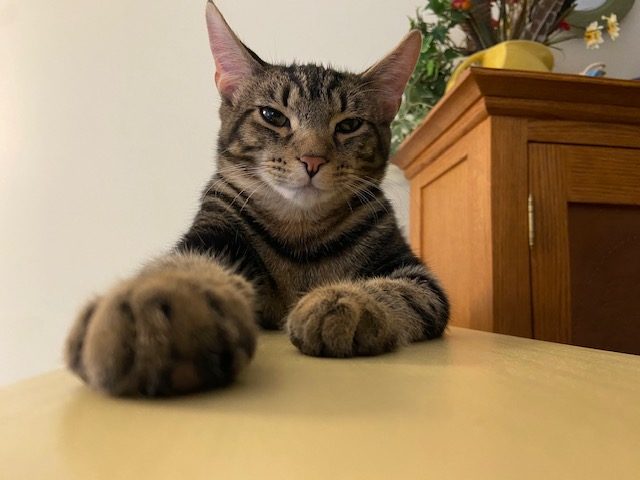
This finding will help scientists determine if the treatments for humans with dementia may help cats, dogs and other pets who suffer from dementia. Unlike rodents, cats naturally develop the brain changes associated with Alzheimer’s disease. The research may lead to treatments for pets.
Journal Reference:
Robert I. McGeachan, Lucy Ewbank, Meg Watt, Lorena Sordo, Alexandra Malbon, Muhammad Khalid F. Salamat, Makis Tzioras, Joao Miguel De Frias, Jane Tulloch, Fiona Houston, Danièlle Gunn‐Moore, Tara L. Spires‐Jones. Amyloid‐Beta Pathology Increases Synaptic Engulfment by Glia in Feline Cognitive Dysfunction Syndrome: A Naturally Occurring Model of Alzheimer\’s Disease. European Journal of Neuroscience, 2025; 62 (3) DOI: 10.1111/ejn.70180
Cite This Page:
University of Edinburgh. “How cats with dementia could help crack the Alzheimer’s puzzle.” ScienceDaily. ScienceDaily, 14 August 2025. <www.sciencedaily.com/releases/2025/08/250813083611.htm>.
 A Blog by Susan Bulanda