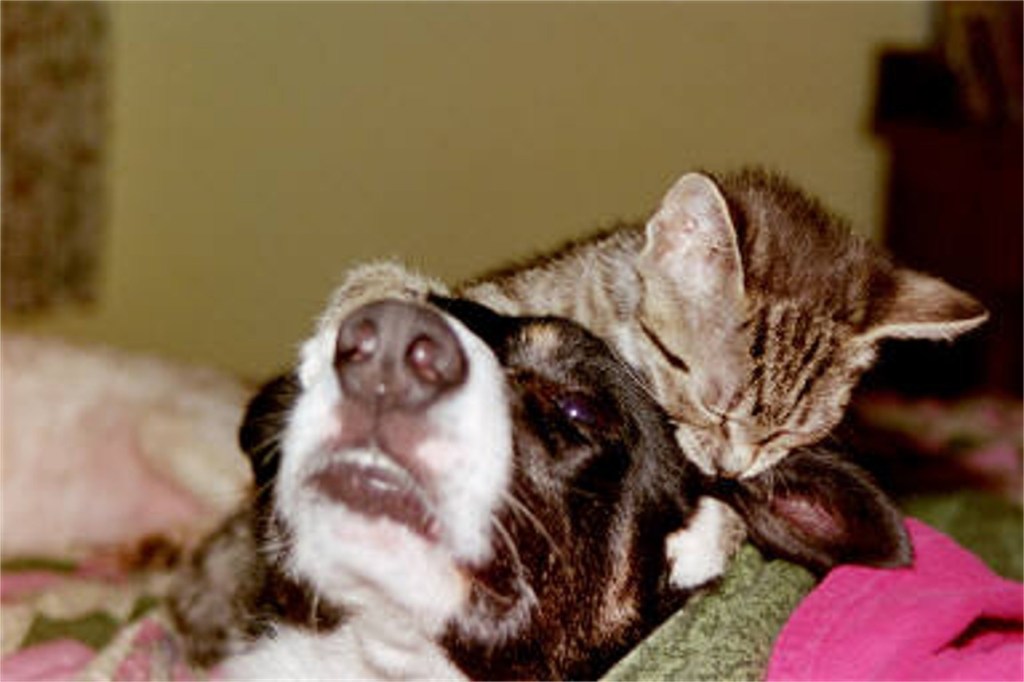
Working with animals can cause mental issues

It may be surprising to learn that veterinarians and people who volunteer to help animals may be at a higher risk for mental health issues such as depression, anxiety and suicide.

Katherine Goldberg, DVM, LMSW, community consultation and intervention specialist at Cornell Health and Founder of Whole Animal Veterinary Geriatrics and Palliative Care Services has conducted a study to determine how and why this exists. She found that people who volunteer with animals are often confronted with the results of cruelty, and while they want to help animals, they are often faced with having to euthanize healthy animals due to a shortage of homes.

Veterinarians are faced with the same circumstances as well as high college debts, lower income and clients who may question the cost of care for their pets and be suspicious that their veterinarian is trying to push services that their pet doesn’t need.     

Goldberg feels that veterinarian colleges should include courses to help veterinary students deal with the pressures of caring for animals.

Author’s Note: With the advances in veterinary care, at times it has become more difficult to determine how much intervention a pet owner should do for their pet. Like human doctors, veterinarians want to save the life of a pet and will offer all of the options available. What helps the pet owner decide is to evaluate what quality of life the pet will have after treatments. Veterinarians will help make that decision.  

Human breast cancer drug helps dogs with lung cancer

The HER2 gene which is found in women with breast cancer, has been linked with canine pulmonary adenocarcinoma (CPAC) in dogs. Researchers at the Translational Genomics Research Institute (TGen) which is an affiliate of the City of Hope and Ohio State University found that a drug, neratinib, can help the over 40,000 dogs who develop CPAC each year.

CPAC is an aggressive cancer that is similar to the type of human lung cancer that non-smokers develop. This study has given researchers more information about the genetics of this disease and treatment options that can help both dogs and humans.

Raw meat diet in dogs associated with antibiotic-resistant bacteria

No matter what age the dog is, eating a raw meat diet causes them to pass antibiotic resistant Escherichia coli (E.coli) in their feces which can be transmitted to humans.

Researchers from the University of Bristol conducted an in-depth study of 823 dogs of all ages.

They found that dogs who lived in the country had a strong risk factor in passing antibiotic resistant E.coli but dogs who live in the city had more complicated risk factors that may be linked to the variety of lifestyles and exposure to other dogs.

E. coli is found in the intestines of both humans and animals and is a common cause of various diseases including urinary tract infection and can cause sepsis in other parts of the body.

The bottom line is that feeding raw meat to dogs is not safe for both the dog and humans. If a dog owner insists on feeding raw meat to their dog, they must be very careful of infection.

A link between a dog’s sense of smell and vision

Researchers at Cornell University have found that there is a neurological link between a dog’s sense of smell and their vision. This study shows that a dog perceives his environment using both vision and scent. This is the first time that scientists have found a neurological connection of this nature in any animal.

In addition, scientists have found that dogs have connections between areas in the brain that process memory and emotion which are similar to humans but that they also have connections between the spinal cord and the occipital lobe which are not found in humans.

Riley

This finding explains why blind dogs are able to function, being able to play fetch and navigate their surroundings much better than people with similar blindness. That is comforting for people who own dogs who are blind or have gone blind.

Author’s Note: Although blind dogs can find their way around better than people, it is still a good idea to not move furniture around. If you have to move or add furniture, you can put a unique gentle scent on the corners of the furniture at the dog’s level to help the dog locate and identify the new or moved object.

We also have to think about how the relationship between scent and vision affects dogs in terms of training and their reaction to the environment, taking into consideration personality traits such as friendliness, fear, aggression etc. While we know that many of the personality traits of dogs are inherited, is it possible that these findings might explain further exactly how and what is inherited. Many people do not realize how complex dogs and perhaps other animals are.

Male dogs more likely to develop Transmissible Venereal Tumors

Researchers at the University of Cambridge’s Department of Veterinary Medicine discovered that male dogs, especially free roaming dogs, were four to five times likely to develop the Oro-nasal form of Canine Transmissible Venereal Tumors (CTVT) than female dogs.

CTVT is an unusual cancer that can spread between dogs that come in contact. This type of cancer is infectious because the living cancer cells can be physically transplanted from one animal to another. The researchers feel that the reason it is more prevalent in male dogs is because they spend more time sniffing and licking female dog genitalia.

The common symptoms are difficulty breathing, nasal deformation or bloody or other discharge from the nose and/or mouth. Fortunately, this type of cancer is treatable with Vincristine chemotherapy.  

The researchers noted that transmissible cancers are found in Tasmanian Devils as well as marine bivalves such as mussels and clams.

DNA Study shows disease causing variants in cats

Studying the DNA of animals helps breeders produce healthier animals. A recent study conducted by Heidi Anderson from Wisdom panel in the USA and researchers from the University of Helsinki in Finland found that there were 13 genetic variants in pedigree cats that are linked to diseases. This was more than researchers previously thought. The good news is that these variants are decreasing in breeds that are regularly DNA tested.

The researchers studied over 11,000 cats which included 90 pedigree breeds and breed types as well as 617 non-pedigree cats. What is interesting is that the researchers found that there was more genetic diversity in the non-pedigree cats. The non-pedigree cats had three disease associated variants found exclusively in non-pedigree cats. The bad news is that they found 13 disease associated variants in 47 breeds where none had been found previously. In the past, 40% of Persian cats were affected by PKD1, the variant that causes Polycystic Kidney Disease yet of the 118 Persians tested, none had the variant, yet it was found in Main Coon and Scottish Straights cats. Good breeding practices will continue to provide healthier pets for everyone.

Does a dog owners stress level affect their dog?

According to a study conducted at the Linköping University, Sweden dogs mirror their owners stress level. The study is just the beginning and more research is needed. The dogs in the study were Border Collies and Shetland Sheepdogs owned by woman. The researchers did note that the higher level of stress did not influence the dog’s personality but it did affect the owners. They also took into consideration that the two breeds studied are bred to respond quickly to commands from their owners. Additional studies are planned to

explore other breeds with the goal of being able to match dogs and people more successfully. They want to see if other breeds are not as affected by their owner’s stress level.

Sue’s Note: It is critical that the climate of a household and the people in it are seriously considered when selecting a breed or type of dog to add to the family. Certain breeds are more active than others. It is never a good idea to introduce a highly excitable dog into a very active household. For example, some terriers may not be a good match for a home where there are young, highly active children. Just like people, dogs can reach their tolerance level and if pushed too far may withdraw or bite.

Living with dogs has an unusual benefit – prevention of Crohn’s disease

Researchers used an environmental questionnaire to evaluate 4300 people related to family members who had Crohn’s disease. Interestingly they found that one of the factors that surfaced was that children between the ages of 5 – 15 who lived with dogs and/or a large family were less likely to develop Crohn’s disease. The study did not indicate that living with cats had the same benefit. Other factors also came into play, and the connection is not entirely clear, but it is promising and warrants further research.

Do octopuses, squid and crabs have emotions?

If they do, then this may change the way people think of these creatures. In a view shattering report, Kristin Andrews, a York University Professor, and also the York Research Chair in Animal Minds, who is working with the London School of Economics supported by the U.K. government has concluded that there is enough proof that decapod crustacean’s and cephalopod mollusks have feelings.

Scientists have demonstrated that octopuses can solve complex puzzles and that they show preferences for different individuals. This is a huge leap in traditional beliefs. For example, even up to the 1980’s it was believed that human babies who were pre-verbal and animals did not feel pain. However, research has shown that mammals, fish, octopuses and crabs, avoid pain as well as dangerous locations. Mammals have shown empathy and concern when their young are in pain.

photo from dreamstime

This research has opened the door to consider whether or not these animals experience curiosity, affection or look forward to a future reward. But more importantly, just as the United Kingdom is seriously considering amendments to its animal welfare legislation that acknowledges the feelings of these beings, so must the rest of the world.

Sue’s Note: Think about the thought process that it takes to solve complex puzzles and show preference to a specific individual. Wouldn’t that indicate the presence of emotions? When someone prefers one thing over another, isn’t that an example of an emotional reaction? Think about it.   

Fish can perform addition and subtraction

The research group led by Prof. Dr. Vera Schluessel from the Institute of Zoology at the University of Bonn has proven that Cichlids and stingrays can perform simple addition and subtraction up to the number five. The researchers still do not understand how fish use this ability.

Google free images

What makes this very interesting is that fish do not have the part of the brain that allows them to perform complex cognitive tasks and these species of fish do not need the ability to count in the wild. Other species of fish do pay attention to the number of eggs in their clutch.

Author’s Note: It is always amazing to learn that fish and animals have more intelligence than humans assumed that they have. It makes it exciting to think of what is yet to be discovered and should make people pause the think about how we treat other species.