Over the past few years there has been a lot of discussion about Pit bull Terriers as well as Pit or Bully mixes. Unfortunately, there are many misconceptions about these breeds to the point where the Bully breeds in general have been banned in certain states. Owners are often restricted as to where they can live, what homeowner’s insurance they can get and how they have to house or walk the bully breeds.
People fail to understand the nature of these dogs therefore I have compiled a list to dispel some of the myths surrounding them.
- Myth: All Pit bulls will attack another dog.
The truth of the matter is not as clear cut as many are led to believe. First of all, the Pit bull is a terrier. As such it can have a typical terrier personality. In the dog show ring a number of terrier breeds are tested by “sparring” them. Here is a quote from the Kerry Blue Terrier (KBT) web site, “The act of sparring KBTs allows a judge to determine which KBT possesses the greatest amount of poise and fire, tempered with dignity and control. In other words, sparring shows the judge “who’s who”!”
To spar a dog is when the dogs are put face to face and they must show a willingness to challenge another dog. Although they are not allowed to fight, sometimes due to poor handling a fight will ensue.
The difference between the Pit bull and other terriers is that the Pit bull breed was bred not to bite his handler when pulled apart in a dog fight. There are few dogs that will not bite any hand that gets in the way of a dog fight. This is why if your dog is in a fight, never try to pull the dog’s apart by their collar, you will be bitten. The Pit bull is the only breed that is specifically bred not to bite people.
However, many Pit bull dogs will not fight other dogs. It is primarily a matter of training by their owners. The proof of this is how many Pit bull dogs have been beaten, abused, killed and otherwise discarded by those people who would use them in a dog fight, because they will not fight!
- Myth: Pit bull dogs can account for most of the human deaths by dogs.
This is difficult to prove because many dogs that are labeled as Pit bull dogs or mixes are in fact not at all Pit bull’s or mixes. It is difficult without a DNA test to determine if a dog is a mix between a Boxer, Boston terrier, Staffordshire terrier, Bullmastiff or a Rottweiler—just to name a few breeds. Many of the people who label a dog as a Pit bull or mix are not well versed in identifying breeds of dogs to make that determination. Even professionals in the dog business can find it difficult to determine what breed or mix a dog is. For example, if you saw a small Bull mastiff standing next to a large Pit bull, or a Pit bull standing next to a Staffordshire terrier or an American Bulldog, or even a Boxer, would you be able to tell the difference?
3. So why are the Pit bull types most often linked to attacks of all kinds on humans and other animals? Part of the reason is that they are currently the popular breed used by drug dealers, and other unsavory people that train the dogs to attack. In the past other breeds were popular with this element of society such as German Shepherds, Dobermans and Rottweilers. Also, when smaller dogs attack it is often not reported because they do not do much damage. The main thing to consider when you hear or read about a dog attacking a human, is to find out if the dog was taught to be aggressive and/or mistreated.
There are a number of key factors that come into play as to why any dog will attack or bite.
a. The way the dog was bred is vital to this issue. Many dogs that come from backyard breeders, commercial breeders, puppy mills or people who do not understand genetics and careful breeding can have a bad temperament. This is not limited to the Bully breeds which are why organizations such as the American Temperament Test Society formed to encourage people to show that the dogs they want to breed or own have a sound temperament. Any dog that does not have a sound temperament can be dangerous, especially if they are a large breed of dog.
b. The way the dog is raised by its owner plays an important part in how the dog will develop. Each puppy, no matter what breed, must receive proper socialization in order to increase its chance of adjusting to life with humans. This is why many dog trainers and dog clubs offer Puppy Kindergarten classes to help dog owners properly raise their puppies.
c. What the dog is taught is also critical. Every dog should have “no force” obedience training. This is critical for large dogs as well as the terrier breeds since they can be very focused on other things and a challenge to train for the novice dog owner.
d. The environment that the dog lives in is very important. Dogs are very intelligent and the latest research shows that they are much more intelligent than previously thought. When a dog’s needs are not met, the dog can become “mentally ill” in that he misjudges how he is supposed to behave. Solitary confinement — defined as being tied to a dog house, kept in a pen or a room in a house can have the same effect on a dog as it would a human—irrational behavior, violence and hostility. Even if the dog is not confined, aggressive behavior by the owner toward the dog or even other people can cause aggressive behavior in a dog.
e. The owner’s attitude can also play an important part in the way a dog behaves around other people. For example, the person that purchases the dog for protection will act differently when someone comes to their door or into their house than the person who only wanted a companion. Either consciously or unconsciously, they want the dog to attack an intruder to protect their home. They expect the dog to bite but they do not want the dog to bite everyone. They expect the dog to understand the difference between a friend and foe.
Unfortunately the dog will sense the owners fear that the dog will bite wanted guests and friends. However, the dog never associates himself as the cause of the fear or anxiety and thinks that everyone who comes near the owner, or to the door, is a threat. Pit bull’s are loyal dogs who instinctively want to protect their family, just like many other breeds. Therefore, as the dog becomes more protective and the owner becomes more fearful, when people come to the door, the dog’s protective instinct increases with every encounter. It is a vicious cycle.
f. One aspect that people hesitate to discuss or consider is the neighborhoods and types of people who own Pit bull’s and what they do with the dogs. Do most bites occur in a neighborhood where people have the dogs for protection, engage in dog fighting, or as a warning for illegal activities? As explained above, the owner plays a big part of why dogs behave as they do.
g. When looking at dog bite statistics it is important to consider what percentage of the whole population of Pitbull’s (real Pitbull’s not dogs labeled as Pitbull’s) bite humans compared to other breeds.
h. Lastly, each bite must be evaluated based on its own merits. Was the dog trained to bite? Was the dog teased? Was the dog mistreated, etc.
All dogs will bite given the right circumstances. A bite is not always an act of aggression. A bite can be a warning to be left alone. People seem to forget that a dog’s mouth is also his “hands.” They communicate, manipulate, explore, and learn by using their mouth. If a dog owner does not teach a dog to inhibit his bite, a playful nip can hurt.
According to statistics, approximately 4.7 million dog bites occur each year. The following list ranks breeds in order of the most bites attributed to that breed.
- Chihuahua
- Bulldog
- Pit Bull
- German Shepherd
- Australian Shepherd
- Lhasa Apso
- Jack Russell Terrier
- Cocker Spaniel
- Bull Terrier
- Papillion
While the Pit Bull Terrier is ranked third on the list, of all of the bites reported, they do not represent the majority of bites. Note that three of the breeds on the list are toy breeds.
Many if not the majority of Pit bull’s and the Bully breeds are sweet, wonderful companions. It is ironic that in today’s world it is against the law to use certain words, and people protest being profiled. Yet the Bully breeds are being profiled and persecuted no matter what the individual dog is like, even if the dog only looks like a Bully breed or mix and in reality is not.
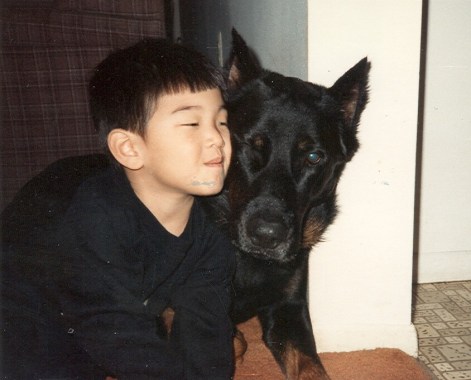
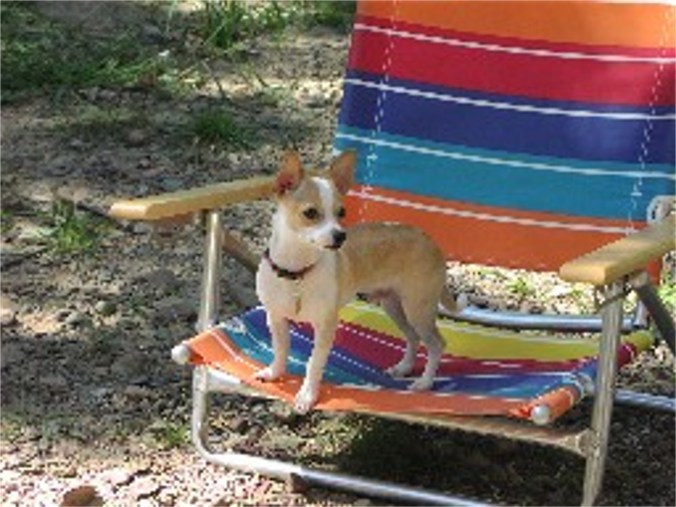
The following photo is from on on-line free photo site: Can you tell what breed it is?