Getting overweight cats to lose weight

Many cat owners who have overweight cats find it very difficult to get their cats to lose weight. There are a number of reasons for this but one of the main reasons is that owners often underestimate how overweight their cat is. In some cases, they do not recognize that their cat is overweight. The other factor that contributes to weight problems in cats is that cats do not exercise very much. Even when owners try to get their cats to exercise and succeed, it is not enough to help the cat lose weight.

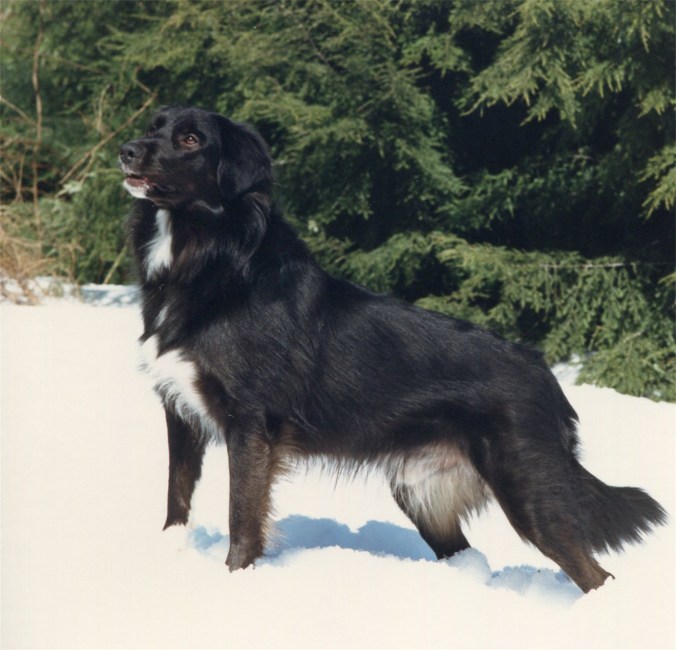
cat in snow

Kelly Swanson, Kraft Heinz Company Endowed Professor in Human Nutrition in the Department of Animal Sciences and the Division of Nutritional Sciences at Univ. of Illinois has conducted research to determine the safest way to help cats lose weight.

One of the problems associated with reducing weight in a cat is that there is a health risk if the cat loses too much weight too fast. The liver becomes over loaded with fat which can cause is hepatic lipidosis. The best way to prevent this is to reduce the cat’s food intake gradually. Cats will hit a plateau the same as people who go on a diet. The key is to keep slowly reducing their food intake.

Interestingly, the researchers monitored the overweight cats in the study to see if their activity level increased with their weight loss. They found that it did, a tiny bit, but not enough to make a difference. Therefore, it is important that cat owners continue to play with their cats to get them to exercise more. Don’t be afraid to experiment with ways to help your cat exercise. In the photo above, I discovered that my cat liked to chase tiny snowballs in footprints. Who would think a cat liked to play in snow?

Overall, the researches concluded that when the cats lost weight, they were generally healthier. Doesn’t that sound familiar?
Goats can read human faces and prefer people who smile!

Although Dr Alan McElligott is currently based at the University of Roehampton, he led the study at Queen Mary University of London to determine if goats react to human facial expressions. He found that goats would rather interact with people who smile and are happy. The study further showed that goats use the left hemisphere of their brain to react to positive facial expressions.

ness bowling1

Anyone who works with goats recognizes that they are very attuned to human body language, but this study shows that goats recognize facial expressions and the emotions that they represent. Past studies have shown that dogs, birds and horses also have this ability.

Goats, horses, birds  and dogs  represent a wide spectrum of the animal kingdom. It stands to reason that many other animals, both domestic and wild have the same abilities to some degree. The challenge is to devise a way to test a wider range of animals and birds. It is exciting to be able to understand more about the animals that we love and anticipate what future studies will teach us.

Toxoplasma gondii in cats and humans

The parasite Toxoplasma gondii (TG) is widely spread, infecting about 30 – 50% of the world human population. The main host for TG is our beloved pet cats and cats in general. The parasite is transported to humans by eating insufficiently cooked meat or by contact with cat feces, putting the parasite in the stomach. From there it passes through the intestinal wall. Next our immune cells attack it but instead of killing it, they become “Trojan horses.”

OLYMPUS DIGITAL CAMERA

OLYMPUS DIGITAL CAMERA

People who have impaired immune systems and unborn fetuses that are infected with Toxoplasmosis have a high risk of death. However healthy people may show only mild symptoms.

Studies have shown that carriers of TG have more instances of mental illness such as schizophrenia, depression and anxiety disorders. Other studies have illustrated that people who are infected with TG may be more prone to aggressive and risky behavior.  This is because TG will eventually get into a person’s brain.

The good news is that since the scientists at Stockholm University have unraveled the mystery of how TG works and is transported, they have found that when mice are infected with TG and given regular blood pressure medicine, it inhibits its spread.

Grain free diet for dogs may be linked to heart disease

Recently veterinarians have seen an increased in canine dilated Cardiomyopathy (DCM) and when they compared the diets of the affected dogs, they found the common factor was a grain free diet.  The pet foods that replaced grains with peas, lentils and other legumes or potatoes are suspect.

scan0013 - Copy

DCM is affecting dog breeds that are not genetically predisposed to this heart condition. Scientists have shown that dogs can digest grain. They may have difficulty digesting raw grains but those found in dog food are easily digested.

I believe the myth about grains started when researchers compared dogs with wolves since wolves cannot digest grain.

Dog food manufacturers are always looking for ways to persuade people to buy their dog food and this is one way that they can convince people to pay a higher price for grain free food.

Dogs are not wolves and should not be treated as such. The only time you must restrict a dog from eating grain is if the dog is allergic to a specific grain such as corn, wheat, etc.

Therefore, be cautious about feeding your dog grain free food. However, do feed your dog a high-quality food such as Wysong or Annamaet.

What’s in your dog’s treats?

Giada Morelli at the University of Padua in Italy and other researchers analyzed 32 popular dog treats that could be purchased in pet shops and supermarkets. They examined 5 biscuit types, ten tender treats, three meat-based strips, five bovine skin rawhides, twelve chewable sticks and six dental care sticks.

img106

They analyzed the ingredients based on the World Small Animal Veterinary Association (WSAVA) guidelines looking for the levels of minerals, starch, simple sugars (glucose, fructose and sucrose) and the amino acid hydroxyproline (a component of collagen).

What they found were rather surprising and should be a caution to dog owners. Seventy-six percent of the treats contained 4 -9 ingredients that were not specifically listed on the label. For example, the classification “cereal” was listed but not what kind. Treats that were made of meat had “meat and animal derivatives” listed instead of which meat and what animal derivatives.

About half of the treats listed “sugars,” and all of them had various amounts of minerals. The researchers suggested that further studies be done on a wider variety of treats and most important, that dog owners who have dogs with sensitivities or diseases should exercise extreme caution when selecting and giving their dogs treats since the ingredients could cause medical issues for those dogs.

While on the topic of treats and chews, to test if the treat or chew is safe for your dog, put a piece of it in water and if it does not dissolve in five to ten minutes, there is a good chance that it will not dissolve in your dog’s intestines and can cause bowel blockage. High on the list of items that cause bowel blockage are rawhide, bones and other hard, chew items.

Feline Epilepsy

Many people realize that dogs can have epileptic seizures, but do not realize the cats can suffer from epilepsy as well. There are two general types of epilepsy, intracranial epilepsy, which is caused by defects in the brain on a cellular level and is more common in dogs and humans, but seems to be rare in cats, and extracranial which are seizures due to injuries outside the skull.

IMG_0236

Seizures in cats are usually caused by brain tumors, infractions or even a stroke. Sometimes the cause of the seizures can be due to kidney disease, liver disease, hypoglycemia and exposure to toxins and poisons.

Some signs of an epileptic event are:

Blank stare

Shake one leg

Cry out in pain

Falling to one side

Uncontrollable Urinating or Defecating

Paddling their feet

Loss of consciousness

Jaw chomping

Become clingy to owner

Shake

Undue restlessness

Unusual salivation

Loss of vision temporally

If your cat shows any of the above signs an immediate visit to your veterinarian is warranted.

Idiopathic epilepsy usually shows up between the ages of 1 and 3 years of age. Seizures are most likely to occur when the cat is resting or asleep, in the morning or at night.

Seizures that are a result of an injury will show up after the injury. The treatment will depend on the cause of the seizure and may require a battery of tests since the seizures can result from various diseases.

If your cat suffers from seizures, keep a log of when the seizure starts and when it ends. It is also a good idea to take note of any environmental events that could have caused the seizure.

If the seizure lasts for more than five minutes get the cat to the veterinarian right away, this is an emergency. If your cat is diagnosed as being epileptic, do not panic. Be sure to have a plan for when the seizure occurs to keep the cat safe, in a place where the cat cannot get hurt. Cats will not swallow their tongue so there is no need to put anything in their mouth. Keep in mind that your cat may take a few hours to return to normal behavior.

By understanding the nature of your cat’s seizures, you can help your cat live a safe, long and normal life. While seizures are frightening to look at, with your veterinarian’s help, they can be controlled.


Animals can identify both time and space

Edward Wasserman, Professor of Experimental Psychology in the Department of Psychological and Brain Sciences at the University of Iowa has determined that pigeons use a common area of the brain to judge space and time. This suggests that these abstract concepts are not processed separately.

OLYMPUS DIGITAL CAMERA

Parrotlet “Sweet Pea”

To determine this, the pigeons were put through the “common magnitude” test. This is where the birds were shown (on a computer) a horizontal line either 6 cm or 24 cm long for either 2 seconds or 8 seconds. When they correctly pecked one of four visual symbols, the length or the duration of the line, they received food.

This compares with a person’s ability to determine space and time without the use of a watch or ruler. Other animals that have been tested have also shown this ability.

One common example that almost all pet owners have witnessed is when their pet knows that they are coming home each day. The dog or cat who waits for their owner to come home from work at the same time each day exhibits what the researchers have tested in pigeons.

There is so much about animals that we are still learning. If only they could talk and tell is what is on their minds!

Dogs try to communicate with angry humans

Animal behavior researchers from the University of Sao Paulo, Brazil, and the University of Lincoln, UK found that dogs will mouth-lick in response to photos of human faces that appeared to be angry. The researchers also let the dogs hear angry human voices and did not see the same mouth-licking behavior. This indicates that dogs are responding to visual stimuli and that they recognize the emotional expressions of human faces. The fact that the dogs tested did not respond the same way to pictures of other dogs indicates that mouth-licking is a way that dogs try to communicate to humans.

scan0019

This is an interesting study because it shows us that dogs do use visual clues as well as their other senses to respond to humans. The fact that they only responded to humans shows that they have specific ways to try to communicate with humans.

With studies such as this one, we learn more about the emotional lives of dogs as well as the unique ways that they attempt to communicate with us. It also indicates that they care about their relationship with humans since this behavior is evident in all if not almost all dogs.

Hydrating Working Dogs

Dogs who work in hot weather such as border patrol dogs, search and rescue dogs as well as military dogs often become dehydrated when they work in hot environments.

Scout SAR training window

Handlers of these dogs do not agree about how to hydrate their dogs to prevent heat stroke and dehydration. There are three major ways that handlers hydrate their dogs.

  1. Free access to drinking water
  2. Subcutaneous hydration (a needle under the skin) of water and electrolytes
  3. Drinks containing electrolytes

Researchers studied all three methods and found that they all worked. However, they found that by using a chicken flavored electrolyte drink, even dogs who were reluctant to drink, would drink more liquid.

The researchers tested the dog’s urine and found that they passed the sodium and therefore did not have a buildup of sodium in their body which had been a concern about using electrolyte drinks. Thus, drinking a chicken flavored electrolyte drink did not have any negative effects on the dogs.

Ghosts of the Buffalo Wheel by Joe Jennings

Ghosts of the Buffalo Wheel by Joe Jennings, 273 pgs., ISBN: 9781980726098, $11.50, self-published

5151SSoPllL._SX331_BO1,204,203,200_

This is the second book about Sam Webber and Gunny the SAR dog, The Ghosts of Iwo Jima was the first in the series. This adventure takes Sam, Gunny and the team to the Buffalo Wheel, also known as the Medicine Wheel which is a real life National Historical Landmark in Wyoming. Based on clues, the team was assigned to find the remains of Butch Cassidy.

Mr. Jennings did quite a bit of research about the Medicine Wheel and what really happened to Butch Cassidy and the Sundance Kid. He mentions historical data about the pair and theories about their fate in his book.

The story weaves in native American traditions and lore as well as forensic research techniques that are used to determine if the remains that are found are those of Butch Cassidy. There is also the drama of the search and an attempt to steal the supposed gold that Butch hid from an old robbery.

This book is as entertaining as Mr. Jennings first book and it is especially fun for SAR people to read. I highly recommend it.