Bladder cancer in dogs

Although it is rare, bladder cancer in dogs is on the rise. Fortunately, there is a new test, the CADET℠ BRAF  to help veterinarians determine if your dog has bladder cancer.

OLYMPUS DIGITAL CAMERA

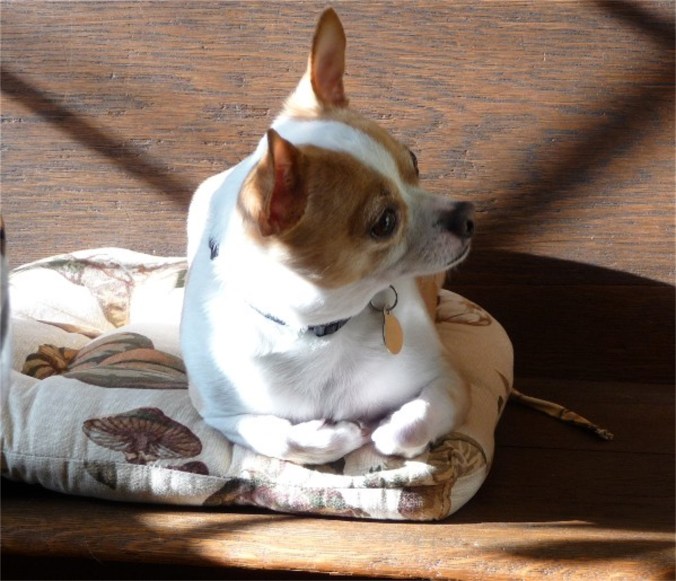
Parsons Russell Terrier

There are two types of bladder cancer, transitional cell carcinoma (TCC) and urothelial carcinoma (UC). The tumors start in the urinary tract, but can travel to the rest of the body including bones, liver, kidney, spleen, and skin.

Warning signs of bladder cancer can often be misdiagnosed as a lower urinary tract disease, such as stones and infections. The most common signs are when a dog urinates small amounts often, difficulty urinating, blood in the urine, and accidents in the house, frequent urinary tract infections that do not respond to treatment.

Certain breeds are more likely to get bladder cancer, and usually from the age of six years and older.

High risk breeds: Scottish Terrier, West Highland White Terrier, Beagle, Shetland Sheepdog, Wire Fox Terrier, American Eskimo Dog,  Australian Cattle Dog, Australian Shepherd, Bichon Frise, Border Collie, Russell Terrier, Lhasa Apso, Rat Terrier, Wire Fox Terrier, Parsons Russell Terrier.

Interestingly, veterinarians have found a link between feeding a dog safe fresh vegetables three times a week to a reduced risk of bladder cancer. On the other hand, exposure to herbicides and pesticides increased the risk of cancer.

The good news is that the CADET℠ BRAF test can catch the cancer in its earliest stages, even before symptoms start to show, and it can help veterinarians determine the extent of the disease.

Some veterinarians suggest that all high-risk breeds get tested from ages 8 years and older. It is a good idea to discuss this possibility with your veterinarian or go to SentinelBiomedical.com for more information.

English Bulldog one of the unhealthiest breeds in the world

There is little hope that breeders can create a healthier English Bulldog from the existing gene pool. Years of breeding for specific physical traits has caused the English Bulldog to become one of the unhealthiest breeds in the world.

img115

One of the reasons for the health issues in this breed is that people in general are more concerned about the dog’s appearance rather than its health. Researchers have used DNA to study the breed and found that there is not enough genetic diversity within the breed to make the needed improvements. When this happens outcrossing the breed to introduce genetic diversity is often the answer.

To this end, many Swiss breeders have out-crossed the English Bulldog with the Olde English Bulldogge, which is an American breed, to improve the English Bulldog’s health. Unfortunately, many English Bulldog breeders do not approve of this and feel that the resulting out-cross is not a true English Bulldog.

The English Bulldog as a breed started around 1835 with about 68 individuals. Since that time the breed lost popularity a few times which further limited the gene pool. In recent years the surge in the breed’s popularity has further caused genetic problems in the breed.

It seems that the only hope for the English Bulldog is to out-cross them as the breeders in Switzerland have done. It would not take many generations to breed the results of the out-cross to resemble the original bulldog.

Anyone who is considering owning an English Bulldog should research the health issues and life-span of this breed before purchasing one. The health issues can result in costly veterinarian bills. It also goes without saying that a puppy should only be purchased from a reputable breeder to help minimize the potential for health issues. For a free copy of my brochure about how to select the right dog and breeder, email me at sbulanda@gmail.com with brochure in the subject line.


Exercise, a benefit of owning a dog

Everyone knows that it is important to get exercise every day. However, for many people, especially elderly people, this can be difficult to do. Often motivation is the key factor to get people moving.

lar & jib

A new study shows that people in general, especially seniors, exercise more daily than people who do not own dogs. This is often because dogs have to be walked more than once a day.

What is even more significant is that even in bad weather, people who own dogs get at least 30 minutes more exercise a day than people that do not own dogs.

Owning a pet also helps people in many other ways. Pets tend to help people socially and help prevent mental distress. They relieve loneliness, give people a reason to live, and a sense of acceptance.

By adding physical exercise to this, pets, especially dogs, help keep us healthy.  And keep in mind that going for a walk benefits the dog as well.

For an excellent book get a copy of Walk a Hound, Lose a Pound by Dr. Phil Zeltzman.

www.sciencedaily.com/releases/2017/07/170724211648.htm

How smart are bees?

Can bees think? I have asked a number of beekeepers if the bees attack them when they harvest the honey. Often they have told me that the bees know that they love and respect them and do not show hostility to them, that they rarely get stung. Could this be true? Are bees aware of their surroundings other than where the flowers, hives and other related environmental elements are?

Small_bee-honeycomb

The way beekeepers have expressed their concern and sadness about the death of colonies of bees almost as much as other pet owners do when their pets are sick or at risk, show their love for bees.

Therefore a recent study about a group of bees who have resisted the Varroa mite that is killing them is a welcomed ray of hope for beekeepers. After all, bees are a pretty amazing insect as far as insects go, in my opinion. We rely on bees to pollinate just about everything that needs pollination, around the world and pollination means that we have food to eat.

The good news is that researchers have found a group of wild bees in the Ithaca, New York area that seems to have developed a genetic resistance to this killing mite.

Alexander Mikheyev, a professor at the Okinawa Institute of Science and Technology Graduate University (OIST) and his cohorts at Cornell University have conducted a rare and interesting study.

They have compared the DNA taken from bees in the Ithaca area in 1977 which have been stored in a museum, with DNA collected in 2010 using a new analysis tool that is especially designed to test degraded or old DNA.

It seems that the group of bees in the Ithaca area were attacked and suffered from the mites the same as other bees during the 1990’s, but were able to recover and are thriving. What the scientists discovered what that the Ithaca bees developed a genetic resistance to the mites. While more research needs to be conducted, it shows promise for the survival of bees. (Okinawa Institute of Science and Technology – OIST. )

But, do bees recognize their keepers as some beekeepers have told me? Can bees tell if their keepers really love and respect them? Most people who study bees know how a bee will come back to the hive and do a sort of wiggle-waggle dance to communicate to the other bees where and how much food the bee has found. For the most part, people think that insects function purely by instinct.

However, an interesting experiment recounted in the book “The Parrots Lament” by Eugene Linden (ISBN: 0-525-94476-1) tells about an experiment conducted by ecologist James Gould on Carnegie Lake in Princeton, New Jersey.

Gould brought some bees and flowers to the middle of a lake in a rowboat and then later, another group of bees were brought to a feeder by the shore. Each group of bees went back to the hive and did their “dance.” However, few bees believed that there was food in the middle of a lake while many bees flocked to the food near the shore. This illustrates that at some level, even bees have the ability to make a judgment about their environment. They made a choice based on their knowledge that pollen is not found in the middle of a lake while it is found on land.

In one of his papers, Gould states, “Other experiments suggest that recruits, having attended a dance in the hive specifying the distance and direction of a food source, can evaluate the “plausibility” of the location without leaving the hive; this suggests a kind of imagination.”

In other words the bees felt that the “dancing” bees, who were telling them to go to the lake, were batty! They made a conscious decision. They made a choice. No matter how you look at it, making a choice involves cognitive ability,  knowledge of the past, present and future. The bees had to realize that from experience, food is not found on water but is found on land, and this illustrates episodic memory.

We know that many if not all animals have episodic memory, is it possible that insects have it too? If they do then could it be possible that bees do recognize and accept their keepers who love them and do not consider them a threat?

This is certainly something interesting to think about.

A Holiday Gift Giving Guide for Dog Owners

This article is contributed by Cindy Aldridge

It’s never easy to find the right gift for someone in your life. You want to give them something they’ll love, but with the holiday season already here, you don’t have a lot of time to wander the malls and hope inspiration strikes you.

Tess67

If you have a dog owner to buy for, it might be a good idea to find something both of them will love. Read on to find the right gifts for both dog and owner. You need to be careful, though. There are some gifts that can be unhealthy for the dog.

Dog Gifts To Never Buy

One common dog gift is a rawhide bone. Many people buy these for their pet dogs, which is a shame. As Dog.com shows, rawhide chews can break off and get swallowed, only to block the intestines as the dog tries to digest it. Some rawhide toys, such as those made outside the US, are also covered with a residue of dangerous chemicals that can sicken a dog.

Other classic dog toys you should avoid giving this year include:

  • Toys shaped like small animals since this teaches the dog to attack the real versions.
  • Dog mustaches, hats, or similar silly gifts.
  • Hard frisbees. (They make a special kind of disc just for dogs.)
  • Any cheaply made chew toys, as they tend to break apart.

What Dogs Love To Get

Then what should you buy for your friend’s cute furry friend? Dog treats are typically good, as almost every dog owner needs a box handy for training or treating their dog. But as Mashable shows, there are some unique dog gifts that can work even better.

  • Doggie cigars look like real cigars but they’re just a chew toy.
  • A pet sofa or bed gives the dog a comfortable place to rest.
  • For a safe stuffed animal the dog can enjoy, have one custom made that looks like the dog.
  • A “Pez” dog treat dispenser looks retro while giving the dog a fun place to store treats.
  • For active dogs, a hyper tennis ball launcher can finally tire them out.

Bored Panda has a great list of unusual gifts for the dog. One of these is the auto zip line. Dogs love car rides, but they can get annoyed as they bounce around the inside of the car. The zip line attaches near the roof and runs across seat. Once tethered to the line, the dog can stay active while staying in the back seat.

Gifts For Owners

Buying a gift for the dog can be fun, but don’t forget about its owner! Dog monitor cameras make a great holiday gift. Leaving a dog at home all day can make owners a bit sad, so being able to see that their pet is just fine can be invaluable.

Some other gifts for the dog lover in your life include:

  • A Paww Secret Agent leash that lets the owner easily attach it to a sign or parking meter.
  • Some black-and-white photo portraits of cute dogs.
  • Dognition, a series of games that helps humans understand how dogs view the world.
  • A GPS tracker for the dog, especially if it tends to get past the fence a lot.

Find The Right Holiday Gift

Buying gifts for others can be a hassle, but it helps when you know you got the right present. For dogs, skip the rawhide bones and go for beds, ball launchers, or auto zip lines. Just don’t forget about something for the owner or they might be jealous!


Herding dogs can suffer from a genetic mutation causing a reaction to certain drugs

Although it is rare, white footed herding breeds such as Border collies, Corgies and Australian shepherds can have a genetic mutation that makes them sensitive to ivermectin and several other drugs including some chemotherapy medicines.

jib

For example, a dog named Bristol who had the genetic mutation almost died as a result of the mutation. Bristol was barely responsive and suffering from seizures. It took months of treatment including a mechanical ventilator and rehabilitation to bring her back to normal health. Bristol had eaten the droppings of sheep that had been recently dewormed with ivermectin, which is what caused her health issue.

It is easy to determine if your dog has the genetic mutation by asking your veterinarian for a simple test to determine if your dog has the genetic mutation. The test involves using a small brush to swab the inside of your dog’s mouth. The swab is sent to a laboratory for the results.

This is an easy preventative way to protect your dog, especially if your dog is around barns, livestock or used for herding trials. All herding breeds should be tested to be safe. It would be a good idea to test all herding breeds whether they are white-footed or not. Rather be safe than sorry.


Excessive barking in dogs

A dog who barks excessively can be a nuisance to neighbors as well as the dog’s owners. Some breeds tend to bark more than others. Often the herding breeds can be barkers because some breeds have been bred to manage livestock by barking, such as the Bearded Collie. Other breeds are bred to bark or “sound” such as hounds. If excessive barking is a problem for your situation, consider the breed traits before you get a dog by researching whether or not that breed or type of dog tends to be a barker.

husky

If you already have a dog who barks, there are steps you can take to control the barking. Some people are concerned that if they teach their dog not to bark that the dog will not alert them when necessary. This is not true. If there is a real reason to bark a dog will do it even if he is taught not to bark.

The best time to start training a dog not to bark excessively is when they are puppies. But even if your dog is older, you can still teach the dog not to bark excessively. A good positive obedience program will help build the communication between you and your dog so that you can teach your dog to be quiet on command. An obedience program will help your dog understand what you want and will build the relationship between you and your dog.

To control excessive barking, start by determining why the dog is barking. Some dogs bark for attention, some out of boredom, sometimes there are wild animals (such as squirrels) or birds outside a window that tease the dog, and some dogs bark to lure another dog or pet to play.

The first step is to remove the stimulus that causes the dog to bark. Next exercise your dog to the point where he comes in and flops down for a nap. Depending on the breed you may have to do this a few times a day, especially for a younger dog.

Next when the dog is quiet, teach the dog to speak on command. Once the dog will speak offer a treat at the same time you give the command “quiet.” Give the treat as soon as the dog stops barking.

Note: If you hold the treat between your fingers while the dog is barking and then quickly put the treat under your dog’s nose, he will stop barking. He cannot sniff and bark at the same time.

Do not yell at the dog to be quiet without teaching the dog the command. Remember, dogs do not speak English, so they do not understand the words you are yelling at them. To a dog your yelling sounds like you are barking along with your dog and that will encourage him to bark more.

Although it may be difficult, totally ignore your dog when he barks. It may take awhile, but if you do not respond the dog will learn that barking does not get the results that he wants.

You can also try to divert the dog when he starts to bark by using a command that tells the dog to do something else such as fetching a toy which can divert the dog from barking.

When a dog barks, in most cases, he has a good reason for doing so even though that reason may not be an acceptable one to you. Dogs need to bark just as much as we need to talk. However, they can control their barking and learn when it is appropriate to bark and when it is not.

The key to success is to not give up and after your dog learns what the “quiet” command means, praise your dog for being quiet. Everyone will be happier, even your dog.

PTSD in dogs

Recently canine behaviorists and veterinarians have seen what appears to be a canine version of Post Traumatic Stress Syndrome in dogs (PTSD).

Some of the dogs are combat veterans and police dogs. However, it is possible that pet dogs who experience a traumatic event can also suffer from PTSD.

Scout SAR training window

Pet dogs who suffer from PTSD can include dogs that have been frightened by fireworks, are noise sensitive, or have been injured in some way. The symptoms usually vary from case to case. Some dogs will be over-responsive, showing extreme fear for example, while others change the way they interact with their owner/handler such as becoming aggressive or over clingy or timid.

Other symptoms can include attempting to escape certain environments or avoid those environments. In some cases, the dog in question who was a good working dog will suddenly fail to complete his tasks or shut down entirely.

Treatment for each case will vary. Sometimes a veterinarian will suggest an anti-anxiety medication to be used for the short term. This must be coupled with retraining, desensitizing to the environmental elements and situations that cause the problem and counter-conditioning to build the dog’s confidence. People who own or work with these dogs must understand that it takes time to work through the issues and that there is no magic pill to fix the problem.

Fortunately, there are certified canine behavior consultants who can help these dogs. There are also organizations dedicated to saving the dogs and finding suitable homes for them when necessary. One organization is Combat Canines: The DDoc Foundation.

It is important to keep in mind that rehabilitating these dogs takes time. No one knows for sure if they actually suffer from PTSD because the dogs cannot tell us. However, the symptoms strongly suggest that they do. Many of these dogs have served our country faithfully and deserve a second chance for a happy life.

Probiotics for humans and pets

Probiotics are a hot topic in both humans and pets. The gastrointestinal (GI) tract in both humans and animals is responsible for overall health.

DSCN0046

It is the largest immune organ in the body. It is also the home of trillions of microorganisms. The ratio of these microorganisms and their relationship to each other is what makes us healthy or unhealthy.

Probiotics are a supplement that both animals and humans can take to make sure that the balance as well as the presence of these microorganisms is correct. Although there is not enough conclusive research about the benefits for humans and animals, there are enough positive results to warrant taking them.

We do know more about how they work in humans than animals, but since animals often have the same results as humans, it is safe to assume that they help in the same ways. So let’s look at how they help in humans to understand the benefits of probiotics.

Mainly they help with diarrhea that is a result of taking antibiotics and they may help with traveler’s diarrhea.  People with ulcerative colitis sometimes benefit from the VSL#3 blend of probiotics. Interestingly there is also evidence that probiotics may help with depression and anxiety, and last but not least, they may reduce the risk of blood infections known as sepsis.

When purchasing probiotics is it important to consider the cost, since many are expensive. Also, certain groups of people such as the very young, elderly, those whose systems are immune-compromised because of health conditions (autoimmune disease, severe burns, on chemotherapy, or on immune suppressants) may experience gas and bloating if they take probiotics too quickly.

It is important to talk to your doctor, (or veterinarian for your pet), about the amount of probiotics needed to bring the results necessary. Research indicates that people may need from one to ten million daily.


Declawing a cat

Some people feel that they must declaw a cat in order to save their furniture, rugs and curtains. However, they fail to realize that declawing a cat is not the same a trimming their nails. It involves removing the end bone and claw on each of the cat’s toes. This is a painful procedure and the cat will need care and pain medications to recover. Many veterinarians will not declaw a cat.

OLYMPUS DIGITAL CAMERA

Declawing a cat will also take away the cat’s main defense mechanism. While you may feel that your cat will be an indoor cat, during the cat’s lifetime, he may accidently get outside and will be almost defenseless.

Scratching is a normal behavior for a cat. They mark their territory and sharpen their nails by scratching. It seems that they also enjoy the activity.

Rather than declaw a cat, you can teach a cat to use a scratching post. Provide a scratching post in the places the cat likes to scratch. If the cat starts to scratch furniture, simply say no and move the cat to a scratching post. They are capable of learning where to scratch. Clicker training can help a cat learn to use a scratching post.

There are different types of scratching posts for cats. Experiment with them to see which one appeals to your cat. Some of the types of scratching posts are ones made from rug, natural wood and cardboard like substance.

It is easier to train a young cat than an older cat, but the main thing is to not give up. With the right scratching post and encouragement, your cat will learn.

If you do consider declawing, consult with your veterinarian first to see what is involved in the procedure as well as the care that the cat will need after. It is always easier to declaw a young cat. Declawing an older cat or one that has medical issues can be riskier and cause health problems.