Dog Training Tips 3

In Dog Training Tips 2 I talked about how the type of dog, its breed(s) influence the dog’s personality and how biddable the dog is. The term biddable means how willing the dog is to obey. Some breeds are much more biddable than others. For example, most of the herding and some of the hunting breeds are very biddable. Some of the breeds classified as working dogs are biddable but some are not. The least biddable breeds tend to fall into the livestock guarding breeds and the hounds. However, this does not mean that they are less intelligent. As a matter of fact, the livestock guarding breeds are very intelligent but as a rule are bred to work independently, and alone. They must make very important decisions to protect the flock that they are guarding. Many people are attracted to these breeds because they are very quiet and calm. However, they do not make good pets. They are bred to repel an intruder regardless if it is animal or human. It takes a special person who understands this type of dog and knows how to train them to successfully own one.

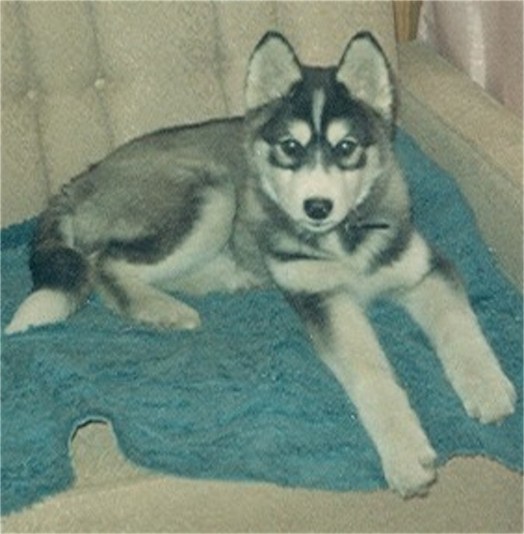
Scan0002 - Copyjpg

Created by Bruce Ross

The hounds are another difficult breed to train. Again, not because they are less intelligent, but because they are bred to be very focused. Think of it this way. If a hound is bred and taught to hunt fox, they must only find and follow the scent of a fox. A Foxhound who is side-tracked on the fresher scent of a rabbit or deer, is no use as a Foxhound. But, some of you may say, what about Bloodhounds that look for missing people. Each person has his own unique scent. This is true, but the hound is trained to follow only human scent, whichever human scent his handler indicates. The Search and Rescue (SAR) Bloodhound will not veer off a trail to track an animal.

Because the hounds are very focused, they often block out everything else. For the pet owner, this can be frustrating because as hound owners know, when these dogs go for a walk, their noses are often on the ground taking in all of the scents. Their tendency to focus so strongly on scent, and their ability to block out everything else makes them seem to ignore the commands of their owners. The younger the dog, the harder the hound is to train because he is going to follow his instincts first. This means that the dog’s owner must exercise a lot more patience and realize that it will take much more effort on their part to motivate the hound to break his focus and listen to commands. One way to circumvent this is to use clicker training on the very young, 12-week-old puppy, before he fully develops his ability to focus on scent. All puppies have short attention spans and if you do not want to train your puppy to hunt, then this is a good time to take advantage of the puppy’s short attention span to teach him to focus on you.

Never forget, dogs do not speak human languages. Therefore, it takes patience on our part to teach them and you must take care not  to repeat a command. The dog does not understand that “Sit” is one word. If you say, “Sit, Sit, Sit!” the dog will think it is all one word and never sit until you say it three times. A thought for today, did you ever wonder why dogs seem to be able to communicate to us better than we can to them?

Feel free to contact me if you have questions or if you need a certified canine behaviorist.

Health issues related to early spay and neuter of dogs

For many years I have had working dog people tell me that a dog should not be neutered or spayed until after they reach puberty. For a bitch that would be after the first heat. They claimed that the dog fully develops mentally after puberty and that early neutering and spaying retards this development.

scan0019

In a recent study, scientists found that some breeds have a higher risk of developing certain cancers and joint disorders if they are neutered or spayed during their first year of life.

This study looked at 35 breeds over a ten-year period and analyzed thousands of dogs over fifteen years. What is interesting is that the age and sex of the dogs did factor into whether or not the dogs were afflicted with health issues.

The health issues under consideration included hip dysplasia, cranial cruciate ligament tears and elbow dysplasia, lymphoma; hemangiosarcoma, or cancer of the blood vessel walls; mast cell tumors; and osteosarcoma, or bone cancer. While the study showed that early neutering did not affect all of the dogs, there were breed related problems.

I personally feel that a dog needs the full range of hormones to fully develop mentally. But it can be difficult for the owners of female dogs to control a bitch in heat and prevent an unwanted litter. For the owners of male dogs there are methods to prevent the dog from siring an unwanted litter other than neutering. It is always wise to consult with your veterinarian and explore all of your options.

As an aside, I would like to see a similar study about the health and mental affects of early spay-neuter in cats.

New discovery about sled dogs

An interesting study has shown that sled dogs are much older than previously thought. Faculty of Health and Medical Sciences, University of Copenhagen, along with the research conducted in collaboration with the University of Greenland and the Institute of Evolutionary Biology, Barcelona did a study of sled dogs. By extracting the DNA from a 9,500-year-old dog from the Siberian island of Zhokhov, they have sequenced the oldest complete dog genome to date. The results show very early diversification of dogs into types of sled dogs. The results also show that the ancient dogs were crossed with an ancient wolf but not with the modern wolves.

brat

What is important to note about this study is that the researchers found that the dietary needs of the sled dog are different from other dogs. Sled dogs do not have the same ability to use sugar and starch but do better with high-fat diets. This is similar to polar bears and Artic people. The researchers found that the Greenland husky is the purest with the least overlap with modern dogs.

Dog training tips 2 -The type of dog and training

Successful dog training is not just about the method of training the dog. A big part of training a dog depends on the type of dog you have and the lines it comes from. Whether it is a purebred or mixed, all dogs have lines which is another way to say their ancestry. Typically the term “lines” refer to selective breeding, but selective or not, the parents and grandparents have a strong genetic influence on the personality of the dog and make up the dog’s lines.

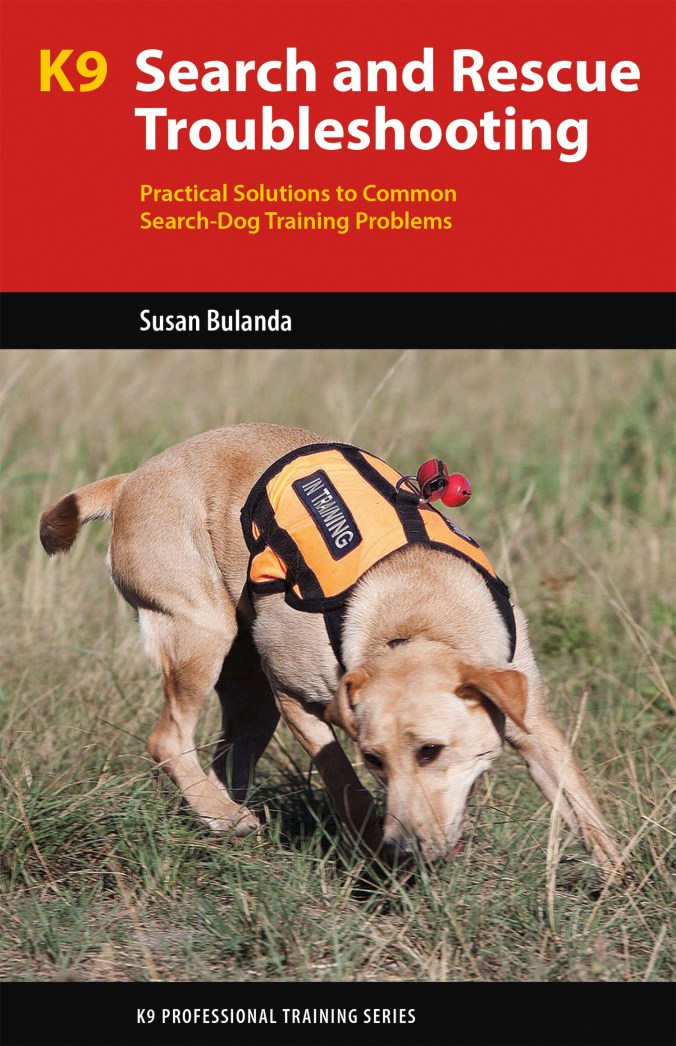
9781550597363

Dogs were selected for specific traits, which make up the breed. These traits are a combination of the physical and mental attributes. For example, if you have a few sheep in a field and nearby is a rabbit hiding in the brush, a Border Collie will know that the rabbit is there but will focus on the sheep. If you put a Beagle in the same field, he will know the sheep are there but focus on the rabbit. This is part of their genetic mental makeup or to put it another way, what they are bred to do.

The attitude of the dog depends on the breed(s) that it is made of. In the case of mixed breed dogs, you will only know by observation which genes are dominating their mind and to confuse things even more, the environmental stimulation can trigger different responses. For example, a dog that is a cross between a Border Collie and Beagle may be attracted to both the sheep and the rabbit, making it unreliable to use in the field.

Added to this are the general canine instincts that all dogs have. The most common and easiest for dog owners to see, is the prey chase drive. What this means is that how easy it is to train a dog depends on the genetic makeup of the dog and its individual personality or temperament.

A good dog trainer will understand how the genetics of a dog affect how it thinks and responds to stimuli and adjust the training methods to ensure success. This does not mean that some dogs must be trained using harsh methods but finding what motivates the dog can be tricky.

There are many dog trainers worldwide that advocate using choke collars, pinch collars, and shock collars. There is never a need to use these methods to train a dog. I have been training dogs professionally since the 1960’s and specialized in aggressive dogs and have never had to use any of this equipment.

A good dog trainer will motivate the dog to want to obey. But as I have said in my previous article, obedience is not a question of knowing what to do or what not to do, but the ability to exercise self-control to do it. You must give your dog time and practice to develop self-control.  More tips to come. Feel free to contact me if you have any questions. If you need the help of a certified canine behavior consultant go to www.iaabc.org.

Dogs monitor environmental chemicals

In a study conducted by North Carolina State University and Duke University’s Nicholas School of the Environment, researchers attached a silicon tag on dog’s collars to collect the environmental chemicals that people (and dogs) encounter every day. What they found was interesting. The researchers had the dogs wear tags and their owner’s wrist bands for five days, then they compared the results.

DSCN1648

What they found was that there were similar patterns of exposure for both dogs and humans. The contaminants were mostly from the home environment. The researchers tested for three main contaminants, pesticides, flame retardants, and phthalates, which are found in plastic food packaging and personal care products.

The advantage of evaluating the contaminants in dogs is that diseases that result from these contaminants may take decades to show up in humans but only years to show up in dogs. According to Matthew Breed, Oscar J. Fletcher Distinguished Professor of Comparative Oncology Genetics, if scientists can develop ways to link dog disease with these exposures, they may find a way to decrease the diseases for both dogs and humans.

I would like to see the tests expanded to other household pets such as cats. This is an interesting study and using the silicon tag is inexpensive and works well.

CBD for dogs

In a study at Baylor College of Medicine the researchers found that giving dogs with arthritis cannabidiol, or CBD brought relief from arthritis. It has also been used to reduce anxiety in dogs. As an aside, I know that when I give it to my dog before a thunderstorm, he is much calmer. It does seem to take about a half an hour to work but it does help.

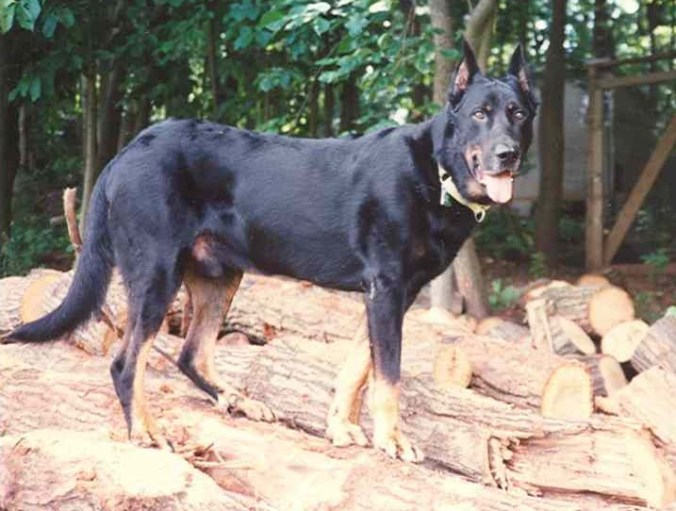
Scout SAR training wood pile

Dr. Matthew Halpert, of the Department of Pathology and Immunology at Baylor conducted the research about arthritis and found that nine out of the ten dogs tested benefited from CBD. They also noted that the pain relief lasted for about two weeks after the treatments stopped.

It seems that CBD significantly reduces the production of inflammatory molecules and immune cells associated with arthritis. The improvement in the quality of life for the dogs was documented by both the dog’s owner and veterinarians. Since the structure of arthritis in dogs is similar to humans, the study supports future scientific evaluation of CBD for human arthritis.

However, it should be noted that the researchers found that the effect was quicker and more effective when CBD was delivered encapsulated in liposomes than when it was administered ‘naked.’ Liposomes are artificially formed tiny spherical sacs that are used to deliver drugs into tissues at higher rates of absorption. This means that buying CBD over the counter may not work as well or as quickly.

If you would like to try CBD, talk to your veterinarian first. It is never a good idea to administer any type of medication, natural or otherwise, without first checking with your veterinarian. I know from personal experience that although veterinarians use human medicines and herbal formulas for dogs, the dosage can be radically different for a dog.

How to find a lost dog

Losing a dog can be devastating. A person’s first reaction is usually fear, confusion and panic. However, with a good plan in place, looking for a lost dog can be less stressful and more successful. There are a few simple points to consider when looking for a lost dog. However, prevention is the key ingredient. The most important thing you can do is have your dog micro-chipped and have a collar on your dog with his name tag that includes a way to contact you. If someone in your area finds your dog, they will not have a microchip reader and will rely on a name tag.

beagle pups

1) If you organize a group of people to look for the dog, use all safety precautions so that the volunteers do not become lost as well. Stay in touch using cell phones or handheld radios. The radios can be purchased for a nominal fee at any store that sells outdoor equipment. Radios will work in areas that cell phones may not, however, they have a limited range so be sure that a chain of people can relay messages over distance. Also, establish radio protocol so that one person does not tie up the frequency preventing communication with others. Communication is essential to let the other volunteers know what is going on, if the search is being suspended, or the dog has been found. Because people feel safer and calmer if they know what is going on, this will allow the volunteers to do a better job.

Be sure that volunteers wear the appropriate clothing, (long pants and long sleeves), hats, and substantial footwear. Each volunteer must carry a snack, water, leash, bath towel, bowl, enough water for themselves and the dog, canned cat food or treats and a flashlight. Flashlights are necessary during the day to check dark places.

The canned cat food should have the strongest aroma, (or a similar treat) to lure the dog. Small cans of cat food work well because they can be carried easily and kept fresh.

A bath towel can be used to carry the dog if he is injured, exhausted or to wipe the dog if he is wet or dirty. If the dog is cold, he can be wrapped in the towel.

Volunteers must always work in pairs for their own safety, and in the event two people are needed when the dog is found. A meeting area and time should be established in case communications break down. No one should leave until all are accounted for.

2) A dog that ran away because he is frightened will bolt in any direction, but usually to the least noisy, darkest area. Given the choice of an open field or woods, the dog will go for the woods. If the dog is lost in the city or suburbs, the dog will look for a dark, quite spot to hide after it has run to exhaustion.

Therefore, try to estimate how far the dog will run (this varies with the dog’s size, breed and condition) and add a mile to that. On a map of the area mark where you last saw the dog as the center of a circle and draw a perimeter around that point, based on the furthest point where the dog could be. The circle will encompass the area to start looking for the dog. If you saw the dog run, you can focus in that direction. Be sure to check small dark areas: under porches, stairs, garages, sheds, etc. If you have several people helping to look, have some start at the perimeter of the circle and some from the center. Be sure to look for the dog, never assume that the dog will come when called.

3) If a dog runs away, they usually run into the wind. That means that the wind will be blowing toward the dog, into the dog’s face. Check with a local airport to see what the wind direction was when the dog ran away. Then start looking into the wind from the point where the dog was last seen.  If your dog is a hound, he may follow a game trail. In this case he could travel miles and because he is so focused on following the scent, can get lost.

Dogs who wander away will usually meander along unless they find something to chase or something that interests them. This means that the search area will be smaller. If searching in the woods or a park, look for a game trail and look for fresh dog tracks to see if the dog went that way. If you do find tracks, you will not be able to tell for certain if they are from your dog, so do not give up searching in the rest of the area. If you are searching in an urban or suburban area, listen carefully if neighborhood dogs are barking. Often, they will bark at a stray dog. If you hear a lot of barking in one direction, check that area first.

4) When searching for a dog, travel slowly and make frequent five to ten-minute-long stops. Many people will drive around in a vehicle, calling to the dog. Unless the dog is within a few seconds of your location, he will not be able to find you if you move too quickly. Keep in mind that a dog can hear you calling from quite a distance away. They need time to determine the direction of the sound and then get to it. Wind and other environmental elements can distort the direction of sound (tall buildings, large hills, etc.) making it difficult for the dog to find the source of the sound. By stopping and continuing to call for about five to ten minutes, the dog will have time to find you.

5) When you see the dog, do not act excited and/or run toward the dog. Sit down or stand still and let the dog approach you, even if it is your dog. Sometimes a dog can become so frightened, hurt, or weary that they may not think straight. Their survival instincts may take over, making them more cautious than they would be at home. Depending upon the direction of the wind, you could be downwind, and the dog may not recognize you right away.

Give the dog time to feel safe. Running to the dog may make him run away from you and lose what little trust in humans that he has left. If you feel it will work, you can, at a distance, slowly move so that you are upwind of the dog, and then open the can of cat food, but still let the dog come to you. When the dog comes to you do not try to grab the dog. Let the dog stay there and relax. Slowly pet the dog until you can attach a leash without frightening the dog. If the dog does not want to be caught, you will most likely not be able to grab the dog fast enough to catch him, even if he is next to you.

6) If the dog does not approach you, do not give up. Stay in that area and/or return to that area. You can leave food etc. but do not try to catch the dog.

7) If you leave food for the dog, do not assume that because the food was eaten that it was eaten by the dog. Other animals may eat the food, so continue to search the area. If you can, spread sand around any food that you leave so that you can check for footprints to determine if a dog ate the food. If sand is not available, loose soil will work as well.

8) If you have to search for the dog over a period of time, keep a log of the weather and the location of water sources. The dog will generally head into the wind and seek water.

9) Never forget to advertise. Use every means possible to let the people in the area know that there is a lost dog. Contact all veterinarian clinics, shelters, pet supply stores, and rescue groups. Also post signs in stores with bulletin boards, on telephone poles, especially where children congregate, by public transportation and any other place that you can think of. Be sure to post on social media.  Many newspapers will run a lost dog ad at no cost. Place an ad in every newspaper that is available in your area.

If your dog is not found right away, about every two weeks call everyone you notified, such as the local rescue groups, to let them know that the dog is still missing. This will keep your dog fresh in the minds of the employees.

Always have an up-to-date photo of your dog. If the dog is a breed that looks like others in the breed, a similar picture will do. Remember, the average pet lover will not notice the fine differences between your dog and others of the same breed. So do not panic if you do not have a recent photo. Be sure to expand the area that you advertise in to at least five miles from the point where you last saw your dog.

Keep all your bulletins up to date. If the lost signs that you post look old or weathered people will think the dog was found. When you find your dog, it is important to call all the organizations that you originally notified to let them know that the dog was found. Also remove all your postings.

10) Lastly, never give up. Dogs have been found months after they disappear. Sometimes people find the dog, think it is abandoned and keep it or turn it into a rescue group. This is why advertising is critical.

The amazing ability of dogs to detect scent

In a recent study conducted by the University of Alberta, they determined that a dog could detect fire accelerants such as gasoline in quantities as small as one billionth of a teaspoon.

new ready

The study was conducted to determine the effectiveness of arson detection dogs. To test this the researchers used two dog-and-handler teams. One dog was trained to detect a variety of ignitable liquids, and the other was trained with gasoline. Interestingly, the dog trained on a variety of liquids performed well detecting all accelerants, but the dog trained on gasoline could not generalize to other accelerants at extremely low concentrations.

The reason for the tests was that accelerant dogs will give an indication at a site and when the material is tested in a lab, no trace of accelerant is found.

Those of us who use dogs for various scent work will find this information helpful. The study concluded that a dog could detect odor at one billionth of a teaspoon. In previous studies by Johnson and Johnson, they determined that a dog could detect any scent at one part per trillion.

The variables that must be considered in research such as this are:

The dog’s physical ability to detect odor. Even a good dog will have off days.

The trainer’s ability to train the dog.

The air flow at the testing site.

The age of the material, in other words, how old is the scent source?

And my last comment, if the dog who was trained to detect only gasoline would not generalize to other accelerants at a low level, he was doing what he was trained to do. It does not mean that the dog could not detect the low-level scents. The question that needs to be addressed is do the non-gasoline accelerants have a gasoline chemical that evaporates quickly that the dog would identify at a higher concentration, but at low levels are there other scents or chemicals in the accelerant that are residual which the dog is not trained to find? For example, a dog taught to follow human scent will never follow animal scent. Unless the other accelerants had the chemical composition of gasoline, the dog should not indicate it.

But this is a good study and does give us an idea of the concentration of scent that a dog can detect.


New strain of canine distemper in wild animals

A new strain of canine distemper has been found by pathologists with the New Hampshire Veterinary Diagnostic Lab at the University of New Hampshire. The infected animals were from New Hampshire and Vermont. The animals infected are fishers, two gray foxes, one skunk, one raccoon, and one mink. This is a distinct strain has not yet been found in domestic dogs. There is no way to determine how many animals are or have been infected that are undetected by veterinarians and researchers.

img039

Symptoms of distemper in domestic dogs include respiratory disease, oral and nasal discharge, gastroenteritis and in advanced stages, neurological disease. If your dog should show any of these symptoms, take it to your veterinarian immediately. It is very important that you get your dog’s yearly shots to prevent infection.

What is important to note is that pathologists discovered that this distinct strain was identified in one raccoon in Rhode Island in 2004. This means that the disease has traveled.

The questions now are how far it will travel and how likely is it that some domestic dogs will catch it and spread it among the pet dog population. Dog owners should be diligent in watching their dogs, especially if they have an encounter with a wild animal.

Pets and autism

It has been fully documented that children who suffer from autism can benefit from living with a pet. However, a new study by Gretchen Carlisle, a research scientist with the Research Center for Human-Animal Interaction in the MU College of Veterinary Medicine has found that the parents of autistic children also benefit from having a pet in the family. Having a pet reduces the stress in parents despite the extra responsibility of owning and caring for a pet.

IMG_0236 email sz

The study goes on to stress that the right type of pet should be selected that will help the autistic child. They suggest that in some cases a quieter cat may be better than an active dog. Certain types of birds or small animals might also qualify as a pet. They also suggest that the child be included in the selection of the type of pet.

As a certified animal behavior consultant, I want to add that if the family decides to adopt a pet, extra care must be taken to ensure that there are no behavioral issues with the pet that could cause an extra level of responsibility for the parents. For any child, being forced to rehome a pet due to behavioral issues after the child becomes attached to the pet is not a desirable situation.

This is why it is important to thoroughly research the types of pets as well as the individual animal to make sure it is suitable for the spectrum of autism the child has. One way to do this is to consult with a qualified dog, parrot or cat behavior consultant (iaabc.org) or an experienced dog trainer if a dog is a consideration.