Limber Tail in Dogs

Limber tail primarily affects large working breeds of dogs, and especially Labrador Retrievers. It is a painful condition where the tail goes limp. It was initially thought to be a result of swimming, also known as “swimmers tail.” However, the researchers found that dogs who did not swim also suffered from this condition.

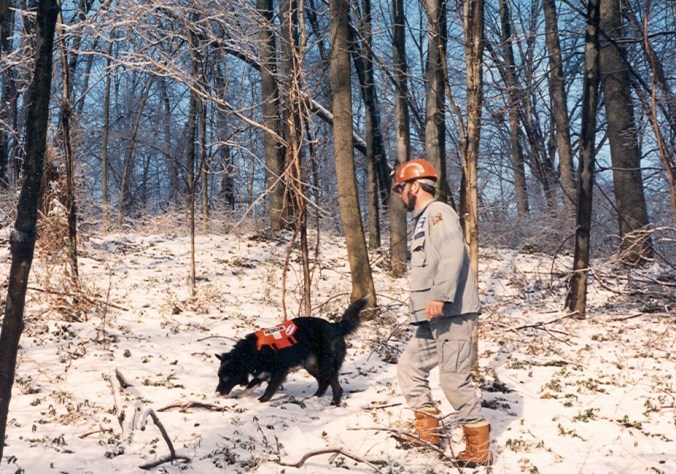
jeff lab 2

Another thought was that the condition resulted from exposure to the cold. Since many of the dogs studied lived in colder regions, it lends support to this theory. However, what researchers did find was that many of the dogs who suffered from limber tail were related, making genetics a strong suspect.

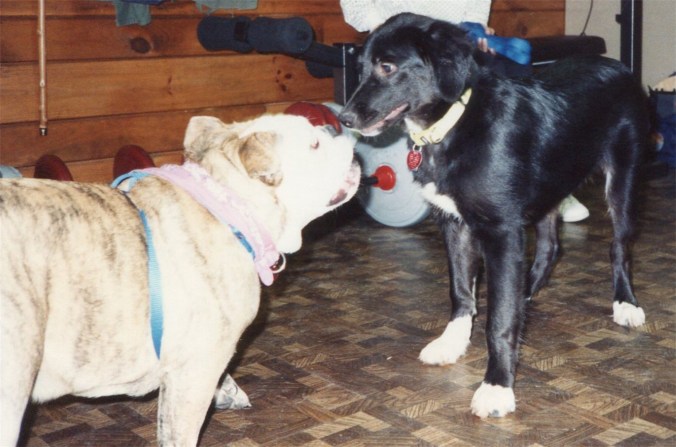
ron lab 2

The researchers hope to expand the study to learn what genetic connection there is to this painful condition in dogs. By doing so it will help breeders avoid breeding dogs that carry the gene.

Fortunately, the condition only lasts from a few days to a few weeks. But that means that many cases are not reported.

The study was conducted by Dr. Carys Pugh, at the University’s Roslin Institute and Royal (Dick) School of Veterinary Studies in Edinburgh. This was the first large-scale study of limber tail, using over 6000 Labrador Retrievers across the UK.

The study was published in the Veterinary Record and was funded by the Kennel Club Charitable Trust. The Roslin Institute receives strategic funding from the Biotechnology and Biological Sciences Research Council.

(thank you to Ron Hix and Jeff Dentler for letting me use photos of their dogs)

Canine aggression to family members and familiar dogs

A recent study by researchers at Nationwide Children’s Hospital showed that there are about 12 genes associated with canine aggression toward an owner or a familiar dog. They concluded that these genetic traits are distinct from the genetic predisposition toward aggression to unfamiliar people and dogs.

It has been found that the genetics involved are common to all breeds of dogs making it easier to study.

DSCN1776

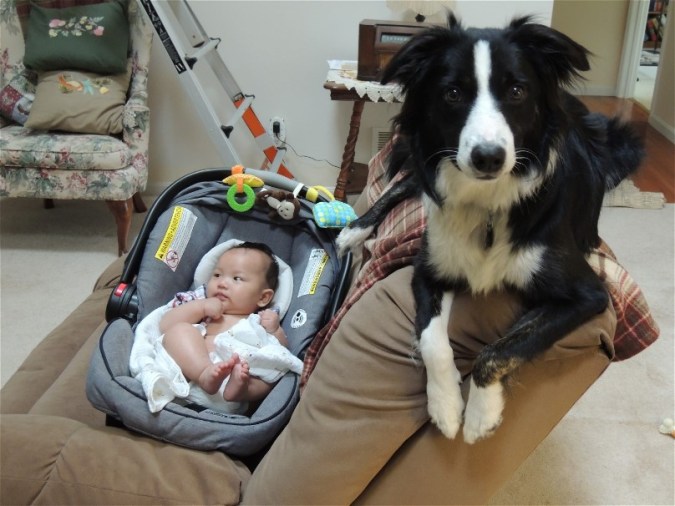
Photo: Babs watching over baby William

Carlos Alvarez, PhD, who is the main researcher at the Center for Molecular and Human Genetics in The Research Institute at Nationwide Children’s Hospital, feels that the genes are consistent with the neural pathway known as the amygdala to the hypothalamic-pituitary-adrenal axis.

Researchers feel that this genetic element is related to anxiety disorders in humans and hope that further research will show what kinds of medications will help both dogs and people.

This is an on-going research project. The fact that this type of aggression is genetically based is a good reason for people who plan to purchase a dog to investigate thoroughly the ethics of the breeder and the lines of the dog. If a person adopts a dog who shows this type of behavior they should immediately consult with a certified canine behavior consultant. You can find one at www.iaac.org. If my readers would like my brochure about how to find a good breeder and a quality dog, please emails me at sbulanda@gmail.com. There is no charge for the brochure.

Heartworms in dogs and cats

Some people feel it is safe to stop their pets (dog and cat) monthly heartworm preventative medicine in the fall and winter. This is not a good idea. Heartworms are transmitted by mosquitoes. The mosquito will bite an infected animal and ingest the heartworm microfilaria. It only takes 10-14 days for the larvae to develop. At that point if the mosquito bites an unaffected animal, it will transmit the larvae to that animal. What makes heartworm risky is that they can live in a dog for up to seven years and a cat for three.

Heartworm is a dangerous condition that can cause severe lung disease, heart failure and damage other organs in the host’s body.

heartworms Photo from Google images

At one-time heartworm was found only in the warmer states, but now it has been detected in all states. The warmer wetter environments that support mosquitoes have the most risk.

The symptoms for dogs include a mild but constant cough, a decrease in activity, fatigue, loss of appetite and weight loss.

Fortunately the medications for treating heartworms have become safer. They are an arsenic-based product called Immiticide. Before treating a dog for heartworm, it is necessary to do a thorough pre-treatment program. This will include x-rays, blood work and perhaps other tests to determine how much damage has been done to the dog’s organs. This way the veterinarian will know what to expect and what to look for which will help with the post-treatment care of the dog.

The post-treatment care is critical in saving the dog’s life. Although the treatment will kill the adult heartworms, their bodies will break up and the pieces can block the pulmonary vessels and/or lodge in the lungs. This is why a dog that has been treated for heartworm must be kept quiet for months after the treatment. This is also why pre-treatment tests can be critical for the dog’s survival.

Unfortunately there is no approved treatment for treating heartworm in cats. Some veterinarians have used a drug approved for dogs on cats, but with major side effects which include sudden lung failure and death. The other risk in treating cats is that they are more likely to die from a reaction to the dead pieces of heartworm in their heart and lungs.

One of the choices is to treat the symptoms from heartworm and hope that the cat outlives the worms. Heartworms only live in a cat for two or three years.

If a cat is treated for heartworms, it will need veterinarian supervision for several months. Often, they need oxygen, cortisone and sometimes a diuretic to remove fluid from the lungs. When they are stable, cats will continue to need corticosteroids either continuously or periodically. There is always a risk of sudden death.

The good news is that in some parts of Europe and Japan, veterinarians have been surgically removing the heartworms, however, the technique has yet to be improved and approved.

In the case of both dogs and cats, prevention is the better way to go. This is easily done with monthly heartworm preventative medicine for both dogs and cats.

Because heartworms can live in a dog or a cat for years, it is imperative that the pet be tested first before giving heartworm medicine. By giving the pet a monthly preventative year-round, you are doing the best you can to avoid these deadly worms.

Separation Anxiety in Dogs

The old saying that “an ounce of prevention is worth a pound of cure” is true when dealing with separation anxiety in dogs. The best thing an owner can do is prevent it from developing.

Most cases of separation anxiety occur in dogs that have a genetic predisposition for it and is enhanced or caused by the owner. This is why two dogs can live in the same home and one will suffer from this anxiety and another will not.

dscn1417

The genetic predisposition for separation anxiety is not limited to any breed, type or sex of dog. Preventing it is almost the same as the method to cure it. So we will talk about it in general.

Whether you get a puppy or adopt a dog, the procedure is the same. Although it is hard to resist a new puppy or cute older dog, the new dog should be left alone while at home. Puppies need lots of down time to rest and sleep.

A dog’s growth rate is much faster than humans and puppies need to sleep a lot. A new adopted or older dog needs time to adjust to their new home. The stress of a new home can tire them so they may need a bit more down time as well.  The best rule of thumb is to let the dog solicit interaction rather than force it on the dog. This is especially important if there are youngsters in the home.

Do not hold, carry or dote on the dog. Let the dog be a dog, no matter what size it is. A dog can become addicted to too much tactile stimulation. Like any addiction, the craving can be there but at the same time it is not a pleasant experience. This explains why a dog may solicit interaction from the owner and then bite the owner for responding. This is especially true for small dogs where the owner likes to cuddle and carry the dog around.

Do not make a fuss over the dog when you leave home or return. Dramatic arrivals and departures only arouse the dog and build stress. Simply leave and return home without saying or doing anything.

Leave soft music on when you leave home. Classical music works best or easy listening music. No other kind is good for dogs. Along with the music leave a chew toy for the dog. Only use the kind that you stuff with treats where the dog must work to get them out. Stuffed Kong toys or cube toys work very well. Never give your dog greenies, rawhide, pig ears, cow hooves or bones. They can seriously injure or kill your dog.

Make sure that your dog gets a good walk or exercise before you leave and is taken out when you return to “do his business.” If the dog has to relieve himself after you leave it will cause stress. If the dog has to have an accident while you are gone it can also cause stress, as well as if the dog has to wait to be taken out when you come home.

Feed your dog twice a day with a high quality dog food such as Wysong or Annamaet. Nothing that you buy in the super market or discount store is good for your dog. Poor quality food can contribute to stress in your dog. Some foods are loaded with sugar, dyes and roughage that can raise your dog’s stress level and act as a diuretic and laxative .

If your dog is already showing signs of separation anxiety then work with the dog over a few days when you will be home. Start by leaving the dog for a few minutes and quickly returning. You can do this every fifteen minutes to a half an hour.

As the dog adjusts, you can leave the dog for five minutes, six minutes and work up to fifteen minutes. You may have to drive away from the house since some dogs will figure out that you are standing on the other side of the door or nearby.  If you can devote a whole weekend to this procedure you may be able to leave him for a normal work day.

Make sure that you change your routine for leaving the house. The dog will learn your routine and become anxious as soon as they see the signs that you are leaving. Dogs notice things such as when you brush your teeth, comb your hair, take a shower, pick out clothes and lastly, picking up your car keys. Examine the order you do things before you leave and change the order. This way the dog cannot determine when you are going to leave. An example would be picking up your car keys before you eat breakfast.

If your dog is destructive you may have to teach the dog to stay in a very large crate for his own protection. If this is not possible because the dog tries to get out to the point where he hurts himself it is time to call a certified canine behavior consultant. The behavior consultant will determine if the dog needs to see a veterinarian for medications and will develop a plan to work with the problem. You can find a behavior consultant at www.iaabc.org.

Last of all and equally important, if your dog does something you do not like, do not yell or punish the dog. This will only elevate his stress levels and make his separation anxiety worse. Ignore any damage the dog has done. He will not know that you are angry at what he did awhile ago but associate your anger as part of your return.

With a little understanding, work and help if necessary, you can make your dog’s life much less stressful.

Blindness in dogs – a cure for XLRP!

Over the past three years, veterinarians have continued to work with blindness in dogs. They have succeeded in curing X-linked retinitis pigmentosa when caught early. XLRP causes gradual vision loss starting at a very young age in dogs, often as early as five weeks of age. It is an inherited retinal disease.

Tess67

Continuing the research using the same techniques, the researchers found that the gene therapy helped dogs at 12 weeks of age (mid-stage disease) when about 40% of the eye’s photoreceptor cells were dead and then at 26 weeks of age (late-stage) when 50 – 60% of the cells were dead.  What the researchers found was that they were able to halt the degeneration of the photoreceptor cells in the treated area.

A few years ago, a team from the University of Pennsylvania  announced that they had cured X-linked retinitis pigmentosa, a blinding retinal disease, in dogs. Now they’ve shown that they can cure the canine disease over the long term, even when the treatment is given after half or more of the affected photoreceptor cells have been destroyed.

To date, dogs have maintained their vision for over two years after treatment. This is very exciting because humans suffer from the same type of blindness. With that in mind, researchers are already examining human patients to determine how to treat their blindness and who might qualify for future treatments.

Again, man’s best friend is offering hope to humans who suffer from this type of cell death that causes blindness. Since this is an inherited disease, breeders should have their dogs examined by a certified canine ophthalmologist and register their dogs with the Canine Eye Registration Foundation, CERF. http://www.tctc.com/~maplerg/cerf-.htm   This will help researchers continue to develop cures for blindness as well as prevent the breeding of dogs who have this inherited disease.

If you have a blind dog or are willing to adopt one, contact www.blinddogrescue.com

Bladder cancer in dogs

Although it is rare, bladder cancer in dogs is on the rise. Fortunately, there is a new test, the CADET℠ BRAF  to help veterinarians determine if your dog has bladder cancer.

OLYMPUS DIGITAL CAMERA

Parsons Russell Terrier

There are two types of bladder cancer, transitional cell carcinoma (TCC) and urothelial carcinoma (UC). The tumors start in the urinary tract, but can travel to the rest of the body including bones, liver, kidney, spleen, and skin.

Warning signs of bladder cancer can often be misdiagnosed as a lower urinary tract disease, such as stones and infections. The most common signs are when a dog urinates small amounts often, difficulty urinating, blood in the urine, and accidents in the house, frequent urinary tract infections that do not respond to treatment.

Certain breeds are more likely to get bladder cancer, and usually from the age of six years and older.

High risk breeds: Scottish Terrier, West Highland White Terrier, Beagle, Shetland Sheepdog, Wire Fox Terrier, American Eskimo Dog,  Australian Cattle Dog, Australian Shepherd, Bichon Frise, Border Collie, Russell Terrier, Lhasa Apso, Rat Terrier, Wire Fox Terrier, Parsons Russell Terrier.

Interestingly, veterinarians have found a link between feeding a dog safe fresh vegetables three times a week to a reduced risk of bladder cancer. On the other hand, exposure to herbicides and pesticides increased the risk of cancer.

The good news is that the CADET℠ BRAF test can catch the cancer in its earliest stages, even before symptoms start to show, and it can help veterinarians determine the extent of the disease.

Some veterinarians suggest that all high-risk breeds get tested from ages 8 years and older. It is a good idea to discuss this possibility with your veterinarian or go to SentinelBiomedical.com for more information.

English Bulldog one of the unhealthiest breeds in the world

There is little hope that breeders can create a healthier English Bulldog from the existing gene pool. Years of breeding for specific physical traits has caused the English Bulldog to become one of the unhealthiest breeds in the world.

img115

One of the reasons for the health issues in this breed is that people in general are more concerned about the dog’s appearance rather than its health. Researchers have used DNA to study the breed and found that there is not enough genetic diversity within the breed to make the needed improvements. When this happens outcrossing the breed to introduce genetic diversity is often the answer.

To this end, many Swiss breeders have out-crossed the English Bulldog with the Olde English Bulldogge, which is an American breed, to improve the English Bulldog’s health. Unfortunately, many English Bulldog breeders do not approve of this and feel that the resulting out-cross is not a true English Bulldog.

The English Bulldog as a breed started around 1835 with about 68 individuals. Since that time the breed lost popularity a few times which further limited the gene pool. In recent years the surge in the breed’s popularity has further caused genetic problems in the breed.

It seems that the only hope for the English Bulldog is to out-cross them as the breeders in Switzerland have done. It would not take many generations to breed the results of the out-cross to resemble the original bulldog.

Anyone who is considering owning an English Bulldog should research the health issues and life-span of this breed before purchasing one. The health issues can result in costly veterinarian bills. It also goes without saying that a puppy should only be purchased from a reputable breeder to help minimize the potential for health issues. For a free copy of my brochure about how to select the right dog and breeder, email me at sbulanda@gmail.com with brochure in the subject line.


Exercise, a benefit of owning a dog

Everyone knows that it is important to get exercise every day. However, for many people, especially elderly people, this can be difficult to do. Often motivation is the key factor to get people moving.

lar & jib

A new study shows that people in general, especially seniors, exercise more daily than people who do not own dogs. This is often because dogs have to be walked more than once a day.

What is even more significant is that even in bad weather, people who own dogs get at least 30 minutes more exercise a day than people that do not own dogs.

Owning a pet also helps people in many other ways. Pets tend to help people socially and help prevent mental distress. They relieve loneliness, give people a reason to live, and a sense of acceptance.

By adding physical exercise to this, pets, especially dogs, help keep us healthy.  And keep in mind that going for a walk benefits the dog as well.

For an excellent book get a copy of Walk a Hound, Lose a Pound by Dr. Phil Zeltzman.

www.sciencedaily.com/releases/2017/07/170724211648.htm

A Holiday Gift Giving Guide for Dog Owners

This article is contributed by Cindy Aldridge

It’s never easy to find the right gift for someone in your life. You want to give them something they’ll love, but with the holiday season already here, you don’t have a lot of time to wander the malls and hope inspiration strikes you.

Tess67

If you have a dog owner to buy for, it might be a good idea to find something both of them will love. Read on to find the right gifts for both dog and owner. You need to be careful, though. There are some gifts that can be unhealthy for the dog.

Dog Gifts To Never Buy

One common dog gift is a rawhide bone. Many people buy these for their pet dogs, which is a shame. As Dog.com shows, rawhide chews can break off and get swallowed, only to block the intestines as the dog tries to digest it. Some rawhide toys, such as those made outside the US, are also covered with a residue of dangerous chemicals that can sicken a dog.

Other classic dog toys you should avoid giving this year include:

  • Toys shaped like small animals since this teaches the dog to attack the real versions.
  • Dog mustaches, hats, or similar silly gifts.
  • Hard frisbees. (They make a special kind of disc just for dogs.)
  • Any cheaply made chew toys, as they tend to break apart.

What Dogs Love To Get

Then what should you buy for your friend’s cute furry friend? Dog treats are typically good, as almost every dog owner needs a box handy for training or treating their dog. But as Mashable shows, there are some unique dog gifts that can work even better.

  • Doggie cigars look like real cigars but they’re just a chew toy.
  • A pet sofa or bed gives the dog a comfortable place to rest.
  • For a safe stuffed animal the dog can enjoy, have one custom made that looks like the dog.
  • A “Pez” dog treat dispenser looks retro while giving the dog a fun place to store treats.
  • For active dogs, a hyper tennis ball launcher can finally tire them out.

Bored Panda has a great list of unusual gifts for the dog. One of these is the auto zip line. Dogs love car rides, but they can get annoyed as they bounce around the inside of the car. The zip line attaches near the roof and runs across seat. Once tethered to the line, the dog can stay active while staying in the back seat.

Gifts For Owners

Buying a gift for the dog can be fun, but don’t forget about its owner! Dog monitor cameras make a great holiday gift. Leaving a dog at home all day can make owners a bit sad, so being able to see that their pet is just fine can be invaluable.

Some other gifts for the dog lover in your life include:

  • A Paww Secret Agent leash that lets the owner easily attach it to a sign or parking meter.
  • Some black-and-white photo portraits of cute dogs.
  • Dognition, a series of games that helps humans understand how dogs view the world.
  • A GPS tracker for the dog, especially if it tends to get past the fence a lot.

Find The Right Holiday Gift

Buying gifts for others can be a hassle, but it helps when you know you got the right present. For dogs, skip the rawhide bones and go for beds, ball launchers, or auto zip lines. Just don’t forget about something for the owner or they might be jealous!