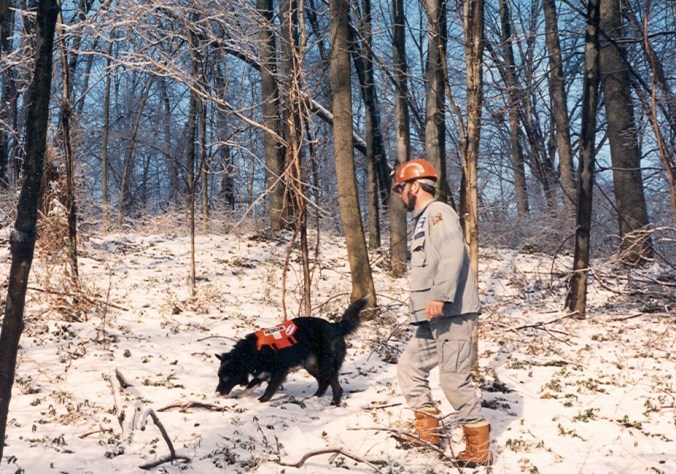
How animals detect odor

Prof. Nowotny, Director of Research and Knowledge Exchange in the University of Sussex’s School of Engineering and Informatics had determined that animals may not single out a specific odor when they look for a substance. He has found that animals may find it easier to detect a collection of odors instead of a single substance. If this is true, then most of the detection dog training that focuses on teaching a dog to look for one odor rather than a scent picture, may not be the best way to train a dog.

scout sar tracking

Scout following scent

One single odor does not exist in a natural environment, rather there are a collection of odors. When you consider that it is impossible to isolate a single odor in a natural environment, this discovery makes sense. Of course it is possible and often likely that a single odor is stronger than the surrounding odors, but still it is not the only odor present.

Professor Nowotny suggests that animal and human olfactory systems may not be made to do analytic smelling of pure odors. He uses the example of how an animal will give off pheromones, a complex set of odors, as a form of communication and that it is important that an animal recognize the entire chemical message and not a single element in the chemical message.

For years I have maintained that when teaching a dog scent work that there is no such thing as an uncontaminated scent article. Professor Nowotny has confirmed this with his latest research. Although more studies need to be done, and we should still train our dogs as we have in the past, it does open the door for a less narrow view of what dogs detect and how they detect it and may lead to new training methods. It is always good to “think outside the box.”

Sue Bulanda’s books

With the holidays fast approaching I thought I would post a list of the books that I have written. All but two of my books can be ordered from my website (www.sbuland.com) by clicking on the “books” tab. If you want a book shipped outside of the USA please email me for the correct postage. If you order my listed books you will get an autographed copy. I only have a few copies of Soldiers in Fur and Feathers so if you want that please email me first to see if I have any more. This book is out-of-print, so do not order it from my website.

K9 Obedience Training: Teaching Pets and Working Dogs to be Reliable and Free-Thinking.  This book shows you how to teach a dog the basic obedience that is the foundation for all other training. The methods used in this book allow the dog the freedom to think for themselves rather than perform in a robotic method where creativity is discouraged. Free-Thinking is necessary for all working dogs who cannot be trained for every situation that they encourage. Obedient disobedience is also covered. The book also explains what not to do and why. It includes basic handling and grooming techniques that are necessary for a well socialized dog. Some fun tricks are included.
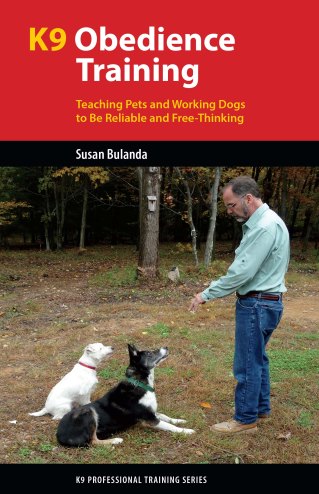
K9 OBEDIENCE TRAINING COVER PRINT

K9 Search and Rescue Troubleshooting: Practical Solutions to Common Search-Dog Training Problems – explains the typical training problems and offers solutions that SAR dog handlers encounter when training their dogs. The solutions apply to all disciplines in canine search and rescue. It explains how the puppy stages of development can have lasting effects on the behavior and training of a dog. Often people adopt an older dog to train and do not understand why the dog behaves the way it does, this book gives insight to those issues. Although K9 Search and Rescue Troubleshooting: Practical Solutions to Common Search-Dog Training Problems is written for the SAR dog handler, the information contained in it applies to many training issues that are not related to SAR.

9781550597363

Soldiers in Fur and Feathers: The Animals That Served in WWI – Allied Forces: A unique, collection of accounts about many different animals that served in WWI. There are many rare photos. What is especially interesting about this book is that it includes many of the mascots that the soldiers kept. Some went into the trenches with the men. For example, there is an account about how a cat saved the life of a soldier, how a pair of geese slated to be Christmas dinner wound up being kept as mascots, and one soldier had a huge Golden Eagle as a pet. WWI was a transitional war from animal power to mechanization, therefore many species of animals served, such as oxen, horses, mules, camels, pigeons, and dogs in many capacities.

2012: Second Place Winner Non-Fiction, National League of American Pen Women; Finalist for the Alliance of Purebred Dog Writers Arthur Award, Certificate of Excellence for the Cat Writers Association of America.

Soldiers in Fur and Feathers

Faithful Friends: Holocaust Survivors Stories of the Pets Who Gave Them Comfort, Suffered Alongside Them and Waited for Their Return: This is the only book written about the animals of the Holocaust victims, recording a part of history that has been overlooked. Some of the stories are sad and some joyous, but all are a part of history. Learn about Nicholas the French Bulldog owned by a woman who was part of the French resistance, and how he came to tour with the German army. Also, the dogs who somehow survived the war and were reunited with their owners and many other stories about dogs and cats.

2012: Dog Writers Association of America, Maxwell Award.

Certificate of Excellence Cat Writers Association, 2012; National League of American Pen Woman 2nd place non-fiction, 2012.

holocaust book cover viewer

God’s Creatures: A Biblical View of Animals: explains the role that animals play in the Bible and how God uses them. It explores the nature of animals and miracles that involve them. The book explores many of the miracles that involve animals. It answers questions such as, do animals go to heaven, do they know and obey God, can they be evil?

AnimalsFrontCover72

Boston Terriers, a book all about this wonderful breed of dog. Learn about their care, training and personality. The book has fun sidebars that give personal accounts of Boston terriers.

First Place Maxwell Award for the Dog Writers Association of America, 2002. (only available on-line)

bost

Ready: The Training of the Search and Rescue Dog: Adopted worldwide as the training book for SAR dogs. This book has been in print since 1994 and is in its second edition. It gives the SAR dog handler a training plan for all disciplines of canine search and rescue.

First place for the National League of American Pen Woman’s biannual contest, 1996. Also nominated best book of the year, 1994 Dog Writers Association.
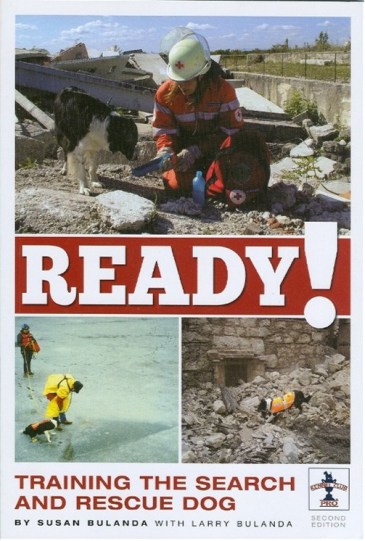
new ready

Ready to Serve, Ready to Save: Strategies of Real-Life Search and Rescue Missions: is about actual search and rescue missions giving the reader inside information about how searches work. It is useful as a tabletop training exercise for SAR units.

2000 Award winner for the National League of American Pen Women contest.
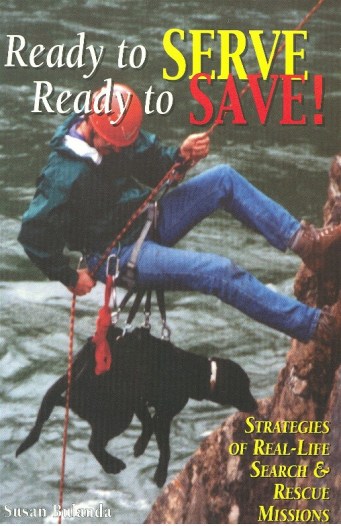
Ready serve

Scenting on the Wind: Scent Work for Hunting Dogs: helps the hunting enthusiast understand how weather, wind and terrain features affect scent. It is a great aid for people who compete in field trials or who do any kind of scent work with dogs.

scenting

Real Estate Today, Seller Beware! – is how to save money when selling your house. Available on Amazon

RE cover


Secrets of the Snout by Frank Rosell

Secrets of the Snout by Frank Rosell, University of Chicago Press, ISBN: 13: 978-0-226-53636-1, 265 pgs., $23.40.

franks book

Professor Rosell has done a wonderful job explaining how a dog’s nose works. He gives us accounts of different types of detection dogs which is a delight to read. The book is easy to read and understand because written for the average pet owner.

While other books have covered a dog’s scenting abilities, Professor Rosell has included the latest research along with keen insight to dog behavior. He explains what makes up scent and what a dog detects.

Each chapter features a specific dog’s scenting experience which helps the reader gain useful insight as to how dogs do their jobs. He explores topics such as, can a dog tell identical twins apart and other interesting experiments.

There are extensive notes for each chapter as well as a thorough index which makes it easy to locate specific material. I highly recommend this book for all working dog and pet owners who would like to understand their dog’s world of scent. This book was first published in Norway and was so popular that it was translated into English and published in the United States.

The Chapters include:

  1. Dogs at Work
  2. A Dog’s Sense of Smell
  3. A Good Judge of Character
  4. Pet Finder
  5. Search and Rescue
  6. On the Hunt
  7. Police Work
  8. Customs and Border Control
  9. Military
  10. Medical Detection
  11. Field Assistant
  12. Pest Detector and Building Inspector
  13. Other Work Tasks for Sniffer Dogs.

How animals detect odor

Professor  Nowotny, Director of Research and Knowledge Exchange in the University of Sussex’s School of Engineering and Informatics had determined that animals may not single out a specific odor when they look for a substance. He has found that animals may find it easier to detect a collection of odors instead of a single substance. If this is true, then most of the detection dog training that focuses on teaching a dog to look for one odor rather than a scent picture, may not be the best way to train a dog.

Waiting patiently to search croped (Jib a Border Collie)

One single odor does not exist in a natural environment, rather there are a collection of odors. When you consider that it is impossible to isolate a single odor in a natural environment, this discovery makes sense. Of course it is possible and often likely that a single odor is stronger than the surrounding odors, but still it is not the only odor present.

Professor Nowotny suggests that animal and human olfactory systems may not be made to do analytic smelling of pure odors. He uses the example of how an animal will give off pheromones, a complex set of odors, as a form of communication and that it is important that an animal recognize the entire chemical message and not a single element in the chemical message.

For years I have maintained that when teaching a dog scent work that there is no such thing as an uncontaminated scent article. Professor Nowotny has confirmed this with his latest research. Although more studies need to be done, and we should still train our dogs as we have in the past, it does open the door for a less narrow view of what dogs detect and how they detect it and may lead to new training methods.

Hydrating Working Dogs

Dogs who work in hot weather such as border patrol dogs, search and rescue dogs as well as military dogs often become dehydrated when they work in hot environments.

Scout SAR training window

Handlers of these dogs do not agree about how to hydrate their dogs to prevent heat stroke and dehydration. There are three major ways that handlers hydrate their dogs.

  1. Free access to drinking water
  2. Subcutaneous hydration (a needle under the skin) of water and electrolytes
  3. Drinks containing electrolytes

Researchers studied all three methods and found that they all worked. However, they found that by using a chicken flavored electrolyte drink, even dogs who were reluctant to drink, would drink more liquid.

The researchers tested the dog’s urine and found that they passed the sodium and therefore did not have a buildup of sodium in their body which had been a concern about using electrolyte drinks. Thus, drinking a chicken flavored electrolyte drink did not have any negative effects on the dogs.

Ghosts of the Buffalo Wheel by Joe Jennings

Ghosts of the Buffalo Wheel by Joe Jennings, 273 pgs., ISBN: 9781980726098, $11.50, self-published

5151SSoPllL._SX331_BO1,204,203,200_

This is the second book about Sam Webber and Gunny the SAR dog, The Ghosts of Iwo Jima was the first in the series. This adventure takes Sam, Gunny and the team to the Buffalo Wheel, also known as the Medicine Wheel which is a real life National Historical Landmark in Wyoming. Based on clues, the team was assigned to find the remains of Butch Cassidy.

Mr. Jennings did quite a bit of research about the Medicine Wheel and what really happened to Butch Cassidy and the Sundance Kid. He mentions historical data about the pair and theories about their fate in his book.

The story weaves in native American traditions and lore as well as forensic research techniques that are used to determine if the remains that are found are those of Butch Cassidy. There is also the drama of the search and an attempt to steal the supposed gold that Butch hid from an old robbery.

This book is as entertaining as Mr. Jennings first book and it is especially fun for SAR people to read. I highly recommend it.


K9 Search and Rescue Troubleshooting

K9 Search and Rescue Troubleshooting: Practical Solutions to Common Search Dog Training Problems by Susan Bulanda, publisher, Brush Education, ISBN: 978-1-55059-736-3 Autographed copies available at www.sbulanda.com also available on Amazon and Barnes & Noble.

9781550597363

My new book is now available! This book will help both the seasoned and inexperienced K9 handler. Many SAR units use a one-size-fits-all training method. When it does not work, they often do not know how to solve the training problem. This book explains how to fix those problems. Every dog is unique and what works for one dog may not work for another. Sometimes a small change in technique is all that is needed. Other times the handler is sending the wrong signal to the dog.

Getting the right dog or puppy is critical to the dog’s success. The book explains how to find the right breeder and puppy for SAR work. The way the puppy is handled during its stages of development can influence how the adult dog will react to training. If a handler is training an older dog, its early experiences can explain some of the training issues that a handler may have.

The book also explains the intelligence of dogs including the latest research about how they perceive life, their emotions and how they react to their owners. This knowledge will help a handler relate to their dog and recognize the message that they send to their dog. Although this book is written for SAR dogs, the information in it applies to all types of dog training, especially for working dogs.

The chapters include:

Finding a good SAR dog; Why dogs have training problems; What is scent; The uncontaminated scent article; Cross train a dog; SAR dog training methods; SAR dog training problems; and an appendix about the nature of scent.

Please Spread the Word!


A new device to help train explosives detection dogs

We depend upon bomb dogs to help protect us from terrorist attacks. Training them can be tricky. To help trainers and handlers, researchers have developed a real-time vapor analysis device called a Vapor Analysis Mass Spectrometer to help trainers and handlers understand what a dog detects when searching for explosive materials. When training a dog for any kind of scent work, it is important to hide items that are not scented as well as items with the target scent on them. Bomb dog trainers and handlers found that in some cases the dogs were indicating scent on the non-scented items. What the Vapor Analysis Mass Spectrometer showed in these cases that the dogs were correct because the non-scented items had picked up scent that drifted from the scented items.

lar & jib

By using the Vapor Analysis Mass Spectrometer during training, handlers and trainers will better be able to determine how accurate the dogs are in detecting explosive material.

The lesson from this research applies to all types of scent work with dogs. It shows us that items handlers think are not contaminated may be contaminated. Ultimately, it means that whoever handles scented items and non-scented items for training must take extra precautions to ensure that non-scented items are not contaminated. This can be especially tricky when training dogs in search and rescue where the handler has no control over the elements (weather, etc.) that can cause scent to drift.

www.sciencedaily.com/releases/2017/06/170628131349.htm

K9 Investigation Errors: A Manual for Avoiding Mistakes

K9 Investigation Errors: A Manual for Avoiding Mistakes, by Resi Gerritsen and Ruud Haak, Brush Education, Inc.; 256 pgs.; ISBN: 978-1-55059-672-4, $44.95

510zjcqcgl-_sx320_bo1204203200_

How can you make a good book better? Resi Gerritsen and Ruud Haak who wrote K9 Fraud, have accomplished that with their updated book, K9 Investigation Errors. They cover many important points in handling dogs that are common mistakes. For example, they explain how dogs can read human gestures, even the slightest ones (the Clever Hans Effect) which can cause a false response from a dog. They review some famous cases in the United States and show how the handler or poor training misled authorities, sometimes resulting in the arrest of the wrong person.

What I especially liked was their comments that dog handlers who claim fantastic results with their dogs (typically false) influence authorities who believe them and then think that properly trained dogs who cannot perform to that level are not as good, when in fact the properly trained and handled dogs are correct.

Another interesting point that they bring out in their book is what they call failure scents. This is when a dog associates a scent with failure and by association can lead to the dog’s poor performance. This is the same as people will often associate a benign event, song, scent or even food with a bad experience and react to the memory that it triggers.

There is so much information in this book that I strongly recommend handlers of all disciplines read this book and evaluate how they can improve their dogs and their handling skills.

The book is a high quality book, as is typical of Brush Education Publications, with quality binding, pages and soft cover. It is well edited with no typo’s or other common mistakes that authors tend to make when writing. It is always a pleasure to review a Brush Education book.

The chapters are:

Scent-Identification Lineups

The Dutch Training Method for Scent Identification

Dogs’ Responsiveness to Human Gestures

Tracking Dogs in Crime Investigations

Scent Research and Tracking Experiments

Errors in Mantrailing

Human Odor and Dogs’ Scent Perception

Scent Problems and Training Problems

Preventing Investigation Errors

K9 Fraud! Fraudulent Handling of Police Search Dogs

K9 Fraud

K9 Fraud

K9 Fraud! Fraudulent Handling of Police Search Dogs, by Resi Gerritsen & Ruud Haak; Publisher, Detselig Enterprises LTD Alberta, Canada; ISBN: 978-55059-393-8, $27.95, 216 pgs.

This is a very interesting book and one of the most unusual books that I have reviewed. While book is primarily about police dogs and scent specific work, it is very applicable for SAR units. Each chapter has a number of real cases which are reviewed. The lessons in this book can be applied to all SAR disciplines.

The authors refer to studies and tests that have been conducted over the past hundred plus years to verify how and why dogs work. For example they address the studies done to determine if dogs follow human scent or the disturbance on the ground.

Each chapter reviews actual cases and why there was fraud or not. Although the book points out flaws in handling and training, it is not done in an accusatory manner. The authors explain the common mistakes that dog handlers make which lead to fraud.

The case studies covered in this book are from around the world including some better known USA cases and are lessons for the SAR dog handler. They are also interesting to read for everyone else.

What is most important about this book are the lessons that the SAR dog handler can learn about how to properly handle cases that will hold up in court as well as how to properly train and handle their dogs. I highly recommend this book. An added benefit of this book is as a guide for lawyers and other people who are involved in legal cases that use canine evidence.

The chapters are:
Chapter 1: Fraud with Scent Identification Line-ups
Chapter 2: Dog’s Responsiveness to Human Gestures
Chapter 3: Fraud with Tracking Dogs
Chapter 4: Scent Research and Tracking Experiments
Chapter 5: Fraud with Mantrailing
Chapter 6: Human Odor and Dog’s Scent Perception
Chapter 7: Scent Problems and Training Problems
Chapter 8: Avoiding and Preventing Fraud
Section 1: Scent Identification Line-ups
Section 2: Management Attention: Intentional Fraud
Section 3: Civilians in Criminal Investigations
Section 4: Contamination of Scents
Section 5: Improper Training
Section 6: Insurance Fraud