A team from the University of Pennsylvania announced that they have cured X-linked retinitis pigmentosa, a blinding retinal disease in dogs when caught early. XLRP causes gradual vision loss starting at a very young age in dogs, often as early as five weeks. It is an inherited retinal disease.
Continuing the research the veterinarian researchers found that the gene therapy helped dogs at 12 weeks of age (mid-stage disease) when about 40% of the eye’s photoreceptor cells were dead and then at 26 weeks of age (late-stage) when 50 – 60% of the cells were dead. What the researchers found was that they were able to halt the degeneration of the photoreceptor cells in the treated area.
Now they’ve shown that they can cure the canine disease over the long term, even when the treatment is given after half or more of the affected photoreceptor cells have been destroyed.
To date, dogs have maintained their vision for over two years after treatment. This is very exciting because humans suffer from the same type of blindness. With that in mind, researchers are already examining human patients to determine how to treat their blindness and who might qualify for future treatments.
Again, man’s best friend is offering hope to humans who suffer from this type of cell death that causes blindness. Since this is an inherited disease, breeders should have their dogs examined by a certified canine ophthalmologist and register their dogs with the Canine Eye Registration Foundation, CERF. http://www.tctc.com/~maplerg/cerf-.htm This will help researchers continue to develop cures for blindness as well as prevent the breeding of dogs who have this inherited disease.
Sue’s Note: All pets who are blind can live a happy life. My cat is blind and is happy and safe. It helps if things are not moved around or left out in the open where the blind pet will bump into them. Blind pets should never be allowed outside unless they are in a fenced area or on a leash.
The fact that humpback whales create bubble nets to trap krill has been known for a while. However, researchers at the Marine Mammal Research Program (MMRP) at UH Hawaii Institute of Marine Biology (HIMB) and Alaska Whale Foundation (AWF) made a new and exciting discovery.
Humpback whales not only create bubble nets, but they blow bubbles in patterns that have internal rings. They determine the number of rings, the size and depth of the net and even the spacing between the bubbles. By doing this they can catch up to seven times more krill in one feeding, thus allowing them to eat more and expend less energy.
photo from pixabay
This discovery has included humpback whales in a small group of animals that can both make and use their own tools for hunting.
Sue’s Note: Consider the cognitive process each whale must use to determine how to create their bubble net. Each new discovery such as this one makes a person wonder how many other animals are not given credit for their intelligence and abilities.
Journal Reference:
A. Szabo, L. Bejder, H. Warick, M. van Aswegen, A. S. Friedlaender, J. Goldbogen, J. M. Kendall-Bar, E. M. Leunissen, M. Angot and W. T. Gough. Solitary humpback whales manufacture bubble-nets as tools to increase prey intake. Royal Society Open Science, 2024 DOI: 10.1098/rsos.240328
Cite This Page:
University of Hawaii at Manoa. “Humpbacks are among animals who manufacture and wield tools.” ScienceDaily. ScienceDaily, 20 August 2024. <www.sciencedaily.com/releases/2024/08/240820221814.htm>.
Imagine that your family is frightened, you know it even though they are trying to hide it from you. People who were your friends now ignore or avoid you. War has gripped your country, and some people are leaving everything behind to flee. Yet at night, you sleep soundly because your faithful pet, whether it be a dog or cat, lays by your side. You pet still loves you and thinks that you are the best person in the world. Then one day, you and your family are taken away, forced to leave your best friend behind. Faithful Friends is the story of these devoted animals. All are true, all are treasured memories, and all are special to the people who shared them for this book, the only book of its kind to tell the stories of these devoted animals. Available in English and Italian.
Researchers at the University of South Korea have studied the benefits people have from interacting with dogs. They had people play, walk, groom and massage dogs while studying their brainwaves. They found that the people studied had an increase in relaxed wakefulness and heightened concentration. They also observed that the subjects felt a significant drop in the feeling of fatigue, depression and stress after interacting with dogs.
Sue’s Note: I would think that the same results would be found when people interact with other animals that they enjoy. This study supports the use of therapy animals in all situations.
Journal Reference:
Onyoo Yoo, YuTong Wu, Jin Soo Han, Sin-Ae Park. Psychophysiological and emotional effects of human–Dog interactions by activity type: An electroencephalogram study. PLOS ONE, 2024; 19 (3): e0298384 DOI: 10.1371/journal.pone.0298384
Cite This Page:
PLOS. “Interactions with dogs can increase brainwaves associated with stress relief and heightened concentration.” ScienceDaily. ScienceDaily, 13 March 2024. <www.sciencedaily.com/releases/2024/03/240313185025.htm>.
Researchers at the Queen Mary University of London successfully taught bumble bees to solve a two-step problem. What was interesting was that when they allowed untrained bees to watch the trained bees, the untrained bees learned how to solve the problem by watching the trained bees.
This experiment demonstrated that bees could learn by social learning which scientists previously thought was only something that humans could do.
Free Google image
In this case the bees shared experience and taught other bees to solve a two-step problem that was beyond their individual ability.
Sue’s Note: In many cases other animals learn from each other. However, this was previously unknown for bees.
Journal Reference:
Alice D. Bridges, Amanda Royka, Tara Wilson, Charlotte Lockwood, Jasmin Richter, Mikko Juusola, Lars Chittka. Bumblebees socially learn behaviour too complex to innovate alone. Nature, 2024; DOI: 10.1038/s41586-024-07126-4
Cite This Page:
Queen Mary University of London. “Bee-2-Bee influencing: Bees master complex tasks through social interaction.” ScienceDaily. ScienceDaily, 6 March 2024. <www.sciencedaily.com/releases/2024/03/240306150557.htm>.
This article is based on my personal experience, opinion, and research.
A new syndrome has affected several breeds of dogs, and it is still being researched. It is most likely genetically based as are many other health issues. All dogs are susceptible to genetically based health issues because all dog breeds have a limited gene pool. That is what makes a Golden Retriever a Golden Retriever. A limited gene pool concentrates the inherited qualities of the breed. When breeders create a line of dogs, it further limits the gene pool by concentrating the genetic quality of the line. In certain breeds when breeders continue to breed dogs with a health issue, the problem can spread throughout the breed. Examples of this is deafness which is common in some breeds. It has been scientifically shown that the merle, harlequin, and piebald-colored dogs carry the gene for deafness. For example, about 30% of all Dalmatians are deaf.
Over the years because of breeding practices, many dog breeds have changed. For example, I had the honor of owning and training the first Border Collie, Ness, to do SAR work in the United States. He was the grandson of a very famous international herding dog champion named Spot. Because so many Border Collies had the same name, the breeder’s name proceeded the name of the dog on registration papers, thus my dog’s grandfather’s name was Gilchrist’s Spot.
Ness
At the time few people heard of or even saw a Border Collie and all Border Collies were working dogs. Fast forward to today. Many people own Border Collies, they are a familiar breed in search and rescue (SAR) as well as sports and as pets.
As breeds became popular, many breeders were not educated or cared about genetics and how they relate to producing a good working line of dogs. In the case of the Border Collie, there was a split in the breed. The true working dogs were not generally registered with the American Kennel Club but rather with Border Collie registries such as the North American Sheepdog Society who focus only on working dogs. When the AKC closed their registry to non-AKC Border Collies, the gene pool became limited. Thus, the non-AKC Border Collies remained working dogs and many of the AKC Border Collies became show dogs. There is a huge difference in the ethics and goals of the breeders in each registry. Other breeds have experienced a drastic change in their working ability as well, such as the American Cocker Spaniel and the Irish Setter.
In terms of genetics, it only takes three generations to alter the quality of a breed of dog. This is because the breed instincts, such as a Pointers style of pointing, is not a single gene, but a collection of genes that must be present for the dog to have its style of pointing. What this means to the dog owner is if they return to the breeder of their previous pet or working dogs, there have been more than three generations since their dog was bred. Due to changes in the line of dogs, it is important to carefully evaluate the line to see what has happened over the years. Some breeders try to keep their lines strictly working lines, others are interested in conformation or looks.
As breeds become popular, a greater number of people get involved in breeding the popular breeds, often with less concern for health and genetic issues and more concern about making money. As a result, new health issues have developed in some breeds. One health issue that is important for dog owners to be aware of is the Border Collie Collapse Syndrome, (BCC). Although it first appeared in Border Collies, they are not the only breed that suffers from this problem. So far, the Australian Cattle Dog, Australian Kelpie, Australian Shepherd, the Bearded Collie, Collie, Shetland Sheepdog, and the Whippet have also shown this syndrome. Except for the Whippet, all these breeds are distantly related.
Unlike heat stroke, dogs that collapse from BCC have no laboratory abnormalities and recover quickly. They can collapse in all types of weather which means that it is not a heat related problem. They usually recover from 5 to 30 minutes. Excitement, intensity of exercise as well as heat can trigger an episode. Sometimes a dog can collapse five minutes after exercising.
Border Collies and some of the related breeds are popular for SAR and sport use which means they experience high excitement and intense activity This makes it important to be aware of this syndrome. Who knows what other breeds may develop BCC as breeding practices and the gene pool changes.
People who own and use these breeds must be careful since a dog can collapse in an environment that could be dangerous or even lethal. It is also important to know about BCC so that the handler does not panic if it happens. If you are not sure if your dog collapsed due to BCC a quick trip to a veterinarian clinic would be wise.
Please Note: I often hear from my clients, “but my dog has papers,” or “he is not from a breeder.” For clarity’s sake, the term breeder applies to anyone who produces a litter of dogs, no matter if they are an ethical or a puppy mill breeder. As for papers, every registry can only keep a record of the breeding and ancestry of a dog as reported to them. No registry can guarantee the quality of the dog or even if the papers issued with the dog belong to that dog. I had a client who called me and told me that they had a Rottweiler. When the breeder found out that the client was going to come to me for training, he confessed that the puppy was half Rottweiler and half German Shepherd. Yet this dog had AKC registration papers that claimed it was a Rottweiler. Some independent registries such as the Jack Russell Terrier Club require a photograph of all sides of a dog, witnessed and signed by a veterinarian to be submitted with a request to register a dog (at least one year of age) before they will issue registration papers.
Susan Taylor, Cindy Shmon, Lillian Su, Tasha Epp, Katie Minor, James Mickelson, Edward Patterson, and G. Diane Shelton (2016) Evaluation of Dogs with Border Collie Collapse, Including Response to Two Standardized Strenuous Exercise Protocols. Journal of the American Animal Hospital Association In-Press.
Susan Taylor, Katie Minor, Cindy L. Shmon, G. Diane Shelton, Edward E. Patterson, and James R. Mickelson (2016) Border Collie Collapse: Owner Survey Results and Veterinary Description of Videotaped Episodes. Journal of the American Animal Hospital Association In-Press.
Scientists at Staffordshire University conducted research on how caffeine impacts soccer players. They found that while ingesting caffeine before a game can improve the accuracy of passing the ball, it can have an adverse effect on tactical play.
The tests showed that participants who consumed caffeine scored 7.14% lower in decision making tests and their scores in the Loughborough Soccer Passing Test were 3.49% lower.
Researchers felt that more studies were necessary to fully understand the effects of caffeine on athletes.
Sue’s Note: I know you are all wondering why I would include this study on my animal related blog. Well, I am not worried about animals ingesting caffeine and scoring low on computer tests, however, what did come to mind is how it affects people who have to make decisions and students who drink caffeine before tests to stay awake. Think about it, how many people start their work or school day with a big mug of coffee? (tea also has caffeine as well as sodas)
Journal Reference:
Negar Jafari, Mohsen Salesi, Pooya Soltani, Davoud Fazeli. The effects of acute caffeine ingestion on decision-making and pass accuracy in young soccer players: A preliminary randomized controlled trial. Behavioural Brain Research, 2024; 457: 114732 DOI: 10.1016/j.bbr.2023.114732
Cite This Page:
Staffordshire University. “Caffeine highs and lows soccer players should be aware of.” ScienceDaily. ScienceDaily, 11 December 2023. <www.sciencedaily.com/releases/2023/12/231211114550.htm>.
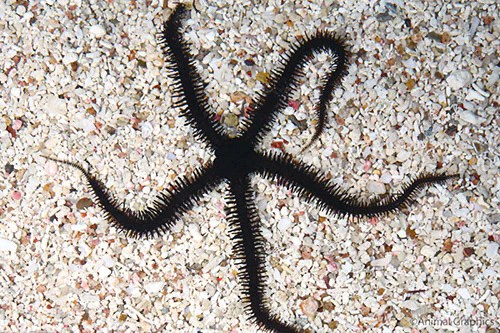
Brittle starfish are very shy, small starfish. They have no brain but they do have nerve cords that are in each of their five arms which join a nerve ring near their mouth. The lead researcher, Julia Notar, at the Sönke Johnsen’s lab at Duke University discovered that these starfish can learn using classical conditioning. Each nerve cord acts independently but work together as a committee according to Notar.
The starfish were kept in an aquarium and fed their favorite food, shrimp, only when the lights were dimmed. The starfish learned to come out of hiding as soon as the lights were dimmed, even before they were fed when there was no evidence of food in the aquarium.
Free google image Brittle starfish
Notar pointed out, “They’re potentially able to expect and avoid predators or anticipate food because they’re learning about their environment.”
Sue’s Note: The fact that they can learn about their environment means that they have the ability to remember as well as learn, if you cannot remember, you cannot learn. There has been evidence for many years that people who receive organ transplants sometimes show evidence of the behavior, likes and dislikes of the donor as a result of cell memory in the organ. This seems to be connected to learning without a brain. (https://pubmed.ncbi.nlm.nih.gov/31739081/)
Journal Reference:
Julia C. Notar, Madeline C. Go, Sönke Johnsen. Learning without a brain: classical conditioning in the ophiuroid Ophiocoma echinata. Behavioral Ecology and Sociobiology, 2023; 77 (11) DOI: 10.1007/s00265-023-03402-x
Cite This Page:
Duke University. “Brittle stars can learn just fine — even without a brain.” ScienceDaily. ScienceDaily, 29 November 2023. <www.sciencedaily.com/releases/2023/11/231129174214.htm>.
Researchers at the University of Bristol found that feeding dogs raw meat increases the risk that they will pass a strain of E. coli that cannot be killed by the common antibiotic ciprofloxacin in their feces.
E. coli can cause food poisoning and is the most common cause of urinary tract and bloodstream infections which can be life-threatening.
According to researcher Matthew Avison, raw meat that is sold for human consumption and the meat used to feed dogs is likely to be contaminated with the antibiotic-resistant E. coli. While cooking the meat kills the E. coli, handling it exposes the person who is feeding their dog raw meat. It is also likely that the dog is passing E. coli in his feces.
Sue’s Note: Many advertisers try portray the dog as being a tame wolf and promote the idea that dogs need to eat like wild canines because it is their “natural diet.” The truth of the matter is that any wild animal can only eat the food that is available to them and it is not a balanced diet. Wolves, if they are lucky, can live to eight years of age. Some do live longer but not as long as domestic dogs. Foxes are lucky if they live three to four years. Many wild animals suffer from starvation, especially in the areas that have a cold winter.
Journal Reference:
Jordan E. Sealey, Ashley Hammond, Kristen K. Reyher, Matthew B. Avison. One health transmission of fluoroquinolone-resistant Escherichia coli and risk factors for their excretion by dogs living in urban and nearby rural settings. One Health, 2023; 17: 100640 DOI: 10.1016/j.onehlt.2023.100640
Cite This Page:
University of Bristol. “Feeding dogs raw meat increases the risk of antibiotic-resistant E. coli.” ScienceDaily. ScienceDaily, 20 November 2023. <www.sciencedaily.com/releases/2023/11/231120124109.htm>.
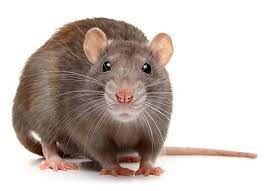
Researchers at the Howard Hughes Medical Institute Janelia Research Campus have discovered that rats have the ability to imagine. There findings indicate that just like people, animals can think about places and objects that they cannot see.
To determine this, they used a Brain Machine Interface and saw that rats showed specific neural activity patterns in the hippocampus area of their brain which is related to spatial memory. The researchers have determined that this function is necessary for an animal to remember past events and imagining future scenarios even if the animal is at a different location.
Sue’ Note: While this research is important because it gives scientific proof that animals can remember the past and think of the future, it is obvious to me because if animals cannot do this, those in the wild would not survive. Our domestic animals would not be able to learn the things we teach them. An example that many of us have observed is the dog who knows what time a person is coming home and waits at the door, long before he could hear, smell or see the person coming. This is evident when the person is late and the dog at waiting at the normal time and illustrates the dog’s ability to anticipate the future. A famous example of this is Hachikō, an Akita who lived in Japan from 1923 to 1935 and went every day to the train station to wait for his master after his master died.
Journal Reference:
Chongxi Lai, Shinsuke Tanaka, Timothy D. Harris, Albert K. Lee. Volitional activation of remote place representations with a hippocampal brain–machine interface. Science, 2023; 382 (6670): 566 DOI: 10.1126/science.adh5206
Cite This Page:
Howard Hughes Medical Institute. “Rats have an imagination, new research suggests.” ScienceDaily. ScienceDaily, 2 November 2023. <www.sciencedaily.com/releases/2023/11/231102162557.htm>.





 A Blog by Susan Bulanda