Susan Bulanda’s books

The Business of Dog Training: How to Succeed as a Successful Dog Trainer – will guide you through every aspect of running dog training business from what kind of trainer you want to be to how to deal with clients. This is a must have book for those people who want to become dog trainers as well as those who already have a business.     2024 First Place Dog Writers Association of America – Maxwell Award

Miitary Dogs of WWII – covers all the countries involved in WWII. It names famous dogs as well as mascots. It covers the dogs that served as SAR dogs in England, helping to find buried people in bombed buildings. It explains training methods as well as the missions that the dogs went on and how they saved lives. There are about 100 photos included in the book.      2023 First Place Dog Writers Association of America- Maxwell Award

K9 Obedience Training: Teaching Pets and Working Dogs to be Reliable and Free-Thinking.  This explains how to teach a dog the basic obedience that is the foundation for all other training. The methods used in this book allow the dog the freedom to think for themselves rather than perform robotically where creativity is discouraged. Free-Thinking is necessary for all working dogs. Obedient disobedience is also covered. The book explains what not to do and why. Some fun tricks are included.

K9 Search and Rescue Troubleshooting: Practical Solutions to Common Search-Dog Training Problems – explains the typical SAR dog training problems and offers solutions for the SAR dog handler. The solutions apply to all disciplines in canine search and rescue. It explains how the puppy stages of development can have lasting effects on the behavior and training of a dog. Often people adopt an older dog to train and do not understand why the dog behaves the way it does, this book gives insight to those issues. Although K9 Search and Rescue Troubleshooting: Practical Solutions to Common Search-Dog Training Problems is written for the SAR dog handler, the information contained in it applies to many training issues that are not related to SAR.      2020, Certificate of Excellence, Dog Writers Association of America.      2018, First Place, National League of American Pen Woman.

Soldiers in Fur and Feathers: The Animals That Served in WWI – Allied Forces: A unique, collection of accounts about many different animals that served in WWI. There are many rare photos. What is especially interesting about this book is that it includes many of the mascots that the soldiers kept. Some went into the trenches with the men. For example, there is an account about how a cat saved the life of a soldier, how a pair of geese slated to be Christmas dinner wound up being kept as mascots, and one soldier had a huge Golden Eagle as a pet. WWI was a transitional war from animal power to mechanization, therefore many species of animals served, such as oxen, horses, mules, camels, pigeons, and dogs in many capacities. 2012: Second Place Winner, National League of American Pen Women, Finalist for the Alliance of Purebred Dog Writers Arthur Award,      Certificate of Excellence for the Cat Writers Association of America.

Faithful Friends: Holocaust Survivors Stories of the Pets Who Gave Them Comfort, Suffered Alongside Them and Waited for Their Return: The only book written about the animals of the Holocaust victims, recording a part of history that has been overlooked. Some of the stories are sad and some joyous, but all are a part of history. Learn about Nicholas the French Bulldog owned by a woman who was part of the French resistance, and how he came to tour with the German army. Also, the dogs who somehow survived the war and were reunited with their owners and many other stories about dogs and cats.      2012: Dog Writers Association of America, Maxwell Award,     Certificate of Excellence Cat Writers Association, 2012; National League of American Pen Woman 2nd place  

God’s Creatures: A Biblical View of Animals explains the role that animals play in the Bible and how God uses them. It explores the nature of animals and miracles that involve them. It answers questions such as, do animals go to heaven, do they know and obey God, can they be evil?

Boston Terriers, a book all about this wonderful breed of dog. Learn about their care, training and personality. The book has fun sidebars that give personal accounts of Boston terriers.        2002 – First Place Maxwell Award for the Dog Writers Association of America (only available on Amazon)

Ready: The Training of the Search and Rescue Dog: Adopted worldwide as the training book for SAR dogs. This book has been in print since 1994 and is in its second edition. It gives the SAR dog handler a training plan for all disciplines of canine search and rescue.       First place for the National League of American Pen Woman, 1996. Also nominated best book of the year, 1994 Dog Writers Association.

Scenting on the Wind: Scent Work for Hunting Dogs: helps the hunting enthusiast understand how weather, wind and terrain features affect scent. It is a great aid for people who compete in field trials or who do any kind of scent work with dogs. Only available from the author’s website http://www.sbulanda.com

Real Estate Today, Seller Beware! – explains how to save thousands of dollars when selling your house. Available on Amazon
Early spay or neuter in dogs

There is an on-going debate over spaying or neutering dogs before they reach maturity. In the United States, most veterinarians, shelters and rescue groups encourage dog owners to spay or neuter their dogs before or by six months of age, before a first heat for females. The AKC Health Foundation has been researching the pro’s and con’s of early spay/neuter in Golden Retrievers.

They have compared dogs that were spay/neutered before one year of age and after one year of age. What they have found so far is that the timing of spay/neutering had a significant effect on the health of the dogs. They found that early neutering of male dogs more than doubled the risk of Hip Dysplasia but did not have the same affect on female dogs.

Early spay/neuter increased the risk of cruciat ligament tear (CCL) and lymphosarcoma (LSA) in both sexes. Late spaying in females increased the risk of hemangiosarcoma (HAS) and mast cell tumor (MCT). Intact female dogs had no mast cell tumors.

As a result of this study, the AKC CHF is extending its research to include German Shepherd Dogs, Labrador Retrievers, Dachshunds, Rottweiler’s, Chihuahua’s, Standard and Miniature Poodles. 

The question remains, what should a dog owner do? No one wants to increase the risk of health issues in their pet.

First and foremost is talk to your veterinarian and ask them if he/she is aware of the most recent studies concerning the effects of early spay/neuter. After researching the facts, the dog owner must evaluate their ability to handle a dog that is not spayed or neutered. How the dog will behave depends in part on how well it is trained and its breed as well as its individual personality.

Some considerations are:

Should I wait until my dog reaches sexual maturity and then have the dog spayed/neutered?

If I have a female dog can I keep the dog safe from being bred until it reaches or passes sexual maturity?

Can I deal with the discharge that comes with the “heat” cycle?

Do I have a prevention plan with my veterinarian to take care of an unwanted, accidental breeding with my female dog?

Do I have a plan to deal with an unwanted litter of puppies?

Can I keep my dog, male or female under control to prevent them from wandering/escaping during a heat cycle?  Females will wander to spread their scent to try to lure a male and a male will run away to find a female when he picks up her scent.

Can I control my male dog to keep him from marking?

If my male dog has a tendency to be aggressive, can I handle the aggression (toward humans and other animals) that sometimes manifests itself in un-neutered male dogs?

These are just a few of the important decisions a dog owner should consider when deciding if they should have their dog spayed or neutered before sexual maturity or at all.

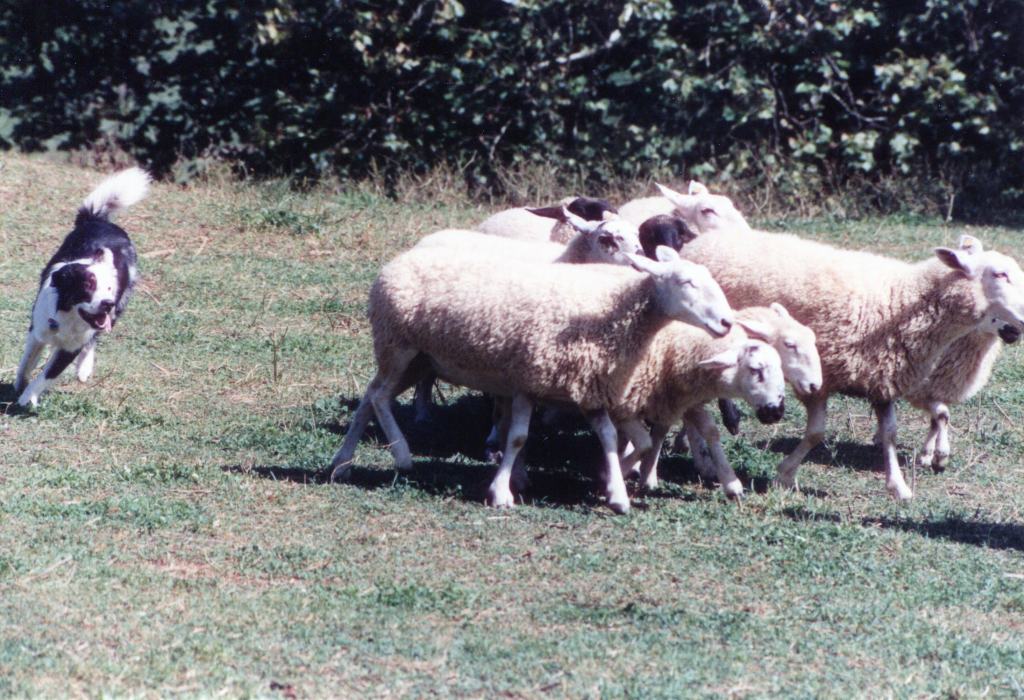
Sue’s Note: For many years people who own working dogs, such as Border Collies that are used for herding have said that if a dog is spayed/neutered before maturity that they do not work as well. Some people feel that the dog does not fully mature mentally if they are spayed before a first heat for females.

Sit, Stay, Prosper: How Dog Training Became a Big Business

by guest blogger, Kallisti Publishing

The next time you pass a well-behaved dog walking serenely on a leash, tail wagging in perfect harmony with its owner, take a moment to appreciate the silent partner in that picture-perfect moment: the dog trainer. Behind every happy canine and relieved pet parent, there’s likely a professional who taught Fido how to sit, stay, and maybe even stop chewing the couch cushions.

Dog training has quietly grown from a charming pastime into a booming industry that combines passion, practicality, and profit. As Americans pour billions of dollars annually into their pets, the demand for professional trainers has skyrocketed. For those who love dogs and want to make a career out of that affection, it’s never been a better time to enter the field.

“Dogs are family now,” says Susan Bulanda, a veteran trainer, internationally recognized canine behavior expert, and author of The Business of Dog Training: How to Succeed as a Professional Dog Trainer (Kallisti Publishing, 2024). “People are investing in their pets like never before, and that includes making sure they’re well-trained and happy. This shift has created incredible opportunities for trainers.”

A Pawsitively Booming Industry

Gone are the days when dog training was little more than a niche service. Today, the industry offers a dazzling array of opportunities. Trainers can specialize in everything from puppy socialization and basic obedience to advanced fields like agility sports, therapy dog certification, and service dog training.

Jessica Ramirez, a trainer based in Austin, Texas, discovered this firsthand. “When I started during the pandemic, I thought I’d stick to basic obedience classes,” she says. “But the demand kept growing—puppy owners wanted socialization, working professionals needed help with separation anxiety, and a surprising number of people wanted their dogs to learn fun tricks.”

Ramirez now runs a six-figure business with three employees, offering services that range from one-on-one consultations to group classes and even virtual training. “It’s incredible how many options there are,” she adds. “This isn’t just a job—it’s a lifestyle.”

And it’s a lucrative one. The American Pet Products Association (APPA) reports that spending on pet services, including training, reached over $11 billion in 2023. With 65 million American households owning at least one dog, this number is only expected to grow.

Why Now?

The rise of the dog training industry can be traced to several factors. For one, the pandemic prompted a nationwide “puppy boom.” Millions of Americans adopted pets, often for the first time, and quickly realized they needed help teaching their new companions how to behave.

“Pandemic puppies changed everything,” says Andrew Mitchell, a Denver-based trainer who left his corporate marketing job to pursue his passion for working with dogs. “Suddenly, people were home all day with these energetic animals and had no idea how to handle them. That’s when trainers became essential.”

Urbanization is another driver. As more people move into cities and apartments, the importance of having a well-behaved dog grows. “A barking or aggressive dog can strain relationships with neighbors,” says Bulanda. “Training ensures harmony in these close-quarters living situations.”

Moreover, dogs are no longer seen as just pets—they’re companions, family members, even emotional support systems. “Training isn’t about control anymore,” Bulanda adds. “It’s about communication. People want to connect with their dogs, and trainers help make that possible.”

The Joys and Challenges of Training

Despite the industry’s many rewards, dog training isn’t without its challenges. Trainers must master both canine behavior and human psychology. “Training a dog is often the easy part,” says Mitchell. “The harder part is teaching the owners. You need to be patient, empathetic, and a great communicator.”

For Ramirez, the emotional rewards outweigh the challenges. She recalls working with a rescue dog named Daisy who had a deep fear of loud noises. “Her owners were ready to give up,” Ramirez says. “But after weeks of gradual training, Daisy became a completely different dog—confident and calm. Seeing that transformation is why I do this.”

Bulanda agrees. “Training changes lives—for the dog and the family. It’s one of the most meaningful careers you can have.”

How to Get Started

Starting a dog training business is surprisingly accessible. Most trainers begin with a certification from organizations like the International Association of Canine Professionals or the Certification Council for Professional Dog Trainers. These programs teach foundational skills, from reading canine body language to implementing training techniques.

For those serious about building a career, resources like Bulanda’s The Business of Dog Training offer valuable guidance. The book provides practical advice on everything from understanding dog behavior to marketing services and managing a business. Drawing on decades of experience, Bulanda outlines the path to becoming a successful trainer in an increasingly competitive field.

“You don’t need a huge investment to start,” she says. “A few basic tools, some education, and a lot of dedication can go a long way.”

The Future of Dog Training

The industry’s growth shows no signs of slowing down. As more Americans embrace the human-animal bond, the demand for skilled trainers will only increase. This expansion opens the door for innovation, such as virtual training programs, mobile apps, and training packages tailored to specific breeds or behavioral issues.

“Dogs are incredibly adaptable, and so is this industry,” says Mitchell. “There’s always room for new ideas and approaches.”

For those considering a career change or looking for a side hustle, dog training offers a unique blend of profitability and purpose. It’s a career that allows people to work with animals, help others, and build a business—all while enjoying the companionship of man’s best friend.

“Dogs bring joy, loyalty, and love into our lives,” Bulanda reflects. “As trainers, we have the privilege of helping them thrive while creating lasting bonds with their owners. It’s a career filled with heart, and it’s one I’d recommend to anyone who loves dogs and wants to make a difference.”

A Career That Changes Lives

Whether you’re looking to leave behind the corporate grind or turn your passion for animals into a thriving business, dog training offers endless opportunities. With the right skills, a willingness to learn, and resources like The Business of Dog Training, you can build a career that’s not only financially rewarding but emotionally fulfilling.

So, the next time you see a dog sitting calmly at its owner’s feet or walking politely on a leash, remember: that’s the work of a trainer. And it might just be your next great career move.

Dogs understand words from a soundboard

A new study investigated whether dogs understand the words on a soundboard or if they were responding to cues from their owners. The study was conducted by researchers at the University of California San Diego as well as other institutions and have proven that dogs who are trained with soundboard buttons can comprehend specific words and will perform contextually appropriate responses. The study was led by Federico Rossano who is an associate professor in the Department of Cognitive Science at UC San Diego and is head of the comparative Cognition Lab. This study was the first empirical study from the world’s largest longitudinal or panel study of button-trained pets.

The way the study was conducted removed bias, owner cues, and showed that the dogs truly did understand the words on the sound board. One of the more important findings is that it shows the complexities of dog cognition and communication.

Sue’s Note: Since I first started training dogs and working as a behaviorist, we have come a long way in understanding how intelligent dogs (and other animals) are. One of the key lessons that we as pet owners must keep in mind, is that dogs are much smarter than previously thought and understand much more than most people give them credit for. This is important to keep in mind when training any animal. What you do and how you do it is critical in building your relationship with your dog or other pet and having them understand what you are teaching them or want them to do. This is why it is very important to use the same word for a specific command. For example, do not use the word DOWN to tell your dog to get off you or furniture and then say the same word to tell your dog to lie down.

Journal Reference:

  1. Amalia P. M. Bastos, Ashley Evenson, Patrick M. Wood, Zachary N. Houghton, Lucas Naranjo, Gabriella E. Smith, Alexandria Cairo-Evans, Lisa Korpos, Jack Terwilliger, Sarita Raghunath, Cassandra Paul, Hairou Hou, Federico Rossano. How do soundboard-trained dogs respond to human button presses? An investigation into word comprehensionPLOS ONE, 2024; 19 (8): e0307189 DOI: 10.1371/journal.pone.0307189

Cite This Page:

University of California – San Diego. “Dogs understand words from soundboard buttons.” ScienceDaily. ScienceDaily, 28 August 2024. <www.sciencedaily.com/releases/2024/08/240828154926.htm>.

Those amazing whiskers

A study at Northwestern University has shown that rats determine the direction of the wind with their whiskers. Since many other animals such as dogs, foxes, coyotes and cats also have whiskers that are similar to those of a rat, is it possible that they also use their whiskers to determine the direction of the wind?

All wild animals also have to be aware of the direction of the wind to either find food or avoid being detected by predators. Therefore, the ability to determine the direction of the wind or even a slight breeze is a life and death skill. It seems reasonable that that they would use their whiskers as well as the movement of their fur to detect the direction of air movement.

Sue’s Note: As a person who has trained many working dogs, I have seen dogs learn how to use the direction of the wind to find scent. It is quite an amazing thing to watch, and another example of how intelligent animals are.

Journal References:

Mitra J. Z. Hartmann et al. Whiskers aid anemotaxis in ratsScience Advances, August 2016 DOI: 10.1126/sciadv.1600716

Yan S. W. Yu, Matthew M. Graff, Mitra J. Z. Hartmann. Mechanical responses of rat vibrissae to airflowThe Journal of Experimental Biology, 2016; 219 (7): 937 DOI: 10.1242/jeb.126896


Cite This Page:

Northwestern University. (2016, August 24). Whiskers help animals sense the direction of the wind: First-ever study shows that rats use whiskers to locate source of airflow. ScienceDaily. http://www.sciencedaily.com/releases/2016/08/160824160248.htm

Death, Decomposition, and Detection Dogs

Death, Decomposition, and Detection Dogs: From Science to SceneBy Susan M. Stejskal, LVT, PhD. Published by CRC Press, Second Edition, 2023, $54.95, 259 pgs.

I love this book. It is very well written; the quality of the cover and pages are excellent. It has informative diagrams and color photos. The book thoroughly researched and covers the topic extremely well. Because the author explains in easy-to-understand terms all of the technical aspects of body decomposition, this book is easy to read. There are nine chapters covering a variety of topics which include forensic tools, a dog’s nose, how a body decomposes, the role that bugs play in forensics, how the environment impacts decomposition, electronic detection devices and what is very interesting, actual case studies.

This book is a must have for canine search and rescue handlers, police, fire fighters, those who study forensics, and authors who write murder mysteries or include a death in their stories.

The loss of a pet

Love runs deep, no matter if it is the love of a person or a pet. When we lose a beloved pet, no matter what species, it leaves a huge hole in our heart and life. For some people, getting a new pet right away helps ease the pain. Other people can never get another pet. I have owned many dogs, cats and birds, each one holds a special place in my heart. When my search dog Scout died suddenly from undetected cancer, I was numb for two weeks. I had other search dogs and pets since losing him, but I could never get another dog of his breed.

Unfortunately, many people do not understand how someone could feel so deeply about an animal. They do not offer the support that they would give if a family member passed, but the person who is heartbroken needs that support just as much.

People handle grief differently and it helps to understand their needs. A pet owner will handle their grief in the same way that someone who has lost person would. Some people need to talk about the lost pet. Others avoid talking about the pet because it is too painful. Almost everyone feels comfort by getting a sympathy card or a hand written note. In this case a hard copy is best because they may want to save it.

As a certified animal behavior consultant, I have had many clients call to tell me about the loss of their pet. They do this because they know that I will understand. Letting a friend who has lost a pet know that you understand is very important. Let them talk and be willing to listen, even if they talk about the pet frequently as they go through the grieving process.

Both the Old and New Testament have a lot to say about animals and how important they are to God. In the book of Matthew 10:29 it says that God knows even if a sparrow falls. Animals are mentioned many times in the Old Testament, illustrating how important they are to God. Knowing this may bring comfort to someone who is grieving the loss of a pet. The big question that people often have is whether or not they go to Heaven. I have explored this and many other questions regarding animals and their importance to God in my book God’s Creatures A Biblical View of Animals. Please feel free to order it on Amazon or directly through my website for an autographed copy. www.sbulanda.com This book has brought comfort to many people, especially when a beloved pet has passed.

A Dog’s Devotion: True Adventures of a K9 SAR Team

A Dog’s Devotion: True Adventures of a K9 Search and Rescue Team by Suzanne Elshult and James Guy Mansfield, 286 pgs., ISBN: 978-1-4930-6871-5, Published by Lyons Press, $28.95.

As a K9 SAR person with over 20 years in the field, I thoroughly enjoyed reading this book. What I found refreshing was that Ms. Elshult and Mr. Mansfield included the struggles that they encountered which seem to permeate the SAR community, such as personality differences, leadership conflicts, and gaining acceptance by non-SAR agencies.

The authors share with us some of the search missions that were especially meaningful to them including those for human remains. Ms. Elshult’s dog Keb, a yellow Labrador Retriever was successfully cross trained in both live detection and human remains. Unfortunately, many SAR people feel that a cross trained dog cannot perform reliably. I personally successfully cross trained all of my search dogs so I understand the struggles that she had.

The book is written in a non-emotional, almost report like manner where we are told the facts. The authors reactions to the situations that they faced are covered but not dramatized. However, we are told of all of the hardships and challenges that they faced and how they worked through them. Even though some of the searches involve looking for human remains, the writing style makes it safe for even the squeamish to read and enjoy.

The beauty of this book is that it clearly gives the reader a factual picture of what search and rescue involves, how searches are managed and decisions are made. Ms. Elshult’s love and admiration for her dog Keb is evident throughout the book and Keb is a good representation of what many search dogs are capable of and do throughout the world. While the searches take place in the Pacific Northwest forests, the dynamics apply to all searches.

Hearing loss in dogs

A number of breeds of dogs, mostly those breeds that have the merle, piebald or white coats, are prone to deafness. However, dogs that are subjected to frequent loud noise can suffer from hearing loss the same as people. This is referred to as noise-induced hearing loss.

A study conducted at the University of Illinois at Urbana-Champaign by Dr. Kari Foss, found that working dogs such as police, sniffer and gun dogs are a strong candidate to suffer from hearing loss. According to Foss,

“Most commonly, noise-induced hearing loss results from damage to the hair cells in the cochlea that vibrate in response to sound waves,” Foss said. “However, extreme noise may also damage the eardrum and the small bones within the inner ear, called the ossicles.”

         The most common signs that a dog is losing his ability to hear are when the dog fails to respond to commands, or they sleep through noise that would normally wake them up. They may bark excessively or make unusual sounds. Sometimes a dog may have a hearing loss in one ear only. If that is the situation, the dog may hear sounds but not be able to tell where it came from.  

         The researchers recommended that dogs who must work around loud noise wear hearing protection that is designed for dogs. It is also possible that dogs can lose hearing from ear infections and illnesses and as they age.

         If a potential dog owner is going to purchase a breed where deafness is a problem, they must be sure that the breeder has done a BAER test to determine if the puppy is deaf or not.

Puppies are wired at birth to communicate with people

Some people believe that a dog’s ability to understand what a person means when they point at something is learned in adulthood through interaction with people. However, a group of researchers at the University of Arizona School of Anthropology in the College of Social and Behavioral Sciences has illustrated that this is not true.

istock

What they did find out is that while puppies are born with an understanding of human physical and verbal cues, they were not able to initiate help from people for unsolvable problems. This ability comes with experience after interacting with people.

The lead researcher, Emily Bray has spent the last decade studying the puppies bred for service dog work at Canine Companions. Bray feels that if they can understand how dogs think and solve problems, they will be able to better identify those puppies that will make better service dogs.     

The researchers noted that the dogs who become successful service dogs respond to people differently than those who are not successful. Because the researchers are able to study the genetics of the puppies in the test, they hope to identify the genes that cause these traits in puppies. This will enable them to predict the potential for service work even before the puppies are born.