Pets can reduce food allergies in children

Previous research has shown that living with animals can reduce allergies in children such as airborne and food allergies. Now a recent study has confirmed and strengthened this finding.

Researcher Hisao Okabe from the Fukushima regional Center for the Japan Environment and Children’s Study and colleagues studied over 65,000 young children who lived with dogs and cats and found that they had less food allergies than children who do not live with pets.

About 22% were exposed to indoor dogs and cats during their fetal stage and showed a significant reduction in food allergies. It is interesting that the study showed that children exposed to outdoor dogs had no significant reduction in food allergies.

The children who were exposed to indoor dogs were less likely to be allergic to eggs, milk and nuts. The children who were exposed to indoor cats had a lower instance of allergies to eggs, wheat and soybeans. Yet those children who were exposed to hamsters had a higher rate of allergies to nuts.

This study did not go into detail about why this occurred but it is interesting that it did.

Journal Reference:

  1. Hisao Okabe, Koichi Hashimoto, Mika Yamada, Takashi Ono, Kazufumi Yaginuma, Yohei Kume, Mina Chishiki, Akiko Sato, Yuka Ogata, Karin Imaizumi, Tsuyoshi Murata, Hyo Kyozuka, Kosei Shinoki, Seiji Yasumura, Hidekazu Nishigori, Keiya Fujimori, Mitsuaki Hosoya. Associations between fetal or infancy pet exposure and food allergies: The Japan Environment and Children’s StudyPLOS ONE, 2023; 18 (3): e0282725 DOI: 10.1371/journal.pone.0282725

Finding a Lost Cat

            In many ways looking for a lost cat can be easier than looking for a lost dog. This is because most cats stay very close to home whereas dogs can run for miles. On the flip side, cats can hide in very small places, making it more difficult to see them.

            If the cat is an indoor/outdoor cat, the chances are that the cat is staying away from home on purpose. I have seen cats spend hours waiting for a chipmunk to pop out of a bush or a hole. Sometimes the cat will wander away from the last place they saw the chipmunk only to return an hour later to wait again. While you are frantically looking for your cat, the cat is having a grand old-time hunting. Few cats will come when called in a situation such as this.

            If your cat is an indoor cat and not used to being outside, it is very likely that the cat is frightened. In this case the cat will find a hiding place and most likely stay there. It depends on the cat’s relationship with his owner and how frightened he is whether he will come if you call him. If the area around your house is quiet, the cat is more likely to come out.

         Regardless of which type of cat you have, as soon as you determine that the cat is missing you should act right away. Below are a few steps that you can take to help find your cat. It depends on your cat’s personality and experiences which will work the best, so to be safe, try all the tips.

         Unless you saw your cat run outside, the first thing you must do is search your home. Sometimes a cat will hide in the house. This is especially true if there is unusual activity in your home. If there is going to be unusual activity in your home, it is best to lock your cat in a room or a crate so that the cat cannot hide somewhere where you will not find him or become so frightened that he will run out of an opened door. A cat that runs out of your home in fear will be less likely to come back to your home right away.

         When you search in your home (and outdoors) never underestimate your cat’s ability to squeeze into very small places. If you find your cat in an inaccessible (for you) small space in your home, and the cat can get out on his own, leave him alone, he will come out when he feels safe. Be sure to check attics, basements and closets.

         If your cat is outdoors, check around your home. Most cats will stay within 2 – 3 houses from yours. They typically do not go more than 1/3 of a mile. Be sure to look in every outbuilding even if you think it is impossible for the cat to be there. Check roofs, trees, under porches and in any small space that might be available to your cat. This can include under rocks that form a small “cave.”

         Next search your neighborhood. Be sure to have a photo of your cat to help people identify your cat. If you can, ask friends to help you canvass the area around your home. Knock on doors and show neighbors a picture of your cat and leave your contact information.

         Post flyers around your neighborhood. Be sure to include a picture of your cat on the flyer. Also keep a record of where you post the flyers. Check them every three days to freshen them as needed. People will assume if a flyer is old that your cat has been found.

         Contact all animal related business in your area. This will include veterinary clinics, pet stores, shelters, cat rescue groups and 4-H clubs. You can also contact child groups such as the girl and boy scouts. Post flyers at any store or restaurant that will allow you to do so. Since a person may find your cat and take them to a shelter, you will want to extend your search to five or ten miles away.

         Take advantage of social media. Also check the lost and found section of your newspaper. Some people only read the weekend editions of their newspaper so place an ad in the weekend edition as well as the daily edition. Many newspapers will let you post an ad for free.

         Keep the ad, posters and social media fresh and up to date. If you find your cat, it is very important to let all the organizations know that the cat was found. Remove all posters as well.

         At your home you can put a litter box outside and articles of clothing that has your scent on it, such as an old tee shirt or shoes. Also leave a bowl of water and food for your cat. I like to get play sand that is used in children’s sand boxes and spread it on the ground around the food and water. This way if another animal comes to eat the food you will know by the tracks that it was not your cat. If another cat comes to your food, you will know that it is a cat and hope that it is your cat. If you have access to one, or if you want to purchase one, you can mount a wildlife camera outside to see if your cat is coming to the food.

         You can also put the cat’s bedding in a cardboard box with a hole cut in it big enough for your cat to enter. Be sure to secure the box so that it will not blow away or be unstable. You cat may be lured to this familiar, safe place.

         Also consider that the best time to search for your cat is at night after midnight when the surrounding area is quieter. At that time you can open a can of food if your cat knows that sound, it may attract him to you. When you do this, be patient, sound travels quiet far at night so your cat may not come running to you right away. Instead he may wait to be sure that it is safe and slowly approach you. If you do this in the same location every night, your cat may come out the second or third night. If you see your cat, stay calm and let your cat come to you. If you try to catch your cat you may frighten him, and he will be hesitant to approach you again. Be sure to leave the can of food outside in the same place you opened it.

         If you have recently moved, be sure to search your old neighborhood using the same methods. Cats have an amazing homing instinct. Searching your old neighborhood is especially necessary if your cat is an indoor/outdoor cat.  If you have moved too far away to do this, ask former neighbors and friends to help you.

         The most important thing is not to give up. Cats have been known to return home months after disappearing. Although it is heartbreaking to not find your cat, in many cases people find a cat and assume it is a stray that has been dumped and keep him, giving him a good home. If this happens and your cat is kept indoors, he will not be able to get back to you unless he gets out again and comes home. Which is why some cats come back months after they disappear. So never give up.

Fearful cats and socialization

Doctoral Researcher Salla Mikkola from the University of Helsinki and the Folkhälsan Research Center wanted to look into what causes behavior problems in cats such as fearfulness, aggression towards people and excessive grooming.  

What they found out is important, and that is socialization when cats are kittens with people is very important. Cats under the age of twelve weeks who only came in contact with strange people and children a few times or more fearful than kittens who interacted with strangers on a weekly basis. Fearful cats had more litterbox, aggression and excessive grooming issues.

The researchers noted that there were less fearfulness and aggression in cats when the cat lived with another cat.

Mimi who is partly blind

Sue’s Note: People tend to associate socialization with puppies and dogs but it is just as important to socialize cats. This should include handling all body parts, grooming, traveling in a vehicle, being put in a carrier, and exposure to noise that is not excessively loud. It is very important to make sure that the cat is not physically handicapped which can cause the cat to become frightened. For example, my cat was born with limited vision that is not detectable by a physical examination and was only apparent by observing her behavior. Many people do not realize that cats are very social and do best if there is at least one other cat in the home.

Journal Reference:

Salla Mikkola, Milla Salonen, Emma Hakanen, Hannes Lohi. Fearfulness associates with problematic behaviors and poor socialization in catsiScience, 2022; 25 (10): 105265 DOI: 10.1016/j.isci.2022.105265

Death, Decomposition, and Detection Dogs

Death, Decomposition, and Detection Dogs: From Science to SceneBy Susan M. Stejskal, LVT, PhD. Published by CRC Press, Second Edition, 2023, $54.95, 259 pgs.

I love this book. It is very well written; the quality of the cover and pages are excellent. It has informative diagrams and color photos. The book thoroughly researched and covers the topic extremely well. Because the author explains in easy-to-understand terms all of the technical aspects of body decomposition, this book is easy to read. There are nine chapters covering a variety of topics which include forensic tools, a dog’s nose, how a body decomposes, the role that bugs play in forensics, how the environment impacts decomposition, electronic detection devices and what is very interesting, actual case studies.

This book is a must have for canine search and rescue handlers, police, fire fighters, those who study forensics, and authors who write murder mysteries or include a death in their stories.

Pigeons can solve problems the same as artificial intelligence

We are always learning more about the mind of animals and this new study showed that pigeons share similarities with artificial intelligence.

Psychologists at the University of Iowa wanted to test the intelligence of pigeons and devised some very interesting and unique tests.

When the pigeons were given complex tests that involved categorization that did not allow them to use logic and reasoning, but instead made them memorize scenarios, they were able to pass the tests about 70% of the time.

free google photo

The tests involved showing the pigeon a stimulus and required the pigeon to choose which category the stimulus belonged to. The categories included line width, angle, concentric rings and sectioned rings. These tests were so arbitrary that no rules or logic would help solve the problem. What made them even more difficult was that each stimulus was special, never repeated and did not look like one another. It required memorization to do the task.

The pigeons were able to solve the problems by using their biological algorithm and employing associative learning. Computers on the other hand, use artificial algorithms that people programed into them.

Sue’s note: How amazing are the animals we share our lives with. It is exciting to think of what other tests might show how intelligent other birds and animals are.  

Swamp cancer (pythiosis) in animals

Swamp cancer has been around for a long time worldwide. It was first reported in 1884 and is typically limited to tropical and subtropical areas that include, Thailand, India, Brazil and states in the U.S. that border the Gulf of Mexico. Although recently it has been reported in northern area of the U.S.

Pythiosis causes either non-healing sores on the skin or lesions internally. Dogs that contract Pythiosis and are not treated, typically live less than one month. Horses and other animals can also contract pythiosis.

Pythiosis is caused by organisms that are similar to fungus but are related to algae, often called water molds. As the name suggests, they need water to survive. They are found in stagnant water including ponds, swamps and bayous but they are also found in moist soil, grasses and aquatic vegetation. The mold is attracted to human and horse hair as well as the skin of animals.

An animal can contract it by rubbing against or eating vegetation, wading or swimming in contaminated water or drinking or getting the water in their mouth. Hunting dogs are a prime candidate and studies have shown that for an unknown reason, German Shepherd Dogs also have a higher instance of Pythiosis.

In the skin form of the disease a dog will have non-healing wounds that will not respond to antibiotics. The wound will grow, drain pus and the tissue will die. In the internal form of the disease the dog may vomit, have diarrhea which will be watery and bloody. The dog may lose his appetite and thus weight. Masses may form on various organs in the body.

There are tests that a veterinarian can use to help determine if the dog has pythiosis and veterinarians at the University of Florida College of Veterinary Medicine are working to find a cure. If your dog has pythiosis you can contact them to partake of a pilot study for treatment of this disease.

Contact the University of Florida Small Animal Hospital at (352) 392-2235 or complete the study interest form at https://research.vetmed.ufl.edu/clinical-trials/contact-us/

 to see if their dog qualifies.

Cockatoos use multiple tools

There aren’t many animals that use multiple tools to solve a task, now the Goffins cockatoos are added to the list. What is equally important, researchers have determined that the birds know that they know how to use the tools and can decide which tools to use. This indicates that they have metacognition.

         A team of researchers led by Antonio Osuna-Mascaro from the University of Veterinary Medicine Vienna tested both tame and wild cockatoos. They found that the birds actually have a set of tools that they use and can decide which tools will work best for the task at hand. They use up to three different tools and will carry more than one to accomplish their goal. Birds often play with different objects, but this study showed the behavior that the birds exhibited was not play but that they were solving a task.

Sue’s Note: Bit by bit our understanding of animals as well as being able to develop the right kind of tests shows how intelligent animals are. I am confident that we have much more to learn. Because this report is very good, rather long and detailed, I suggest that you click on the link and read it. I try to keep my blog posts short and to the point.

  1. Antonio J. Osuna-Mascaró, Mark O’Hara, Remco Folkertsma, Sabine Tebbich, Sarah R. Beck, Alice M.I. Auersperg. Flexible tool set transport in Goffin’s cockatoosCurrent Biology, 2023; DOI: 10.1016/j.cub.2023.01.023

Help Your Dog Live Longer with These Fitness Techniques

By guest blogger Cindy Aldridge

Dogs of every age need proper exercise and nutrition in order to maintain good health. With the right balance, you can help your pup live a long and happy life. The key is to keep everything in moderation because even exercise can be detrimental if your dog overdoes it.

Ready to create a new fitness routine for your furry friend? Certified Animal Behavior Consultant Susan Bulanda shares some tips to get you started.

Make Quality Food a Priority

The foundation of any pet’s health is a great diet. The right food can make a big difference for everything from his coat to his joints. Look for high-quality food with natural ingredients that provide the nutrients they need. If you want to take it a step further, consider air-dried beef dog food, which has all the protein-packed benefits of raw food without the mess or hassle of preparing it yourself. Not only that, your dog will love the flavors.

Exercise, But Don’t Overdo It

Dogs need regular exercise for both physical and mental stimulation, but it’s crucial not to overdo it, especially as your pet gets a little older. He may want to run and play the way he did as a puppy, but certain types of exercise are better than others, depending on your dog’s breed and size. To avoid injury and keep his joints healthy, consider taking your dog for a swim, which is gentle enough for most ages.

Keep His Mind Sharp

In addition to getting enough exercise, it’s also important to provide your pup with plenty of mental stimulation throughout the day, even when you’re not around. You can introduce different smells and sounds to keep his senses engaged or provide interactive toys such as tug ropes or treat-dispensing balls that encourage thinking and playing. Training games are also great for mentally stimulating your dog, teaching him new tricks, or honing existing skills. You can also try playing hide-and-seek with his favorite toy.

Keep His Coat Healthy

Brushing and grooming your dog regularly and removing dirt, debris, dead skin cells, and excess fur from their skin helps keep their coat healthy. Invest in a high-quality brush for daily brushing sessions at home or visit a professional groomer for more extensive grooming services such as nail trimming or hair styling. Additionally, make sure you check for fleas or ticks regularly, too, especially during warmer months when these parasites are more active.

Spend Quality Time Together

No matter how old your pup is, spending quality time together is an essential part of keeping him happy and healthy. Take some time out of each day to cuddle up with your pup on the couch or take him on an adventure around town. Go for a drive if your pet enjoys car rides. Giving your dog this time is important for his mental health.

Invest in the Right Gear

As you and your dog spend time together, invest in quality gear like a durable leash and harness to ensure his safety. Look for products made from materials like leather, which are strong enough to withstand wear and tear but still comfortable enough for long periods of use without causing irritation. Lastly, make sure you have a good collar complete with ID tags so you’ll have peace of mind.

Keeping your pet healthy and active will ensure his continued mental and physical fitness, which can, in turn, lengthen his life. By feeding him quality dog food and providing lots of opportunities for exercise and bonding time, you can help your dog make the most of his years. Don’t forget to talk to your vet about any concerns right away.

The loss of a pet

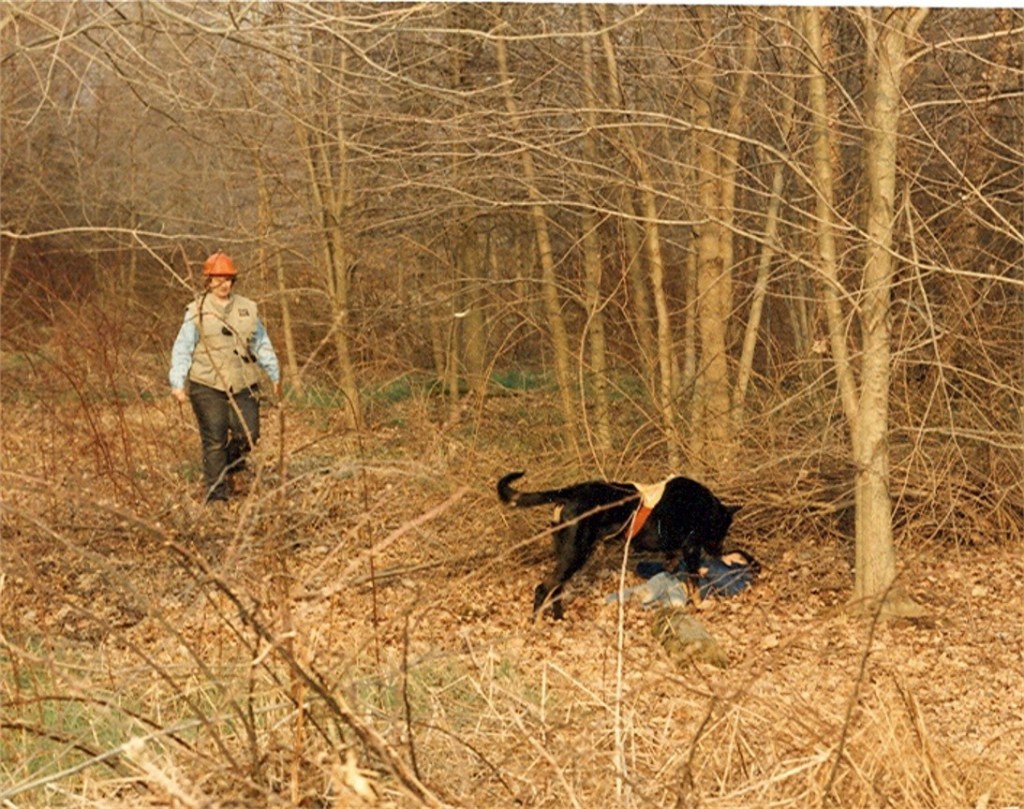
Love runs deep, no matter if it is the love of a person or a pet. When we lose a beloved pet, no matter what species, it leaves a huge hole in our heart and life. For some people, getting a new pet right away helps ease the pain. Other people can never get another pet. I have owned many dogs, cats and birds, each one holds a special place in my heart. When my search dog Scout died suddenly from undetected cancer, I was numb for two weeks. I had other search dogs and pets since losing him, but I could never get another dog of his breed.

Unfortunately, many people do not understand how someone could feel so deeply about an animal. They do not offer the support that they would give if a family member passed, but the person who is heartbroken needs that support just as much.

People handle grief differently and it helps to understand their needs. A pet owner will handle their grief in the same way that someone who has lost person would. Some people need to talk about the lost pet. Others avoid talking about the pet because it is too painful. Almost everyone feels comfort by getting a sympathy card or a hand written note. In this case a hard copy is best because they may want to save it.

As a certified animal behavior consultant, I have had many clients call to tell me about the loss of their pet. They do this because they know that I will understand. Letting a friend who has lost a pet know that you understand is very important. Let them talk and be willing to listen, even if they talk about the pet frequently as they go through the grieving process.

Both the Old and New Testament have a lot to say about animals and how important they are to God. In the book of Matthew 10:29 it says that God knows even if a sparrow falls. Animals are mentioned many times in the Old Testament, illustrating how important they are to God. Knowing this may bring comfort to someone who is grieving the loss of a pet. The big question that people often have is whether or not they go to Heaven. I have explored this and many other questions regarding animals and their importance to God in my book God’s Creatures A Biblical View of Animals. Please feel free to order it on Amazon or directly through my website for an autographed copy. www.sbulanda.com This book has brought comfort to many people, especially when a beloved pet has passed.

Will your dog rescue you if you need to be saved?

Researchers Joshua Van Bourg and Clive Wynne, Arizona State University professor of psychology and director of the Canine Science Collaboratory wanted to find the answer to this question. They evaluated 60 dogs who had no specific training to rescue people, by having the dog’s owners hidden in a box with a movable door. The owners were taught how to sound distressed and called out “Help” or “Help me.” As one control they had the owners sit in the box and read from a magazine and as another control drop food in the box. Out of the three tests, 84% of the dogs rescued their owners, more than the control tests.

“What’s fascinating about this study,” Wynne said, “is that it shows that dogs really care about their people. Even without training, many dogs will try and rescue people who appear to be in distress — and when they fail, we can still see how upset they are. The results from the control tests indicate that dogs who fail to rescue their people are unable to understand what to do — it’s not that they don’t care about their people.