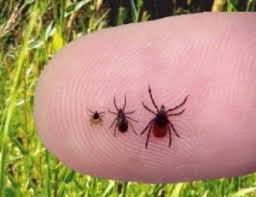
The good news is that researchers at The Wistar Institute have designed and tested the first-of-its-kind synthetic DNA vaccine against Powassan virus (POWV). This disease is an RNA virus in the flavivirus family the same as Zika.
google free photo
This tick-borne disease is fatal in ten percent of people who are infected. It causes detrimental neurological problems such as encephalitis and meningitis. It is passed quickly to a human from a tick and symptoms can occur anytime during the one-to-four-week incubation period. Symptoms include flu-like fever, body aches, skin rash and headaches.
Even though the disease is still rare, there has been an increase in cases in North America. The areas most affected are the Northeastern states and the Great Lakes region.
Residents of these areas should be extra careful in the spring and fall when the virus is the most active. As we learned in SAR, you can take some precautions. If you work outdoors, even doing yard work, use bug repellent, wear long pants and put your socks over your pant cuffs so ticks cannot crawl up your pant legs. Wear a hat or scarf to keep them out of your hair and long sleeves. After working outdoors, be sure to take off all of your clothes and examine them and then wash them. Check your whole body, especially your back and other areas you cannot see easily. Take a thorough shower. With care, you can protect yourself from all ticks and tick diseases.
December in many parts of the world often means snow. Almost everyone who is an animal lover knows that most dogs love to play in the snow, but do you know that cats can enjoy the snow too? Many people believe that cats do not like any form of liquid, whether it be a bath, the rain, a swimming pool or even riding in a boat, but there are cats who do find these things fun to do.
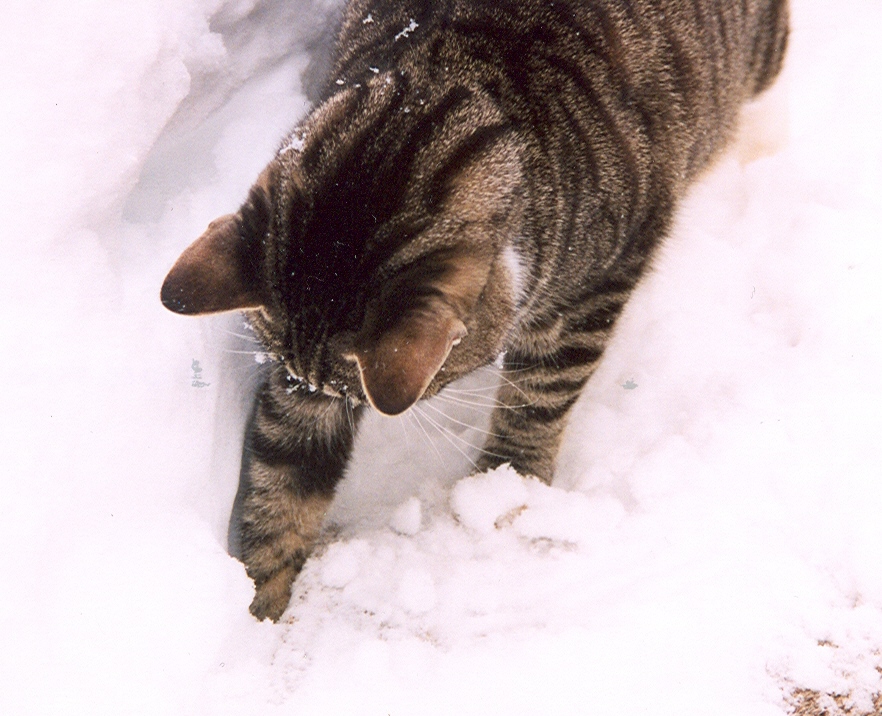
My cat is one of them. It all started when I was shoveling the deck and she saw a chipmunk run from under the bird feeder and dive into the snow. In a moment of excitement, she leaped off the deck and dove into the snow chasing the chipmunk. I stopped my shoveling to see what would happen. It wasn’t long before her head popped up through the snow, the flakes covered her ears, face and nose. She shook herself and started to come back to the deck. But as she walked, tiny snow balls started to cascade down the sides of her path through the snow. She stopped suddenly and pounced on them with both front feet, like cats do.
Playing in the snow chasing little snowballs
I could see by her body language that she had discovered a new game and was enjoying it very much. She was oblivious to the fact that some of the snow was melting on her body, making her wet.
As the winter progressed and we got more snow, she decided that she liked to follow me as I did my outdoor chores and pounce on the little balls of snow that slid into my footprints. She also joined the dogs for their romps through the snow. It is quite a sight to see her walk in the paths that they make, ever alert for sliding snow with her tail above the snow, standing straight up with a slight hook at the tip.
The lesson I learned from this is that a pet of any kind may enjoy playing in circumstances that you would not expect them to like. In the case of my cat or a small dog, I am careful to keep a close eye on them because they could become disoriented in deep snow, become exhausted and not be able to get back to the house. In very windy conditions they may not hear you call, so it is also important to be able to walk to your pet while they play outside in the winter. I have taught my dogs to come to a sheepherding whistle which carries up to a mile.
It is also important to be sure that your pet does not become too cold. Dogs will play outside even though they are cold and wet, to the point of shivering, and not want to come indoors. Cats, however, seem to be more willing to come indoors when they get too cold.
All pets that go for a walk on paved surfaces may have problems with salt, so it is a good idea to wash their feet when they come indoors. A dog can become cold and wet even if you put a dog coat on them.
The bottom line is, let your pet have the opportunity to experience safe play, even if it is not the type of play that you think they would like. You never know.
A recent study illustrated that Zebra finches can recognize the song or call of at least 50 members of their flock. They use this ability to find a lost member or to call and see if it is safe to return to the nest.
They need this ability because they usually travel in colonies of 50 to 100 birds and they split up and then come back together. They have distance calls that they use to identify where they are and to find members of the flock.
Zebra finch
While it has been known that songbirds are capable of communicating sounds with complex meanings, the latest research shows that songbird brains are capable of complex vocal communication. This also reflects on their high level of intelligence. Imagine how smart other animals are.
When people think of animals being struck by aircraft, birds come to mind. However, researchers have studied how many mammals were hit by aircraft. They found that worldwide, mammals hit by aircraft have increased by 68% world-wide. The range in size was from voles to the giraffe and everything in-between.
In the United States alone, damage to aircraft over a thirty-year period was 103 million dollars. Most of the animal strikes occurred during the landing phase of flight. Typically, the take-off and landing of an aircraft are the riskiest times. The study did not suggest how to alleviate the risk of hitting mammals.
The following is the third part in a series of eight articles about breeding dogs. Although it applies to a dog, it also applies to cats. People do not realize that there are cat mills which are similar to puppy mills. Note that these articles are based on my years of experience, my opinion and that I do not intend to refer to any individual. Please read the entire eight articles to glean a full understanding of breeding.
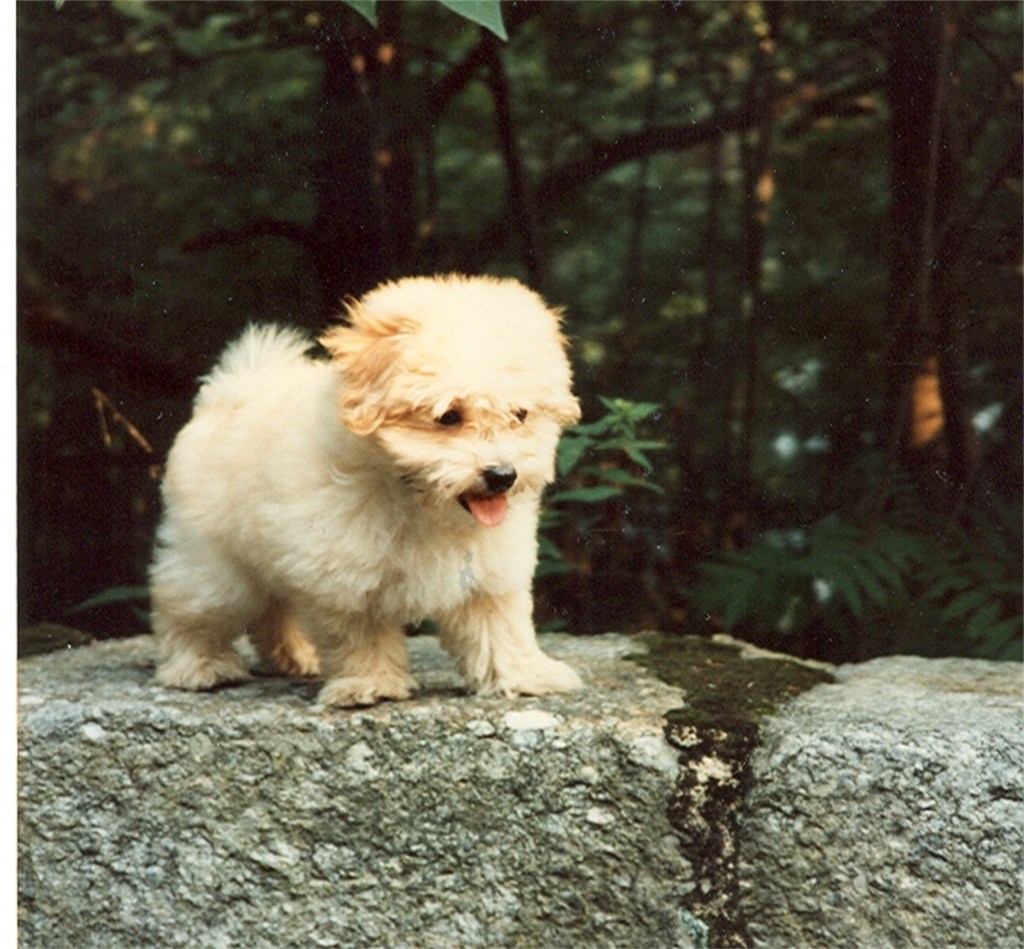
A top quality Havanese puppy
Part Three
There are six types of breeders.
There is the ethical breeder who studies lines and has a goal that they hope to accomplish with a breeding. This goal can be for a litter who has a solid temperament. It could be for conformation showing, for a good working dog and a combination of qualities. It is important to understand that temperament and intelligence are the two qualities that make a dog a good pet or working dog. A dog who meets the conformation standard without a good temperament or intelligence is not a desirable pet or working dog.
Ethical breeders are typically involved with a breed club or organization that monitors the ethics of the breeder. The ethical breeder does not produce multiple litters at one time and often only has one or two litters a year. They do not breed their dogs before they are tested for inherited issues or are under two years old. The ethical breeder will only breed those dogs who are worthy of breeding having been cleared of inherited issues and has been proven as a good show or working dog. Only exceptional dogs are bred. Ethical breeders work with the puppies from birth to placement so that they are socialized.
Ethical breeders often have waiting lists for puppies because their lines have been proven. They also only line breed or outcross. They rarely if ever inbreed.
The ethical breeder rarely makes a profit from their dogs due to the expenses of raising, testing and proving their dogs. Their litters are consistent in temperament, health and conformation. The ethical breeder will often guarantee the quality of their puppies.
Puppies from an ethical breeder are registered with a recognized registry. In the US this will be either the American Kennel Club or the United Kennel Club. In some cases, there are breed registries that are recognized as well. There are other registries that will register any type of animal and those that cater to the puppy mills. (See Registries Part 2)
The new breeder. Everyone has to start sometime. A small in-home breeder who is being mentored by an experienced breeder can be a quality, ethical breeder. Not every breeder has a large kennel. Most ethical breeders have a number of dogs that live in their house with them as pets. A home-raised puppy from an ethical breeder is the ideal place to get your puppy. The quality of the breeding is not measured by the number of dogs a breeder has, but by the care and goals of the breeder.
The commercial breeder mass produces puppies from a limited number of dogs. Their puppies are often registered with a national registry but the care and planning of the lines does not exist. Their goal is to make money so they often shortcut the testing and care of their dogs including the puppies. Their puppies are not from proven stock, are not consistent in temperament, health and conformation. These breeders will produce the breeds that are popular and likely to sell. They often produce a number of different breeds.
The puppy mill breeder. These people breed solely for profit. The dogs are often kept in cages and rarely given attention. They are not part of the family but viewed as livestock. They do no testing or planning and have no goals except to produce puppies and make money. Often these puppies are not pure and are not registered or if they are, they are registered with a non-recognized organization that supports puppy mills.
These puppies are often not consistent in temperament, conformation and are more prone to health issues.
The backyard breeder. This is the person who thinks they can make money from their pet. Due to a lack of understanding about breeding these puppies are one step away from the puppy mill breeder. The parents have no health testing, there is no consistency in the litter since they are randomly bred with no understanding of genetics. Because the backyard breeder does not understand all that is involved in producing and raising a quality dog, they do not take the precautions or socialize the puppies properly.
The last type of breeder is a rather recent phenomenon. This is the designer dog breeder. These people take two different breeds and try to create a dog of their own design. There is no consistency in the puppies that result because they do not have a solid goal. One of the excuses these people use is to create an allergy free dog. Because allergies are not a result of dog hair but of dander, this is not possible. All dogs have dander. Unfortunately, since there is no consistent conformation with designer dogs, there is no way other than a DNA test, to prove that the dogs are the mix that the breeder claims. I have had clients come to me with a dog that was supposed to be a Labradoodle and the dog grew up to be a terrier. Unfortunately, there is no way to guarantee the puppies and the buyer cannot know for certain that they are getting what they paid for. Also, it is unfortunate that these breeders charge as much or more for the mixed breed puppies as a buyer would pay for a well-bred puppy from an ethical breeder. These puppies are not registered or if they are, they are not registered with a recognized organization.
What is also important to consider is that a person who has a well-bred dog from an ethical breeder is not likely to cross this quality dog with another breed. Therefore, by default, many designer dogs are created from less desirable stock, often obtained from puppy mill breeders.
The following is the second part in a series of eight articles about breeding dogs. Although it applies to a dog, it also applies to cats. People do not realize that there are cat mills which are similar to puppy mills. Note that these articles are based on my years of experience, my opinion and that I do not intend to refer to any individual. Please read the entire eight articles to glean a full understanding of breeding.
Part Two
Understanding registries is important because who a dog is registered with will give you a clue as to its legitimacy. There are a few types of registries.
Nationally recognized registries. These are established organizations that register purebred dogs. In the United States it would be the American Kennel Club and the United Kennel Club. In some cases, there are breed registries that are legitimate. The way to determine if a registry is recognized is if other countries or registries accept a dog registered with the organization.
Non-recognized registries are those that anyone can establish. In the United States there are registries that cater to puppy mill breeders so that the AKC cannot shut down puppy mill operations.
Breed registries are those that are recognized but are designed to register certain types of working dogs. An example would be some of the working stock dog registries.
Anything goes registry are those that will register any type of animal for any reason.
Most people who own a pet dog feel that their dog is worth more if it is registered. They only understand that the dog has “papers.” They do not understand the value or uselessness of the papers. The non-recognized registries have used this lack of understanding to legitimize dogs by giving them “papers” that are not recognized by any national or international recognized registry.
It is important to note that no registry can guarantee the quality of a dog or puppy. They can only guarantee that as reported to them the records have been accurately kept. If the breeder owns both the sire and dam, they can list any dog as the sire and dam of a litter. For example, I had a client who made an appointment for training and told me that he had a Rottweiler. When I questioned him, he assured me that he had AKC papers. When his breeder found out that he was coming to me for training, he admitted that the dog was a Rottweiler/German Shepherd cross, the result of an accidental breeding. Yet the dog had recognized registration papers because the breeder owned both the male and female. The real ethics depends on the honesty of the breeder.
Ethical breeders will only register their dogs with recognized registries.
The following is the first part in a series of eight articles about breeding dogs. Although it applies to dogs, it also applies to cats. People do not realize that there are cat mills which are similar to puppy mills. Note that these articles are based on my years of experience, my opinion and that I do not intend to refer to any individual. Please read the entire eight articles to glean a full understanding of breeding.
Dempsey
Part One: The Bitch
First it must be said that only the best bitches and males should be bred. The only reason to breed is to better the breed.
Often in my career I have had clients tell me that they wanted to breed their pet dog. In most cases, they have no idea what is involved. It is much more than simply introducing a male and female.
Here are some of the reasons why they feel they want to breed their dog.
To make a lot of money. Often people will pay a substantial amount of money for a puppy. They feel that if they breed their bitch, they will earn eight to ten times that money.
It will be good for the children to watch. Whelping puppies is pretty gory and most children cannot handle what is involved. In some cases, it can traumatize a child and if the child is a girl, make her afraid to have children of her own.
If you still want a child to see this, it is better to find a breeder who will let your child get up in the middle of the night to watch the birthing of a litter.
We love our dog so much we want another like him/her. The chances of reproducing your dog are slim to nothing. Genetics is not an exact science and if breeders could control how a dog turns out there would be many more champions and exceptional dogs.
Everyone who meets my dog wants a puppy like him/her. As soon as the litter is born most people find that all of those friends who said they wanted a puppy have excuses as to why they cannot get one now. Breeders who have dogs that are breeding quality have waiting lists for a reason. A home bred or backyard bred dog has no special qualities to warrant the cost.
We really love puppies. Raising a litter of puppies is a lot of work and if done right, is very costly.
For a long time, dog trainers that use positive training methods have tried to convince those who use punishment or aversive methods that aversive methods are detrimental to a dog’s mental health. Now a new study has proven that positive or reward-based training is conductive to a dog’s mental well being and adverse methods compromise a dog’s well-being.
The researchers studied 92 companion dogs from 7 different dog training schools that used aversive stimuli, (this could be shock collars, pinch collars and even choke collars or negative sound devices) as well as schools that used reward-based methods (such as clicker training) and some that used mixed methods. They filmed the dogs being trained, and then they tested the saliva for stress related cortisol. They found that the dogs who were trained using aversive methods were more stressful, showing stress related behavior such as crouching and yelping. The researchers even tested the dogs in neutral environments to see if the stress level remained high. They found that the dogs trained with aversive methods were more pessimistic.
Puppies and adult dogs will often swallow a foreign object that can potentially harm them. If they ingest an object that is sharp, and they seem normal and are not gagging, or choking, immediately give them Metamucil or another psyllium fiber product and then call your veterinarian. I keep unflavored psyllium fiber on hand so that if necessary, I can add broth to it so the dog will eat/drink it. If you don’t have psyllium fiber on hand the old-time remedy was to give the dog bread and milk or bread and water. The purpose of doing this is to form bulk or a coating around the object to prevent it from injuring the dog until a veterinarian can evaluate the situation and treat the dog. It is a first aid measure, not a cure.
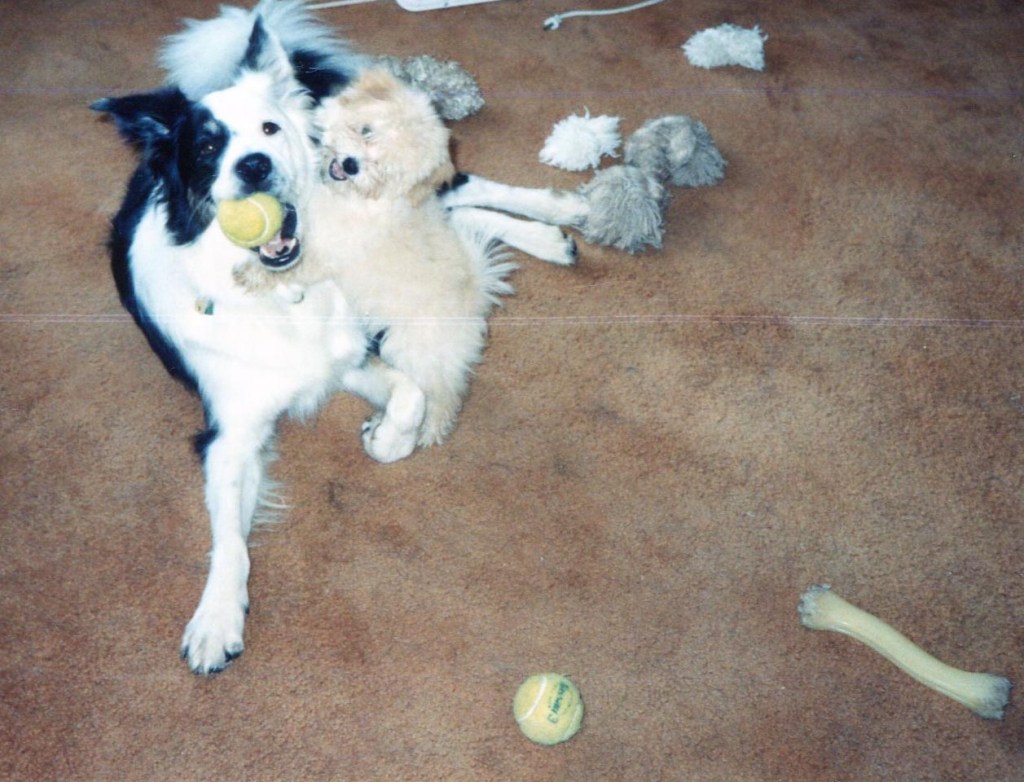
Woody and Lily playing with toys under supervision
Dogs should not be given any product that can be chewed into small undigestible pieces. Such items would be bones, both real and fake, plastic toys, balls, sticks, some of the teeth cleaning chews/products, rawhide, pig ears, and cow hooves. If you are in doubt as to whether or not a product is safe for your dog to eat, put it in a bowl of water. If it does not break down and dissolve in five to ten minutes it is most likely not safe for your dog to ingest.
Many people like to play tug-of-war with their dog and use rope toys. These are OK for this type of play, but a dog should not be allowed to chew and swallow any type of rope. The strands can block the intestines, they are not digestible. Also be careful of stuffed toys and any product made of cloth. These also can block the dog’s intestines and are not digestible. Many stuffed toys are stuffed with batting that is made of synthetic material, again, not digestible.
If your dog likes to play with stuffed toys, watch him carefully to see if he rips the toy apart to pull out the stuffing or if he is the type of dog that will not destroy the stuffed toy. The key with any type of toy is to know your dog. With care and observation, a dog can play safely with toys.
The question came up about why some animals such as cats, dogs and ferrets as well as humans can get the virus but bovine and swine do not. Researchers led by Professor Singh and his team which included Professor Rajinder Dhindsa (McGill University), Professor Baljit Singh (University of Calgary) and Professor Vikram Misra (University of Saskatchewan) decided to explore this question.
What they found is that those animals who can get the virus have two cycteine amino acids while those who do not only have one. This discovery will most likely lead to a cure for the virus. This is exciting news. Please read the whole article for a more in-depth explanation of how this works.






 A Blog by Susan Bulanda