The Cavalier King Charles Spaniel has been a breed for over 1000 years. However, during that time there were “bottlenecks” in the breeding of these dogs where only a small number of dogs were bred.
Researchers studied eight different breeds and found that the Cav had the greatest number of disease-causing genes than any of the other breeds studied. They are especially prone to heart disease.
picabay photo
Note: The study only sampled a limited number of dogs of each breed studied. While this is a good indicator, I would have liked to see a larger number of dogs tested from a wider geographical area. However, breeders who sincerely love their breed, what ever it is, can improve the breed by selective breeding for the right reasons. Too many people breed indiscriminately and do not test their dogs for genetic defects. As a canine behavior consultant, I have seen the results of this for my entire career.
Separation anxiety is a genetic issue. This means that owners do not cause it, however, they can bring it out in a dog and intensify it. Research has shown that dogs that are noise shy, such as a fear of thunderstorms tend to also have separation anxiety.
Separation anxiety is a panic attack and is very similar to a panic attack in people. It is not fun to have and if it happens often enough, such as when a dog is left alone frequently, can cause the dog’s quality of life to degrade. Imagine being afraid for eight to ten hours, five or more days a week. It is also important to understand that separation anxiety is very stressful, and a dog’s health is affected the same as a person from constant stress. Therefore, separation anxiety not only destroys a dog’s mental health, but can also harm their long-term physical health as well.
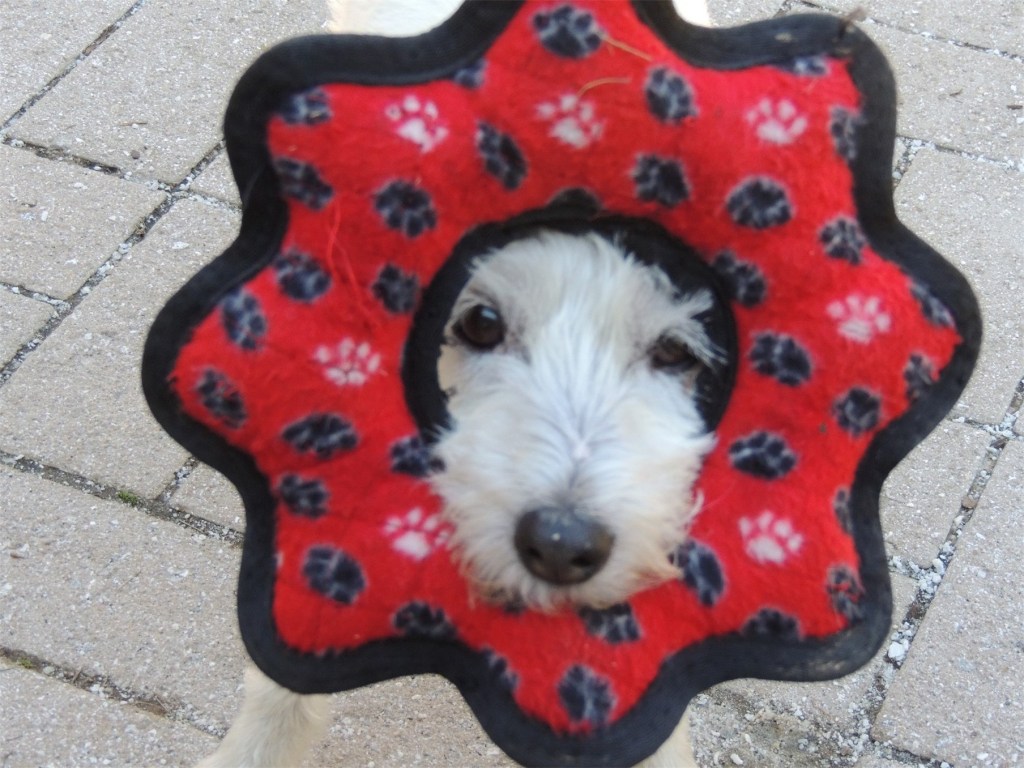
Riley – Parsons Russell Terrier
Before you determine that your dog has separation anxiety, you must rule out medical issues that can cause the same symptoms. This will require a thorough examination by your veterinarian. The examination should check for the following:
CBC, Chemical profile, thyroid profile, urinalysis and fecal exam, dental health, GI distress, diabetes, renal failure, colitis, and inflammatory bowel disease.
After you have ruled out any medical reasons for your dog’s behavior you can then examine the behaviors.
Before you label your dog as having separation anxiety, you must determine if your dog is simply behaving as a normal dog. Puppies, chew and destroy things. Is your dog completely housebroken? Is something teasing your dog outside of your home, making him bark? Is your dog marking? Did you change his food or give him a treat that made him unable to wait to eliminate?
A dog can have various levels of separation anxiety. Like any fear or anxiety, it gets worse the longer the dog has it. Older dogs tend not to respond to treatment as well as younger dogs. Therefore, the behavior associated with separation anxiety will not just “go away” or get better with time. It will get worse until it could reach a level were the dog harms himself.
The symptoms are:
Pacing, drooling, vocalization, destructive behavior and inappropriate elimination of urine and feces, usually randomly throughout the house. Often the feces will have mucus in them and do not appear the same as normal stools.
If you determine that your dog does suffer from separation anxiety, it is best to contact a certified canine behavior consultant because the treatment can vary widely and should be tailored to your living arrangements and the dog’s needs. In some cases, medication may be necessary and, in that case, you would need to consult with a veterinarian behaviorist who understands which medications are best and how to administer the medications and how to wean your dog off of them. A non-veterinarian behavior consultant who understands the medications can work with your veterinarian.
The question that I am often asked is how can a person determine if a puppy is prone to separation anxiety. There is no hard and fast rule, but typically if a young puppy cannot be crated, it is often a good indication that the puppy is prone to separation anxiety.
Remember, the sooner you address the problem the better the chance you will be able to get it under control. All behaviors are learned very quickly. An example is a dog who becomes frightened of thunderstorms and as he experiences more storms, he learns that as the barometric pressure changes, a storm is coming and starts to shake before the storm arrives. He will even act as if a storm is coming when the pressure changes and no storm comes.
The breeds that are most likely to have separation anxiety are:
Labrador Retriever
Border Collie
Cavalier King Charles Spaniel
Jack Russell Terrier
German Shepherd
Australian Shepherd
Bichon Frise
Vizsla
To find a qualified behavior consultant go to www.iaabc.org
A new study has found that there are five distinct coat colors in dogs and wolves. Previously scientists believed that there were only four. The mystery of coat colors has been solved. (However, we never know what discoveries the future holds.)
This discovery is the result of the work done by an international team of researchers including scientists from the Institute of Genetics of the University of Bern. The team found that a genetic variant which is responsible for a very light-colored coat in dogs and wolves originated in a now extinct relative of the modern wolf.
According to the research a small piece of DNA from this extinct ancestor is still found in yellow dogs and white artic wolves.
Note: This information may help breeders better determine the potential coat color of future litters. I hope that it eventually helps eliminate the deafness and other ills that are connected to certain colorations in dogs, namely the merle, harlequin, piebald and for some breeds the all-white factors, that cause genetic problems.)
The researchers offered a sample of cats, the option of getting their food from a food puzzle or having access to their food on a tray. All of the cats preferred the easily available food on a tray.
This was true for active cats and cats used to using a food puzzle. The researchers added that the food puzzles used in the study may not have stimulated their natural desire to hunt and ambush their prey.
The researchers added that this does not mean that cat owners should stop using a food puzzle.
Scientists use dogs and other animals to learn about genetically related diseases and illnesses that are common to animals and humans. By developing a cure for an animal disease, they often have breakthroughs for curing similar human diseases. One species that has been overlooked in this process is the common domestic cat.
Leslie says Lyons, of the Department of Veterinary Medicine & Surgery at the University of Missouri has explored this option. According to Lyons, cats can be an important asset in understanding the genetic “dark matter” that makes up 95% of DNA. Lyons has found that cats have genetic diseases that are related to the dysfunction of their genetic dark matter.
Lyons feels that cats could pay a role in developing precision medicine for genetic diseases. This could allow scientists and medical personnel to fix the actual gene and what the gene does instead of treating the symptoms.
The wonderfully varied stories recount experiences with dogs and cats, sheep and horses, backyard birds and woodland deer, and other surprising creatures. The encounters and adventures of people and animals include childhood memories, individual and family experiences, and wilderness adventures. They all celebrate the companionship we have with animals both domestic and wild, in good times and bad, in times of celebration and times of challenge.
As fellow creatures, we give animals attention and care, and they give us so much in return. If we listen and observe, they teach us about God and about ourselves. This inspirational volume will evoke laughter, tears, and the experience of awe.
Animals entertain us, help us, teach us, play with us, mourn with us, even work with us. They help us experience God’s presence in our lives.
Publication date: August 20, 2021
ISBN: 9781945099274, 5.5″ x 8.5″, 15 Black/White Photos
Researcher Mark Hauber a professor of evolution, ecology and behavior at the University of Illinois Urbana-Champaign and other scientists have made an unusual discovery. They found that Tufted Titmice and Chickadees will use animal hair to line their nests. While this may not seem unusual, what he found by studying videos, was that the birds braved landing on sleeping mammals to pluck out their hair. It seems the mammals did not mind having the birds do this and some did not wake up. The fact that these birds use animal hair was not new to the researchers, but it was always assumed that the birds obtained the hair from carcasses, not from live animals.
Tufted Titmouse
The researchers have named this behavior “kleptotrichy” which is Greek for “theft” and “hair.” As the researchers further studied this behavior, they found that the birds plucked hair from 47 humans, 45 dogs, three cats, three raccoons and a porcupine. I wonder if the humans were aware of the plucking birds.
Lily the Havanese
budgie who pulled Lily’s tail
What came to mind for me was a parakeet (budgie) that I owned years ago. While I was working in my office, I would let the bird fly around. My small Havanese would sleep in her bed next to my desk. The keet would sit on my lamp and watch the dog. Then he would fly down, landing on the floor and tilt his head back and forth as birds do, watching her sleep. He would take a few hops toward her until he reached her tail and then he would grab one hair and pull it. The dog would wake up, half rise and growl at the bird, who would squawk bird laughter, as he flew back to the lamp. When the dog went back to sleep, he would do it all over again. I always felt that he did it for fun but who knows?
An international team of scientists, Barbara Klump and Lucy Aplin from the Max Planck Institute of Animal Behavior, John Martin from the Taronga Conservation Society and Richard Major from the Australian Museum have made an interesting discovery.The sulphur-crested cockatoo, native to Australia, has been observed lifting the lids off of garbage bins to gain access to food. The team of researchers have determined beyond any doubt, that this behavior has been taught through social interaction from bird group to bird group. In one case a lone bird reinvented the technique of opening the trash bin and it was quickly copied and spread to other bird groups. The researchers have determined that this “taught/copied” behavior illustrates regional subcultures.
cockatoo opening a trash bin – Max Planck photo
Not all of the cockatoos use the technique to open trash bins, but will wait for another bird, typically a male, to open the bin and then they scavenge for food.
Sulphur crested cockatoos are very smart. They are also persistent and in the wild as well as as pets, have adapted very well to living with people.
What goes into being a great dog owner? Obviously, it means giving your pet the best possible care. It means building a long-term relationship of trust and affection. But there’s another component of being a great dog owner, too, that has to do with how you and your dog relate to your neighbors. If you want those around you to love your pet as much as you do, it’s important that you keep in mind certain basic principles of good neighborly behavior for dog owners. After all, failure to do so can jeopardize your relationships in your community, which can have a harmful effect on your dog’s well-being, too.
image pixabay
Keep the noise down.
Just because your dog’s barking doesn’t bother you, that doesn’t mean that it’s acceptable. For one thing, your dog may be barking because they are anxious, bored, or feel threatened. It’s important to pinpoint the reason behind the barking so you can help your dog get past whatever is bothering them. Secondly, you don’t want your family to be a nuisance. Hearing constant barking can be frustrating for your neighbors, and significantly reduce their quality of life. Seek the help of a trainer if your dog is barking excessively for no clear reason.
Clean up after your dog.
Hopefully, you know that letting your dog defecate on someone else’s property is a major faux pas. In fact, in many states, it constitutes a trespass and is technically illegal. Make sure you keep your dog from running onto someone else’s property. Should they happen to do so, however, and relieve themselves there, be sure to clean up after them and apologize to your neighbor. You don’t want to let feces accumulate on your property, either, as the stink can be unpleasant to those around you. It can also attract flies and other unappealing insects, and in significant quantities pose a health risk, as dog poop can carry dangerous parasites and bacteria.
Don’t let your dog roam past property lines.
If you live in a rural area, this rule may be easy to follow – even then, it’s important to train your dognot to leave your property. In the suburbs or in urban areas, letting your dog run about willy-nilly could lead to an accident. They could get struck by a car or get into a fight with another dog. They could become the victim of dognapping or animal cruelty. If your dog is more reactive or nervous, they could end up doing physical harm to someone else. If you want to let your dog run freely in your yard, have sturdy and attractive fences installed. Do a little research to see what kind of fence will work best for you and your dog – then, when searching for afencing company near me, compare prices and read reviews on the specific type of fence you are looking for.
Communicate with your neighbors about your dog.
As a dog owner, you will find that plenty of people want to chat with you, especially those who have dogs themselves. But even if your neighbors are reserved, it’s important for you to let them knowabout your dog’s temperament, especially if there are any behavioral issues you are working out. If your dogtends to be aggressive or reactive, let your neighbor know. Or, if your dog is friendly and enjoys being petted, your neighbor may (or may not) appreciate the opportunity to make a new local friend. Be sure, too, to let your neighbors know they should feel free to communicate with you if any issues arise with your dog.
When you adopted your dog, you may have signed on to accepting a certain level of noise, mess, and disruption, but your neighbors did not. You owe it both to the others in your community, and to your dog, to train them well so that they can be a happy, pleasant member of your community, and be appreciated – not resented – by others around you. It might be helpful for you as a dog owner to understand more about canine behavior, so reach out to a certified animal behavior consultant like Susan Bulanda for more tips and pointers.
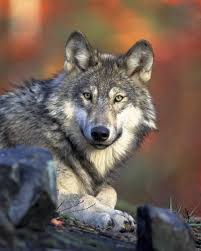
Scientists are constantly trying to understand the mind of the dog vs. the wolf. A recent study at <a href="http://<!– wp:paragraph –> <p>www.sciencedaily.com/releases/2021/07/210712122206.htm</p> Duke University showed that dogs understand people almost from birth whereas wolf puppies that were raised by people within days of their birth do not.
The wolf puppies were fed, slept in bed with and thoroughly interacted with people to try and socialize them. The dog puppies were left with their mother and littermates. The wolf and dog puppies were tested between 5 and 18 weeks old.
The researchers hid a piece of food in one of two bowls and then pointed to the right one. The dog puppies knew instantly, often on the first try, to follow the clue given by the tester. The wolf puppies never were able to follow the tester’s indication, often pointing to the correct bowl.
When the food was put in a container so that the puppy could not access it, the dog puppies looked to the human tester for help but the wolf puppies did not.
According to the researchers, the ability to understand human gestures is a complex cognitive ability that is rare in the animal kingdom. So, the fact that dogs can do it is special.
Author’s Note: Researchers try to understand the process about how dogs became dogs. There are a number of theories and as more material becomes available the theories change. One theory is that dogs are not descended from wolves, even though they are closely related but a species in and of themselves. There is evidence to support this theory the same as other theories.