Household noise and stress in dogs

We all know that some dogs seem to be more stressed than other dogs. Part of the reason is the genetics of the dog. Certain breeds tend to be more noise sensitive than others. But all dogs can be stressed by certain types of noise. Researchers at the University of California found that dogs are often stressed by common household noise. Particularly noises that are high frequency or very loud. Examples are smoke detectors, microwave ovens, and vacuum cleaners.

Many loud and high pitches noises actually hurt a dog’s ears. Most owners recognize obvious signs of fear or stress, such as trembling, hiding, howling, barking and running away. However, owners often miss a dog’s more subtle signs and therefore do not help their dog when stressed.  Some of the subtle signs are panting, licking their lips, turning their head away, a rigid body, ears turned back or flattened against the head, and lowering their head below their shoulders.

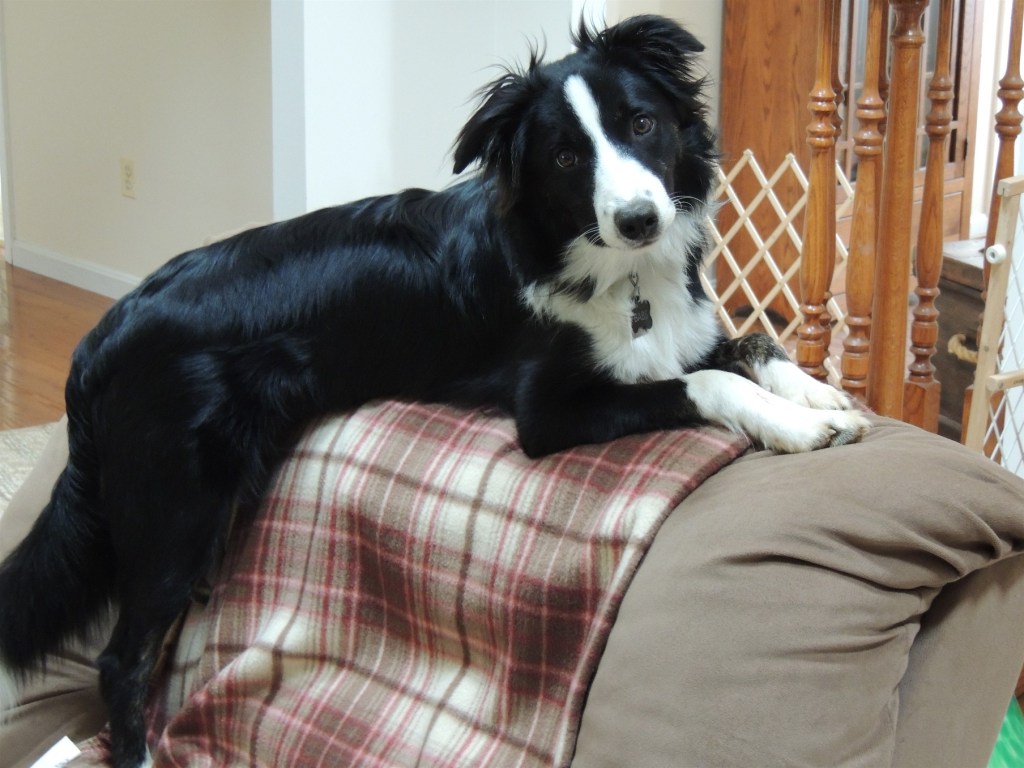
By watching your dog or cat carefully you can learn to recognize their relaxed body language. This will help you recognize when your pet is not relaxed.

Babs, totally relaxed

Whenever a stressful noise occurs, a concerned owner will remove the dog from the area. It is important to watch the dog’s body language to see how far away the dog needs to be to avoid being stressed.  

Cats are also stressed by noises therefore cat owners should also be aware if noise bothers their cat.

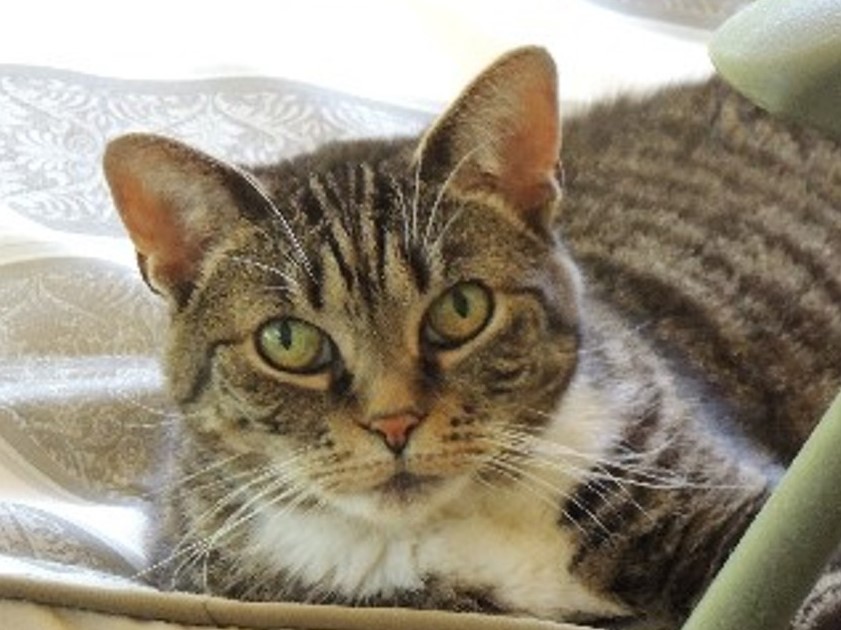
Pluskat totally relaxed

Cats often get a bad rap

Many people think that cats are asocial. Quite the opposite is true. Cats are very social animals but their way of showing it is quite different from dogs. Because people are used to dogs, they do not recognize the social behavior in cats. Also, many cat owners have just one cat, therefore they do not see cat to cat social interaction.

            From studying feral domestic cat populations, we have learned quite a bit about the cat’s social structure. Female cats, known as queens, will help each other raise their young. They even act as midwives to a queen giving birth. For example, they will help clean the newborn kitten and nurse them if they are lactating. They will groom and guard the kittens as well. Males, or tom’s will also help defend kittens in their colony.

            Cats will sleep together, touching, even if it is hot, which rules out some assumptions that they only sleep close to each other for warmth. Cats will form special friendships with each other, having preferences in the colony. Cats are very family oriented and are closer to relatives than a stranger. Although the colony will accept a strange cat after a period of time. This takes weeks to months, depending on the situation.

            When cats groom each other, it is almost always in areas that are hard to reach, such as the head, face and neck. It is considered bad cat manners to groom below the shoulders.

Another way cats communicate to each other is by rubbing. Anyone who has owned or seen cats would have seen head bumping, body and tail rubbing. Sometimes cats will wrap their tails together, which is a form of rubbing.

            Adult cats will also monitor the play between kittens. If the kittens get too rough, the adult will break it up. The kittens always listen and will stop their play.

            Cats do not hunt in groups. This is because each cat needs the equivalent of three mice a day to survive. Their hunting technique is to sit quietly, slowly stalk and then pounce. This does not lend itself to sharing the food. It is very rare for more than one cat to hunt together but it has happened, for example when trying to catch a squirrel. Cats will spray to mark their territory so that other cats, even those in the colony do not hunt in another cat’s area.   

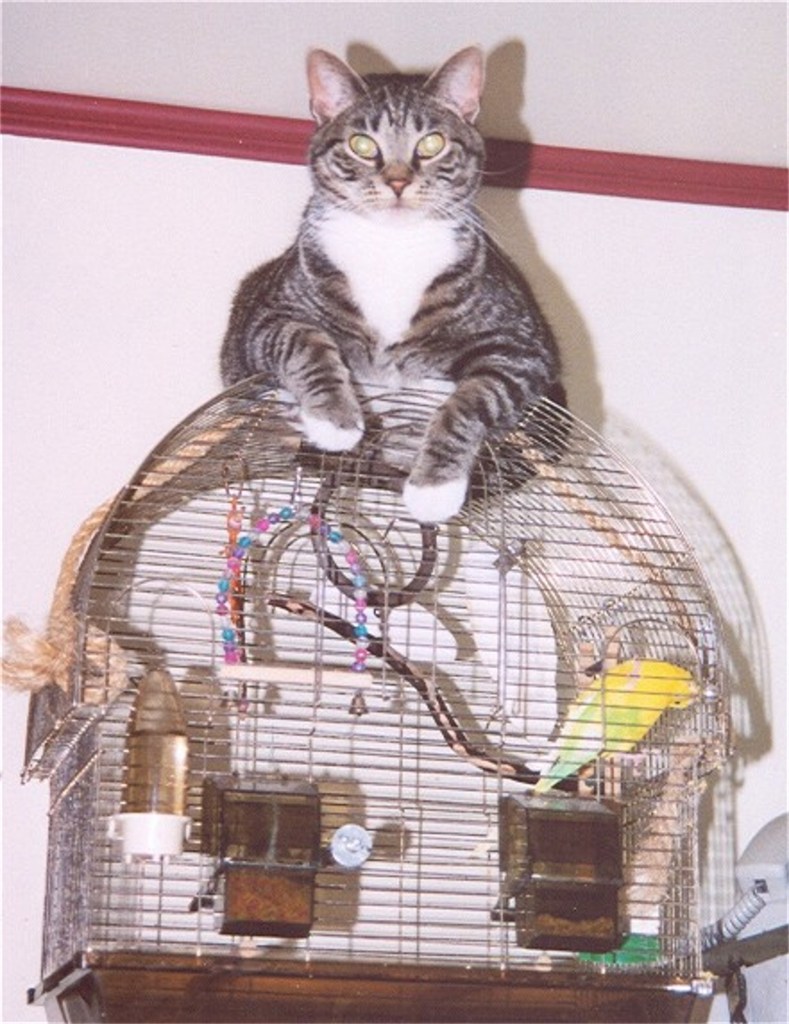
Pluskat and Sunshine (budgie) who are friends

            Kittens need to stay with their litter until they are at least 12 weeks old. They go through developmental stages similar to other animals. They learn how to behave and how to interact with other cats while they are young. If they are taken away from the litter too soon, they do not know how to act like a cat. If the cat owner decides later to get another cat, the resident cat will not know how to accept or interact with the new cat. This is one of the reasons why people have trouble introducing a new cat to the home. It is always better to have two kittens instead of one, and if possible, adopt litter mates. Family is very important to cats.

Mimi

            Like dogs, there are many breeds of cats and there are breed traits. Despite the breed of mix of a cat, each individual will have its own personality. Some cats act more like dogs and some are very aloof. Some cats are bold and some are timid. All cats are different due to breeding, family involvement, early training and experiences. It is important to keep this in mind and not label all cats as having the same personality and temperament. By understanding your cat’s natural social behavior, you can make the quality of life for your cat much better.  

Separation anxiety in first year college students

Researchers at Washington State University conducted a study of first year (freshmen) college students who owned pets and their level of separation anxiety. What they found is not surprising to those of us who are pet owners and lovers.

The students were tested before leaving for college and during their first two weeks on campus. Prior mental issues were accounted for so that they did not influence the results of the study. What the researchers found was that students who treated their pets more like people suffered more. It also seems that dog owners suffered the most rather than cat owners and people with other types of pets.

My soul mate, Scout

The importance of this study shows that programs that allow pets to visit campus to help students that are stressed, are beneficial. What this study made me think of are all of the elderly people who are forced to give up their pets, who were their companions for many years, because they had to move to a care facility. Young people are active and seem to be able to adjust more readily than the elderly. This also brings to mind how important it is to bring certified therapy pets to nursing homes and assisted living facilities. No matter how young or old a person is, losing a pet for any reason is often very traumatic. Your heart can ache for the loss for many years.

Those amazing whiskers

A study has shown that rats determine the direction of the wind with their whiskers. Since many other animals such as dogs, foxes, coyotes and cats also have whiskers that are similar to those of a rat, is it possible that they also use their whiskers to determine the direction of the wind?

All wild animals also have to be aware of the direction of the wind to either find food or avoid being detected by predators. Therefore, the ability to determine the direction of the wind or even a slight breeze is a life and death skill.

cat whiskers

It seems reasonable that that they would use their whiskers as well as the movement of their fur to detect the direction of air movement. As a person who has trained many working dogs, I have seen dogs learn how to use the direction of the wind to find scent. It is quite an amazing thing to watch, and another example of how intelligent animals are.

Help for pets with dementia

I have had dogs who suffered from cognitive decline or dementia in their old age. Often these dogs are put down because they can no longer function properly. I wish this product had been available years ago.

Noted Veterinary Surgeon Dr. Theresa Fossum Adds CogniCaps, a cognitive function supplement, to her Popular Line of Natural Animal Supplements

Noted veterinary surgeon Dr. Theresa Fossum DVM, MS, Ph.D., Diplomate ACVS, and author of the most referenced book on its topic, Small Animal Surgery, has added a new product to her popular line of natural animal supplements Dr. Fossum’s Pet Care, CogniCaps, to support healthy brain function in aging dogs.

Dr. Curtis Dewey, a veterinary neurologist with extensive knowledge of the brain concerns aging dogs often experience, collaborated on the development of CogniCaps with Dr. Fossum. The supplement, a combination of eastern and western modalities, was created in an easy to administer capsule format and contains a proprietary blend including our own BioCog formula (registration pending) plus vitamin E, zinc, naturally occurring phytochemicals such as curcumin, oral S-adenosylmethionine (SAMe), and phosphatidylserine, a membrane phospholipid. In addition, the supplement contains a number of herbs from Traditional Chinese Medicine that have been shown to support cognitive function.

According to Dr. Dewey, the estimated prevalence of cognitive concerns in older dogs generally varies between 14% and 35% of the pet dog population; however, these numbers are likely an underestimation. As with people, cognitive decline in dogs can increase dramatically with age; as many as half of all dogs 11-12 years old are likely experiencing age-related decline, and nearly 70% of dogs over the age of 15 are affected. Importantly, dogs may show evidence of brain changes as early as 4-6 years of age.

Even mild or moderate changes in cognitive ability can make living with affected pets difficult. Dogs may become disoriented and frequently become “stuck” in a corner of a room, they may urinate or defecate in the house because they may be temporarily confused about where the appropriate place to go is. They may seem stressed, they may bark at inappropriate sounds or objects, and they may become less interactive with their owners. Affected dogs often develop sleep disturbances (they are active and may vocalize at night, but they sleep during the day). In a word, these pets show signs of senility.  

Dogs affected with changes in cognitive ability typically respond well to intervention, especially if instituted early in the process. Precautionary measures such as dietary changes and environmental enrichment can both help, and slow the progression of cognitive decline due to aging. This suggests that simple changes including health supplements as provided in CogniCaps may be generally advisable in pet dogs as they approach middle age.

Because there are so many individual health supplements for cognitive decline, veterinarians and their clients are often faced with the prospect of recommending multiple separate supplements to produce a positive response. It is also common practice to separate the recommendation into the categories of western and eastern medicine. Again, this conceptualization leads to the necessity of multiple supplements-both western (conventional) and eastern (non-conventional, holistic, etc.). Although pet owners often will administer multiple supplements to their senior dogs, it can be challenging. Also, it is unlikely that the average pet owner will administer multiple supplements to a well seeming middle-aged dog. CogniCaps is a truly integrative health supplement, combining a mixture of both western and eastern ingredients in one small capsule, allowing for ease of use for pet guardians to support keeping dogs’ minds sharp as they age.

                               #                            #                            #

For more information on CogniCaps, please see https://drfossums.com/product/cognicaps-cognitive-function-supplement/. For information on Dr. Fossum’s full line of natural pet wellness products please see https://drfossums.com.
Viability: The Essence of Existence, a book review

Viability: The Essence of Existence by Lex Sloot, ISBN: 13-978-0-9864287-6-0,

433 pgs. $29.95, hardcover.

This is an amazing book filled with practical advice, and philosophy. Viability deals with all of life’s challenges and concerns that everyone faces at one time or another. For example, in the section of his book titled Yesterday, Today and Tomorrow, Sloot states in his book that today, this is the historical present. What an interesting thought and a new way to look at today. The book includes an Index of Trucepts that covers every situation that a person might face. There is so much in this book that it is hard to write a comprehensive book review. Some of the topics in the book are: People deceive; Our customers tell us; My inner truth; Life is not always fair; I made a mistake; All individuals; Do not lose ground; and If you are driven, are just examples of the topics he covers.

I especially liked the section about government which in an unemotional way, explains the true dynamics of how the government works. Not only is this a worthy book to have, but it would be a wonderful gift for anyone from a teen to an adult. This is one of the most unusual books, with sage advice that I have not seen in a long time. There are three basic chapters with about 25 topics in each chapter.

You can purchase this book on Amazon

Bird migration how you can help save birds

It is the time of year when birds migrate. One of the dangers to migratory birds are ground lights, even porch and street lights. Many birds are killed because of ground lights. We can help by turning off all outside lights when they are not needed. Here are two articles for you to read. The one is a newsletter that comes out very two weeks by Brome, a maker of the very best squirrel proof bird feeders. I know because I have tried them all. The Brome newsletter is free and anyone can subscribe to it. The newsletter is a great learning tool for adults and children. They also have a photo contest each month.

https://theconversation.com/want-to-save-millions-of-migratory-birds-turn-off-your-outdoor-lights-in-spring-and-fall-114476


https://bromebirdcare.com/bbn-5-20-a-visit-from-a-young-jay-birds-have-incredible-vision-new-species-discovered-lights-out/?ct=t(BBN_Episode_499_20_2016_COPY_01)&goal=0_db27e6004d-3996b78197-176213157&mc_cid=3996b78197&mc_eid=cfe2b5e782

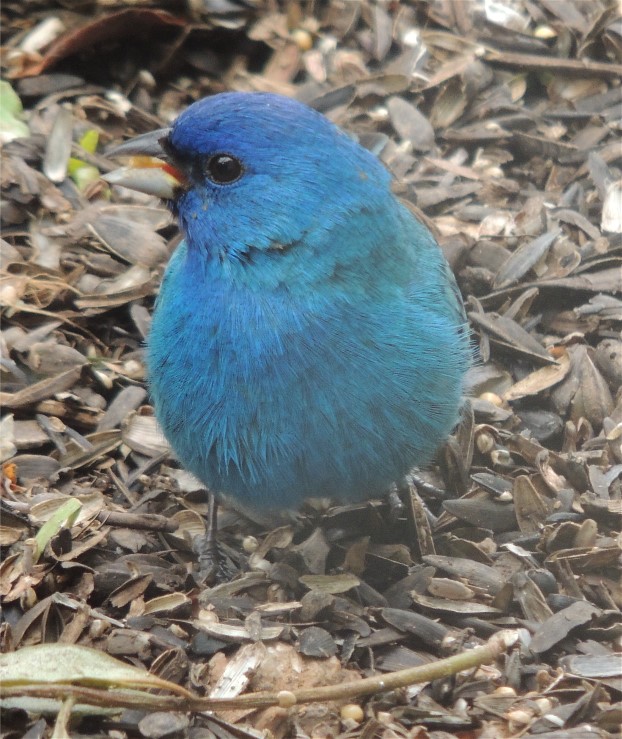
Indigo Bunting

Canine hookworms resistant to treatments

            Hookworms are a common problem in dogs. These worms have a hooklike mouth that attaches to the dog’s intestinal tract. There are serious consequences if a dog in highly infested. Currently the most prevalent breed to have hookworms are Greyhounds. The conditions that they are raised and raced in is conductive to the spread of hookworms.

            Because of the widespread adoption of racing greyhounds’ hookworms are spreading to other dogs as well. A dog does not have to ingest the worms to become infected. The larvae live in the soil and can burrow through the dog’s skin and paws. Also, a female can pass the worm to their puppies through their milk. Hookworms also can infect people.

            What is upsetting is that veterinarian researchers have found high levels of hookworms in dogs that were treated. It is important that dogs are retested after a treatment to ensure that all of the worms have been killed.

            The most upsetting thing about hookworms is that they are becoming resistant to the three medications used to deworm a dog. The researchers are concerned that only the drug resistant hookworms will be left and will spread. Right now, the only deworming medication that is successful in killing the resistant hookworms is emodepside. However, that medication is only approved for cats.

            What a dog owner can do is avoid dog parks, where hookworms can live. Have your dog tested for worms frequently, especially if it is an adopted Greyhound, and make sure if your dog has hookworms, retest after treatment.

Juvenile epilepsy in Parsons Russell Terriers

When epileptic seizures caused the death in some Parsons Russell Terriers at six to twelve weeks of age, researchers delved into the cause. These puppies’ seizures were so severe that they died and medication would not help them. The researchers at the University of Helsinki found a gene disorder similar to the cause of Alzheimer’s in humans.

Riley, PRT

They developed a test that can determine if a dog carries this recessive gene. Because the gene is recessive, both the sire and dam must carry it to produce the defect in dogs. Therefore, it is essential that breeders of PRT’s have their dogs tested before they breed.

Behavior and personality traits identified in cats

With cats being the number one pet, there is surprising little research about their personality and behavior traits, especially in relation to cat breeds. This study has managed to explore the world of cats. They studied 4300 cats in 26 breed groups. Their study was the most extensive and significant to date and opens the door for further research.

By using questionnaires in an efficient manner, the researchers at the University of Helsinki have identified the following:

  • Activity/playfulness
  • Fearfulness
  • Aggression towards humans
  • Sociability towards humans
  • Sociability towards cats
  • Litterbox issues (relieving themselves in inappropriate places, precision in terms of litterbox cleanliness and substrate material)
  • Excessive grooming
Turkish Angora – Bonnie

 According to the study, “The most fearful breed was the Russian Blue, while the Abyssinian was the least fearful. The Bengal was the most active breed, while the Persian and Exotic were the most passive. The breeds exhibiting the most excessive grooming were the Siamese and Balinese, while the Turkish Van breed scored considerably higher in aggression towards humans and lower in sociability towards cats.”

The result of this study coincided with a previous study, giving it more validity.

Author’s Note: It is just as important for anyone who plans to add a cat to their home to be aware of the personality traits of cats as it is for future dog owners to select the right type of dog for their living arrangements. Even if a cat is a mixed breed, certain physical characteristics can give the potential cat owner an idea of the breed group it comes from, helping them make a selection.