Heavy mixed breed dogs have greater health risks

Benjamin Hart, a professor emeritus at the UC Davis School of Veterinary Medicine, did a comprehensive studyon health issues in mixed breed dogs weighing 44 pounds and over. He found that if these dogs were spayed or neutered prior to one year their health risks increased.

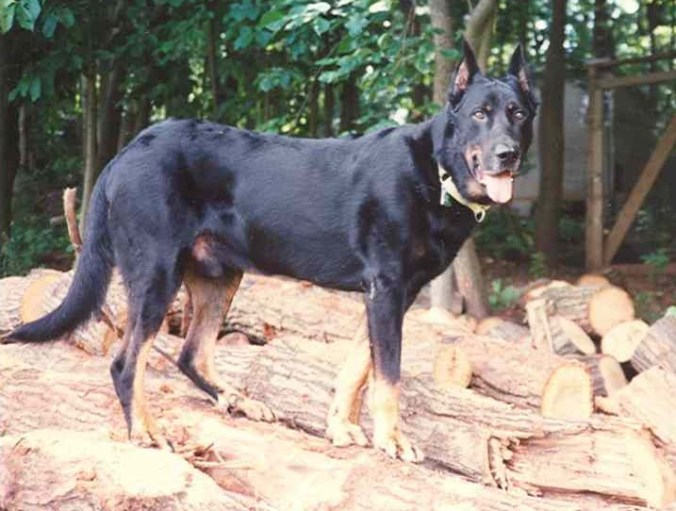
Scout SAR training wood pile

The study analyzed 15 years of data from thousands of dogs at the UC Davis Veterinary Medical Teaching Hospital. They found that joint disorders including hip dysplasia, elbow dysplasia and cranial cruciate ligament tears, and knee injuries jumped from 4% in intact dogs to 10 – 12% in those neutered or spayed prior to one year.

The problem which the study pointed out, is that when someone adopts or purchases a mixed breed dog as a puppy, they may not know who the parents are and thus will not know for sure how big the dog will get as an adult.

In an earlier study, the scientists determined that health risks due to the age of neutering varied a lot depending upon the breed of dog. In this case the common belief that a mixed breed dog is generally healthier than a purebred does not seem to be the case.

My question is, why is there a difference between mixed breed and purebred if the injuries are a result of weight.

The bigger issues as pointed out in the article is that the common practice of early spay and neuter needs to be reviewed and possibly modified. This is also important information for people who train working dogs.

Do animals think probabilistically?

We know that rats in studies create new mental maps for new spatial situations such as a new maze. But scientists do not know how the animal decides when a situation is new enough to requires a new map.

OLYMPUS DIGITAL CAMERA

Riley

No two situations are ever exactly alike, for animals as well as humans, but how much needs to change to create a new map? The scientists at MIT and Harvard postulate that they can determine this with Bayesian statistics, a mathematical model. This model can take into account individual differences in animals as well as the situation.

Understanding remapping is important because when scientists evaluate a problem or test, they do not know if the rat is thinking about experiment A or experiment B. This will change the results of the test and possibly give scientists false data which leads to conflicting, confusing or surprising results.

Communication is always a problem when people work or train animals. We cannot tell them about the context of an experiment, the animal has to make his own conclusions based on what he sees or experiences. The researchers feel that by using a probabilistic approach, they can determine how uncertainty plays a role when change occurs.

While all of these methods are a good attempt to understand the mind of animals, because if it applies to a rat it most likely applies to other animals as well. However, as I tell my clients, there are only two beings who will know for sure what is in the mind of an animal—the animal and God. No one else, but we need to keep trying.

Early childhood adversity lasts a lifetime

A study by scientists at theUniversity of Notre Dame on baboons has shown that early adverse conditions such as famine, abuse, neglect or the death of a parent in early childhood are not reversed by support in adulthood. They feel that things such as elevated stress hormones take a physiological toll on the body, and remain, even with a healthy, supportive relationships in adulthood.

scan0023

Because the subjects of the study were baboons, scientists measured life experience against levels of glucocorticoids (fGCs) — hormones that regulate physiological functions such as metabolism and immune function, and moderate the body’s response to stress. They found that the levels of fGC’s were 9% higher in subjects that had three or more adverse experiences and 21% higher than subjects that had no harsh experiences.

I have to wonder how this study relates to other animals. Does this mean that pets who are abused or experience harsh situations as youths, will not ever fully respond to kind treatment when they are adults? Will the stress always be with them? What comes to mind are children who are given up for adoption at birth and then suffer from attachment disorder. While further research is needed and on a wider subject base (other animals) this is important information to keep in mind when trying to rehabilitate abused pets. This may mean that failure is not the result of poor rehabilitation techniques, but is a result of the chemical changes in the subject.

Crops suffer from a lack of pollinators

Rachael Winfree, a professor in the Department of Ecology, Evolution, and Natural Resources in the School of Environmental and Biological Sciences at Rutgers University-New Brunswick conducted a study of 131 farms across the United States and in British Columbia Canada.

The team of scientists collected data on the insect pollination of crop flowers and yields for apples, high bush blueberries, sweet cherries, tart cherries, almonds, watermelons and pumpkins. They found that apples, sweet cherries, tart cherries and blueberries showed the most decline in fruit yields. Wild bees and honey bees are the main pollinators for these crops.

This is directly related to the decline in pollinating insects, primarily bees of all types. Homeowners can contribute to the increase of these insects in a variety of ways. You do not need a large area to plant bee and pollinating insect flowers. Also avoid using insecticides.

I maintain gardens around my home that produce flowers from early spring to late fall. Besides Butterfly bushes, you can plant Coneflowers, dwarf flowering bushes such as My Monet Weigelia, and dwarf Crepe Myrtles. These are some suggestions for small areas that attract butterflies, bees and other pollinating insects. The advantage of having Coneflowers is that if you do not deadhead them and leave the flowers on the plant until spring, the birds love the seeds in the fall and winter. Some of these plants can be grown in containers.

DSCN2364

My cone flower garden

il_794xN.2343502313_qtxr

My Monet Weigelia

berry-dazzle-crape-myrtle_570x570

Dwarf Crepe Myrtle

Dog age vs human age

The old rule that one dog year equals seven human years is not true. New research has indicated that dogs are much older than we think. Based on DNA chemical markers called methylation marks, researchers have been able to come up with a better idea of the age comparison between dogs and humans.

download (6)

Dogs age faster when they are young and slower as they get older. The article points out that a 6 – 9-month-old puppy is capable getting pregnant which would be the same as a human who has reached puberty. Yet an eight-week-old puppy is equal to a nine-month-old human. A one-year old dog is the same as a 30-year-old human.

The researchers studied Labrador Retrievers and found that a 12-year-old Lab corresponds with a 70-year-old human. The researchers plan to study other breeds to see how their methylation marks relate to corresponding human age. This will be interesting since dog breeds have lifespans from six to eight years up to 16 years. The researchers hope that their findings will help veterinarians determine the best care for different breeds based on their relative age.

Dog Training Tips 3

In Dog Training Tips 2 I talked about how the type of dog, its breed(s) influence the dog’s personality and how biddable the dog is. The term biddable means how willing the dog is to obey. Some breeds are much more biddable than others. For example, most of the herding and some of the hunting breeds are very biddable. Some of the breeds classified as working dogs are biddable but some are not. The least biddable breeds tend to fall into the livestock guarding breeds and the hounds. However, this does not mean that they are less intelligent. As a matter of fact, the livestock guarding breeds are very intelligent but as a rule are bred to work independently, and alone. They must make very important decisions to protect the flock that they are guarding. Many people are attracted to these breeds because they are very quiet and calm. However, they do not make good pets. They are bred to repel an intruder regardless if it is animal or human. It takes a special person who understands this type of dog and knows how to train them to successfully own one.

Scan0002 - Copyjpg

Created by Bruce Ross

The hounds are another difficult breed to train. Again, not because they are less intelligent, but because they are bred to be very focused. Think of it this way. If a hound is bred and taught to hunt fox, they must only find and follow the scent of a fox. A Foxhound who is side-tracked on the fresher scent of a rabbit or deer, is no use as a Foxhound. But, some of you may say, what about Bloodhounds that look for missing people. Each person has his own unique scent. This is true, but the hound is trained to follow only human scent, whichever human scent his handler indicates. The Search and Rescue (SAR) Bloodhound will not veer off a trail to track an animal.

Because the hounds are very focused, they often block out everything else. For the pet owner, this can be frustrating because as hound owners know, when these dogs go for a walk, their noses are often on the ground taking in all of the scents. Their tendency to focus so strongly on scent, and their ability to block out everything else makes them seem to ignore the commands of their owners. The younger the dog, the harder the hound is to train because he is going to follow his instincts first. This means that the dog’s owner must exercise a lot more patience and realize that it will take much more effort on their part to motivate the hound to break his focus and listen to commands. One way to circumvent this is to use clicker training on the very young, 12-week-old puppy, before he fully develops his ability to focus on scent. All puppies have short attention spans and if you do not want to train your puppy to hunt, then this is a good time to take advantage of the puppy’s short attention span to teach him to focus on you.

Never forget, dogs do not speak human languages. Therefore, it takes patience on our part to teach them and you must take care not  to repeat a command. The dog does not understand that “Sit” is one word. If you say, “Sit, Sit, Sit!” the dog will think it is all one word and never sit until you say it three times. A thought for today, did you ever wonder why dogs seem to be able to communicate to us better than we can to them?

Feel free to contact me if you have questions or if you need a certified canine behaviorist.
Health issues related to early spay and neuter of dogs

For many years I have had working dog people tell me that a dog should not be neutered or spayed until after they reach puberty. For a bitch that would be after the first heat. They claimed that the dog fully develops mentally after puberty and that early neutering and spaying retards this development.

scan0019

In a recent study, scientists found that some breeds have a higher risk of developing certain cancers and joint disorders if they are neutered or spayed during their first year of life.

This study looked at 35 breeds over a ten-year period and analyzed thousands of dogs over fifteen years. What is interesting is that the age and sex of the dogs did factor into whether or not the dogs were afflicted with health issues.

The health issues under consideration included hip dysplasia, cranial cruciate ligament tears and elbow dysplasia, lymphoma; hemangiosarcoma, or cancer of the blood vessel walls; mast cell tumors; and osteosarcoma, or bone cancer. While the study showed that early neutering did not affect all of the dogs, there were breed related problems.

I personally feel that a dog needs the full range of hormones to fully develop mentally. But it can be difficult for the owners of female dogs to control a bitch in heat and prevent an unwanted litter. For the owners of male dogs there are methods to prevent the dog from siring an unwanted litter other than neutering. It is always wise to consult with your veterinarian and explore all of your options.

As an aside, I would like to see a similar study about the health and mental affects of early spay-neuter in cats.

Toxoplasma gondii from cats

It is fairly common knowledge that pregnant woman and people with compromised immune systems should avoid cleaning cat litter boxes to avoid getting toxoplasma gondii from cat feces. Toxoplasma can also be introduced to the body through the consumption of contaminated food and water.

img055

Leonardo Augusto, PhD, a postdoctoral fellow in the Department of Pharmacology and Toxicology and lead author on the National Institutes of Health-funded study about toxoplasma has discovered the way the parasite takes control of a person’s cells and uses them to transport itself throughout the body.

This finding is important because once scientists discover how a parasite spreads, they can focus on a cure. This particular parasite infects about 1/3 of the world’s population making it a serious risk. What is especially dangerous about this parasite is that it can stay dormant in a body until the immune system weakens.

With the new understanding about how toxoplasma spreads through the body researchers are one step closer to finding a cure for this disease which can infect the brain as well as other organs.

New discovery about sled dogs

An interesting study has shown that sled dogs are much older than previously thought. Faculty of Health and Medical Sciences, University of Copenhagen, along with the research conducted in collaboration with the University of Greenland and the Institute of Evolutionary Biology, Barcelona did a study of sled dogs. By extracting the DNA from a 9,500-year-old dog from the Siberian island of Zhokhov, they have sequenced the oldest complete dog genome to date. The results show very early diversification of dogs into types of sled dogs. The results also show that the ancient dogs were crossed with an ancient wolf but not with the modern wolves.

brat

What is important to note about this study is that the researchers found that the dietary needs of the sled dog are different from other dogs. Sled dogs do not have the same ability to use sugar and starch but do better with high-fat diets. This is similar to polar bears and Artic people. The researchers found that the Greenland husky is the purest with the least overlap with modern dogs.