Do dogs need training to understand human cues?

Dr. Anindita Bhadra of the Indian Institute of Science Education and Research Kolkata, India, and colleagues studied stray dogs across several Indian cities to determine if dogs can understand human cues without training.

img051

They found that stray dogs that were not timid or shy, would respond to a strange human pointing to a bowl. If the dog was friendlier and less anxious, they approached the bowls that the tester pointed to about 80% of the time. This shows that the dogs not only recognized human body language but are able to understand complex gestures.

What the researchers were unable to tell is how much experience the stray dogs had with humans and was it positive or negative. Also unknown is if people had fed the dogs in the past, using a pointing motion to indicate that there was food available.

The study does mention that more research is needed to determine if the personality of the dog is a factor in their response to human pointing. But all in all, it is another piece of information that gives us insight into the mind of the dog.

Roaming cats worry their owners

A study conducted by researchers at the University of Exeter, found that owners who allow their cats to roam freely outdoors worry about their cat’s safety. Why then do they let their cats roam? The study shows that many cat owners feel that their cats need to roam and hunt. They feel that a cat would not be happy or fulfilled if they are kept indoors.


image8

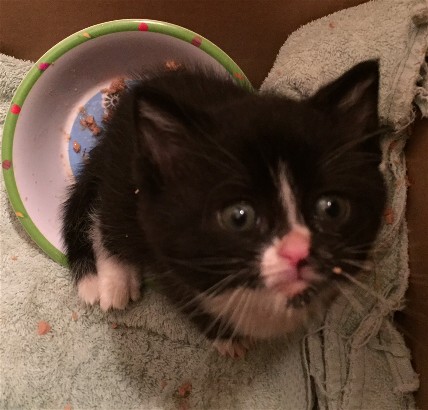
A feral kitten we rescued a few years ago. We found her in the road on a cold, snowy Christmas eve. She was adopted to a good home. 

Unfortunately these sentiments can be detrimental to a cat’s health and even it’s life. Cats do not need to be free outdoors to roam and hunt. Cats can and do live a happy and productive life indoors. It is up to the owner to provide interactive toys or play with their cat to satisfy the cat’s need to hunt and attack prey.

Cats also need companionship, either from another animal or their owners. Most cats are very social although not in the same way as dogs are.

There are videos made for cats to watch. If a cat owner feels strongly that their cat should spend time outdoors there are cat containment systems that allow a cat to go outdoors and be safe. You only need to google “cat outdoor yards” or “cat containment systems” to find a wide variety to meet your cat’s needs.

There are a number of reasons why a cat should not be allowed to freely roam outdoors. Being outdoors, even in a city or urban environment subjects the cat to predators which can range from dogs, other cats, hawks, foxes, coyotes and other wild animals that will attack a cat either aggressively or defensively. There are also evil people who make it a sport to trap and torture or kill cats.

If a cat kills wildlife, they are exposed to various parasites and diseases. If they come in contact with other outdoor cats, they can be exposed to various cat borne diseases which could be fatal. If a cat kills and ingests some of the blood of a rodent that has eaten rodent poison, the poison in the rodent’s blood can kill the cat.

Being exposed to injury, diseases and parasites, can make the cat sick and cost the owner multiple veterinarian bills. Not to mention subject the cat to preventable suffering and death.

If the cat is not spayed or neutered, letting it roam freely will cause pregnancy and add to the feral cat population. Contrary to what many people think, feral cats do not live a good life. They are subjected to all the above-mentioned diseases and death. Most feral cats do not live past kittenhood and if they do, only live about two very harsh years, struggling to find food, water, warmth and to fend off predators.

In conclusion, there is no positive reason to let a cat roam freely outdoors. There is every reason to trap, spay, neuter and adopt feral cats.

Early exposure to dogs lessens the risk of schizophrenia

An important study conducted by Robert Yolken, M.D. the chair of the Stanley Division of Pediatric Neurovirology at the Johns Hopkins Children’s Center showed that early exposure to dogs may lessen the risk of children developing schizophrenia and bipolar disorder. The study also explored if early exposure to cats had the same affect. It seems that it has not been proven if cats produce the same results.

scan0014

It is not hard to understand how this is possible when you realize, as the article explains, that serious psychiatric disorders are associated with changes in the immune system. Changes result from exposure to different environmental conditions (not just pets). In the case of pet cats and dogs, they can affect the immune system through allergic responses, bacteria related to pets, contact with animal bacteria and viruses, the microorganisms in the home environment as well as the reduction of stress which changes the brain chemistry.

While this study has given us insight to another benefit of raising a child during his first 13 years with a dog (and possibly a cat), the study points out that more research is needed. It is my hope that researchers will eventually be able to pinpoint the exact cause of this benefit and develop a way to use it to help many people.

Animal related injuries account for over 1 billion dollars of health care

What may be surprising to many people is that most of the injuries are due to non-venomous insect and spider bites, about 40%. Dog bites only accounted for about 25% of the injuries. About 13% were caused by hornet, wasp and bee stings.

The dollar amount does not include doctor’s fees, outpatient charges, lost productivity, and rehabilitation.

download (3)

Over half of the costs associated with animal injuries included dog bites, non-venomous insect and spider bites, and bites from venomous snakes and lizards.

Death due to injuries is rare, only .02% with the highest rate of death due to rat bites, with venomous snake/lizard a close second and third was by dogs.

People over the age of 85 were six times more likely to be admitted to hospital and 27 times more likely to die after their injury.

It seems that while people are careful around dogs and other animals, they should be more aware of the reptiles and insects that they may encounter. This is especially true of ticks that carry several diseases that can make a human or animal seriously ill or even bring about their death.

Shining Hope: The Sparkly Silver Travel Trailer by Libby Trostle

This is a delightful children’s book series that will help children explore North America. The main characters are Gracie and her dog Marshmallow. Shining Hope is the travel trailer that they bring across the country with them.

52720474_2115020932143559_1387097741653442560_o

The series not only introduces magical places in the US but also teaches children about valuable camping and life lessons. The first book in the series visits Niagara Falls. The book is based on the experiences of the author as they travel throughout the country.

You can order a copy from: shininghopeadventures.com

The Child’s Role in Picking Out a New Dog

Over the years when I have helped families find and select the right dog/puppy, I have seen the frustration, heartache and pressure that allowing children to be part of the process at the wrong time has caused. In some cases even disagreements within the family. As a result I have developed a system that works 100% of the time if followed. In this article I mention my brochure about how to find the right dog and breeder. If you would like the brochure email me with brochure in the subject line. (sbulanda@gmail.com)

img116

The Child’s Role

Parents often want their children to be involved in picking out the family dog.

While this is a sweet thought, it must be done in a positive way for the benefit of the family, child and dog. First read my brochure, Selecting the Right Dog, Finding the Right Breeder that I offer at no cost.

Once the parents have followed these instructions, they can start the process that will include the children. It is important that only adults select the type, breed and age of the dog for the family. The reasons why are:

A. Children are not educated enough to know what will work for the entire family.

B. They do not understand the cost and care of a given type of dog. They often pick a dog that looks nice to them with no thought to the grooming requirements or costs to pay a groomer to maintain your dog’s coat.

C. If you bring a child with you to evaluate a breeder and/or a litter, and you find that the situation is not one you want to get a dog from, the child may not understand why you are not going to buy or adopt that cute puppy or dog. It can be traumatic for the child to walk away. It can also be impossible for some parents to walk away in that situation. For example, we all know that we should never buy a puppy from a puppy mill breeder. But picture a child who does not understand this and falls in love with a puppy in that situation. Try walking away with a child who is crying and begging you to bring home a puppy. It can be embarrassing for the parent to justify the decision in front of an unethical breeder.

Once you find the right breeder and litter, only the adults should pick which puppy is a candidate. If it is a good litter, then there should be more than one puppy that meets your needs.

Preselect the puppies that are candidates. Come to terms with the breeder about payment and paperwork. Once that is accomplished, then arrange for another visit to the litter. At that time you can bring the children and the breeder can introduce them to the preselected puppies. Now the children can pick which puppy they like.

By handling the puppy selection in this manner it will be a 100% happy experience for the whole family, as well as the breeder.

If you are going to adopt an older dog it is essential to have the dog evaluated by a professional, preferably a certified canine behavior consultant to be sure that the adult dog will be safe around children and safe in your home environment. This includes an evaluation to determine if the adult dog is safe around other animals. Even if you do not own other animals, the chances are that you and your dog will encounter them. It saves everyone heartache and disappointment if you carefully evaluate the new member of your family before you bring him home.

I would also like to mention that it is never a good idea to surprise an adult family member with a puppy as a present. Because of the unique bond that develops between people and their dogs, it is essential that the family member pick their own puppy/dog. If you want to give a dog as a gift, you can give the recipient a stuffed dog with a note that when they are ready, they can pick out the puppy/dog that they want. This way they can choose the breed, breeder and puppy. In many cases people have told me that they really did not want another dog or that they would have rather gotten a different breed even though the family thought they would want a dog like they had before. In some cases if the family member is elderly, they may want a smaller breed or even a cat instead of a dog.

New pets should not be given during the holidays and good breeders will not allow a puppy or kitten to be purchased as a holiday gift. This is a dangerous time to bring a new pet into the home. Often there are many guests coming and going that can frighten a dog or cat, or the pet can bolt out of an open door. It is frightening enough for them to be taken to a strange home. Remember, the pet has no idea why it was taken from its mother, litter mates and put in an unfamiliar environment.

The new pet needs a quiet environment to adjust and feel safe. There are also decorations and typically, an abundance of food available that the new pet might be able to get a hold of, so extra monitoring is needed.

Guests will want to see and perhaps play with the new pet. This can be traumatic for the pet who does not feel safe to begin with.  The new owners may be too busy with guests and even family celebrating the holidays to give the new pet the care and attention that he needs. This is especially true if the family does any visiting and must leave the pet alone.

If anyone has any questions, feel free to email me. I am always glad to help. When picking a dog for work, it is essential that the right breeder, breed and line are up to standards. We put too much effort and time into training a working dog to find out after a year or more of training that the dog cannot work up to the requirements. If children are part of the family, it is likely that you will keep the dog and try to find another. Keep in mind that genetics are not an exact science and even the best breeder can produce a “lemon.”


Catnip may help cancer patients

Many of us have seen how catnip also known as catmint makes cats act like a kitten. I have seen cats who played like crazy and some who seemed to get angry and aggressive when given catmint.

images (4)

Now scientists have discovered what the chemical process is that makes cats go gaga over catnip.

It turns out it is a two step process that has never been discovered before, where the plant produces nepetalactone, a chemical called a terpene. Other plants such as peppermint, have terpene. By understanding how this chemical is produced, scientists will be able to recreate chemicals such as vinblastine that comes from the Madagascan periwinkle and used for chemotherapy. If scientists can unlock this mystery they will not have to rely on the actual plants for medicines.

Again, our pets have helped us unlock the mysteries of medicine and we will benefit from this research. The lesson for me from this study is that researching something that seems to have no benefit can unlock lifesaving techniques for both humans and animals. After all, who would think of studying catnip?

People’s ability to read canine facial expressions

Some people seem to be able to understand a dog’s facial expressions better than other people. Of course we know that you need to be able to read the dog’s whole-body language to fully understand how a dog feels and what they are thinking. But why are some people better at it than others?

scout at night

In a recent study by Federica Amici of the Max Planck Institute for Evolutionary Anthropology and Juliane Bräuer of the Max Planck Institute for the Science of Human History has discovered that all humans can identify anger and happiness, but those who grew up in a dog friendly environment were able to identify other emotions much better. It seems that age and experience make a difference in a person’s ability to interpret canine feelings. It would be interesting to see how this applies to other animals.

How animals detect odor

Prof. Nowotny, Director of Research and Knowledge Exchange in the University of Sussex’s School of Engineering and Informatics had determined that animals may not single out a specific odor when they look for a substance. He has found that animals may find it easier to detect a collection of odors instead of a single substance. If this is true, then most of the detection dog training that focuses on teaching a dog to look for one odor rather than a scent picture, may not be the best way to train a dog.

scout sar tracking

Scout following scent

One single odor does not exist in a natural environment, rather there are a collection of odors. When you consider that it is impossible to isolate a single odor in a natural environment, this discovery makes sense. Of course it is possible and often likely that a single odor is stronger than the surrounding odors, but still it is not the only odor present.

Professor Nowotny suggests that animal and human olfactory systems may not be made to do analytic smelling of pure odors. He uses the example of how an animal will give off pheromones, a complex set of odors, as a form of communication and that it is important that an animal recognize the entire chemical message and not a single element in the chemical message.

For years I have maintained that when teaching a dog scent work that there is no such thing as an uncontaminated scent article. Professor Nowotny has confirmed this with his latest research. Although more studies need to be done, and we should still train our dogs as we have in the past, it does open the door for a less narrow view of what dogs detect and how they detect it and may lead to new training methods. It is always good to “think outside the box.”

Sue Bulanda’s books

With the holidays fast approaching I thought I would post a list of the books that I have written. All but two of my books can be ordered from my website (www.sbuland.com) by clicking on the “books” tab. If you want a book shipped outside of the USA please email me for the correct postage. If you order my listed books you will get an autographed copy. I only have a few copies of Soldiers in Fur and Feathers so if you want that please email me first to see if I have any more. This book is out-of-print, so do not order it from my website.

K9 Obedience Training: Teaching Pets and Working Dogs to be Reliable and Free-Thinking.  This book shows you how to teach a dog the basic obedience that is the foundation for all other training. The methods used in this book allow the dog the freedom to think for themselves rather than perform in a robotic method where creativity is discouraged. Free-Thinking is necessary for all working dogs who cannot be trained for every situation that they encourage. Obedient disobedience is also covered. The book also explains what not to do and why. It includes basic handling and grooming techniques that are necessary for a well socialized dog. Some fun tricks are included.
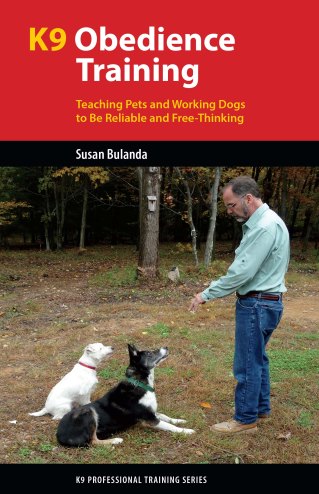
K9 OBEDIENCE TRAINING COVER PRINT

K9 Search and Rescue Troubleshooting: Practical Solutions to Common Search-Dog Training Problems – explains the typical training problems and offers solutions that SAR dog handlers encounter when training their dogs. The solutions apply to all disciplines in canine search and rescue. It explains how the puppy stages of development can have lasting effects on the behavior and training of a dog. Often people adopt an older dog to train and do not understand why the dog behaves the way it does, this book gives insight to those issues. Although K9 Search and Rescue Troubleshooting: Practical Solutions to Common Search-Dog Training Problems is written for the SAR dog handler, the information contained in it applies to many training issues that are not related to SAR.

9781550597363

Soldiers in Fur and Feathers: The Animals That Served in WWI – Allied Forces: A unique, collection of accounts about many different animals that served in WWI. There are many rare photos. What is especially interesting about this book is that it includes many of the mascots that the soldiers kept. Some went into the trenches with the men. For example, there is an account about how a cat saved the life of a soldier, how a pair of geese slated to be Christmas dinner wound up being kept as mascots, and one soldier had a huge Golden Eagle as a pet. WWI was a transitional war from animal power to mechanization, therefore many species of animals served, such as oxen, horses, mules, camels, pigeons, and dogs in many capacities.

2012: Second Place Winner Non-Fiction, National League of American Pen Women; Finalist for the Alliance of Purebred Dog Writers Arthur Award, Certificate of Excellence for the Cat Writers Association of America.

Soldiers in Fur and Feathers

Faithful Friends: Holocaust Survivors Stories of the Pets Who Gave Them Comfort, Suffered Alongside Them and Waited for Their Return: This is the only book written about the animals of the Holocaust victims, recording a part of history that has been overlooked. Some of the stories are sad and some joyous, but all are a part of history. Learn about Nicholas the French Bulldog owned by a woman who was part of the French resistance, and how he came to tour with the German army. Also, the dogs who somehow survived the war and were reunited with their owners and many other stories about dogs and cats.

2012: Dog Writers Association of America, Maxwell Award.

Certificate of Excellence Cat Writers Association, 2012; National League of American Pen Woman 2nd place non-fiction, 2012.

holocaust book cover viewer

God’s Creatures: A Biblical View of Animals: explains the role that animals play in the Bible and how God uses them. It explores the nature of animals and miracles that involve them. The book explores many of the miracles that involve animals. It answers questions such as, do animals go to heaven, do they know and obey God, can they be evil?

AnimalsFrontCover72

Boston Terriers, a book all about this wonderful breed of dog. Learn about their care, training and personality. The book has fun sidebars that give personal accounts of Boston terriers.

First Place Maxwell Award for the Dog Writers Association of America, 2002. (only available on-line)

bost

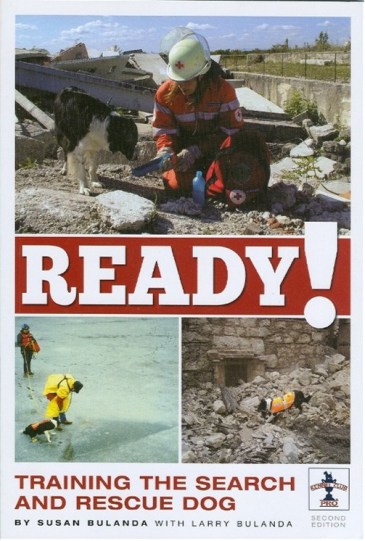
Ready: The Training of the Search and Rescue Dog: Adopted worldwide as the training book for SAR dogs. This book has been in print since 1994 and is in its second edition. It gives the SAR dog handler a training plan for all disciplines of canine search and rescue.

First place for the National League of American Pen Woman’s biannual contest, 1996. Also nominated best book of the year, 1994 Dog Writers Association.
new ready

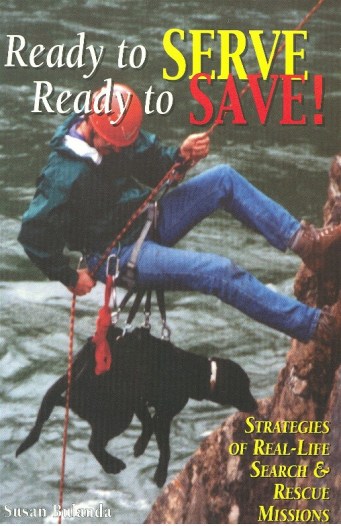
Ready to Serve, Ready to Save: Strategies of Real-Life Search and Rescue Missions: is about actual search and rescue missions giving the reader inside information about how searches work. It is useful as a tabletop training exercise for SAR units.

2000 Award winner for the National League of American Pen Women contest.
Ready serve

Scenting on the Wind: Scent Work for Hunting Dogs: helps the hunting enthusiast understand how weather, wind and terrain features affect scent. It is a great aid for people who compete in field trials or who do any kind of scent work with dogs.

scenting

Real Estate Today, Seller Beware! – is how to save money when selling your house. Available on Amazon

RE cover