Pet Toys

Note: This article is my opinion, based on my experiences with many dogs, cats and birds.

Pet owners spend a considerable amount of money on toys for their pets. Toys are important for pets; they give pets something to do and, in some cases, build the bond between the pet and owner. While I will refer mostly to dogs, this article applies to all pets.

It is important to realize that there is no regulatory body for pet toys. What that means is that manufacturers can use whatever material they choose to make pet toys. Unfortunately, many of the products that are available are not safe, either because of a chewing or a toxic substance risk.

When picking a toy for your pet, you should consider the type of animal it is and what it likes to do. Dogs like to fetch, toss and chew and shred toys. This satisfies their natural hunting instinct. Cats like to chase, pounce, carry and sometimes tear up toys.

Birds generally like to tear apart, peck and toss toys. Although many birds play with toys in various ways. I had a budgie who liked to “herd” plastic balls into a tight group.

When considering a toy for a pet, keep in mind that if there is a risk associated with the toy, the risk increases if the pet is small. This is because it takes less material to block their intestines and less toxins to make them sick or kill them. This is why a pet owner should carefully evaluate what toy they give their pet.

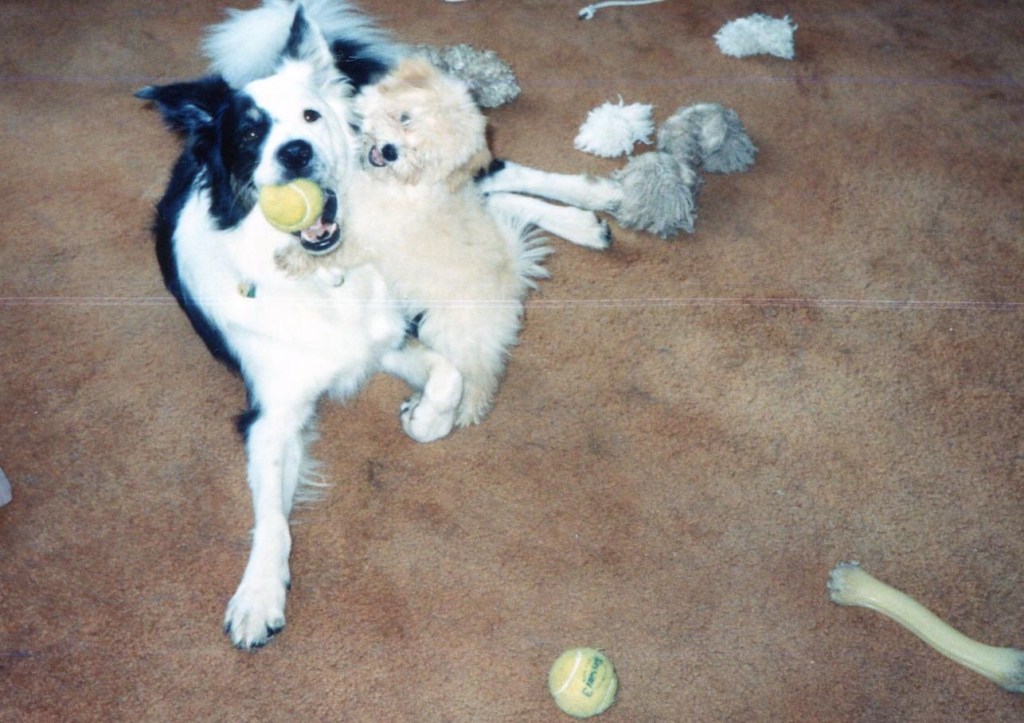
I feel that toys for dogs pose the most risks because dogs tend to chew and eat pieces of their toys more than other pets. Know how your dog likes to play with a toy before you pick one out for him. Some dogs will totally destroy a stuffed toy or a plastic one. Other dogs like to carry a toy around and will not destroy it. Many dogs are obsessed with getting the squeaker out of a toy that has one. My terrier is a squeaker killer. He will work on a toy almost endlessly until he gets the squeaker out. Then for the most part, he loses interest in the toy.

Puppies almost always chew a toy until it is destroyed and they are more likely to eat the pieces of the toy. For this reason, plastic toys are a higher risk for puppies. Regardless if your dog is a puppy or an adult, plastic toys in general are the highest risk.

Because dogs like to chew and destroy toys, they are less likely to play with the chew-proof variety of toy. Some of the hard nylon toys are coated with a scent and when the coating wears off, the dog loses interest in the toy. Stuffed toys pose a problem because the stuffing, which can be ingested and not digested. The stuffing in most dog and cat toys are fiber fill which is a form of plastic and can block intestines.

If a dog owner is going to give their dog one of the many products on the market designed to clean the dog’s teeth while they chew the toy, be sure to check the ingredients. Most dental chews for dogs are only 96% digestible. What is the other 4%? Some of these products have plastic in them to make them last longer.

Those chew products that are designed to be eaten, should break down in five to ten minutes when placed in water, if not, it is a high risk for your dog. These types of products can block a dog’s intestines. Because of a dog’s short digestive tract, these products do not have enough time to break down if they can break down at all.

This is also true of any rawhide product. I personally do not approve of any animal product such as cow hooves, pig’s ears and rawhide. These products are often treated with formaldehyde as a preservative and cured in arsenic. Many people think that rawhide comes from a butcher, but in reality, rawhide comes from a tannery. Also, keep in mind that any wild domestic canine does not eat bones, skin or hooves.

This is evident when you see a dead deer along the roadside. After everything, animal, bird and insect are finished feeding on the carcass, the things left are hide, hooves and bones. The main risks for letting a dog eat rawhide are contamination, choking hazard, and intestinal blockage. A number of pet related organization discourage giving dogs rawhide.

(https://m.facebook.com/PlanetPawsMedia/photos/a.114414471966777/883417478399802/?type=3&p=30)

Rope toys are acceptable if your dog does not chew them and swallow the threads. The safest rope toy is one made of cotton instead of nylon. Cotton has a better chance of breaking down if it is ingested whereas the nylon will not.

It is never a good idea to give a dog old shoes or slippers because of the chemicals used to make them. It is especially difficult for a puppy to understand that old shoes and slippers are OK to play with, but new shoes and slippers are not. If you insist on giving your dog rawhide remember that rawhide comes from a tannery and dogs have a very sophisticated sense of smell. Therefore, a dog of any age can smell the similarity between rawhide and other leather products, which include furniture, gloves, jackets and briefcases.

Bones are not a good choice for dogs either. Again, it is not natural for dogs to eat bones. Many of the “natural” bones have bacteria on them that can harm both dogs and people who handle them. Some of the stuffed bones that are treated can be safer for a dog who likes bones. The danger associated with bones are splinters from the bone and bacteria.

The bottom line is to know your dog. If a toy becomes small enough to swallow it should be taken away from the dog. By knowing your dog’s play habits you will be able to decide what toy is safe for them to play with. The best toy is one that allows you to interact with your dog, playing fetch games, chase games or whatever your dog likes. If you understand your dog’s breed, it will guide you to selecting the right toy for your dog. All dogs and cats can benefit from puzzle toys and treat dispensing toys. The main thing is to keep your pet safe and happy.
Cats need exercise

Everyone knows that dogs need to be exercised, but often people don’t realize that cats need exercise too. When they are young, cats will play and amuse themselves, but as they get older, they tend to play less. It is beneficial for older cat to exercise, and playing with your cat is one way to do this. Cats often prefer toys that move or fly such as toys on a sting. Many cats love to pounce on a plain string that is pulled along the ground. Fortunately there are several toys designed to both play with and exercise your cat. By playing with your cat you also foster a positive bond.

chasing mini snowballs

You may have to experiment with simple toys to see what your cat likes. I have owned cats that loved to play with a wadded tissue tied with a string. A wadded tissue is easy for the cat to pick up and carry and cost next to nothing.  Some cats love the craft puff balls, or ones that make a crackling sound.

Cats that are deaf or blind can also play with toys. If the cat is blind a toy that works best is one that makes some sound, even if it is the sound of it going across the floor.

Cats can benefit from having the ability to go outside for exercise, venting energy and soaking up some sun. This is especially beneficial for the multi-cat household, since letting cats exercise can help them get along. However, the main problem in letting cats go outdoors is keeping them safe and at home. Purr…fect Fence offers a solution to this problem by offering an easy to install poly mesh system. They also offer a converter kit to make existing 5 – 6-foot fences cat proof. 

Many people are surprised that you can train a cat to do tricks and obey basic commands. The best way to train a cat is to use the clicker training method. Cats enjoy interaction with their owners. Clicker training also helps cats that have been adopted and may have been feral for a period of time. Many zoo animals have been easier to handle after they are clicker trained.

Cats are very social and enjoy the company people and other animals. However, some cats are more social than others, they have as many different personalities as dogs.

Cat fence information:  www.purrfectfence.com, email info@purrfectfence.com or call 888-280-4066

Getting Started: Clicker Training for Cats by Karen Pryor

Cats love secret hiding places

Cats enjoy boxes and other “secret” hiding places. But why? While no one knows for sure, some studies have shown when cats have boxes to hide in they have lower stress levels, especially cats in rescues or shelters.

Cats generally enjoy going behind, into, under and on top of things. It provides a way to explore, satisfy their curiosity, provide exercise and practice hunting skills. Anyone who has watched cats play have seen them hide behind something and then pounce on anything, (dog, cat or you) that goes by. This can be great fun for the cat. It is especially funny to see kittens do this and after they pounce on their victim, bounce away on their toes, as kittens do. Cats enjoy paper bags, especially if you make scratching noises with your finger nails on the outside of the bag and slowly move your finger along the bag.

Cats may enjoy going in small places such as boxes, to keep warm or bury themselves in something soft such as blankets or clothes in an open hamper. Some cats learn to head for the clothes that have just come out of the dryer and if they can, settle down for a long, warm nap.

A careful cat owner will keep their cat’s safety in mind as they play. This is especially true around holidays, birthdays and other events where there can be empty boxes, wrapping paper, plastic wrap around the house. Children may not see a cat hiding and step on them, especially a young kitten.

Cats can also chew boxes, wrappings, paper, ribbons, strings and other tempting non-cat toys which can result in a trip to the veterinarian. While it is fun to watch a cat or kitten play with these things, they should never have access to anything that can harm them. Even if the owner is there to supervise the cat/kitten, things can happen so fast that you cannot prevent them.

So instead of spending a lot of money on cat toys, once in awhile give your cat a box to play in or a paper or reusable shopping bag to hide in. Your cats will love you for it.

http://phys.org/news/2015-02-cat-stress-access.html

New research about overeating

UCLA psychologists have discovered a circuit in the brain of mice that makes them crave food and seek it out, even when they are not hungry. What is interesting about this discovery is that when the group of cells is stimulated, the mice seek fatty and pleasurable foods such as chocolate instead of healthier foods such as carrots.

The area of the brain where the cells are located is called the periaqueductal gray which is in the brainstem. When these cells are stimulated, the mice are so driven to eat that they will endure foot shocks to get to the food. The opposite occurs when the researchers inject a virus that produces a protein that reduces the cells activity even hungry mice foraged less.

“Like mice, humans also possess vgat PAG cells in the brainstem. It could be that if this circuit is overactive in a person, they might feel more rewarded by eating or crave food when not hungry. Conversely, if this circuit is not active enough, they could have less pleasure associated with eating, potentially contributing to anorexia. If found in humans, the food-seeking circuit could become the treatment target for some kinds of eating disorders.”

Sue’s Note: If mice have this cluster of cells, it stands to reason that other animals have it as well. Could this be why some of our pets overeat and some have low appetites?

Journal Reference:

  1. Fernando M. C. V. Reis, Sandra Maesta-Pereira, Matthias Ollivier, Peter J. Schuette, Ekayana Sethi, Blake A. Miranda, Emily Iniguez, Meghmik Chakerian, Eric Vaughn, Megha Sehgal, Darren C. T. Nguyen, Faith T. H. Yuan, Anita Torossian, Juliane M. Ikebara, Alexandre H. Kihara, Alcino J. Silva, Jonathan C. Kao, Baljit S. Khakh, Avishek Adhikari. Control of feeding by a bottom-up midbrain-subthalamic pathwayNature Communications, 2024; 15 (1) DOI: 10.1038/s41467-024-46430-5

Cite This Page:

University of California – Los Angeles. “Craving snacks after a meal? It might be food-seeking neurons, not an overactive appetite.” ScienceDaily. ScienceDaily, 20 March 2024. <www.sciencedaily.com/releases/2024/03/240320122517.htm>.

A new cancer treatment for dogs and cats

Researchers have found a new way to extend the life of terminally ill dogs who have cancer. This new form of chemoimmunotherapy repurposes stem cells that uses a non-viral gene delivery treatment instead of the usual virus treatment. The new method is safe has had great results.

The researchers treated 65 dogs and two cats who had either adenoma, lung metastasis or sarcoma. After three to eight weeks of treatment, 55 showed signs of positive response. Of that 14 had a full recovery. Two animals remained cancer free for at least 30 months and 46 enjoyed a good quality of life for 32 months. None of the animals treated had significant side effects.

The research team are conducting further studies and plan to research the possibility of using this treatment on humans.

Journal Reference:

  1. Yoon Khei Ho, Kin Man Loke, Jun Yung Woo, Yee Lin Lee, Heng-Phon Too. Cryopreservation does not change the performance and characteristics of allogenic mesenchymal stem cells highly over-expressing a cytoplasmic therapeutic transgene for cancer treatmentStem Cell Research & Therapy, 2022; 13 (1) DOI: 10.1186/s13287-022-03198-z

Cite This Page:

National University of Singapore, Yong Loo Lin School of Medicine. “Novel cancer therapy extends lives of terminally ill dogs.” ScienceDaily. ScienceDaily, 30 January 2023. <www.sciencedaily.com/releases/2023/01/230130112405.htm>.

Stress causes overeating in pets

Researcher Sora Shin, an assistant professor at the Fralin Biomedical Research Institute at Virginia Tech has discovered a molecule that triggers the need to eat high fat foods in mice 24 hours after being exposed stress in the form of the scent of cats.

This molecule is found in the hypothalamus section of the brain which is the part of the brain that is connected to changes in the brain that lead to emotional overeating.

 The same molecule is found in people as well as animals. This discovery may lead to treatment methods that can help people who react to the emotionally driven need to overeat, even when they are not hungry.

Sue’s Note: There are many animals, particularly dogs and cats that tend to overeat which result in them becoming obese. Pet owners who have pets that have this problem should consider stress as a factor that causes their pets to overeat. First be sure that the family or friends are not over feeding the pets. If this is not the case the pet owner should evaluate the possibility that stress may be a cause. Since the study showed that the effects of stress can cause overeating 24 hours later, the pet owner should consider events that happened in the last 24 hours. An example would be someone or something that passes the pet’s home when the owner is not home that causes high stress in the pet. In situations where stress is a factor, reducing the amount of food that the pet has access to may cause a greater amount of stress. In this case over the counter calming remedies may help the pet. If not a visit to your veterinarian would be in order explaining to the veterinarian that you suspect stress is a cause of the overeating. Print a copy of the article in the link below to show your veterinarian if necessary.

Journal Reference:

  1. In-Jee You, Yeeun Bae, Alec R. Beck, Sora Shin. Lateral hypothalamic proenkephalin neurons drive threat-induced overeating associated with a negative emotional stateNature Communications, 2023; 14 (1) DOI: 10.1038/s41467-023-42623-6

Cite This Page:

Virginia Tech. “Scientist discovers potential brain link between stress, emotional eating.” ScienceDaily. ScienceDaily, 27 November 2023. <www.sciencedaily.com/releases/2023/11/231127180702.htm>.

Gene therapy to prevent pregnancy in dogs and cats

A Research team led by David Pépin, PhD, Associate Director of the Pediatric Surgical Research Laboratories at Massachusetts General Hospital, and an Associate Professor at Harvard Medical School has developed a gene therapy as an alternate to spaying and neutering animals. They are hopeful that this method will eventually be available to be able to control outdoor pet populations.

While this discovery is promising, the researchers have yet to develop the infrastructure to treat thousands of unowned feral cats. This will also give pet owners an alternative to traditional spay and neuter programs to prevent pregnancy in their pets.

What is interesting is this gene therapy was first used in people. Typically discoveries in animals help humans, in this case it is the reverse.

Journal Reference:

  1. Vansandt, L.M., Meinsohn, MC., Godin, P. et al. Durable contraception in the female domestic cat using viral-vectored delivery of a feline anti-Müllerian hormone transgeneNat Commun, 2023 DOI: 10.1038/s41467-023-38721-0

Cite This Page:

Massachusetts General Hospital. “Gene therapy produces long-term contraception in female domestic cats.” ScienceDaily. ScienceDaily, 6 June 2023. <www.sciencedaily.com/releases/2023/06/230606111636.htm>.

Fearful cats and socialization

Doctoral Researcher Salla Mikkola from the University of Helsinki and the Folkhälsan Research Center wanted to look into what causes behavior problems in cats such as fearfulness, aggression towards people and excessive grooming.  

What they found out is important, and that is socialization when cats are kittens with people is very important. Cats under the age of twelve weeks who only came in contact with strange people and children a few times or more fearful than kittens who interacted with strangers on a weekly basis. Fearful cats had more litterbox, aggression and excessive grooming issues.

The researchers noted that there were less fearfulness and aggression in cats when the cat lived with another cat.

Mimi who is partly blind

Sue’s Note: People tend to associate socialization with puppies and dogs but it is just as important to socialize cats. This should include handling all body parts, grooming, traveling in a vehicle, being put in a carrier, and exposure to noise that is not excessively loud. It is very important to make sure that the cat is not physically handicapped which can cause the cat to become frightened. For example, my cat was born with limited vision that is not detectable by a physical examination and was only apparent by observing her behavior. Many people do not realize that cats are very social and do best if there is at least one other cat in the home.

Journal Reference:

Salla Mikkola, Milla Salonen, Emma Hakanen, Hannes Lohi. Fearfulness associates with problematic behaviors and poor socialization in catsiScience, 2022; 25 (10): 105265 DOI: 10.1016/j.isci.2022.105265

Pain in Animals

Because animals are very similar in many ways to people, they experience some of the same problems. Recently researchers at the University of Leeds have learned that chemical triggers in the nervous system can malfunction making pain much more intense in response to certain stimuli. This is similar to the way humans suffer from long-term, chronic pain such as associated with neuropathies, arthritis and migraines. The chemistry involved amplifies the electrical signal to the brain which alters the sensation of pain.

With this new discovery, researchers may be able to find a better way to control pain in both humans and animals.

Author’s Note: What comes to mind is when our pets seem to have long-term pain that does not seem to represent the level of the cause of the pain. The pain is real, but seems extreme or continues after healing.

Indoor/outdoor cats and wildlife

Researchers studied 935 indoor/outdoor cats to determine how their hunting habits impacted local wildlife. They found that the cat’s hunting range was small, but the impact on the wildlife in their range was two to ten time more than wild predators. This is because their hunting was limited to their own property or into neighbor’s yards. It was also interesting to note that cats do more damage to wildlife in areas that have been disturbed by housing developments.

Sue’s Note: Many people think that cats need to roam outside. This is not true. Cats can be 100% happy and satisfied as a house cat if their needs are met. Different breeds of cats have different activity levels. Since many domestic short and long-haired cats have questionable parentage, their needs may have to be determined by how the cat acts. If a cat owner feels that their cat needs to go outside, there are products on the market that can confine a cat safely outdoors or in a cat designed window box. Keep in mind a cat that is allowed to roam outside freely becomes prey for other animals such as foxes, coyotes, wolves and free roaming dogs as well as other cats. If the cat is small enough, it may be snatched by birds of prey as well. Cats that eat or come in contact with wildlife are exposed to various parasites as well. For the benefit of local wildlife and for your cat’s well-being, it is better to keep them indoors or have safe access to the outdoors. Google outdoor cat enclosures to see the many products available.