Stress causes overeating in pets

Researcher Sora Shin, an assistant professor at the Fralin Biomedical Research Institute at Virginia Tech has discovered a molecule that triggers the need to eat high fat foods in mice 24 hours after being exposed stress in the form of the scent of cats.

This molecule is found in the hypothalamus section of the brain which is the part of the brain that is connected to changes in the brain that lead to emotional overeating.

 The same molecule is found in people as well as animals. This discovery may lead to treatment methods that can help people who react to the emotionally driven need to overeat, even when they are not hungry.

Sue’s Note: There are many animals, particularly dogs and cats that tend to overeat which result in them becoming obese. Pet owners who have pets that have this problem should consider stress as a factor that causes their pets to overeat. First be sure that the family or friends are not over feeding the pets. If this is not the case the pet owner should evaluate the possibility that stress may be a cause. Since the study showed that the effects of stress can cause overeating 24 hours later, the pet owner should consider events that happened in the last 24 hours. An example would be someone or something that passes the pet’s home when the owner is not home that causes high stress in the pet. In situations where stress is a factor, reducing the amount of food that the pet has access to may cause a greater amount of stress. In this case over the counter calming remedies may help the pet. If not a visit to your veterinarian would be in order explaining to the veterinarian that you suspect stress is a cause of the overeating. Print a copy of the article in the link below to show your veterinarian if necessary.

Journal Reference:

  1. In-Jee You, Yeeun Bae, Alec R. Beck, Sora Shin. Lateral hypothalamic proenkephalin neurons drive threat-induced overeating associated with a negative emotional stateNature Communications, 2023; 14 (1) DOI: 10.1038/s41467-023-42623-6

Cite This Page:

Virginia Tech. “Scientist discovers potential brain link between stress, emotional eating.” ScienceDaily. ScienceDaily, 27 November 2023. <www.sciencedaily.com/releases/2023/11/231127180702.htm>.

Gene therapy to prevent pregnancy in dogs and cats

A Research team led by David Pépin, PhD, Associate Director of the Pediatric Surgical Research Laboratories at Massachusetts General Hospital, and an Associate Professor at Harvard Medical School has developed a gene therapy as an alternate to spaying and neutering animals. They are hopeful that this method will eventually be available to be able to control outdoor pet populations.

While this discovery is promising, the researchers have yet to develop the infrastructure to treat thousands of unowned feral cats. This will also give pet owners an alternative to traditional spay and neuter programs to prevent pregnancy in their pets.

What is interesting is this gene therapy was first used in people. Typically discoveries in animals help humans, in this case it is the reverse.

Journal Reference:

  1. Vansandt, L.M., Meinsohn, MC., Godin, P. et al. Durable contraception in the female domestic cat using viral-vectored delivery of a feline anti-Müllerian hormone transgeneNat Commun, 2023 DOI: 10.1038/s41467-023-38721-0

Cite This Page:

Massachusetts General Hospital. “Gene therapy produces long-term contraception in female domestic cats.” ScienceDaily. ScienceDaily, 6 June 2023. <www.sciencedaily.com/releases/2023/06/230606111636.htm>.

Fearful cats and socialization

Doctoral Researcher Salla Mikkola from the University of Helsinki and the Folkhälsan Research Center wanted to look into what causes behavior problems in cats such as fearfulness, aggression towards people and excessive grooming.  

What they found out is important, and that is socialization when cats are kittens with people is very important. Cats under the age of twelve weeks who only came in contact with strange people and children a few times or more fearful than kittens who interacted with strangers on a weekly basis. Fearful cats had more litterbox, aggression and excessive grooming issues.

The researchers noted that there were less fearfulness and aggression in cats when the cat lived with another cat.

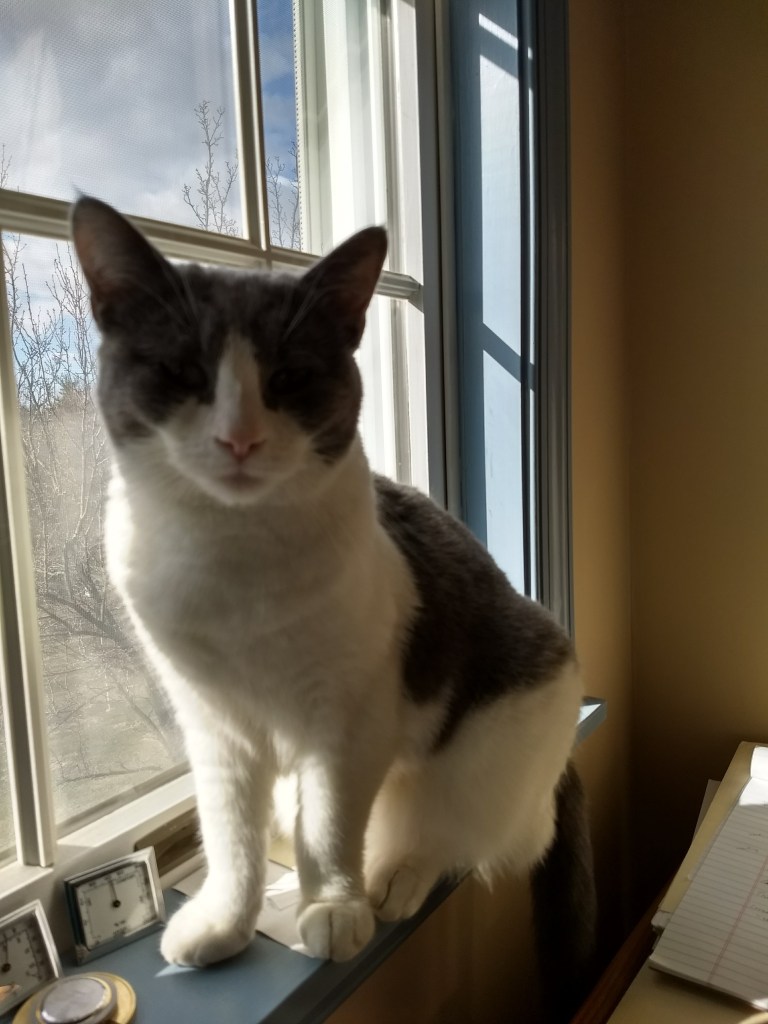
Mimi who is partly blind

Sue’s Note: People tend to associate socialization with puppies and dogs but it is just as important to socialize cats. This should include handling all body parts, grooming, traveling in a vehicle, being put in a carrier, and exposure to noise that is not excessively loud. It is very important to make sure that the cat is not physically handicapped which can cause the cat to become frightened. For example, my cat was born with limited vision that is not detectable by a physical examination and was only apparent by observing her behavior. Many people do not realize that cats are very social and do best if there is at least one other cat in the home.

Journal Reference:

Salla Mikkola, Milla Salonen, Emma Hakanen, Hannes Lohi. Fearfulness associates with problematic behaviors and poor socialization in catsiScience, 2022; 25 (10): 105265 DOI: 10.1016/j.isci.2022.105265

Pain in Animals

Because animals are very similar in many ways to people, they experience some of the same problems. Recently researchers at the University of Leeds have learned that chemical triggers in the nervous system can malfunction making pain much more intense in response to certain stimuli. This is similar to the way humans suffer from long-term, chronic pain such as associated with neuropathies, arthritis and migraines. The chemistry involved amplifies the electrical signal to the brain which alters the sensation of pain.

With this new discovery, researchers may be able to find a better way to control pain in both humans and animals.

Author’s Note: What comes to mind is when our pets seem to have long-term pain that does not seem to represent the level of the cause of the pain. The pain is real, but seems extreme or continues after healing.

Indoor/outdoor cats and wildlife

Researchers studied 935 indoor/outdoor cats to determine how their hunting habits impacted local wildlife. They found that the cat’s hunting range was small, but the impact on the wildlife in their range was two to ten time more than wild predators. This is because their hunting was limited to their own property or into neighbor’s yards. It was also interesting to note that cats do more damage to wildlife in areas that have been disturbed by housing developments.

Sue’s Note: Many people think that cats need to roam outside. This is not true. Cats can be 100% happy and satisfied as a house cat if their needs are met. Different breeds of cats have different activity levels. Since many domestic short and long-haired cats have questionable parentage, their needs may have to be determined by how the cat acts. If a cat owner feels that their cat needs to go outside, there are products on the market that can confine a cat safely outdoors or in a cat designed window box. Keep in mind a cat that is allowed to roam outside freely becomes prey for other animals such as foxes, coyotes, wolves and free roaming dogs as well as other cats. If the cat is small enough, it may be snatched by birds of prey as well. Cats that eat or come in contact with wildlife are exposed to various parasites as well. For the benefit of local wildlife and for your cat’s well-being, it is better to keep them indoors or have safe access to the outdoors. Google outdoor cat enclosures to see the many products available.

Cat food formula surprise

Different groups of researchers are interested in learning how much wildlife cats kill for food. With this in mind researcher Roland Kays from North Carolina State University and the North Carolina Museum of Natural Sciences decided to study how much wildlife domestic cats kill and eat to supplement the food they are fed by their owners. What they found was very surprising as well as important for cat owners.

The researchers found that they could not determine the amount of wildlife that cats eat because they were studying elements in cat food as a comparison. The reason why this study failed is because cat food manufacturers do not use consistent types and amounts of ingredients in their food. Even foods that were the same flavor and brand were inconsistent. The researchers found that the less expensive brands had more corn products and that the cat food produced in the United Kingdom had a lower amount of corn products.

Author’s Note: This information accounts for why some cats who like a certain brand and flavor of food will suddenly refuse to eat that food. Cats have a very acute sense of smell and they can detect the change in their food. Dog food is no better and dogs can suddenly reject a food that they liked previously. Changing the formula of dog or cat food can also induce loose stools and weight changes in a dog or cat.

DNA Study shows disease causing variants in cats

Studying the DNA of animals helps breeders produce healthier animals. A recent study conducted by Heidi Anderson from Wisdom panel in the USA and researchers from the University of Helsinki in Finland found that there were 13 genetic variants in pedigree cats that are linked to diseases. This was more than researchers previously thought. The good news is that these variants are decreasing in breeds that are regularly DNA tested.

The researchers studied over 11,000 cats which included 90 pedigree breeds and breed types as well as 617 non-pedigree cats. What is interesting is that the researchers found that there was more genetic diversity in the non-pedigree cats. The non-pedigree cats had three disease associated variants found exclusively in non-pedigree cats. The bad news is that they found 13 disease associated variants in 47 breeds where none had been found previously. In the past, 40% of Persian cats were affected by PKD1, the variant that causes Polycystic Kidney Disease yet of the 118 Persians tested, none had the variant, yet it was found in Main Coon and Scottish Straights cats. Good breeding practices will continue to provide healthier pets for everyone.

COVID in dogs and cats

A study in the Veterinary Record, has reported a few cases of dogs and cats contracting the SARS-CoV-2 variant in England. In these cases, the pets caught the variant from their owners who had shown symptoms several weeks before the pets became ill. Heart problems were manifested in the pets who contracted the variant.

While this is not widespread and actually rare, it is a good idea for pet owners to be aware of the possibility since COVID-19 is so widespread. At this point the research does not indicate that people can catch the variant from pets.

Feeding indoor cats once a day is healthier

Many cat owners have been told to feed their cats up to four times a day. Some cat owners have a self-feed system where food is left out all day. What is surprising is that a recent study showed that cats are healthier if they are fed only once a day. Animal nutrition specialists in U of G’s Ontario Veterinary College (OVC) and Ontario Agricultural College (OAC) conducted a study and found that cats who eat once a day were less hungry which might help prevent cats from becoming overweight.  

          The study showed that cats that ate once a day were more satisfied and burned stored fat which helped them keep a healthy body mass. They also had more protein which helps build and maintain body mass an important benefit for older cats to help prevent sarcopenia.

Scruffy Paws Nutrition for Cats

I was contacted by Scruffy Paws Nutrition for Cats to see if I would test and review their products. After reading about the company and their philosophy as well as their attention to specific health issues for cats, I was impressed, and as my regular readers know, I am very critical.

Peachpuff_Brush_Stroke_Photography_Logo-5_360x

I was offered the opportunity to try a product of my choice on my cat. Unfortunately my cat would not eat the vitamins, she is very fussy. You don’t want to know how many brands of wet food I tried to find one that she would eat along with her Annamaet dry food.

Here is a quote from their site: “Each supplement has been specifically designed for a certain ailment. So instead of a ‘Jack of all trades’ vitamin supplement that may not do any real good… Ours laser target feline conditions to make a real difference. Using our wealth of knowledge and experience, we formulate a nutritional top up that will supercharge the organ health, and help the body heal itself.”

However, I feel that I should share these products with my followers and hopefully you will check them on the Scruffy Paws web site.