Animal related injuries account for over 1 billion dollars of health care

What may be surprising to many people is that most of the injuries are due to non-venomous insect and spider bites, about 40%. Dog bites only accounted for about 25% of the injuries. About 13% were caused by hornet, wasp and bee stings.

The dollar amount does not include doctor’s fees, outpatient charges, lost productivity, and rehabilitation.

download (3)

Over half of the costs associated with animal injuries included dog bites, non-venomous insect and spider bites, and bites from venomous snakes and lizards.

Death due to injuries is rare, only .02% with the highest rate of death due to rat bites, with venomous snake/lizard a close second and third was by dogs.

People over the age of 85 were six times more likely to be admitted to hospital and 27 times more likely to die after their injury.

It seems that while people are careful around dogs and other animals, they should be more aware of the reptiles and insects that they may encounter. This is especially true of ticks that carry several diseases that can make a human or animal seriously ill or even bring about their death.

The Child’s Role in Picking Out a New Dog

Over the years when I have helped families find and select the right dog/puppy, I have seen the frustration, heartache and pressure that allowing children to be part of the process at the wrong time has caused. In some cases even disagreements within the family. As a result I have developed a system that works 100% of the time if followed. In this article I mention my brochure about how to find the right dog and breeder. If you would like the brochure email me with brochure in the subject line. (sbulanda@gmail.com)

img116

The Child’s Role

Parents often want their children to be involved in picking out the family dog.

While this is a sweet thought, it must be done in a positive way for the benefit of the family, child and dog. First read my brochure, Selecting the Right Dog, Finding the Right Breeder that I offer at no cost.

Once the parents have followed these instructions, they can start the process that will include the children. It is important that only adults select the type, breed and age of the dog for the family. The reasons why are:

A. Children are not educated enough to know what will work for the entire family.

B. They do not understand the cost and care of a given type of dog. They often pick a dog that looks nice to them with no thought to the grooming requirements or costs to pay a groomer to maintain your dog’s coat.

C. If you bring a child with you to evaluate a breeder and/or a litter, and you find that the situation is not one you want to get a dog from, the child may not understand why you are not going to buy or adopt that cute puppy or dog. It can be traumatic for the child to walk away. It can also be impossible for some parents to walk away in that situation. For example, we all know that we should never buy a puppy from a puppy mill breeder. But picture a child who does not understand this and falls in love with a puppy in that situation. Try walking away with a child who is crying and begging you to bring home a puppy. It can be embarrassing for the parent to justify the decision in front of an unethical breeder.

Once you find the right breeder and litter, only the adults should pick which puppy is a candidate. If it is a good litter, then there should be more than one puppy that meets your needs.

Preselect the puppies that are candidates. Come to terms with the breeder about payment and paperwork. Once that is accomplished, then arrange for another visit to the litter. At that time you can bring the children and the breeder can introduce them to the preselected puppies. Now the children can pick which puppy they like.

By handling the puppy selection in this manner it will be a 100% happy experience for the whole family, as well as the breeder.

If you are going to adopt an older dog it is essential to have the dog evaluated by a professional, preferably a certified canine behavior consultant to be sure that the adult dog will be safe around children and safe in your home environment. This includes an evaluation to determine if the adult dog is safe around other animals. Even if you do not own other animals, the chances are that you and your dog will encounter them. It saves everyone heartache and disappointment if you carefully evaluate the new member of your family before you bring him home.

I would also like to mention that it is never a good idea to surprise an adult family member with a puppy as a present. Because of the unique bond that develops between people and their dogs, it is essential that the family member pick their own puppy/dog. If you want to give a dog as a gift, you can give the recipient a stuffed dog with a note that when they are ready, they can pick out the puppy/dog that they want. This way they can choose the breed, breeder and puppy. In many cases people have told me that they really did not want another dog or that they would have rather gotten a different breed even though the family thought they would want a dog like they had before. In some cases if the family member is elderly, they may want a smaller breed or even a cat instead of a dog.

New pets should not be given during the holidays and good breeders will not allow a puppy or kitten to be purchased as a holiday gift. This is a dangerous time to bring a new pet into the home. Often there are many guests coming and going that can frighten a dog or cat, or the pet can bolt out of an open door. It is frightening enough for them to be taken to a strange home. Remember, the pet has no idea why it was taken from its mother, litter mates and put in an unfamiliar environment.

The new pet needs a quiet environment to adjust and feel safe. There are also decorations and typically, an abundance of food available that the new pet might be able to get a hold of, so extra monitoring is needed.

Guests will want to see and perhaps play with the new pet. This can be traumatic for the pet who does not feel safe to begin with.  The new owners may be too busy with guests and even family celebrating the holidays to give the new pet the care and attention that he needs. This is especially true if the family does any visiting and must leave the pet alone.

If anyone has any questions, feel free to email me. I am always glad to help. When picking a dog for work, it is essential that the right breeder, breed and line are up to standards. We put too much effort and time into training a working dog to find out after a year or more of training that the dog cannot work up to the requirements. If children are part of the family, it is likely that you will keep the dog and try to find another. Keep in mind that genetics are not an exact science and even the best breeder can produce a “lemon.”


People’s ability to read canine facial expressions

Some people seem to be able to understand a dog’s facial expressions better than other people. Of course we know that you need to be able to read the dog’s whole-body language to fully understand how a dog feels and what they are thinking. But why are some people better at it than others?

scout at night

In a recent study by Federica Amici of the Max Planck Institute for Evolutionary Anthropology and Juliane Bräuer of the Max Planck Institute for the Science of Human History has discovered that all humans can identify anger and happiness, but those who grew up in a dog friendly environment were able to identify other emotions much better. It seems that age and experience make a difference in a person’s ability to interpret canine feelings. It would be interesting to see how this applies to other animals.

How animals detect odor

Prof. Nowotny, Director of Research and Knowledge Exchange in the University of Sussex’s School of Engineering and Informatics had determined that animals may not single out a specific odor when they look for a substance. He has found that animals may find it easier to detect a collection of odors instead of a single substance. If this is true, then most of the detection dog training that focuses on teaching a dog to look for one odor rather than a scent picture, may not be the best way to train a dog.

scout sar tracking

Scout following scent

One single odor does not exist in a natural environment, rather there are a collection of odors. When you consider that it is impossible to isolate a single odor in a natural environment, this discovery makes sense. Of course it is possible and often likely that a single odor is stronger than the surrounding odors, but still it is not the only odor present.

Professor Nowotny suggests that animal and human olfactory systems may not be made to do analytic smelling of pure odors. He uses the example of how an animal will give off pheromones, a complex set of odors, as a form of communication and that it is important that an animal recognize the entire chemical message and not a single element in the chemical message.

For years I have maintained that when teaching a dog scent work that there is no such thing as an uncontaminated scent article. Professor Nowotny has confirmed this with his latest research. Although more studies need to be done, and we should still train our dogs as we have in the past, it does open the door for a less narrow view of what dogs detect and how they detect it and may lead to new training methods. It is always good to “think outside the box.”

Sue Bulanda’s books

With the holidays fast approaching I thought I would post a list of the books that I have written. All but two of my books can be ordered from my website (www.sbuland.com) by clicking on the “books” tab. If you want a book shipped outside of the USA please email me for the correct postage. If you order my listed books you will get an autographed copy. I only have a few copies of Soldiers in Fur and Feathers so if you want that please email me first to see if I have any more. This book is out-of-print, so do not order it from my website.

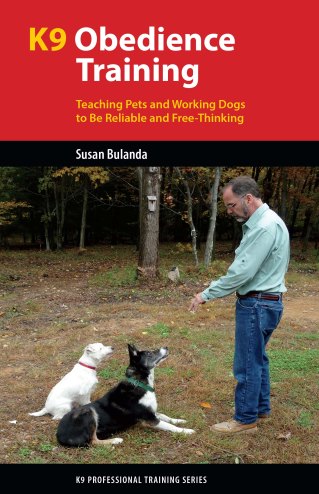
K9 Obedience Training: Teaching Pets and Working Dogs to be Reliable and Free-Thinking.  This book shows you how to teach a dog the basic obedience that is the foundation for all other training. The methods used in this book allow the dog the freedom to think for themselves rather than perform in a robotic method where creativity is discouraged. Free-Thinking is necessary for all working dogs who cannot be trained for every situation that they encourage. Obedient disobedience is also covered. The book also explains what not to do and why. It includes basic handling and grooming techniques that are necessary for a well socialized dog. Some fun tricks are included.
K9 OBEDIENCE TRAINING COVER PRINT

K9 Search and Rescue Troubleshooting: Practical Solutions to Common Search-Dog Training Problems – explains the typical training problems and offers solutions that SAR dog handlers encounter when training their dogs. The solutions apply to all disciplines in canine search and rescue. It explains how the puppy stages of development can have lasting effects on the behavior and training of a dog. Often people adopt an older dog to train and do not understand why the dog behaves the way it does, this book gives insight to those issues. Although K9 Search and Rescue Troubleshooting: Practical Solutions to Common Search-Dog Training Problems is written for the SAR dog handler, the information contained in it applies to many training issues that are not related to SAR.

9781550597363

Soldiers in Fur and Feathers: The Animals That Served in WWI – Allied Forces: A unique, collection of accounts about many different animals that served in WWI. There are many rare photos. What is especially interesting about this book is that it includes many of the mascots that the soldiers kept. Some went into the trenches with the men. For example, there is an account about how a cat saved the life of a soldier, how a pair of geese slated to be Christmas dinner wound up being kept as mascots, and one soldier had a huge Golden Eagle as a pet. WWI was a transitional war from animal power to mechanization, therefore many species of animals served, such as oxen, horses, mules, camels, pigeons, and dogs in many capacities.

2012: Second Place Winner Non-Fiction, National League of American Pen Women; Finalist for the Alliance of Purebred Dog Writers Arthur Award, Certificate of Excellence for the Cat Writers Association of America.

Soldiers in Fur and Feathers

Faithful Friends: Holocaust Survivors Stories of the Pets Who Gave Them Comfort, Suffered Alongside Them and Waited for Their Return: This is the only book written about the animals of the Holocaust victims, recording a part of history that has been overlooked. Some of the stories are sad and some joyous, but all are a part of history. Learn about Nicholas the French Bulldog owned by a woman who was part of the French resistance, and how he came to tour with the German army. Also, the dogs who somehow survived the war and were reunited with their owners and many other stories about dogs and cats.

2012: Dog Writers Association of America, Maxwell Award.

Certificate of Excellence Cat Writers Association, 2012; National League of American Pen Woman 2nd place non-fiction, 2012.

holocaust book cover viewer

God’s Creatures: A Biblical View of Animals: explains the role that animals play in the Bible and how God uses them. It explores the nature of animals and miracles that involve them. The book explores many of the miracles that involve animals. It answers questions such as, do animals go to heaven, do they know and obey God, can they be evil?

AnimalsFrontCover72

Boston Terriers, a book all about this wonderful breed of dog. Learn about their care, training and personality. The book has fun sidebars that give personal accounts of Boston terriers.

First Place Maxwell Award for the Dog Writers Association of America, 2002. (only available on-line)

bost

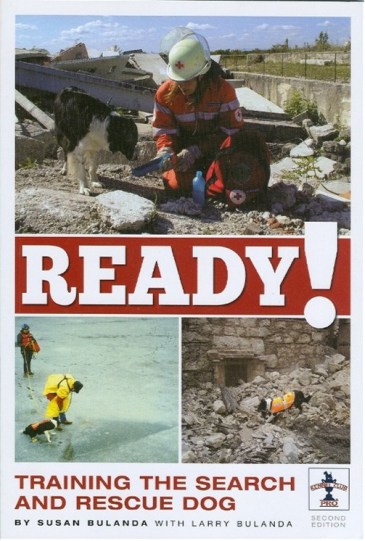
Ready: The Training of the Search and Rescue Dog: Adopted worldwide as the training book for SAR dogs. This book has been in print since 1994 and is in its second edition. It gives the SAR dog handler a training plan for all disciplines of canine search and rescue.

First place for the National League of American Pen Woman’s biannual contest, 1996. Also nominated best book of the year, 1994 Dog Writers Association.
new ready

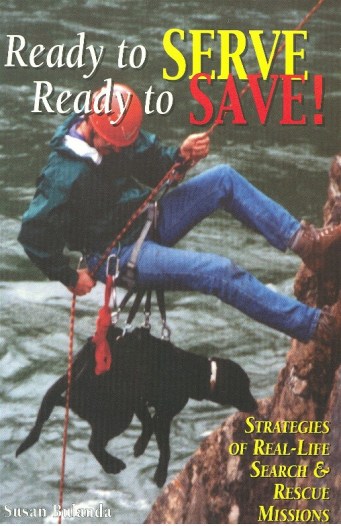
Ready to Serve, Ready to Save: Strategies of Real-Life Search and Rescue Missions: is about actual search and rescue missions giving the reader inside information about how searches work. It is useful as a tabletop training exercise for SAR units.

2000 Award winner for the National League of American Pen Women contest.
Ready serve

Scenting on the Wind: Scent Work for Hunting Dogs: helps the hunting enthusiast understand how weather, wind and terrain features affect scent. It is a great aid for people who compete in field trials or who do any kind of scent work with dogs.

scenting

Real Estate Today, Seller Beware! – is how to save money when selling your house. Available on Amazon

RE cover


Canine genetics and behavior

Dog owners and breeders know that certain behaviors dominate certain breeds. For example herding dogs have the instinct to herd. Hounds have the instinct to hunt with their nose, some breeds are better guard dogs and the list goes on. This is what makes breed traits what they are. But it has been somewhat of a mystery about how this happens genetically because not all dogs in a particular breed have the same strength of the trait for that breed and some lack it entirely.

scout full body

In a new study, James A Serpell of the University of Pennsylvania and colleagues Evan L. MacLean of the University of Arizona, Noah Snyder-Mackler of the University of Washington, and Bridgett M. vonHoldt of Princeton University conducted a study to try to unravel how genetics affect breed trait behavior.

Their study concluded that genes do play a large part in breed behavior, and those gene most affect the brain rather than other bodily tissues. However, they stressed that there is a large margin to allow for the differences between individual animals.

What this means to the dog owner, and especially the potential dog owner, is that getting a dog from a reliable, ethical and trusted breeder is critical to your dog’s behavior. The genetic tendencies can and do vary from line to line. It also means that if you adopt a mixed breed or purebred dog, you will have no idea what it’s genetically controlled behavior will be.

This is important to understand because if behavior issues arise, you will have to allow for the possibility that it is genetically influenced. The method that you use to alter any unwanted behavior that is genetically influence will be different than simple training methods. Always consult a certified behavior consultant. You can find one at www.iaabc.org.

Also keep in mind that genetically influenced behavior is not limited to dogs but is a part of the makeup of all living beings. Yes, environment and learning also comes into play.

Measuring device-critical in feeding your dog

Prof. Jason Coe from University of Guelph, Ontario Veterinary College did a study to see how accurately people measure dry dog food. While this may not seem like an earth-shattering study, it can have a huge impact of the health of all dogs. Coe found that 48 percent of the people tested underestimated and 152 percent overestimated the amount of food that they fed their dogs.

image6 (1)

This can cause dogs to be either underweight or overweight. Small dogs are especially at risk because even a small error in the amount of food can cause them to become overweight.

A two-cup measuring device was the least accurate form of measuring food. This is because it is hard to eyeball one half or one cup of food. A measuring device that is the correct size for the amount you want works better than the two-cup device. What works the best is a kitchen scale. This is the most accurate way to ensure that your dog gets the correct amount of food.

Of course it goes without saying that if you feed your dog table scraps or other items, you must account for that too. Yes, table scraps of a high quality are OK in small amounts. You also have to consider treats, especially if you are training your dog and using treats as a reward.

One of the culprits that I have found is if your dog is around small children, since kids often share their food with a dog. I have seen my grandson sitting next to my dogs and sharing, ‘one for you and one for me.’

It is always best to take notice of your dogs’ physical condition and if you see that they are losing or gaining weight, reassess what you are feeding your dog and how much. If there has been no change, sudden weight loss or gain does warrant a trip to your veterinarian.

Night blindness in dogs

Dogs suffer from the same type of night blindness as people. People who have congenital stationary night blindness (CSNB) have normal vision during the day but have trouble seeing things in dim light. Because dogs cannot tell us what they see or do not see, we can only assume that they have the same problem. We do know that they suffer from CSNB by their behavior. If you notice that your dog seems to be okay going out during the day but does not want to go out at night or acts uncertain when the lights in your home are off, you might want to have a veterinarian ophthalmologist examine your dog.

petey

The good news is that a team of veterinarians have proven that dogs suffer from CSNB and they have identified the gene that causes it. Once the gene has been identified, veterinarians can work to find a cure. That is exactly what veterinarians Keiko Miyadera and Gustavo Aguirre, a professor of ophthalmology and medical genetics at Penn Vet, and Rueben Das, then of Penn Vet and now of Penn’s Perelman School of Medicine, in collaboration with a team led by Mie University’s Mineo Kondo are doing.

As with inherited disorders and diseases that are common in dogs and humans, a cure for one will lead to a cure for the other.

Another canine therapy job

Dogs have proven themselves over and over again as a benefit to humans who are stressed or ill. Yet scientists have found another way that dogs can help people.

Waiting patiently to search croped (Jib a Border Collie)

Often military personnel must be transported by air to distant facilities for treatment. These people are often in a state of chronic and acute stress as well as requiring medical care.

Cheryl A. Krause-Parello, Ph.D., R.N. who is a researcher at the Florida Atlantic University in the Christine E. Lynn College of Nursing has determined that therapy dogs have drastically helped these patients, especially those with PDST.

What is awesome is that the study was assisted by researchers from the University of Maryland School of Nursing; the Daniel K. Inouye Graduate School of Nursing, Uniformed Services University; TriService Nursing Research Program, Uniformed Services University; and Rutgers, the State University of New Jersey.

This research is supported by The Henry M. Jackson Foundation for the Advancement of Military Medicine, Inc. The Uniformed Services University of the Health Sciences (USU) is the awarding and administering office (award number HT9404-12-1-TS06, N12-011). This research is sponsored by the TriService Nursing Research Program, Uniformed Services University of the Health Sciences.

It is a real plus that so many organizations supported this study and hopefully therapy dogs will be assigned to help the soldiers that need them.

Must-Have Smartphone Apps for First-Time Dog Owners by guest blogger Penny Martin

adorable-animal-breed-356378

Photo Credit: Pexels


There are some basic materials  you need to be a great dog parent. This includes the right dog food, a quality leash and collar, ID tags, and a supportive, cozy bed, just to name a few. And in this day and age, there are apps that can help you keep your dog safe, organize information, and stay on top of health concerns.

However, you also need a reliable smartphone that is compatible with the latest dog apps and that provides fast internet service. If your current phone is not up to the task, consider getting an upgrade. There are plenty of options to choose from, so you’re bound to find a model that’s easy to use, fits your budget, and allows you to access your favorite apps.

If you want the highest-performing model, consider something dynamic with enhanced features—something with exceptional battery life that helps you to stay constantly connected. The new iPhone 11 Pro is such a device. It comes with impressive battery capacity, a triple-camera and a 5.67-inch display height, among many other features that makes it an excellent choice for dog owners. Or you might consider the Samsung Galaxy S10+, an Android option that includes a dual-aperture camera, long battery life, and enhanced integration with Windows systems.

THE APPS

Now, since using apps is a major benefit of having a good smartphone, let’s discuss some of the best dogs apps on the market:

FitBark

It’s exactly what it sounds like—the dog version of FitBit. When used in conjunction with FitBark dog activity monitors,  PCMag notes the FitBark app helps you to keep track of your pup’s daily activity and health status. Also, it tracks their sleep and will alert you of any activity that suggests your dog is dealing with stress and anxiety. It will even monitor how much your dog scratches in certain areas so that you can check them for a skin condition. And yes, you can connect the app to FitBit and exercise with Fido!

Whistle

Used with a tracker, the Whistle app  can monitor your dog’s daily activity and health. But its primary function is GPS tracking. By attaching the tracker to your pup’s collar, the Whistle app allows you to always know where your dog is, whether Fido is just in the backyard or has wandered off of your property. The app uses AT&T nationwide LTE-M network and Google Maps for easy and accurate tracking.

Chewy

As Best Company explains, the Chewy app  makes getting supplies for your dog as easy as possible. With more than 1,000 brands to choose from, Chewy will sell and deliver food, toys and other supplies to your door; and for orders of $50 or more, they provide free two-day shipping. When you create a profile for your pup, the app will show you the right kinds of food for his breed, and you can even set up automatic shipments to come each week or each month.

Pet First Aid

When it comes to preventing emergencies, and dealing with them if they happen, Pet First Aid  is the best app for dog owners. Developed by the American Red Cross, this app offers simple, step-by-step guides on how to treat Fido from home and routinely check on his health—including videos and graphics for some of the most common emergency and first aid situations. Furthermore, Pet First Aid provides information on preventative care and can direct you to nearby veterinary hospitals in the event of an emergency.

Becoming a dog parent is a big step in life. With the joys of your newfound companionship comes a host of responsibilities you may not be used to. But don’t worry, as long as you love dogs, you can be a great dog owner! Just make sure you have all your essentials and remember to take advantage of all the great dog apps available.