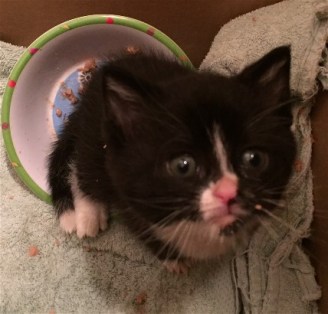
Whole genome sequencing is helping to identify rare feline genetic disorders


Whole genome sequencing looks at the complete DNA sequence to identify anomalies that cause disease. This process allows veterinarians to provide more effective treatment for the diseases that they identify.

download (12)

Scientists at the University of Missouri, using the 99 Lives Cat Genome Sequencing Consortium established at Mizzou by Leslie Lyons, the Gilbreath-McLorn Endowed Professor of Comparative Medicine in the College of Veterinary Medicine, have identified genetic variants that cause progressive retinal atrophy and Niemann-Pick type 1 which is a fatal disorder in domestic cats.

These studies will help domestic cats as well as their close relative the African black-footed cat which also suffers from these disorders.

DNA sequencing has helped in previous studies by identifying a genetic link between degenerative myelopathy in dogs and amyotrophic lateral sclerosis (Lou Gehrig’s disease) in people.

It is exciting to read about the progress that is being made by scientists that will eventually help both people and animals live a longer, quality of life.

www.sciencedaily.com/releases/2017/05/170511115938.htm

Allergies in Pets

Pets suffer from allergies the same as people do. They can suffer all year long or only at certain times of the year depending upon what they are allergic to.

They can be allergic to many things such as the dander from other pets, mites, fleas, pollen’s, insects and foods. The places on the body that typically show the allergic reaction are: ears, underarms, belly, lower legs and feet. The signs typically are: itching, redness, swelling, pimple like bumps, sores that ooze, reoccurring ear infections and loss of fur. Sometimes a pet will pick at the area that irritates them by frequent licking or biting the area.

If you notice any of these symptoms you should take your pet to the veterinarian where a series of tests may be necessary to rule out other medical issues that could mimic allergic symptoms.

gus with look

If the problem is allergy related there are a number of medications, either taken orally or applied topically that can ease your pet’s discomfort.

Allergies are referred to as Atopic Drmatitis and unfortunately there is no cure for it. However, once your veterinarian determines what your pet is allergic to, they can give your pet allergy shots which in many cases reduce the symptoms significantly. Shots along with oral and topical treatment can give a pet quality of life again.

If your pet is allergic to a certain type of food, you can avoid giving your pet that food. Sometimes a low quality food can cause a problem for a pet. You should only give your pet high quality food. Food that is available at discount stores or the supermarket should be avoided.

For an excellent article, go to: http://www.vetdepot.com/in-depth-look-at-atopicdermatitis-dogs.html

Cats seem to be able to understand the laws of physics

Researchers from Kyoto University in Japan led by Saho Takagi published their findings in Springer’s journal, Animal Cognition. In previous tests, researchers determined that cats can determine the location of invisible items based on their hearing alone. The latest study showed that cats responded to articles dropped from a container more when the container was shaken and made a rattling sound then they did to containers that had an object in them but did not make a rattling sound.

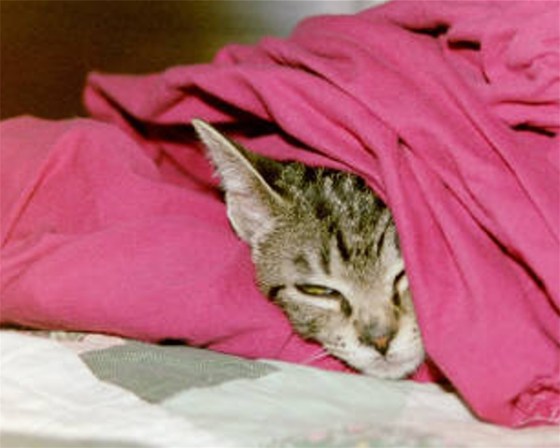
cat under sheets kitten

“Cats use a causal-logical understanding of noise or sounds to predict the appearance of invisible objects,” say Takagi. Since many cat’s hunt in low-light situations, this is a necessary association for them. This is one step closer to understanding the abilities of cats.

www.sciencedaily.com/releases/2016/06/160614114410.htm

Medicating a cat

Medicating a cat can be one of the most difficult tasks that a cat owner faces. Most cats do not like to take medications. It is difficult to give a cat liquid medications, but they can be squirted into the side of the cat’s mouth, if you can hold the cat while doing it. Some pharmacy’s will compound medications for pets, using a chicken or beef flavor, which can make giving liquid medications easier.

However, giving a cat pills is even more difficult. Most cats are hard to hold and it is almost impossible to drop a pill into the back of the cat’s mouth far enough so that they must swallow it. If you miss, the pill can become wet with saliva and fall apart or be less likely to slide down the cat’s throat on a second try.

Trying to pry a cat’s mouth open when they know a pill is coming can result in being bitten. Janna Hautala, MSc (pharmacy) is addressing this problem by experimenting with flavored and flavor coated minitablets for cats. If she succeeds, cats may enjoy taking their medications, which will be a bonus for both them and the cat’s owner.

In the meantime, a pill popper is a good way to place a pill in the back of a cat’s mouth so that they swallow it. This helps to prevent the owner from being bitten and will help keep the pill dry until it is placed in the cat’s mouth.

There are two basic types, one is the Kruuse Buster Pet Pill/Tablet Syringe with Soft Tip and the other is called a pill gun.

 buster-pet-piller-with-soft-tips-single-3

The best way to use them is to tilt the cat’s head back, pry open the cat’s mouth by squeezing the back of the cat’s mouth on both sides to force it open with one hand and then quickly put the pill gun in the back of the mouth and dispense the pill. Quickly close the cat’s mouth and hold it until the cat swallows the pill. If the cat loves a special treat you can give the cat the treat the instant the cats swallows the pill.

 pill-gun-21

Timing and rewarding the cat is essential or the cat will fight when it is time for the next pill. Of course, the best thing a cat owner can do is teach the cat or kitten to allow you to open their mouth and give them a pill. This can be done by going through the motions of giving the cat a pill but instead of a pill, they are given a small, pill sized treat that they love. It also helps if the cat only gets that treat when you practice giving the cat a pill. Make sure that the treat is easy to swallow and does not hurt the cat’s mouth or throat.

 It is essential that the cat owner practice giving the cat treat as a pill at least every other day. Hopefully in the near future, there will be cat pills that cats like to take.

www.sciencedaily.com/releases/2017/03/170322103701.htm

Brominated flame retardants found in cats

This is a short article but important. A recent study found that indoor cats have a high level of brominated flame retardants in their blood as a result of inhaling the dust in homes. Previous studies found that cats who developed Feline Hyperthyroidism had high levels of flame retardants, but now researchers have found it in healthy cats as well.

1pluskat

As the flame retardant materials age the particles that come from them become part of the dust in a home. What is especially important to be aware of is that other pets, humans, and especially small children also breathe in the dust.

The flame retardants make up part of furniture, electronics, and even various fabrics. So what can we do about it? I have found an air cleaner that can help reduce the dust in a home. I personally have used the Fresh Air Surround air purifier for years and find it helps keep my home allergy free. I picked that model because it kills germs as well, an added benefit, and does a great job of killing household odors, including litter box odor.

I strongly urge everyone to consider this air purifier. You can get more information from David Scharikin, at Finance2@ptd.net or call him at 570-325-2433. There are a number of models to choose from. And no, I do not make a commission for passing this information along. As a pet owner, dogs, cats and birds, and allergic to many indoor and outdoor irritants, it has made my life much better.

FMI: www.sciencedaily.com/releases/2017/02/170224092516.htm

The Five Most Common Diseases for Cats

Cats, like dogs, suffer from inherited diseases. Understanding what these diseases are can help the cat owner work with their veterinarian to insure that their cat lives a long, healthy life. This article will briefly explain the five most common diseases. It is important to note that although many inherited diseases may be more common in certain breeds of cats, all cats can suffer from them.

1baby-pluskat

Hypertrophic Cardiomyopathy (HCM)

Affected cats can experience heart failure or sudden death at 6 months to 7 years of age. This disease is more common in Main Coon Cats and Ragdoll cats. There is genetic testing for this disease which should be done to all cats of these breeds, including kittens before they are sold.

It also appears in Sphynx, Norwegian forest cats, Persian, Chartreux, Bengal, and Birman cats.

Polycystic kidney disease (PKD)

Is common in Persian cats as well as in high frequencies in Himalayan and other Persian-derived breeds. All longhaired cats that are suspected of having a Persian background should be suspect. Most affected cats develop kidney failure at an average age of 7 years (range, 4-10 years).

Suspect cats and kittens should have a PKD DNA test to determine if they carry the gene for this disease. There is no cure for kidney failure which results from the disease. Note that the old method, ultrasonography is not reliable and should not be used as a means of testing cats. I owned a Turkish Angora cat that suffered from this disease and died at a young age.

Lymphocytic or Plasmacytic Inflammation Disease

Also known as inflammatory bowel disease (IBD). This is more common in Siamese and other Asian breeds. This disease can be controlled with dietary changes, anti-inflammatory or immunoregulatory drugs, minimization of environmental stress, and dental extraction in cats with severe gingivostomatitis.

Diabetes mellitus

This is a common diagnosis in cats and can be controlled with insulin and diet. Although it is common in all cats, it is often seen in Burmese, Siamese, Norwegian forest, Russian blue, and Abyssinian cats and overweight domestic shorthaired cats. Weight control is a good preventative measure for diabetes.

Feline Lower Urinary Tract Disease (FLUTD)

Persian cats seem to be at greater risk for this disease, but it affects all cats. It does not appear to be infectious. Owners must be diligent in treating and preventing this by minimizing environmental stress, maintaining anti-inflammatory or behavior-modifying drugs that decrease likelihood for bladder inflammation, and maintaining dietary control for cats predisposed to crystalluria.

Other common inherited health issues are:

Bladder stones, allergic skin disease, mammary tumors, and lymphoma. Hyperthyroidism is frequently seen as well but it does not seem to be inherited.

In conclusion it is best to have suspected cats tested for the various diseases that they may be susceptible to. This can be done through the Canine and Feline Hereditary Disease (DNA) Testing Laboratories at http://research.vet.upenn.edu/Default.aspx?TabId=7620

FMI:

http://www.cliniciansbrief.com/article/top-5-genetic-diseases-cats?utm_medium=email&utm_source=Clinician%27s+Brief+Newsletter&utm_campaign=Online+170207&eid=290551173&bid=1654455

Transporting Your Nervous Cat to the Veterinarian

The following article is written by and provided courtesy of:

Dr. Daniel Mudrick; B.Sc, D.V.M, Clarkson Village Animal Hospital, 1659 Lakeshore Road West, Mississauga, ON, L5J 1J4

905-855-2100

petcare@clarksonvillagevet.com

www.clarksonvillagevet.com


cat.png

Transporting Your Nervous Cat to the Vet

As tough as cats can be, a simple car ride to the vet can be very stressful for them. Cats often become nervous or anxious with travel, and then behave in a passive or sometimes aggressive way.

Our goal is to prevent problems for you and your pet. Our simple recommendations will make travel and vet visits much easier for your cat.

Cat Calming Recommendations

Leave your cat carrier out for at least a few days prior to travelling.

Leave the carrier in an easily accessible area of the house where your cat will see it. You should leave the door of the carrier open so your cat may go in and out as she/he pleases. You can place food or treats in the carrier to help build a positive association with it.

Use Feliway 15 minutes prior to putting your cat in the carrier.

15 minutes before you will put your cat in the carrier, you should wipe down the inside with Feliway wipes or Feliway spray. Feliway is a pheromone treatment that helps elicit a calming response in cats.

Learn more at www.feliway.com.

Don’t put your cat in the front seat of the car.

It’s best not to put your cat carrier in the front seat of the car as it can be dangerous if the passenger airbag is deployed. You can secure the carrier in the back seat using one of the rear passenger seatbelts. Try to keep the carrier level, instead of sloping back.

Calming Supplements and Medications 

Some cats will be anxious despite the above measures. If that’s the case, we may recommend the use of a calming supplement or medication to ease your cat through the trip and vet visit.

If we have discussed with you the use of Zylkene (a calming milk protein based supplement) or Gabapentin (a gentle calming medication) to help your cat cope with the anxiety of going for a car ride, please read the following recommendations:

Hunger is your friend!

It is ideal if your cat is hungry before travel time. Feed your cat a small dinner and breakfast the night and morning before your visit. One hour before you are going to put your cat in the carrier, feed a small amount of her/his favorite food with the medication mixed in. Once you get back home, you can feed the remainder of the meal.

If your cat is not willing to eat, you should reschedule for another day.

If you need, please come in to the clinic and pick up an appetite stimulate that you can use to help ensure your cat will eat (and therefore eat the medication) at the appropriate time prior to your next appointment. The appetite stimulant is in the form of a paste that you can apply to the inside of your cat’s ear – no pilling required!

We use Feliway pheromone diffusers at the hospital and we handle cats very gently to minimize nervous behaviour.

Each cat is an individual and we want to make your cat’s car rides, and life, as comfortable as can be. Cats don’t understand what is happening; they are just afraid, and we want to help alleviate those fears.

Our goal is “Stress-Free Visits”.

For more information, visit CATalyst Council’s Cat Friendly Practice to watch a thorough video on this subject.

Please call us if you have any questions at all about helping to take the stress away from your cat.
Christmas Eve Kitten

December 24, 2015 was a chilly, foggy night. Larry, Tom, Jory and I were driving home from church when we turned the corner a block from our house. Tom was driving and saw a tiny kitten scoot across the road following an older cat.

“Did you see that?” he asked. None of us saw the black kitten. Tom stopped the car and lowered the window. We could hear the pitiful cry of the kitten. We got out of the car and walked around the wooded area where the cries were coming from. There was the kitten in a pile of brush. Nearby was a dead cat. Another older cat (about six months old) stood near, watching but would not approach us.

I gently picked up the kitten whose little body fit in the palm of my hand and held her against my chest. She was trembling from the cold. By the time we reached our home the kitten had stopped shaking. Inside in good light, I could see that she was about 3 weeks old. Her eyes still had that kitten just opened blue-gray color. Fortunately I had some small cans of wet cat food left over from my cat. I put the food in a dish and put it in the box with the kitten. She did not know how to eat or what it was. Gently, I took some of the food and put it on the end of my finger and touched it to the kitten’s mouth. She licked the food off of her face and after two tries, literally dove into the dish of food with her two front feet and face. She ate almost the whole thing.

Later I eye dropper fed her some milk and water which she readily took. Of course Tom and Jory kept asking me if I was going to keep the kitten. I told them I could not because of the dogs. Although my Parson’s Russell Terrier, Riley, was raised with a cat, our new Border Collie puppy Babs, was not. I did not think I could keep the kitten safe from the dogs. I fully expected Babs to want to play with the kitten and could injure or kill her with rough play.

The next day, as hard as it was, we took the kitten to our local humane shelter (Humane Society of Carroll County, Inc. Westminster, MD) which does a great job finding homes for them. They even have programs to socialize their cats. We were lucky that someone was at the shelter to take the kitten for us.

Update: January 8, 2015

I stopped by the shelter to see how the Christmas kitten was doing. Much to my delight, they had a mother cat who is nursing the kitten, along with another little older kitten. Although she was in the quarantine area and I could not see her, I knew that taking her to the shelter was the best thing for her. They confirmed that she was barely three weeks old. She is so cute that I know she will get a forever home.DSCN1504 image3 image8