Feline Epilepsy

Many people realize that dogs can have epileptic seizures, but do not realize the cats can suffer from epilepsy as well. There are two general types of epilepsy, intracranial epilepsy, which is caused by defects in the brain on a cellular level and is more common in dogs and humans, but seems to be rare in cats, and extracranial which are seizures due to injuries outside the skull.

IMG_0236

Seizures in cats are usually caused by brain tumors, infractions or even a stroke. Sometimes the cause of the seizures can be due to kidney disease, liver disease, hypoglycemia and exposure to toxins and poisons.

Some signs of an epileptic event are:

Blank stare

Shake one leg

Cry out in pain

Falling to one side

Uncontrollable Urinating or Defecating

Paddling their feet

Loss of consciousness

Jaw chomping

Become clingy to owner

Shake

Undue restlessness

Unusual salivation

Loss of vision temporally

If your cat shows any of the above signs an immediate visit to your veterinarian is warranted.

Idiopathic epilepsy usually shows up between the ages of 1 and 3 years of age. Seizures are most likely to occur when the cat is resting or asleep, in the morning or at night.

Seizures that are a result of an injury will show up after the injury. The treatment will depend on the cause of the seizure and may require a battery of tests since the seizures can result from various diseases.

If your cat suffers from seizures, keep a log of when the seizure starts and when it ends. It is also a good idea to take note of any environmental events that could have caused the seizure.

If the seizure lasts for more than five minutes get the cat to the veterinarian right away, this is an emergency. If your cat is diagnosed as being epileptic, do not panic. Be sure to have a plan for when the seizure occurs to keep the cat safe, in a place where the cat cannot get hurt. Cats will not swallow their tongue so there is no need to put anything in their mouth. Keep in mind that your cat may take a few hours to return to normal behavior.

By understanding the nature of your cat’s seizures, you can help your cat live a safe, long and normal life. While seizures are frightening to look at, with your veterinarian’s help, they can be controlled.


Animals can identify both time and space

Edward Wasserman, Professor of Experimental Psychology in the Department of Psychological and Brain Sciences at the University of Iowa has determined that pigeons use a common area of the brain to judge space and time. This suggests that these abstract concepts are not processed separately.

OLYMPUS DIGITAL CAMERA

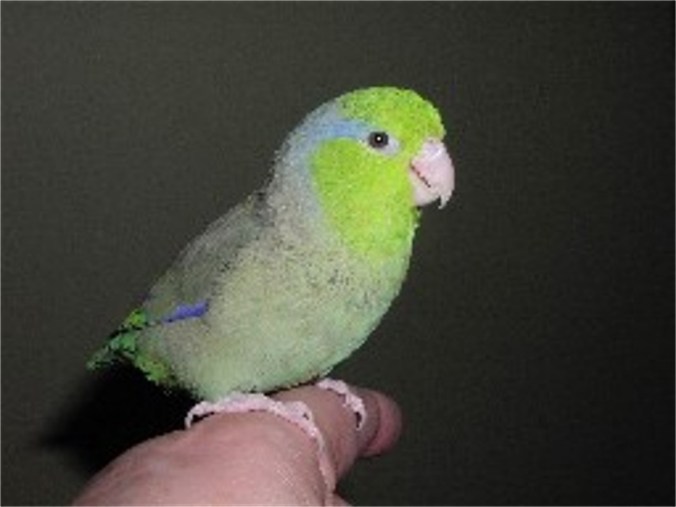
Parrotlet “Sweet Pea”

To determine this, the pigeons were put through the “common magnitude” test. This is where the birds were shown (on a computer) a horizontal line either 6 cm or 24 cm long for either 2 seconds or 8 seconds. When they correctly pecked one of four visual symbols, the length or the duration of the line, they received food.

This compares with a person’s ability to determine space and time without the use of a watch or ruler. Other animals that have been tested have also shown this ability.

One common example that almost all pet owners have witnessed is when their pet knows that they are coming home each day. The dog or cat who waits for their owner to come home from work at the same time each day exhibits what the researchers have tested in pigeons.

There is so much about animals that we are still learning. If only they could talk and tell is what is on their minds!

Hydrating Working Dogs

Dogs who work in hot weather such as border patrol dogs, search and rescue dogs as well as military dogs often become dehydrated when they work in hot environments.

Scout SAR training window

Handlers of these dogs do not agree about how to hydrate their dogs to prevent heat stroke and dehydration. There are three major ways that handlers hydrate their dogs.

  1. Free access to drinking water
  2. Subcutaneous hydration (a needle under the skin) of water and electrolytes
  3. Drinks containing electrolytes

Researchers studied all three methods and found that they all worked. However, they found that by using a chicken flavored electrolyte drink, even dogs who were reluctant to drink, would drink more liquid.

The researchers tested the dog’s urine and found that they passed the sodium and therefore did not have a buildup of sodium in their body which had been a concern about using electrolyte drinks. Thus, drinking a chicken flavored electrolyte drink did not have any negative effects on the dogs.

Dog ownership lessens risk of heart disease

In a unique Swedish study, researchers found that people who owned dogs had a lower mortality rate then those who did not. They also found that people who lived alone and owned a dog had less cardiovascular diseases then people who lived alone who did not own a dog.

36scan0036

The researchers studied 3.4 million people between the ages of 40 and 80 making this a comprehensive comparison. What the study did not show was why there was a difference between dog ownership and non-dog ownership.

One possibility considered was that people who own dogs are more active because they walk their dogs. There was also no indication as to whether or not there were other factors such as the type of people who own dogs vs those who do not.

However, the bottom line is that dog ownership, again, has proven to benefit the health of their owners. It would be interesting to study how growing up with a dog or pet affects the health of children as adults if they continue to own a pet vs those who get a dog or pet later in life. We know that children who own pets are less prone to developing allergies. It would be interesting to know what other physical and mental benefits pet ownership has on children.

Allergies in Pets

All types of pets, just like people, can suffer from allergies. Unfortunately, pets cannot tell us when they feel poorly. We must look for the symptoms.

There are a few common types of allergies in pets but not all are true allergies, some may be sensitivities which can be as bothersome as a full-blown allergy.

frame013

Skin Allergies are the most common type and are usually caused by flea bites, food and things in their environment.

Flea allergies are the easiest to find and stop. By keeping your pet free of fleas, you can prevent the allergic reactions. If fleas are the problem you may see red and inflamed skin, scabbing, and flea dirt which looks like small black dots.

Flea dirt or droppings are digested blood so if you put one in a drop of water it will turn red. To get rid of the fleas you need to consult with your veterinarian as well as an exterminator. The veterinarian will help make your pet more comfortable and control the fleas, however, if your pet has fleas, they will be in your home. You must use an exterminator, or the fleas will come back because at this point they have infested your house. The eggs are microscopic and will hatch periodically.

Sometimes various foods can cause sensitivities that are not full allergic reactions. Typically, food related allergies and sensitivities manifest themselves by causing the pet’s skin to itch. This usually happens around their paws and ears. Sometimes they can get an upset stomach as well. The usual culprits are beef, chicken, eggs, corn, wheat, soy and milk.

Environmental allergens are often the same ones that bother people. Things like dust, mold, and pollen are often seasonal, so you may not see the allergic reaction year-round. The typical areas that are affected are: paws, ears, wrists, ankles, muzzle, underarms, groin, around the eyes, and between the toes.

Although it is more rare, acute allergic reactions can be a result of bee stings or shots. For this reason keep a close eye on your pet after being vaccinated. Signs can be facial, throat, lips, eyelids or earflap swelling. Any of these signs should be an immediate visit to your veterinarian or emergency clinic. Always have the phone number and address of your nearest emergency clinic handy.

Overall, the general signs of allergies or sensitivities are:

  • Itchiness
  • Hives
  • Swelling of the face, ears, lips, eyelids, or earflaps
  • Red, inflamed skin
  • Diarrhea
  • Vomiting
  • Sneezing
  • Itchy ears
  • Chronic ear infections
  • Itchy, runny eyes
  • Constant licking

It is critical that you take your pet to the veterinarian as soon as you notice any sign of an allergy or sensitivity. If your pet continues to scratch, rub or bite an area of his body, it can lead to other types of infections, not to mention that your pet may feel miserable. Keep in mind that allergies and sensitivities can develop at any time in a pet’s life, therefore you must be vigilant and watch for any signs that they have developed.

Allergies and sensitivities will often affect your pet’s behavior which you may be the first thing you notice. If your pet seems a bit withdrawn, sullen, irritable, not as interested in playing, it would be a good idea to pay close attention and look for signs of allergies or other illnesses. It is always wise to err on the side of caution and schedule a visit to your veterinarian rather than wait until your pet becomes more uncomfortable. Because of the potential seriousness of allergies, it is not in your pet’s best interest to try and treat them yourself.

Like people, pets can lead a happy normal life with allergies if they are treated and if possible, prevented.


Dog’s use facial expressions to communicate to people

Dr. Juliane Kaminski of the University’s Dog Cognition Centre proved that the facial expressions dogs make are not a result of their emotions, but rather are a purposeful act to communicate.  Her research also showed that dogs make more facial expressions when people are looking at them, further illustrating that dogs specifically use facial expressions to communicate to people. This finding further shows us that dogs make choices and decisions to purposely try to communicate with people.

DSCN1485

One of the most common facial expressions that dogs made was to raise their brow. This facial expression often makes people feel that the dog is sad and is often referred to as the puppy dog look.

Of course, it must be understood that dogs use a whole realm of body language to communicate, not just their facial expressions. Keep in mind that dogs who have excessive facial hair may make it difficult, if not impossible for people to see the raised brow.

How dogs understand us – the latest research

Marcello Siniscalchi, Serenella d’Ingeo and Angelo Quaranta of the University of Bari Aldo Moro in Italy conducted a study to determine if dogs can read human emotions. Their study showed that dogs can understand us by reading our tone of voice, body odor, posture, our faces.

DSCN1407

The researchers showed 26 dogs pictures of a man and women whose facial expressions displayed anger, fear, happiness, sadness, surprise, disgust or neutral. The dogs had a stronger response (greater cardiac activity) when they saw the more emotional faces of the man and woman displaying anger, fear and happiness. Interestingly, the dogs took longer to resume eating when they saw these emotions. What is interesting is the dogs turned their heads to the left when they perceived these emotions.

When they saw the look of surprise on the human faces they turned their heads to the right. This indicates that the right side of the brain is more involved in processing negative emotions and their left side of the brain processes more positive emotions.

The important thing for us to understand is that when we are working with our dogs, they are able to understand a wide range of our emotions. This helps our dogs understand us and hopefully, help us understand our dog’s behaviors.

A new species of tick invades the Mid-Atlantic

The longhorned tick, (Haemaphysalis longicornis), also known as the bush tick or cattle tick can seriously hurt or even cause death in livestock. The ticks can last for up to a year without feeding. They have been found in other countries such as Russia, China, and Japan.

tick

(Although this is not a longhorned tick, it is about the size of the tick. The longhorned tick has a pattern on its body that resembles a turtle shell.)

When the tick infests cattle, it can cause severe blood loss and even death, especially in calves. In dairy cows it can cause reduced milk production and in sheep poorer wool quantity and quality. This is because the tick transmits theileriosis.

In humans and pets the tick can transmit Q-fever and anaplasmosis. Q-fever can cause death in humans. The symptoms include “high fever, headache, sore throat, malaise, nausea, diarrhea, chest pain, nonproductive cough, pneumonia, and hepatitis. Neurological manifestations occur in about one percent of patients and could develop into meningitis, encephalitis, myelitis and/or peripheral neuropathy. Endocarditis, infection of the heart valves, is the most serious manifestation. However, it is usually found in patients with preexisting valvular disease. Unfortunately, the mortality rate is increasingly high, currently at 65 percent.”

The signs of Anaplasmosis are “Fever, Severe headache, Muscle aches, Chills and shaking. Less frequent symptoms of anaplasmosis include nausea, vomiting, loss of appetite, weight loss, abdominal pain, cough, diarrhea, aching joints and change in mental status.

Although people of any age can get anaplasmosis, it tends to be most severe in the aging or immune-compromised. Severe complications can include respiratory failure, renal failure and secondary infections.”

Although the longhorned tick has only been found in the Mid-Atlantic, it is just a matter of time until it will be found across the country.

African wild dogs sneeze to vote

Dr Neil Jordan, a research fellow at UNSW Sydney and Taronga Conservation Society Australia and Reena Walker, of Brown University in the US, have studied the wild dogs, (Lycaon pictus) of Botswana found that these canines sneeze to vote whether or not they should go hunting.

170905202954_1_540x360

A pack of wild African dogs. Photo by Megan Claase

The study showed that if the dominant pair were not part of the vote, that approximately ten more sneezes were needed to make the decision. The team studied 68 social gatherings from 5 African wild dog packs living in the Okavango Delta in Botswana. The act of sneezing to vote shows the cognitive ability and process of these wild dogs.

We know that our pet dogs sneeze to show joy, now we have to wonder if they lived in groups, would they also communicate with each other by sneezing to decide daily activities.  What an interesting thought.


Can humans identify the emotions of all air-breathing animals?

A study by researchers at Vrije Universiteit Brussel and Ruhr-Universität Bochum, in collaboration with colleagues from Alberta, Canada, and Vienna, Austria, say yes!

Humans are capable of identifying the emotions of all air-breathing beings via the sounds that they make.

frame011

The research team headed by Dr Piera Filippi, currently at the University of Aix-Marseille and the Max Planck Institute for Psycholinguistics in the Netherlands, included, among others, three academics from Bochum: philosophy scholar Prof. Dr. Albert Newen, biopsychologist Prof. Dr. Dr. h. c. Onur Güntürkün and assistant professor Dr Sebastian Ocklenburg.

To test their theory, they used 75 people whose native language was English, German or Mandarin. The participants listened to audio recordings of nine different species of land-living vertebrates to include, mammals, amphibians and reptiles, and birds.

The participants were able to identify both high and low levels of arousal in all species. This suggests that there is a universal ability to communicate emotions. If humans can identify the emotions of other animals, it stands to reason that this ability is not unique to humans and that all animals have the ability.

Of course, pet owners have seen this to be true with their pets. They always seem to know how we feel and we know how they feel.