Blindness in Irish Soft-Coated Wheaten Terrier has been attributed to the mother

Researchers at the University of Helsinki, UC Davis and the University of Jyväskylä have discovered that the gene RBP4 for canine congenital eye disease is passed from the mother to the puppies in the womb.

The researchers have discovered that this recessive gene, which blocks the developing eyes of puppies from getting vitamin A, causes blindness. In order for the disease to occur, both the mother and puppy must have the mutated gene, which is why all puppies are not born blind.

It has also been determined that the RPB4 gene may be related to human MAC disease. So again, understanding canine diseases may lead to cures for humans.

scwt

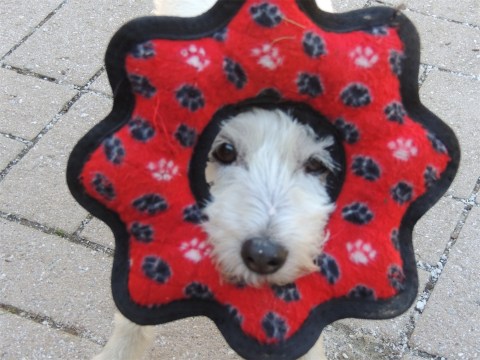
An Irish Soft-coated Wheaten Terrier, Photo: Lohi Research Group

The good news is that researchers have developed a DNA test that can identify those dogs that carry the gene. This will help both veterinarians and breeders control and hopefully eradicate blindness in this breed.

Dogs, wolves and some primates understand inequality

A new study by comparative psychologists at the Messerli Research Institute of the University of Veterinary Medicine, Vienna has illustrated that both dogs and wolves understand what it means to be treated unequally.

Previously, the studies that illustrated that dogs understood and reacted negatively to inequality, assumed that this reaction was due to domestication. The current study illustrates that this is not true because wolves  reacted the same way as dogs.

woody & lily

The tests also showed that higher ranking wolves and dogs became frustrated more quickly when they perceived favoritism. Scientists assumed this is because they are not used to receiving lower quality rewards.

What makes this interesting is that the study illustrates that the animals being tested understand and recognize what a lower quality reward consists of. This means that they observed the differences in the rewards, were able to value the reward and determine that they were not getting as much.

The most exciting information from this experiment is how it illustrates an animal’s ability to think, reason and make decisions and judgements. For pet owners, it shows us that when we train our animals, the reward needs to be something valued by the animal. After all don’t people feel the same way too?

Thinking of getting a pet? Here’s what you need to know.

by guest blogger Jessica Brody

man-3226882_1920

Photo by Pixabay

Have you been thinking of adding a pet to your family? If you’ve never had pets or are inexperienced in pet ownership, you’ll need to do a little thinking and research first. What kind do you want? What fits your lifestyle? Where do you get it? These are all good questions to get ready.

First, consider your home and lifestyle. What kind of pet can your home handle? If you’re in an apartment or condo, you will have different needs than someone with a big house and a yard. Are you home a lot or do you travel often for work? If you’re a traveler, you’ll need a pet like a cat or rodent who is much more independent. If you’re home a lot and physically active, you might do better with a dog (though not all dogs like to run). Start by assessing your lifestyle.

If you want a dog, you’ll want to consider breeds. One of the great things about dogs is that they come in so many shapes, sizes and personalities. You are almost certainly likely to find one that fits your style. Start reading up on breeds that you like and determine if they fit your personality. Don’t trust what you see on TV. A dog that looks like a calm friend on a sitcom is actually a well-trained actor. For example, Eddie, the super-cool dog from “Frazier” is a Jack Russell Terrier, one of the most high-energy breeds.

Pay attention to grooming and medical needs, too. If you can’t stand dog hair, don’t even think about getting an Akita, Chow Chow or Husky. If you’re not into dog drool, avoid St. Bernards or bloodhounds. If you live in close quarters with your neighbors, you might want to avoid the barky breeds.

Next, consider where you’ll get your dog. Never buy a dog from a pet store or flea market. They get their dogs from puppy mills, which don’t breed with care and often keep their breeders in inhumane conditions. Seek out reputable breeders, preferably those who work or show dogs. Quality breeders are careful to breed out bad temperament and genetic diseases.

If you would like to help an animal in need, stop by your local shelter or rescue organization. There are millions of dogs in shelters that need homes, and many are purebred or close to it.

When it’s time to bring your new pal home, do a little shopping. Make sure you have all the basics that your pal needs, including a dog bed that’s the correct size for your pet, food and water bowls, leashes and even a stroller for your pet who won’t or can’t go for walks.

If you adopt a pet, especially a dog or cat, give him a chance to adjust. If he’s from a shelter, he’s likely been through a lot and can be nervous, so don’t force yourself onto him. Give him a chance to hide out at first, and just sit near him and speak to him softly. He’ll slowly come out of his shell and fall in love with you. Tell children to give him a little space, and remind them that dogs (and cats too) don’t always like being grabbed or hugged. Lay down some ground rules with your child such as leaving pets alone when they are sleeping, eating, and pottying. Of course, a life-size version of their stuffed animal is tempting, so never leave children unattended around pets, no matter how kid-friendly the pet may be.

Before long, you’ll have a great friend who is ready to spend his life hanging out with you. You can take Fido on adventures with you, or just chill on the couch and watch movies. Either way, you’ll learn each other’s quirks and have a life of laughs together. With a little planning, introducing a pet to your home can go smoothly and happily.

It is important to control how much weight your young dog retrieves

A study by the University of Veterinary Medicine, Vienna showed that young hunting dogs who are trained using  the same weight as adult dogs, can cause damage to the joints and tendons, especially of the front legs.

This is because the extra weight that young dogs carry causes them to tilt forward in much the same manner that a person would who was carrying a heavy load. The researchers felt that adult dogs are suited for carrying loads but young dogs that are growing should use adjusted weight instead of the same weight as adult dogs.

They suggested that young dogs in training be checked regularly by a specialist to be sure that there is no damage to joints, tendons and muscles.

It stands to reason that if a dog associates pain with an activity, he will not enjoy the job or game and may not perform to his best ability, especially if he is being trained for competition.

Although this study was conducted primarily on hunting retrievers, many breeds of dogs enjoy the game of fetch. This means that all dog owners who play fetch with their dogs should be aware of how much weight the object is and not allow young dogs to carry heavy objects.

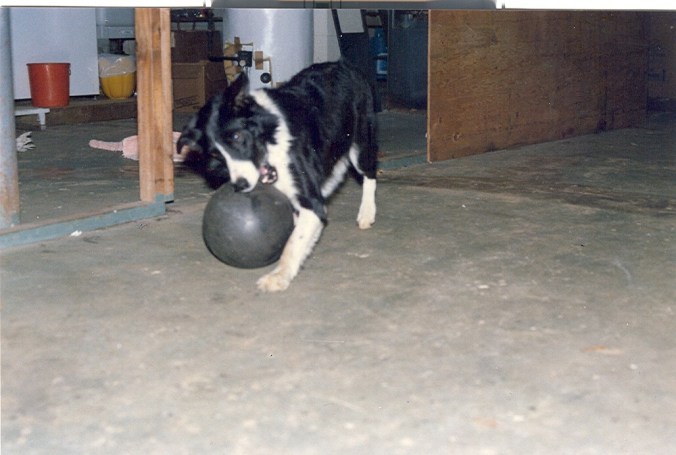
I personally had a Border Collie who as an adult, loved to play with a bowling ball and would successfully put his canines in the holes and pick it up and carry it for a short distance. You never know what a dog will fancy and play with!

ness bowling1

Dogs Can Understand Vocabulary and the Intonation of Human Speech

The world was amazed by the accomplishments of Chaser the Border Collie. Chaser can identify 1022 toys by their name and retrieve them by category.

She also knows common nouns such as house, ball, and tree. What is more amazing is that she can learn new words by inferential reasoning by exclusion.

This means she can pick out an object that she has not been taught the name of by eliminating all the objects she knows.  She also understands sentences with multiple elements and has learned by imitation.

scan0011

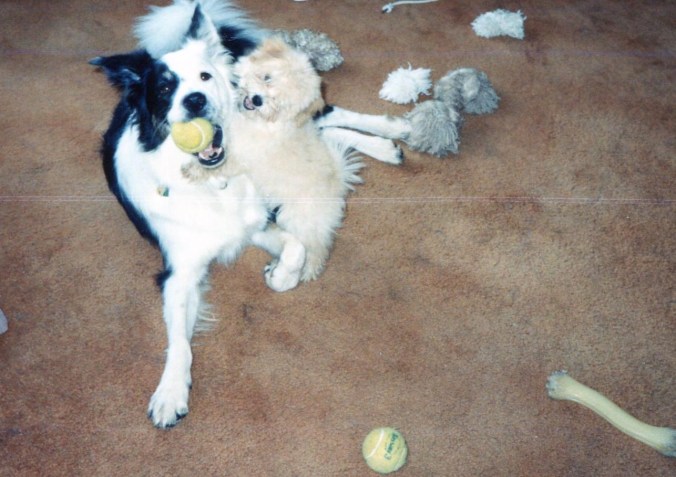
Border Collie “Ness”

Scientists have shown that Chaser is not unique in her ability to do these things. They have discovered that dogs understand both vocabulary and intonation of human speech using their left brain the same as people do. Prior to this research, it was thought that understanding words and intonations was something only humans could do, but that is not the case. The study also showed that dogs, like people, process words separately from intonation.

This is exciting because it shows us that our dogs (and possibly other animals) are far better able to understand what we say than many people realize. It also expands the horizon as far as how and what we can train our dogs to do.

However, does this mean that if we want to hide something from our dogs that we are talking about we will have to spell out the word? I can only imagine the conversation, “You know I made a v-e-t appointment for R-o-v-e-r for tomorrow.”

Genetic testing shows greater number of dogs have diseases then previously thought

Dr. Jonas Donner of Genoscoper Labratories, a Finnish company that specializes in animal genetics and testing has found that about 1 in 6 dogs carry the genetic predisposition for genetic disorders. They tested 7000 dogs that made up 230 different breeds. What was important about this research is that some of the diseases that showed up were in breeds that had not been previously reported as having that predisposition.

img096

Because many of the canine inherited disorders are more widespread than previously thought, it indicates that further investigation and testing is needed to help veterinarians and pet owners improve the health of canines.

It also shows that it is important for breeders to conduct genetic testing before they breed their dogs. With breeder and pet owner cooperation, the overall health of our dogs can be improved.

If you plan to purchase a purebred dog, be sure that the parents have been genetically or other wise tested for the diseases and disorders common for that breed. A good breeder will have done this for the dam and sire of a litter. For example, a German Shepherd should be Orthopedic Foundation (OFA) certified free of hip and elbow problems. A Rottweiler should be tested to be free of the canine bleeding disorder, VWD.

Noise sensitivity could be related to pain in dogs

Perhaps this is one of the more important discoveries in recent years. Researchers found that dogs who show noise fear and/or anxiety may be suffering from pain.

2lilya

Dogs who had underlying pain showed greater aversion to areas and a stronger reaction to noise. The researchers concluded that when the dog tenses or trembles from fear, the already underlying pain is made worse by the stress and pressure on the painful muscles and/or joints.

Often when this happens the dog associates the pain with the area or circumstances that he was in when the noise and pain occurred. They found that dogs who have pain associated with noise, associated the noise with a wider range of their environment. For example, if the dog associated pain with a piece of furniture in a room they may tend to avoid the entire room. They also tended to avoid other dogs.

What is very important to be aware of is that dogs who start to show noise fear or aversion later in life are more likely to also be suffering from underlying pain.

This study gives pet owners and veterinarians another tool to use to help diagnose pain that might otherwise be difficult to detect. Therefore, if you have an older dog who suddenly starts to react to noise, it is time for an in-depth examination by your veterinarian.

Angus, Canada’s infection sniffing dog

Angus is a Springer Spaniel, trained to sniff out Clostridium difficile (C. diff) an infection caused by a fecal bacterium that can make people very sick. Angus is used in hospitals to ensure that the spores from this illness are not present. He has effectively reduced the spread of infections in hospitals.

Surprisingly, even though rooms are thoroughly cleaned, Angus will sometimes find 5 -6 places where the bacteria are located a week. Hospitals have learned because of Angus, that staff locker rooms and cubby holes used to store items were found to have C. diff often transported on staff worker’s shoes. As a result of these findings, cleaning practices and prevention have been improved.

Although there is another dog in training, I would suspect that specially trained dogs to sniff C. diff would greatly improve cleanliness in nursing homes and other places such as assisted living quarters.

It is always exciting to find new jobs for our dogs that benefit the health and well-being of people.

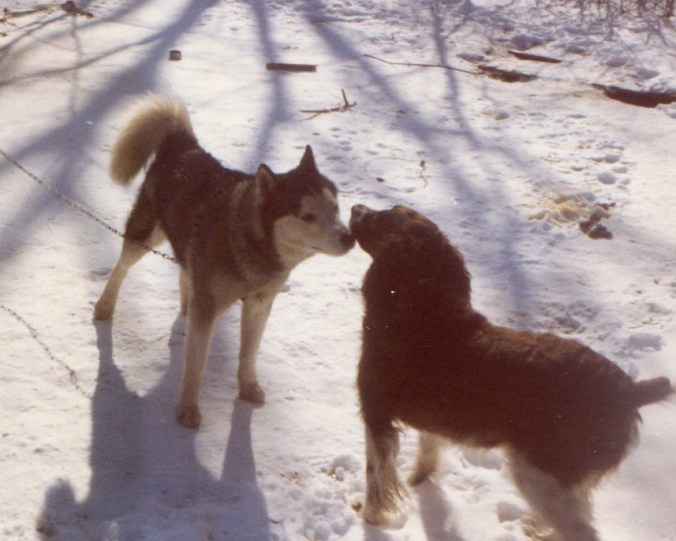
My Springer Spaniel and Siberian Husky saying “Hi” (many years ago)

Candy and Travis

Dogs anticipate what they will find at the end of a scent trail

A new test conducted by researchers at the Max Planck Institute for the Science of Human History and the Department for General Psychology and Cognitive Neuroscience (Institute of Psychology) at Friedrich Schiller University of Jena illustrated that dogs have a mental picture or an expectation of what they will find at the end of a scent trail based on the scent of the object.

The test was conducted on dogs (police and search and rescue dogs) trained to follow a scent as well as pets not trained to follow a scent. Both groups showed surprise when the object that they found was not the one used to lay the scent trail.

img107

Although this test was not intended to illustrate the mind of the dog, this is further evidence of the mental abilities of dogs showing that they anticipate what will happen in the future based on their surroundings. Many dog owners have seen this behavior in relation to other events. An example is the dog who can anticipate the arrival of a family member when that person comes home at about the same time every day.

It is exciting to anticipate what future studies will show us about the mind of animals.

Indoor dogs and cats have a higher rate of certain diseases

Keeping a dog mostly indoors and cats exclusively indoors typically benefits the pet by reducing their exposure to communicable diseases that can be caught from other animals and insects. Yet researchers have found that dogs and cats kept indoors suffer from a higher rate of diabetes, kidney disease and hypothyroidism compared with pets that are kept outdoors.

DSCN1407

The researchers tested 58 varieties of dog and cat food as well as 60 urine samples from dogs and cats and found certain parabens, which are a preservative, in the food and urine samples. They discovered that the highest level of parabens were methyl paraben and the metabolite called 4-hydroxybenzoic acid (4-HB). Parabens are used as preservatives both in human and pet food as well as cosmetics. The use of them is regulated by the FDA.

The researchers found that there were higher levels in dry dog food and less in wet food. Cat food had the highest levels. The researchers also determined that dogs are exposed to parabens through non-food sources as well as food, whereas a cat’s exposure was only from food.

This is the first study to consider the affects of paraben on diseases in dogs and cats. More research is needed to further examine the initial findings.