Check out this neat site. Look for my contribution.
https://thecatsite.com/ams/14-cat-experts-reveal-how-to-get-a-cat-to-like-me.33883/
Check out this neat site. Look for my contribution.
https://thecatsite.com/ams/14-cat-experts-reveal-how-to-get-a-cat-to-like-me.33883/
The old saying that “an ounce of prevention is worth a pound of cure” is true when dealing with separation anxiety in dogs. The best thing an owner can do is prevent it from developing.
Most cases of separation anxiety occur in dogs that have a genetic predisposition for it and is enhanced or caused by the owner. This is why two dogs can live in the same home and one will suffer from this anxiety and another will not.

The genetic predisposition for separation anxiety is not limited to any breed, type or sex of dog. Preventing it is almost the same as the method to cure it. So we will talk about it in general.
Whether you get a puppy or adopt a dog, the procedure is the same. Although it is hard to resist a new puppy or cute older dog, the new dog should be left alone while at home. Puppies need lots of down time to rest and sleep.
A dog’s growth rate is much faster than humans and puppies need to sleep a lot. A new adopted or older dog needs time to adjust to their new home. The stress of a new home can tire them so they may need a bit more down time as well. The best rule of thumb is to let the dog solicit interaction rather than force it on the dog. This is especially important if there are youngsters in the home.
Do not hold, carry or dote on the dog. Let the dog be a dog, no matter what size it is. A dog can become addicted to too much tactile stimulation. Like any addiction, the craving can be there but at the same time it is not a pleasant experience. This explains why a dog may solicit interaction from the owner and then bite the owner for responding. This is especially true for small dogs where the owner likes to cuddle and carry the dog around.
Do not make a fuss over the dog when you leave home or return. Dramatic arrivals and departures only arouse the dog and build stress. Simply leave and return home without saying or doing anything.
Leave soft music on when you leave home. Classical music works best or easy listening music. No other kind is good for dogs. Along with the music leave a chew toy for the dog. Only use the kind that you stuff with treats where the dog must work to get them out. Stuffed Kong toys or cube toys work very well. Never give your dog greenies, rawhide, pig ears, cow hooves or bones. They can seriously injure or kill your dog.
Make sure that your dog gets a good walk or exercise before you leave and is taken out when you return to “do his business.” If the dog has to relieve himself after you leave it will cause stress. If the dog has to have an accident while you are gone it can also cause stress, as well as if the dog has to wait to be taken out when you come home.
Feed your dog twice a day with a high quality dog food such as Wysong or Annamaet. Nothing that you buy in the super market or discount store is good for your dog. Poor quality food can contribute to stress in your dog. Some foods are loaded with sugar, dyes and roughage that can raise your dog’s stress level and act as a diuretic and laxative .
If your dog is already showing signs of separation anxiety then work with the dog over a few days when you will be home. Start by leaving the dog for a few minutes and quickly returning. You can do this every fifteen minutes to a half an hour.
As the dog adjusts, you can leave the dog for five minutes, six minutes and work up to fifteen minutes. You may have to drive away from the house since some dogs will figure out that you are standing on the other side of the door or nearby. If you can devote a whole weekend to this procedure you may be able to leave him for a normal work day.
Make sure that you change your routine for leaving the house. The dog will learn your routine and become anxious as soon as they see the signs that you are leaving. Dogs notice things such as when you brush your teeth, comb your hair, take a shower, pick out clothes and lastly, picking up your car keys. Examine the order you do things before you leave and change the order. This way the dog cannot determine when you are going to leave. An example would be picking up your car keys before you eat breakfast.
If your dog is destructive you may have to teach the dog to stay in a very large crate for his own protection. If this is not possible because the dog tries to get out to the point where he hurts himself it is time to call a certified canine behavior consultant. The behavior consultant will determine if the dog needs to see a veterinarian for medications and will develop a plan to work with the problem. You can find a behavior consultant at www.iaabc.org.
Last of all and equally important, if your dog does something you do not like, do not yell or punish the dog. This will only elevate his stress levels and make his separation anxiety worse. Ignore any damage the dog has done. He will not know that you are angry at what he did awhile ago but associate your anger as part of your return.
With a little understanding, work and help if necessary, you can make your dog’s life much less stressful.

Your dog is always up for an adventure, whether it’s a quick walk around the block or a trip to the park. But planning a road trip with your four-legged friend requires a little extra preparation. Here’s what you need to do to keep your pup safe, happy, and active on the road.
Before any trip, make sure your dog’s microchip information and ID tag are up to date. You can print a new ID tag at most pet stores, but changing microchip information is a little more complicated. Your vet can help you retrieve microchip data so you can update your information with the manufacturer.
If you plan to board your dog at any point during your trip, he’ll need up-to-date rabies, DHPP, and Bordetella vaccinations. Check with your vet to see if your dog is due for shots and request a copy of his records.
It may be common to leave dogs loose in the car, but it’s far from safe. Your dog could get hurt in a crash or become a projectile that injures you and your passengers. The safest way for your dog to ride is restrained in the back seat. Put him in the front seat, and he could get hurt by airbags; place him in the cargo area, and he’ll be directly in the crumple zone.
There are two options for safe canine seating. For maximum peace of mind, choose a product certified by the Center for Pet Safety. These options are:
A crate: A sturdy crate secured to your vehicle keeps your dog in place and protects him in an accident.
In addition to brushing up on basic obedience, spend time building your dog’s car confidence before your trip. He’ll need help getting used to his new harness or crate and learning how to behave in the car.
Start by introducing the crate or harness at home, not in the car. When your dog is in the restraint, praise him and give treats to encourage a positive association. Then, start using it in the car. Go on short drives at first and gradually build up to longer trips. Make your destinations somewhere fun so he looks forward to car rides. Provide a toy to keep him happy in the back seat and use the quiet command to stop excited whining. If he’s whining out of anxiety, take your training back a step.
Roadside rest stops aren’t enough to keep your dog happy on long trips—and even if they were, what fun is that? One of the best parts of road tripping with your dog is finding fun places to explore along the way. Here’s are a few ideas for outdoor activities you can do on the road:
Plan a pet-friendly route. Green spaces are few and far between on major highways. Rather than trying to cover the most ground each day, plan a route that provides plenty of stopping points.
Having an adventure companion is one the best parts of being dog owner. But while you may have visions of your pooch with his head out the window and wind in his fur, that’s not the safest option for you or your dog. However, that doesn’t mean you can’t find excitement on the road. Focus on safety while your car is in motion and make lots of stops for fun and bonding along the journey.
Image via Unsplash
A recent comparison of the number of cortical neurons in the brains of various carnivores found two things: First, the size of the brain does not necessarily coordinate with the level of intelligence as was previously thought and, Second, dogs have over twice the neurons than cats.

For example, raccoons have as many neurons as a primate but in the brain about the size of a cat while bears have the same number of neurons as a cat but in a much larger brain.
The research was conducted by Associate Professor of Psychology and Biological Sciences Suzana Herculano-Houzel, who developed the method for accurately measuring the number of neurons in brains.
Herculano-Houzel is convinced that the number of neurons an animal has determines their ability to predict what is about to happen in their environment based on their experience. What that may mean is that dogs are biologically capable of doing more complex and flexible things with their lives than cats.
The study also found that there was no difference between wild and domestic animals or predators or prey. It was always thought that predators were smarter than prey.
My comments: This is an interesting study that adds more fuel to the debate about who is smarter, dogs or cats. One thing to keep in mind is that intelligence varies from individual to individual (human or animal) and having greater intelligence does not necessarily mean it is used to its fullest capability. In the case of animals, there is no accurate way to measure their true intelligence or their willingness to do what humans want, also known as being biddable.
Adopting is the Best Choice by guest blogger, Mary Nielsen
With all the dogs in the world it can be difficult to choose just one. However, there is one choice that should be quite clear; where you go to get your new best friend. Some people might go to a pet store or answer an ad in a paper. Neither of those is very good unless the pet store in question is working hand in hand with the local animal shelter. You want to get a dog from a shelter for various reasons. Here are just a few:
You don’t want to support puppy mills.
You just don’t. The puppy mills are all about profit rather than animal welfare. Dogs and puppies are almost continually locked in cages with minimal food and little to no comfort. This cruelty leads to sickly puppies and mother dogs in constant agony. Please don’t support animal abuse. Not only is adopting the humane choice, it’s less expensive. Another good reason to consider adoption rather than buying a purebred is that mixed-breed dogs tend to be more robust than purebreds. They have the best traits of every breed they’re related to!
Shelter dogs are safe and healthy.
Some people might be a bit wary about taking in a dog with an unknown background. That worry is groundless. Occasionally, an owner might relinquish a pet be re-homed due to moving, allergies or other unexpected lifestyle changes. No matter what reason the animal is in a shelter, it’s never their fault. All a dog wants to do is find a loving family to belong to. The first thing a shelter does with a dog that is brought to them is screen for health and behavior problems. If the dog has any, the shelter will do all they can to solve the problem so that the dog will be fit to be a loving companion. This may take the form of extra grooming, veterinary care or remedial training. A lot of work goes into making a dog adoptable.
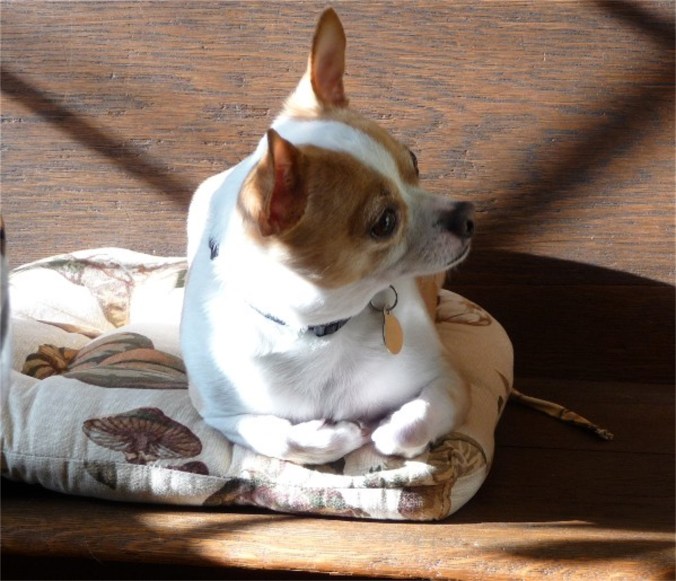
So many dogs, so little time (and space)
Shelters have plenty of puppies, and there’s more coming in every year. In just six years, one dog and her offspring could have 67,000 puppies if breeding goes unchecked. Some shelters are forced to euthanize dogs to make room for these puppies. Even no-kill shelters can only take in so many. Please make things easier on everyone by adopting.
Note from Sue Bulanda: Also consider adopting other pets from your local shelter. They often have a variety of animals and birds for adoption.
For more information, please consult this infographic. https://www.felineliving.net/10-reasons-adopt-pet/
K9 Search and Rescue Troubleshooting: Practical Solutions to Common Search Dog Training Problems by Susan Bulanda, publisher, Brush Education, ISBN: 978-1-55059-736-3 Autographed copies available at www.sbulanda.com also available on Amazon and Barnes & Noble.

My new book is now available! This book will help both the seasoned and inexperienced K9 handler. Many SAR units use a one-size-fits-all training method. When it does not work, they often do not know how to solve the training problem. This book explains how to fix those problems. Every dog is unique and what works for one dog may not work for another. Sometimes a small change in technique is all that is needed. Other times the handler is sending the wrong signal to the dog.
Getting the right dog or puppy is critical to the dog’s success. The book explains how to find the right breeder and puppy for SAR work. The way the puppy is handled during its stages of development can influence how the adult dog will react to training. If a handler is training an older dog, its early experiences can explain some of the training issues that a handler may have.
The book also explains the intelligence of dogs including the latest research about how they perceive life, their emotions and how they react to their owners. This knowledge will help a handler relate to their dog and recognize the message that they send to their dog. Although this book is written for SAR dogs, the information in it applies to all types of dog training, especially for working dogs.
The chapters include:
Finding a good SAR dog; Why dogs have training problems; What is scent; The uncontaminated scent article; Cross train a dog; SAR dog training methods; SAR dog training problems; and an appendix about the nature of scent.
Please Spread the Word!
Over the past three years, veterinarians have continued to work with blindness in dogs. They have succeeded in curing X-linked retinitis pigmentosa when caught early. XLRP causes gradual vision loss starting at a very young age in dogs, often as early as five weeks of age. It is an inherited retinal disease.

Continuing the research using the same techniques, the researchers found that the gene therapy helped dogs at 12 weeks of age (mid-stage disease) when about 40% of the eye’s photoreceptor cells were dead and then at 26 weeks of age (late-stage) when 50 – 60% of the cells were dead. What the researchers found was that they were able to halt the degeneration of the photoreceptor cells in the treated area.
A few years ago, a team from the University of Pennsylvania announced that they had cured X-linked retinitis pigmentosa, a blinding retinal disease, in dogs. Now they’ve shown that they can cure the canine disease over the long term, even when the treatment is given after half or more of the affected photoreceptor cells have been destroyed.
To date, dogs have maintained their vision for over two years after treatment. This is very exciting because humans suffer from the same type of blindness. With that in mind, researchers are already examining human patients to determine how to treat their blindness and who might qualify for future treatments.
Again, man’s best friend is offering hope to humans who suffer from this type of cell death that causes blindness. Since this is an inherited disease, breeders should have their dogs examined by a certified canine ophthalmologist and register their dogs with the Canine Eye Registration Foundation, CERF. http://www.tctc.com/~maplerg/cerf-.htm This will help researchers continue to develop cures for blindness as well as prevent the breeding of dogs who have this inherited disease.
If you have a blind dog or are willing to adopt one, contact www.blinddogrescue.com
All dogs bite at one time or another. However, most people do not realize that there are different types of bites. Unfortunately, many dogs have lost their homes, lives or been restricted due to the misunderstanding and misinformation about dog bites.
Dogs used their mouths the same as we use our hands. Puppies mouth everything. Human human babies will put everything in their mouths similar to puppies. The mouth is a very sensitive part of the body, perhaps the most sensitive. The mouth can taste, feel texture, heat, cold, size and shape.
The mouth and tongue are so sensitive that the smallest bump or lump in a person’s mouth often feels like a boulder or a cracked tooth feels like a canyon. We have to assume that dogs have the same or similar capabilities. However, dogs do not have the same capability to taste as humans do. They have about 1,706 taste buds compared to a human’s 9,000. A dog’s taste buds are located at the tip of their tongue. They can taste bitter, sweet, sour and salty. Their choice of what they eat depends more on their sense of smell than taste.
Dogs use their mouths to manipulate objects, carry objects, groom themselves and/or companions, to show affection, as a means of correcting another dog, as a way to get another animal or person away from them (distance increasing), and to vocalize. One of the most affectionate things a dog may do is nibble the object of their affection. This is a very gentle nibbling using the small front teeth.
Sometimes dogs will grab a person to try and lead them somewhere, such as a door if they have to go out. This is like a person taking another person by the hand to guide them.
Bites often happen in a few seconds. It may be difficult for an untrained person to analyze a bite because you must consider the dog’s body language and the circumstances that happened just before and after the bite. Dogs also can give mixed signals. For example, a dog can act aggressively and at the same time fearfully. The dog’s life experience including training will influence what and how they bite. However, below is a general explanation of dog bites.
Dog bites follow a progression if, as a puppy, the dog has been allowed to learn how to properly act socially with other dogs. An adult dog will first give a warning look, whether it is a puppy, another animal or person. If that does not work, next are warning growls or vocalizations. (Never correct a dog for growling, you will remove an important warning, forcing the dog to go directly to a bite.) If a puppy does not heed the body language and then the vocal warning of an older dog, the dog may give the puppy an open mouth correction. This is when the older dog will “hit” the puppy with his mouth open but does not bite.
The next level is the nip. In human terms, it would be equal to a pinch. It is typically done with the little front teeth. It is a corrective measure used to stop the unwanted behavior or to communicate the message to get away or back off.
If the nip does not work the next bite will be a full mouth bite but a quick release and often not bearing down hard. This type of bite may result in a bruise or small puncture. This is also a request to back off or get away. The dog is trying to increase the distance between himself and who he bit. It is also the type of bite that a fearful dog may employ. It could be a defensive or corrective bite.
If that does no work the next bite may have increased pressure resulting in a deeper puncture or larger bruise. It is also a distance increasing bite or a fear bite.
The aggressive bite that the enraged dog or the dog who is truly aggressive will use is a bite and hold or a bite, hold and shake. These are the bites that are dangerous where the dog typically intends to hurt.
A dog that has developed strong bite inhibition, may put his mouth on a person if he is in pain. Often that is a reflex and when the dog realizes that his mouth is on a person will either stop before making contact or not put any pressure in the bite. Other times a dog who is in pain may bite. This should not be held against the dog. Also, a dog that is enraged or upset about something may do what is called redirected aggression. This also a reflex where the dog will bite whatever is near him when he cannot get to the object of his anger.
The other situation where a dog will bite because of reflex is if the dog is engaged in a fight with another animal and a person tries to grab the dog to pull him away. The dog will bite not realizing that it is not the animal he is fighting but a person. This also should not be held against the dog. In these cases of reflex biting, the humans that are working with the dog should expect it and take precautions to avoid being bitten. The only breed of dog that has been bred not to bite a human when engaged in a fight are the bully breeds, such as Pitbull Terriers.
How likely a dog will bite depends on the breed (or mix) of the dog, the lines of the breed, how well the breeder and then the owner socialized the dog and the dog’s training. Some breeds of dog are less tolerant and quicker to bite than others.
Children are often bitten in the face because they are at face level with dogs. Children of all ages should be taught how to interact with dogs and carefully monitored always. A dog that bites a child due to a reflex action is rarely forgiven even though in most cases the dog is not an aggressive dog by nature.
It would do the dogs and dog owners a great service if the dog owners studied canine body language and learned to understand their dogs. Children should be taught how to interact with dogs. Studies have shown that children can recognize when a dog is angry but not when they are fearful.
There are two excellent resources that help the dog owner learn how to read dog body language.
Although it is rare, bladder cancer in dogs is on the rise. Fortunately, there is a new test, the CADET℠ BRAF to help veterinarians determine if your dog has bladder cancer.
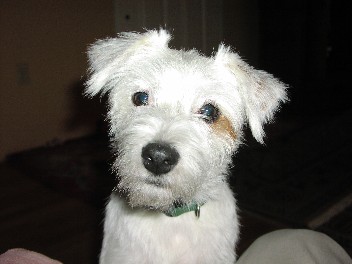
Parsons Russell Terrier
There are two types of bladder cancer, transitional cell carcinoma (TCC) and urothelial carcinoma (UC). The tumors start in the urinary tract, but can travel to the rest of the body including bones, liver, kidney, spleen, and skin.
Warning signs of bladder cancer can often be misdiagnosed as a lower urinary tract disease, such as stones and infections. The most common signs are when a dog urinates small amounts often, difficulty urinating, blood in the urine, and accidents in the house, frequent urinary tract infections that do not respond to treatment.
Certain breeds are more likely to get bladder cancer, and usually from the age of six years and older.
High risk breeds: Scottish Terrier, West Highland White Terrier, Beagle, Shetland Sheepdog, Wire Fox Terrier, American Eskimo Dog, Australian Cattle Dog, Australian Shepherd, Bichon Frise, Border Collie, Russell Terrier, Lhasa Apso, Rat Terrier, Wire Fox Terrier, Parsons Russell Terrier.
Interestingly, veterinarians have found a link between feeding a dog safe fresh vegetables three times a week to a reduced risk of bladder cancer. On the other hand, exposure to herbicides and pesticides increased the risk of cancer.
The good news is that the CADET℠ BRAF test can catch the cancer in its earliest stages, even before symptoms start to show, and it can help veterinarians determine the extent of the disease.
Some veterinarians suggest that all high-risk breeds get tested from ages 8 years and older. It is a good idea to discuss this possibility with your veterinarian or go to SentinelBiomedical.com for more information.
There is little hope that breeders can create a healthier English Bulldog from the existing gene pool. Years of breeding for specific physical traits has caused the English Bulldog to become one of the unhealthiest breeds in the world.
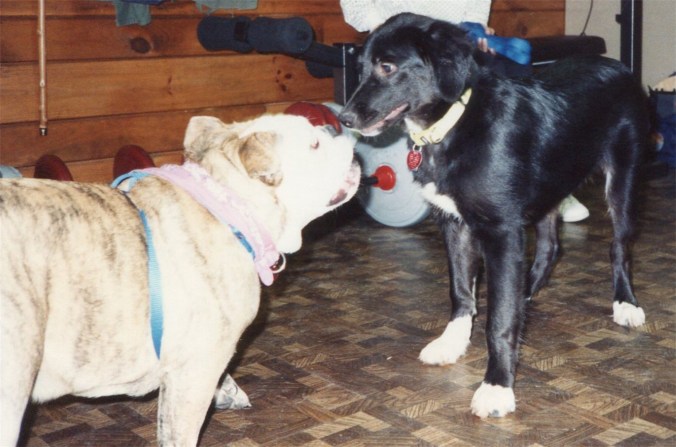
One of the reasons for the health issues in this breed is that people in general are more concerned about the dog’s appearance rather than its health. Researchers have used DNA to study the breed and found that there is not enough genetic diversity within the breed to make the needed improvements. When this happens outcrossing the breed to introduce genetic diversity is often the answer.
To this end, many Swiss breeders have out-crossed the English Bulldog with the Olde English Bulldogge, which is an American breed, to improve the English Bulldog’s health. Unfortunately, many English Bulldog breeders do not approve of this and feel that the resulting out-cross is not a true English Bulldog.
The English Bulldog as a breed started around 1835 with about 68 individuals. Since that time the breed lost popularity a few times which further limited the gene pool. In recent years the surge in the breed’s popularity has further caused genetic problems in the breed.
It seems that the only hope for the English Bulldog is to out-cross them as the breeders in Switzerland have done. It would not take many generations to breed the results of the out-cross to resemble the original bulldog.
Anyone who is considering owning an English Bulldog should research the health issues and life-span of this breed before purchasing one. The health issues can result in costly veterinarian bills. It also goes without saying that a puppy should only be purchased from a reputable breeder to help minimize the potential for health issues. For a free copy of my brochure about how to select the right dog and breeder, email me at sbulanda@gmail.com with brochure in the subject line.
 A Blog by Susan Bulanda