If your dog swallows a foreign object

Puppies and adult dogs will often swallow a foreign object that can potentially harm them. If they ingest an object that is sharp, and they seem normal and are not gagging, or choking, immediately give them Metamucil or another psyllium fiber product and then call your veterinarian. I keep unflavored psyllium fiber on hand so that if necessary, I can add broth to it so the dog will eat/drink it. If you don’t have psyllium fiber on hand the old-time remedy was to give the dog bread and milk or bread and water. The purpose of doing this is to form bulk or a coating around the object to prevent it from injuring the dog until a veterinarian can evaluate the situation and treat the dog. It is a first aid measure, not a cure.

Woody and Lily playing with toys under supervision

Dogs should not be given any product that can be chewed into small undigestible pieces. Such items would be bones, both real and fake, plastic toys, balls, sticks, some of the teeth cleaning chews/products, rawhide, pig ears, and cow hooves. If you are in doubt as to whether or not a product is safe for your dog to eat, put it in a bowl of water. If it does not break down and dissolve in five to ten minutes it is most likely not safe for your dog to ingest.

Many people like to play tug-of-war with their dog and use rope toys. These are OK for this type of play, but a dog should not be allowed to chew and swallow any type of rope. The strands can block the intestines, they are not digestible. Also be careful of stuffed toys and any product made of cloth. These also can block the dog’s intestines and are not digestible. Many stuffed toys are stuffed with batting that is made of synthetic material, again, not digestible.

If your dog likes to play with stuffed toys, watch him carefully to see if he rips the toy apart to pull out the stuffing or if he is the type of dog that will not destroy the stuffed toy. The key with any type of toy is to know your dog. With care and observation, a dog can play safely with toys.

Dry or raw food for dogs

A study by researchers at the University of Helsinki have determined that there is a benefit to feeding dogs a raw food diet. They found that dogs eating raw food had better immune systems, more antioxidants and less inflammation of the skin.

The researchers stressed that the study was conducted on a limited number of Staffordshire Bull Terriers only and that more research is a necessity. However, the results of this study are promising.

Note: There are many advocates for feeding dogs a raw diet. Making your own can be a challenge as well as having a ready supply on hand to meet your dog’s needs. Many people claim that a raw diet has improved their dog’s health and even cured various medical issues.

There are a number of manufacturers who make a balanced raw food for dogs. Some people elect to make their own. This can be a challenge since the homemade food must meet all of your dog’s nutritional needs. As your dog ages those needs will change and so must the dog food. Dogs who have health issues must monitored by a veterinarian to be sure that their particular needs are being met.

Breathing difficulties in dogs

Researchers have found that a gene mutation is responsible for breathing difficulties in Norwich Terries and Bulldogs that is not related to brachycephalic faces. Brachycephalic faces can cause Brachycephalic Obstructive Airway Syndrome or BOAS. Researchers found that Norwich Terriers can suffer from Upper Airway Syndrome or UAS which is similar to BOAS.

stockfreeimages

The team from the University of Edinburgh’s Royal (Dick) School of Veterinary Studies, led by Jeffrey Schoenebeck found that a mutation of the ADATS3 gene was linked to the breathing problems. This mutation is also found in French and English Bulldogs. The gene has been linked to edema, (swelling and fluid retention) which is a problem with UAS and BOAS causing breathing difficulties.

Once the researchers develop a test to determine which dogs have the gene mutation, breeders can better control breeding practices. What is important to recognize is that the mutation may occur in other breeds as well shedding a whole new light on breathing issues in dogs.

Hemangiosarcoma cancer linked to Bartonella bacteria

Researchers at North Carolina State University have found that dogs who have hemangiosarcoma, a cancer of the blood vessels have high levels of Bartonella bacteria. This leads researchers to believe that there is a connection between persistent infection and/or inflammation and some types of cancer.

Hemangiosarcoma (HSA) is an aggressive, deadly cancer that comes from cells lining the blood vessels. It is responsible for two-thirds of all heart or splenic tumors in dogs, and is most common in medium-sized and middle-aged dogs.

What makes this difficult is that the bacteria are found in tumors and tissues but not detectable in blood samples. This indicates that Bartonella can survive undetected within tissue.

I have personally lost two dogs to cancer of the spleen. I hope that the researchers can develop a simple test to detect hemangiosarcoma and the Bartonella bacteria.

Jib, SAR dog who died from cancer of the spleen

Feeding indoor cats once a day is healthier

Many cat owners have been told to feed their cats up to four times a day. Some cat owners have a self-feed system where food is left out all day. What is surprising is that a recent study showed that cats are healthier if they are fed only once a day. Animal nutrition specialists in U of G’s Ontario Veterinary College (OVC) and Ontario Agricultural College (OAC) conducted a study and found that cats who eat once a day were less hungry which might help prevent cats from becoming overweight.  

          The study showed that cats that ate once a day were more satisfied and burned stored fat which helped them keep a healthy body mass. They also had more protein which helps build and maintain body mass an important benefit for older cats to help prevent sarcopenia.

Non-social fear in dogs

According to a recent study at the University of Helsinki there are a number of factors that cause a dog to have non-social fears.

The researchers studied 14,000 dogs of various breeds and found that those who were fearful of novel situations, noise sensitivity, slippery surfaces, heights and transparent stairs, for example, benefited from physical activity. Some dog owners avoid doing things with their dogs because they do not want to put them into situations that cause fear.

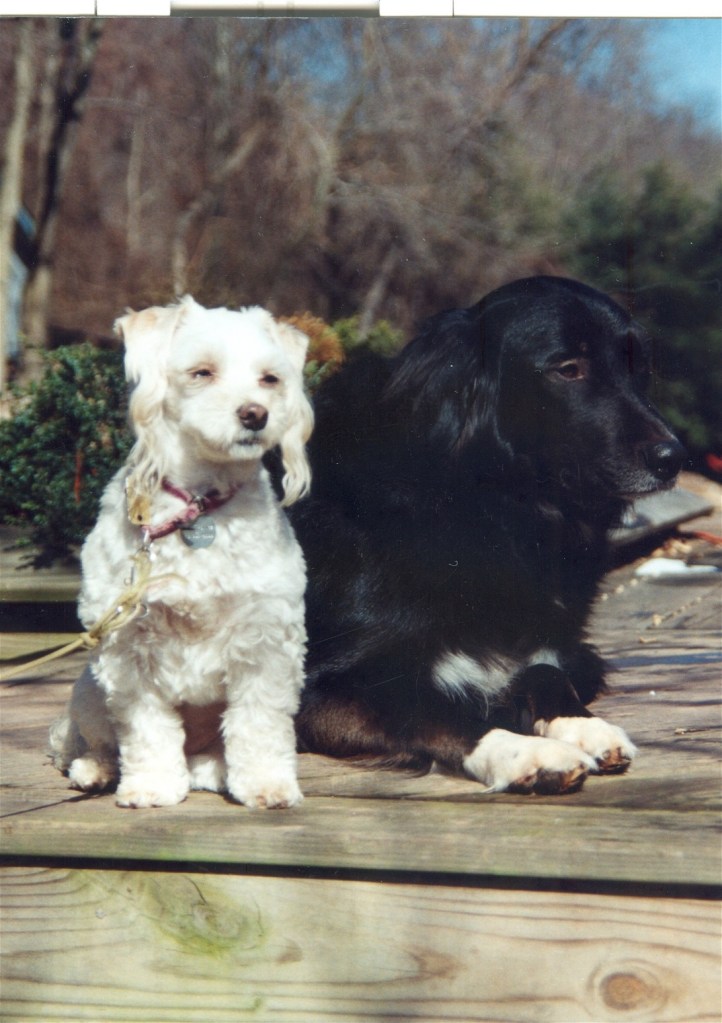
Lily and Jib

Lack of proper socialization is also a contributing factor that causes a dog to develop fear. They found that urban dogs are more fearful than rural dogs and fear is more common in spayed females and smaller dogs.

The article goes into more detail about the various breeds and the fears that they have. Interestingly they stated that Cairn Terriers were among the most fearful breeds.

The fact that there are breed differences indicates that a good breeding program can go a long way in reducing fear in breeds of dogs. Socializing puppies is something everyone can do. However, it should be done under the guidance of a competent dog trainer, especially for first time dog owners.

Health issues related to early spay and neuter of dogs

For many years I have had working dog people tell me that a dog should not be neutered or spayed until after they reach puberty. For a bitch that would be after the first heat. They claimed that the dog fully develops mentally after puberty and that early neutering and spaying retards this development.

scan0019

In a recent study, scientists found that some breeds have a higher risk of developing certain cancers and joint disorders if they are neutered or spayed during their first year of life.

This study looked at 35 breeds over a ten-year period and analyzed thousands of dogs over fifteen years. What is interesting is that the age and sex of the dogs did factor into whether or not the dogs were afflicted with health issues.

The health issues under consideration included hip dysplasia, cranial cruciate ligament tears and elbow dysplasia, lymphoma; hemangiosarcoma, or cancer of the blood vessel walls; mast cell tumors; and osteosarcoma, or bone cancer. While the study showed that early neutering did not affect all of the dogs, there were breed related problems.

I personally feel that a dog needs the full range of hormones to fully develop mentally. But it can be difficult for the owners of female dogs to control a bitch in heat and prevent an unwanted litter. For the owners of male dogs there are methods to prevent the dog from siring an unwanted litter other than neutering. It is always wise to consult with your veterinarian and explore all of your options.

As an aside, I would like to see a similar study about the health and mental affects of early spay-neuter in cats.

Dogs monitor environmental chemicals

In a study conducted by North Carolina State University and Duke University’s Nicholas School of the Environment, researchers attached a silicon tag on dog’s collars to collect the environmental chemicals that people (and dogs) encounter every day. What they found was interesting. The researchers had the dogs wear tags and their owner’s wrist bands for five days, then they compared the results.

DSCN1648

What they found was that there were similar patterns of exposure for both dogs and humans. The contaminants were mostly from the home environment. The researchers tested for three main contaminants, pesticides, flame retardants, and phthalates, which are found in plastic food packaging and personal care products.

The advantage of evaluating the contaminants in dogs is that diseases that result from these contaminants may take decades to show up in humans but only years to show up in dogs. According to Matthew Breed, Oscar J. Fletcher Distinguished Professor of Comparative Oncology Genetics, if scientists can develop ways to link dog disease with these exposures, they may find a way to decrease the diseases for both dogs and humans.

I would like to see the tests expanded to other household pets such as cats. This is an interesting study and using the silicon tag is inexpensive and works well.

CBD for dogs

In a study at Baylor College of Medicine the researchers found that giving dogs with arthritis cannabidiol, or CBD brought relief from arthritis. It has also been used to reduce anxiety in dogs. As an aside, I know that when I give it to my dog before a thunderstorm, he is much calmer. It does seem to take about a half an hour to work but it does help.

Scout SAR training wood pile

Dr. Matthew Halpert, of the Department of Pathology and Immunology at Baylor conducted the research about arthritis and found that nine out of the ten dogs tested benefited from CBD. They also noted that the pain relief lasted for about two weeks after the treatments stopped.

It seems that CBD significantly reduces the production of inflammatory molecules and immune cells associated with arthritis. The improvement in the quality of life for the dogs was documented by both the dog’s owner and veterinarians. Since the structure of arthritis in dogs is similar to humans, the study supports future scientific evaluation of CBD for human arthritis.

However, it should be noted that the researchers found that the effect was quicker and more effective when CBD was delivered encapsulated in liposomes than when it was administered ‘naked.’ Liposomes are artificially formed tiny spherical sacs that are used to deliver drugs into tissues at higher rates of absorption. This means that buying CBD over the counter may not work as well or as quickly.

If you would like to try CBD, talk to your veterinarian first. It is never a good idea to administer any type of medication, natural or otherwise, without first checking with your veterinarian. I know from personal experience that although veterinarians use human medicines and herbal formulas for dogs, the dosage can be radically different for a dog.

Coronavirus structure clue to high infection rate

This is an interesting study and one that everyone should read. According to the study conducted by Gary Whittaker, professor of virology, is the senior author on the study at Cornell University, primates, cats, ferrets, and mink are the most susceptible to the human virus.

cat under sheets kitten

According to Whittaker, further research into feline coronaviruses might provide further clues into SARS-CoV-2 and coronaviruses in general.