Chronic colitis in cats

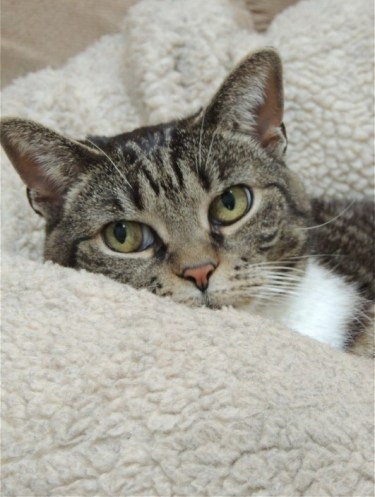
Chronic colitis in cats has been an ongoing problem for cat owners and veterinarians alike. Cats who have it suffer from diarrhea that comes and goes. Often the bowel movements are soft, like a ‘cow pie’ and can have blood and/or mucus in it. The most common cause is a protozoan Tritrichomonas foetus which typically infects the large bowel.

The cats that are most affected are young, about one year of age, come from catteries, shelters or places where there are multiple cats. This infection is transmitted both by feces and orally. What makes this a difficult infection to treat is that it does not respond to most medications. The only medication that seems to work is ronidazole. However, the effectiveness of this drug is in question.
DSCN0046

For multiple cat households or multiple cat environments cleanliness is the best preventative measure that a cat owner can take. More research needs to be done and hopefully can resolve this issue in cats.

www.sciencedaily.com/releases/2017/03/170320104032.htm

Myoclonic epilepsy in dogs and Juvenile myoclonic epilepsy in humans share a common gene

Myoclonic epilepsy in dogs is very similar to juvenile myoclonic epilepsy in humans. Veterinarian researchers have identified a specific gene that is linked to this type of epilepsy.

jib

Myoclonic seizures are brief shock-like jerks of either a single muscle or a muscle group. In humans the person is typically awake and can think clearly.

In dogs the seizures usually occur by the time the dog is six months old and when they are resting. It appears that some of the seizures can be triggered by light.

The good news is that researchers have identified a gene that is connected to this form of seizure. The gene, DIRS1 is unique to this type of epilepsy and has not been linked to any neurological disorder before. The good news is that the DIRS1 gene is similar to those found in humans.

Researchers have developed a genetic test for dogs which will help veterinarians and breeders identify dogs who have this gene and enable them to modify breeding programs. It seems that  that the Rhodesian Ridgeback is especially susceptible to this form of epilepsy, but it has been found in many other breeds as well.

While more research is needed to further understand the connection between the gene and epilepsy, it is a breakthrough. Once the role of the gene is understood then researchers can develop a cure or treatment for this form of epilepsy.

Again, veterinarian research has the potential to help humans. Dogs are indeed our best friends.

www.sciencedaily.com/releases/2017/02/170221110730.htm


Brominated flame retardants found in cats

This is a short article but important. A recent study found that indoor cats have a high level of brominated flame retardants in their blood as a result of inhaling the dust in homes. Previous studies found that cats who developed Feline Hyperthyroidism had high levels of flame retardants, but now researchers have found it in healthy cats as well.

1pluskat

As the flame retardant materials age the particles that come from them become part of the dust in a home. What is especially important to be aware of is that other pets, humans, and especially small children also breathe in the dust.

The flame retardants make up part of furniture, electronics, and even various fabrics. So what can we do about it? I have found an air cleaner that can help reduce the dust in a home. I personally have used the Fresh Air Surround air purifier for years and find it helps keep my home allergy free. I picked that model because it kills germs as well, an added benefit, and does a great job of killing household odors, including litter box odor.

I strongly urge everyone to consider this air purifier. You can get more information from David Scharikin, at Finance2@ptd.net or call him at 570-325-2433. There are a number of models to choose from. And no, I do not make a commission for passing this information along. As a pet owner, dogs, cats and birds, and allergic to many indoor and outdoor irritants, it has made my life much better.

FMI: www.sciencedaily.com/releases/2017/02/170224092516.htm

Lady Bugs Can Pose a Threat to Pets

There is a “new” threat that dog owners have to watch out for, Lady Bugs! There have been cases where dogs were foaming at the mouth, drooling, lethargic and refused to eat. Upon examination the dog’s owner and/or veterinarian found Lady Bugs in the dog’s mouth.

Apparently Lady Bugs give off a toxin that causes a chemical burn in the dog’s mouth. There are certain times of the year that Lady Bugs seem to invade homes and some dogs try to eat them.

As a general rule, if there is an infestation of bugs in a home, a pet owner, both dog and cats, should watch carefully to make sure that their pet is not eating the bugs. My own dog became sick after eating a large number of Stink bugs. Fortunately, he only vomited and as a result of the experience never ate a Stink bug again.

download-10

http://thebark.com/content/dogs-mouths-damaged-ladybugs?utm_source=Bark+Newsletter&utm_campaign=16b764efae-BarkNews_11162016&utm_medium=email&utm_term=0_e8c8dbbec1-16b764efae-78310125&mc_cid=16b764efae&mc_eid=7a6c42f027

Canine Parvovirus Mutated from Domestic Cats

Those of us who have been involved with dogs for many years may recall the terrible outbreak of Canine Parvovirus in the 1970’s. Many puppies and dogs died as a result. In some cases, whole litters died.

What most people do not realize is that according to a study conducted by Colin Parrish, the John M. Olin Professor of Virology and director of the Baker Institute for Animal Health at Cornell University and Susan Daniel, associate professor in Cornell’s Robert Frederick Smith School of Chemical and Biomolecular Engineering, is that the virus most likely was transferred from the feline panueukopenia or a similar virus from domesticated cats.

According to their study the virus can jump from one species to another because of a mutation in its protein shell. As a result, the virus has since infected a variety of wild carnivores including the raccoon.

This is why it is very important to vaccinate pet dogs and cats. This not only protects them from the virus, but can help prevent the virus from spreading to wildlife.

FMI: www.sciencedaily.com/releases/2016/04/160414122007.htm

scan0022

Canine Hereditary Disorders Affect More Dogs Than Previously Thought

Good breeders typically do all of the genetic testing on the parents of a litter before they breed. Research has indicated that this is much more important than ever before.

Genoscoper Ltd. (a Finnish company specializing in animal genetics and gene testing) has published the most conclusive study ever on canine hereditary disorders. The study was done with researchers from the University of Helsinki and the University of Pennsylvania and published on PLOS ONE, 8/15/16.

They tested 7000 dogs in about 230 different breeds for a predisposition for about 100 genetic disorders. They found that 1 in 6 dogs carried at least one disease. Additionally, 1 in 6 breeds that never tested positive for one of the diseases had a predisposition for it.

This information will help dog owners understand and identify early signs of inherited disorders which may enable pet owners and veterinarians to better able  identify health issues earlier and perhaps prevent suffering for the dog.

This important study will lead to further research about inherited diseases in dogs that will help the overall health and well-being of both dogs and other pets.

www.sciencedalily.com/releases/2016/08/160822100703.htm

dempsey.jpg