Pets and autism

It has been fully documented that children who suffer from autism can benefit from living with a pet. However, a new study by Gretchen Carlisle, a research scientist with the Research Center for Human-Animal Interaction in the MU College of Veterinary Medicine has found that the parents of autistic children also benefit from having a pet in the family. Having a pet reduces the stress in parents despite the extra responsibility of owning and caring for a pet.

IMG_0236 email sz

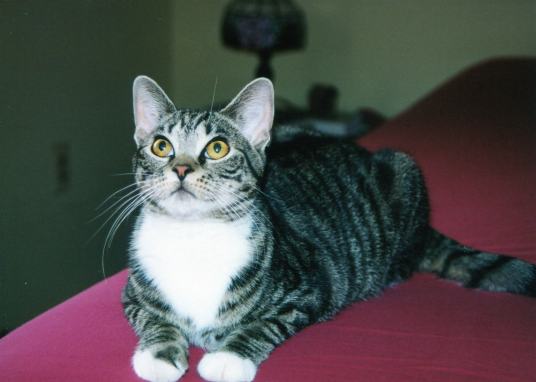
The study goes on to stress that the right type of pet should be selected that will help the autistic child. They suggest that in some cases a quieter cat may be better than an active dog. Certain types of birds or small animals might also qualify as a pet. They also suggest that the child be included in the selection of the type of pet.

As a certified animal behavior consultant, I want to add that if the family decides to adopt a pet, extra care must be taken to ensure that there are no behavioral issues with the pet that could cause an extra level of responsibility for the parents. For any child, being forced to rehome a pet due to behavioral issues after the child becomes attached to the pet is not a desirable situation.

This is why it is important to thoroughly research the types of pets as well as the individual animal to make sure it is suitable for the spectrum of autism the child has. One way to do this is to consult with a qualified dog, parrot or cat behavior consultant (iaabc.org) or an experienced dog trainer if a dog is a consideration.

Petting zoos pose a risk of infection for humans and animals

Professor Shiri Navon-Venezia of Ariel University, Ariel, Israel and colleagues conducted a study to see if there is a risk of infection to both humans and animals. “Extended spectrum beta-lactamase (ESBL) and AmpC-producing Enterobacteriaceae (AmpC-E), which are resistant to a number of commonly used antibiotics, have become a matter of great concern in both human and veterinary medicine, so understanding the likelihood of them colonising the animals is critical to evaluating the risk that may be posed to visitors.”

goat-4822738__340

google free image

The researchers also found that if an animal was treated with antibiotics it was seven times more likely to shed MDR bacteria.

Petting zoos are important for educational purposes as well as bringing happiness to both adults and children. However, it is important that petting zoos provide hand washing stations. People who go to petting zoos should wash their hands before and after interacting with the animals.

While this study focused on petting zoos, the same rules should apply to fairs where livestock is housed for show and competition. Many people pet the livestock or walk near their stalls. It is important to note that some of the bacteria comes from the animal droppings, so care should be taken to clean the bottom of shoes before you enter your car or home. If you wear flipflops or another type of open shoe such as a sandal, it would be wise to wash your feet as well. This is critical if you own pets.

If young children are allowed to interact with animals, be careful that they do not put their hands on their faces, in their mouth or handle food before washing thoroughly.

Therapy animals help brain injured people

When you mention animal assisted therapy, most people think only of dogs. However, a study conducted by the REHAB Basel, the clinic for neurorehabilitation and paraplegiology, and the Swiss Tropical and Public Health Institute have found that animals such as guinea pigs, miniature pigs, rabbits and sheep improved social interaction, positive feelings and encouraged people to communicate more.

download (3)

pickabay

This is an important study which opens the door for other types of animals to help with severely brain injured people. In some cases smaller animals may be easier to incorporate into therapy sessions making it easier for rehabilitation centers. How wonderful the relationship is between the animal kingdom and humans.

Do cats suffer from separation anxiety?

They most certainly do! Daiana de Souza Machado, from the Universidade Federal de Juiz de Fora, Brazil, and colleagues has conducted a survey to explore whether cats suffer from separation anxiety when left alone. Although this study needs further investigation, I can personally attest to the fact that more than one cat that I have owned has shown displeasure at being left alone for a weekend.

img045

Many people think that cats are fine being left alone for a few days while their owners go away. I have been guilty of leaving my cat alone while I went on an overnight trip. If the cat does not have a companion, such as another cat, they do miss their owners. In my case, although two cats that I owned did not like being left alone, they were not destructive. However, they were excited when I returned and vocalized their feelings. They made it clear that they were not happy being left behind.

In the survey that the researchers did, the cats that were left alone showed a variety of behaviors including excess vocalization and some destructive behavior.

Cats are much more social than many people realize. There are some cats that may not like to be cuddled and handled as much as others, but they still enjoy being near their owners and having the companionship.

Because cats sleep 12 – 16 hours a day, they may give the impression that they are not social since they are not as active as dogs. However, the hours that they are awake they crave companionship. And like many people, they sleep better knowing that their owners are home or that it is the normal routine.

So what is a solution if you must leave a cat overnight? If you know that this is going to be a common occurrence, you can own two cats instead of one. They will be company for each other. Another option is to have someone the cat knows and trusts visit the cat often or stay at your home while you are away.

Part of the problem is that cats do not like change in their lives. They are fine with the daily routine of their owners being gone for the day while at work, often sleeping the day away. Cats, just like dogs have an acute sense of time and recognize that on the weekends their owners are home most of the time. So when the owner goes away overnight, the cat will recognize that this is not the normal routine.

While more research needs to be done about separation anxiety in cats, it is important for cat owners to realize that their cats do love and miss them while they are away. Owners should take this into consideration when planning a weekend away or a vacation.

Pets may suffer stress during a crisis

A friend of mine who is not a dog trainer or behaviorist, suggested to me that dogs may suffer from stress due to the current pandemic. That was very insightful of him. The more I thought about it the more likely it seemed. Therefore I am addressing this possibility.
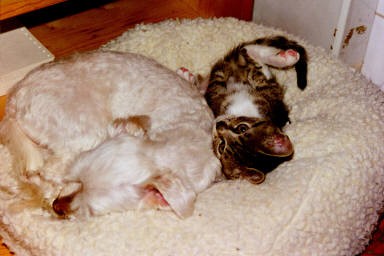
lily kitten

Anytime your routine changes and your pet, (mostly dogs and cats) notice the change, it can stress them. In the case of being home bound, as opposed to going on vacation or visiting, you are more likely to spend more quality time with your pet. This may mean more play time, more cuddle time, and more people at home collectively giving the pet attention. The pet will enjoy this and most likely be happy. However, some dogs and cats do not like the extra attention, especially from children, because they can suffer from over-stimulation. In some cases the pet will give subtle warnings asking to be left alone, but many people will not recognize them. The result may be a bite or a scratch. It is especially important to watch older pets who may not be physically able to handle the extra attention. If your pet does not seem willing to engage with you, leave him alone.

Family members may use the extra home time to groom their pets more frequently. In the case of older pets it is important to be aware that if they suffer from arthritis or a sore muscle from the extra exercise, brushing may be anywhere from uncomfortable to painful.

If the pet is younger and getting more exercise, watch their weight because they may need to eat a little bit more food since they are burning more calories. This is especially true for younger and physically fit older dogs.

We know that our pets feel and understand our emotions. As the pandemic continues, some members in the family may become more upset and stressful, your pet may react to this. They may cling to you or follow you around whereas they did not before. They may mope, or even avoid being as near to you as they normally were. They may pant more frequently, pace, or even tremble as their stress level rises along with yours. They may also react if the family members become short tempered or there is discord in the family. This is especially true if there are children in the home and they become irritated because they cannot see their friends or go out to play. Some pets are more protective of children and may react to their stress more than they would to an adult. A great activity for children is to read to the pet. It is calming for everyone.

Don’t forget that your pet does not understand the change in the family dynamics. They only understand what they see and experience. Therefore, it is equally important to watch how your pet reacts when you return to work or your normal schedule. At this time your pet may react to the sudden shift from having companionship 24/7 to being alone.

Rest assured that your pet will not forget what normal life was like, they do have the ability to recall the past, but again, they will not understand the change. More importantly, they may not like the change. It was certainly more fun having the family around all the time. To ease the shift back to normal, try to give your pet as much attention as you can when you first return to your regular routine. Gradually ease back to the normal routine that you had with your pet.

Fortunately our pets are very adaptable so many will not show any signs of stress due to the changes in our daily lives. But it certainly helps to keep a careful eye on your pet and to be aware that they know something is going on. Because they love us and care, they may react as they feel is necessary. Most important of all, show them understanding if they react in a way that becomes annoying to you.

Other circumstances that cause stress for a pet are:

Moving to a new home

Adding a new family member

Losing a family member

Changing the normal routine

Working more or less hours

Adding a new pet

Losing a pet in a multiple pet household

Remodeling

If your pet becomes too difficult to handle, feel free to contact a certified behavior consultant at www.iaabc.org Many of us can offer phone consults.

Airedale Terriers have an inherited lung disease

Breeders of Airedale Terriers in Finland sent the bodies of dead newborn puppies for examination to the Finnish Food Authority. At Evira, Professor Marjukka Anttila uncovered a problem in the puppies’ lungs. What they found was a defect in the LAMP3 gene that affected the puppy’s ability to breathe due to a failure in the lining of the lung.

DSCN1778 Rolly 2

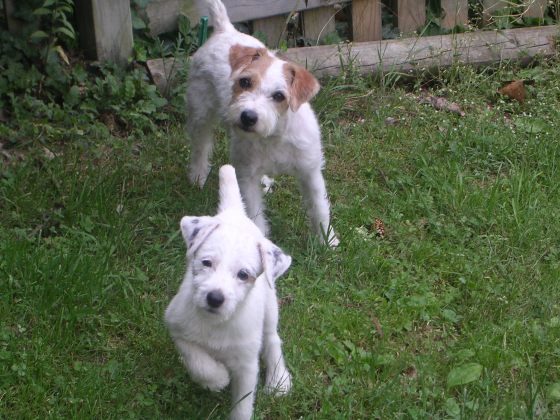
These are not Airedales. I couldn’t get a photo of one. Dog in the foreground is my Riley as a pup with his mother.  Parson’s Russel Terriers

After this discovery almost 7,000 dogs that included 300 different breeds were screened for the gene defect. However, it was only found in the Airedale Terriers. The researchers did discover that 1/5th of Airedale Terriers carried the defect.

The good news is that breeders can have a genetic test performed to determine if their dogs have the defect, thus preventing the spread. With total cooperation between breeders, eradicate the defect.

Researchers have said “As the LAMP3 gene has not previously been associated with diseases, in the future its role in the breathing difficulties afflicting newborn babies should be investigated.” This could be another case where a canine issue leads to a cure for humans. If this genetic defect is in 1/5th of Finnish Airedales, it may be in the breed worldwide.

Senior citizens and pet ownership

A recent poll by Preeti Malani, M.D found some interesting facts about pet ownership. Pets included dogs, cats, birds, fish, and other types of pets. The physical and mental benefits were evident as has been indicated by other studies, however this study found some interesting information that families as well as an elderly person should consider when deciding if it is a good idea for an elderly family member to have a pet.

scan0021

We know that the positive reasons to have a pet include but are not limited to:

  • Companionship
  • Social connections
  • Source of enjoyment
  • Feeling of being needed and loved

Some of the negatives to consider are:

  • Difficulty to travel
  • Enjoying activities outside the home
  • Putting pet’s needs ahead of their own health needs
  • The cost of pet health care, especially for older pets
  • Owner health issues that make keeping a pet difficult
  • Owner or other family member’s allergies to the pet
  • A need to move into a facility that does not allow pets
  • The risk of falling because of a pet

In some cases family support will allow an elderly person to keep a pet. If the family agrees to take the pet and care for it if the elderly person must move to a care facility, that will ease the mind of the pet owner and allow them to keep the pet as long as possible.

If the pet owner can arrange for someone to care for a pet while on vacation, this will solve the vacation issue. The pet owner in most cases will be home more than they are away so watching a pet for them may not be a huge task.

If the pet lover cannot have a pet due to financial reasons, they may volunteer at a local shelter or offer to pet sit for friends. This will give them some quality time with pets without the expense. Another consideration if the person likes birds, is to feed the wild birds. A feeder near a window can be a source of joy with little responsibility. Many people enjoy bird-watching which is a year-round activity.

DSCN1090

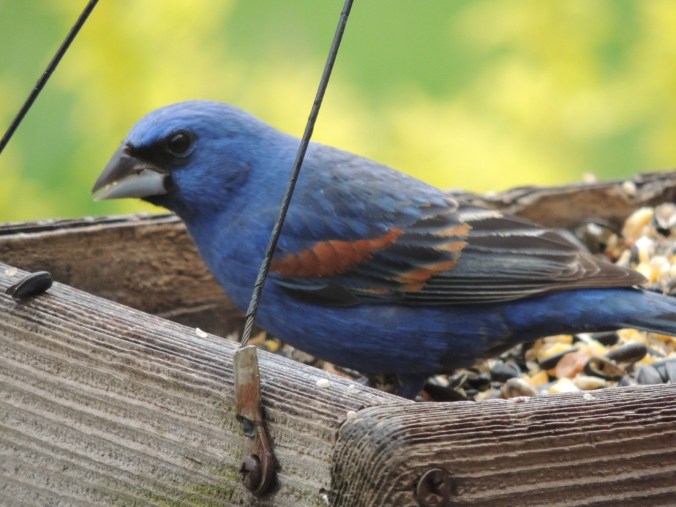
A visitor to one of my bird feeders

Often if the family will “think outside of the box” a happy solution can be found for whatever difficulties may be present.

Cleanliness at veterinary practices and home

In view of the current corona virus pandemic, I thought this study is very interesting and important for everyone to read and share. Jason Stull, assistant professor of veterinary preventive medicine at The Ohio State University, Armando Hoet of Ohio State’s College of Veterinary Medicine and Gregory Langdon of the College of Public Health did a study about cleanliness in veterinary clinics. What they found is interesting. Please read the entire article that is referenced.

1_18 (1)

For over a month, using a dye only visible with a black light, they studied how thoroughly surfaces were cleaned. They found that it was almost impossible to clean 100% of the surfaces at the clinic. For the current work, Stull and colleagues assessed almost 5,000 surfaces over the course of the study. On average, 50 percent of surfaces were cleaned, with broad variations by type of surface and hospital location. The human-touch surfaces were the least likely to be cleaned such as medical instruments, dog run handles, and computer mice and keyboards.

I believe it is impossible to completely clean everything in your home so that it is germ free. What I do is use a Fresh Air Surround that kills all virus and bacteria. I have used it for years and I believe my family has had less illnesses as a result. I started using it mostly for my allergies since it cleans the air very well. I also notice that it removes any odors that may occur. The real benefit is that it cleans every surface in your house continually. This is something that every veterinary practice, or any other public place can use. I am not suggesting that it should replace regular disinfecting practices, but it is a great addition and easy to use.

Future help for humans with speech impairments

By using computers, scientists have discovered the brain activity that precedes vocalization in Seba’s short-tailed bats. This species is important to study since they use a vocal range produced through their larynx to communicate with other bats. What is of interest to scientists is that besides this species of bat, only songbirds and humans use this method.

images (2)

Since bats use sonar navigation to maneuver and to find food as well as vocalizations to communicate with other bats, their brain activity is an important clue to help understand human vocalizations.

Julio C. Hechavarria at the Institute for Cell Biology and Neuroscience at Goethe University, investigated brain activity preceding vocalization in Seba’s short-tailed bats and were able to identify a group of nerve cells that create a circuitry from the frontal lobe to the corpus striatum in the interior of the brain. When this neural circuit fires off rhythmic signals, the bat emits a vocalization about half a second later. The researchers were able to predict, based on the rhythmic signals, if the bats were about to utter echolocation or communication vocalizations.

According to Dr. Hechavarria, “. . . we know that the corresponding brain networks are impaired in individuals who, for example, stutter as a result of Parkinson’s disease or emit involuntary noises due to Tourette syndrome. We therefore hope that by continuing to study vocal behavior in bats, we can contribute to a better understanding of these human diseases.”