Tick diseases in humans and pets

Tick season is here again in many parts of the country. Ticks can cause diseases in both dogs and humans as well as other pets. Most people do not realize that there are a number of diseases that are transmitted by ticks with some infections taking place in as little as three hours after being bitten.

tick

Many diseases transmitted by ticks can infect a variety of species of animals as well as humans. Although many pet owners use tick and flea prevention drugs, it is important to realize that while the tick may not bite the pet, the tick can travel from the pet to a human.

Therefore, if the pet owner lives in an area where there are ticks or their pet goes to a tick infested area, the pet should be checked thoroughly for ticks. One way to do this is to use a flea comb and comb the pet’s fur right to the skin but not digging into the skin.

Sometimes a pet owner can run their hands over the pet and feel a tick. This is very important if the pet sleeps on the owners bed, furniture of sits on the owner’s lap. Keep in mind that ticks are found in bushes, trees, grass, weeds, and in the soil. Check with your veterinarian to see what tick preventative medicine is best for your pet

Pets and humans (especially children) should be checked for ticks every time they go into a potentially tick infested area. Ticks are often most active in the spring and fall, but in certain areas of the country can be active year round.

Humans can use insect repellent when entering tick infested areas. Wearing long sleeves and putting pant legs inside socks can help prevent ticks from crawling up pant legs and arms. Hats can help to protect the head from ticks dropping from overhead vegetation. .

If the tick embeds it should be removed as quickly as possible. A product called a tick key is very useful in removing ticks from pets and humans.

If you do not have a tick key, remove a tick by using tweezers to grab the tick as close to the skin as possible, then pull up with a stead, even pressure. Do not twist or jerk the tick since the head of the tick may break off. If it does try to remove the head with the tweezers. Do not touch the tick with your hands if possible. Dispose of it by dropping it in rubbing alcohol or wrap the tick on sticky tape and throw it away. Be sure to wash your hands after handling a tick.

It is a good idea to take a shower after working or playing in tick infested areas and washing your clothes. Ticks can hide in clothing and then crawl into the home. With a little diligence and care, you can protect yourself and your pets from tick diseases.

Ticks exist in all 50 states, with some having greater infestations than others. Here is a list of some of the tick diseases:

Anaplasmosis human, – is also known as human granulocytic ehrlichiosis. Ticks get the organism when feeding on deer, elk or wild rodents. The symptoms are: fever, headache, muscle pain,malaise, chills, nausea and/or abdominal pain, cough, confusion and although rare, a rash. Dogs can get anaplasmosis as well as other animals. The symptoms in dogs are: joint pain, high fever, lethargy, loss of appetite, vomiting, diarrhea, seizures and neck pain.

Bartonellosis – Although it is thought to be carried by ticks, this disease at present, does not seem to be transmitted to humans through ticks. However, it is transmitted by cats through fleas. It causes what is commonly known as “cat scratch disease” and is most likely carried by feral cats. There is some evidence that it can be transmitted to humans by being bitten with an infected flea.

Hepatozoonosis – is often fatal in dogs. Dogs get it by eating an infected tick. The symptoms include: fever, weakness, muscle atrophy, generalized pain, reluctance to move, ocular discharge; and gradual deterioration of the body.

Rocky Mountain spotted fever (RMSF) is a serious, potentially fatal disease that is transmitted to humans by a tick. It is carried by the American dog tick, Rocky mountain wood tick, and the brown dog tick. Symptoms include fever, headache, abdominal pain, vomiting and muscle pain. A human can get a rash from the tick bite. It must be treated in the first few days or the disease can be fatal.

Dogs and other animals can get RMSF. The symptoms in dogs include: depression, lethargy, anorexia, blood in the urine, irregular heartbeat, discolored skin that often looks like a bruise, loss of coordination, swelling in the limbs, bleeding through the nose and stools, difficulty with blood clotting, swollen lymph nodes, pain in the eyes, inflammation or conjunctivitis.

Ehrlichiosis Affects both dogs, humans, and wild canids and is found worldwide and throughout the United States. It is transmitted by ticks including the brown dog tick and the Lone Star tick. What is important to realize is that this disease can live in a tick for up to five months, which means that a tick that has it in the fall can pass it along to a dog or human in the spring.

There are three phases of this disease. The acute phase develops in 1 – 3 weeks. The liver, lymph nodes and spleen are often enlarged. Humans get fever, depression, lethargy, loss of appetite, shortness of breath, joint pain and stiffness and bruises. Dogs can sometimes fight the infection and go into the subclinical phase. In this phase the dog may show slight anemia. This phase can last for years when the dog will eliminate the disease from its body or go into the chronic phase which can be mild or severe. The signs are weight loss, anemia, neurological signs, bleeding, the eyes can become inflamed, fluid builds up in the hind legs, and fever develops. Sometimes the disease will only show up when the dog becomes stressed. In some cases arthritis or kidney disease may develop.

Lymes Disease in humans is transmitted by deer ticks or the blacklegged ticks. Symptoms include fever, headache, fatigue and sometimes a rash. This disease can spread to joints, the nervous system and the heart.

Lymes disease in dogs Symptoms include: a stiff walk with an arched back, sensitivity to touch, difficulty breathing, fever, lack of appetite and depression, lymph nodes may be swollen, and although rare, heart abnormalities and neurologic issues.

Is there a difference between dog and cat owners/ lovers?

Is there a difference between cat and dog owners? Some studies say that there is, and when you think of each pet, it makes sense. Dogs are more active and social and cats quieter and less playful than a dog. Its reasonable that different human personalities would be attracted to the different personalities between dogs and cats.

IMG_0231

An article by Lorenzo Jensen III says that there are 17 differences between dog and cat owners. Another article by Cosette Jarrett says that there are 10 differences. Stanely Coren also tackled this question in his own study.

dscn1417

Here is a comparison of what they found.

1) Dog lovers listen – they follow the rules more closely (Cosette Jarrett) CJ
Dog people are more obedient ( Lorenzo Jensen III) LJ

2) Cat lovers are smart – generally cat people scored higher in IQ tests (CJ)
Cat people are smarter – (LJ)

3) Dog lovers are more lively – friendlier and more energetic (CJ)

4) Cat lovers keep an open mind – (CJ)
Cat lovers are more open minded – (LJ)

5) Dog lovers love people – (CJ)
Dog lovers are more outgoing (LJ)

6) Cat lovers seek affection (CJ)
Cat people seen affection (LJ)

7) Dog lovers look for companionship (CJ)
Dog Lovers seek companionship (LJ)

8) Cat lovers are sensitive (CJ)
Cat lovers are more sensitive (LJ)

9) There are more dog lovers than cat lovers (CJ)
More dog people than cat people (LJ)

10) Cat lovers would rather be alone, single and in an apartment (CJ)
Cat lovers tend to live alone (LJ)

11) Dog lovers are dominant – (CJ)

12) Cat people tend to be more prone to anxiety and have neurotic disorders (LJ)

13) Dog people tend to live in rural areas (LJ)

14) Dog people are more conservative (LJ)

15) Dog Lovers are more masculine (LJ)

16) Dog people tolerate cats (LJ)

17) Cat people hate dogs (LJ)

18) Dog people love a different Beatle – Dog people love Paul McCartney; Cat people love George Harrison (LJ)

19) Dog and cat people have a different sense of humor (LJ)

20) Cat people are more independent

What about people who love both dogs and cats? According to Stanley Coren, people who owned both tended to fall into the dog people category. Perhaps there needs to be further studies on the differences between dog and cat lovers/owners. But always keep in mind that these studies do not apply to everyone. There are always exceptions to the rule, however it is fun to read these studies.

A new cure for lameness in horses

Dr. Catrin Rutland, Assistant Professor of Anatomy and Developmental Genetics at Nottingham’s School of Veterinary Medicine and Science, led a study with the Kazan Federal University and the Moscow State Academy of Veterinary Medicine and Biotechnology that discovered the use of DNA injections to cure injury related lameness in horses.

horse

Within two months the horses were 100% restored to their pre-injury state. The gene therapy uses a combination of the Vascular Endothelial Growth Factor gene VEGF164, to enhance the growth of blood vessels and bone morphogenetic protein 2 (BMP2), which plays an important role in the development of bone and cartilage.

The genes were taken from horses and cloned into a DNA, which was not rejected by the horses that were treated since it was horse DNA. The current therapies for lameness at best has only a 40 to 80% success rate and can take up to 6 months for the horse to recover.

The DNA treatment resulted in the tissues in the horse’s limbs to be fully recovered. As a follow-up the horses were examined a year later and found to be 100% fit, active and pain free.

Not only is this good for horses, but the researchers hope that with further research, the method can be used on all animals, including people who suffer from similar injuries.

www.sciencedaily.com/releases/2017/10/171018091156.htm

Belly rubs for cats

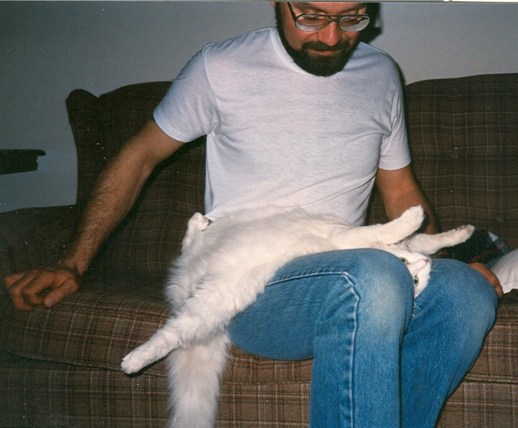
“My cat rolls over but if I try to rub her belly, she will scratch and bite, why does she do this?” is a question I am often asked by cat owners. People who are familiar with dogs and have experienced the dog that rolls over to have his belly scratched, assume that cats want the same thing.

scan0026

When a cat, rolls over it is a defensive position that they use when they cannot out run an attacker. This allows them to use the claws on all four feet for defense.

However, some cats do roll over and lay on their back because they enjoy it. They will do this when they feel comfortable enough in their environment to expose their vital organs.

Tom's cat

If you have a kitten, you can get the kitten used to being handled and petted by gently handling all their body parts in a caressing manner. This will allow a veterinarian and you to examine the cat for lumps, bumps and injuries without too much stress to the cat.

scan0015

If you gently pet a kitten sometimes the kitten will allow you to rub its belly. If the kitten seems to enjoy this, you can do it as a sign of affection. Often a kitten will playfully hit your hand with its front and hind feet. As long as it is playful and no teeth and claws scratch or bite, this can be a fun time for the kitten and owner. But if the cat offers its belly but does not like to be touched there, it is best to accept the friendly gesture as a compliment and do not try to rub their belly.

Rat bite fever

Many people have rodents as pets and they can make wonderful pets for people who do not have room for a larger pet or cannot have a dog, cat or bird. However, although it is rare, rat bite fever can be transmitted by pet rodents, either through a bite or scratch. Rats, gerbils, mice, guinea pigs and ferrets are capable of transmitting rat bite fever. Rat bite fever is an old disease that has been recorded for over 2300 years.

Rat bite fever is caused by Streptobacillus moniliformis which is the most common cause. The symptoms include fever, pain in joints, nausea, rash and vomiting and can be fatal if not treated.

images

Children, pet store workers, veterinary technicians, veterinarians and laboratory technicians are in the higher risk group since they handle rodents on a regular basis. People who frequently handle rodents can wear protective gloves to prevent being bitten.  Parents should monitor children who have rodents as pets and if they are bitten or scratched, notify your pediatrician.

Socializing a pet rodent is a precautionary measure that will reduce the chance of being bitten. Rodents can be trained using clicker training methods which will also help to reduce the chances of being bitten by teaching the rodent to come to you.

Always be careful not to frighten or startle a rodent. Avoid trying to handle a rodent that is sleeping. A tap on the cage or talking to the rodent before handling it can calm the rodent and allow the pet to be aware that it is going to be handled. Using common sense will help prevent being bitten and avoid rat bite fever. 

Keep in mind that rat bite fever can also be transmitted by wild rodents. If there are wild rodents in your area and they are trapped, use caution in removing them or handling predators that might have caught and killed a rodent.

 http://www.sciencedaily.com/releases/2015/12/151223141151.htm?utm_source=feedburner&utm_medium=email&utm_campaign=Feed%3A+sciencedaily%2Fplants_animals%2Fanimals+%28Animals+News+–+ScienceDaily%29

http://www.ncbi.nlm.nih.gov/pmc/articles/PMC1797630/

Chronic kidney disease in cats

If your cat is ten years old or older, there is a 33% chance that your cat will get chronic kidney disease, (CKD). Cats that have CKD often have a number of signs and complications which include, lack of appetite, nausea, vomiting, anemia, hypertension and urinary tract infections (UTI).

DSCN0046

Because standard tests can be iffy, diagnosing CKD may not be easy for a veterinarian. To help veterinarians, cats and their owners, the International Society of Feline Medicine (ISFM), the veterinary division of International Cat Care, formed an international panel of veterinarians from the UK, France, Australia and North America to analyze CKD.

They found that dietary management is one of the best therapies, but often it is difficult to get a cat to eat the prescription diets. They also found that routine blood pressure monitoring and the use of antihypertension medications helped reduce damage to other organs such as the eyes and heart, thus prolonging the quality of the cat’s life. While there is no cure as yet, it is heartening that veterinarians continue to search for ways to help our pets live longer, quality lives.

www.sciencedaily.com/releases/2016/03/160302121038.htm

Large carnivore attacks on humans

Studies have shown that at least half of the attacks on humans by brown bear, black bear, polar bear, puma, wolf and coyote are due to risks that humans take. Most are due to the fact that people do not understand how to act in areas where these animals live. This is not limited to North America, the studies have been conducted since 1955 in the United States, Canada, Sweden, Finland, Russia and Spain.

If you are going hiking, camping, hunting or visiting areas where these animals live do not go jogging at night, leave children unattended, approach a female with young, walk a dog unleashed.

Bears are attracted to food, so find out the safe ways to have food if you are camping. Local rangers can advise you what works in their area. Do not feed wild animals, this teaches them to approach humans.

Recently in certain parts of the United States and Canada, coyotes and wolves have interbred creating the coywolf.

These animals are typically bolder than wolves and no one is sure what the mix of wolf or coyote they are, if they are more of one or the other. If they are in the area where you live, you must take precautions if you have pets, especially outdoor cats, since they prey on small dogs and cats. If you live in a rural area where there is a large population of feral cats you can expect that coyotes and coywolves are in the area.

IMG_0046

This makes it important to understand how to protect yourself, pets and family from these animals. Often if an animal attacks a human, the animal must be destroyed, even if the attack was defensive and not aggressive. By being careful and avoiding confrontation, you are protecting yourself and saving the life of the animal.

www.sciencedaily.com/releases/2016/02/160204111357.htm

A parasitic worm that infects the eyes of dogs

The worm, Thelazia callipaeda is transmitted by a fruit fly and is capable of infecting mammals including dogs, cats and humans. Three dogs in the UK have been infected that were imported from Europe. The adult worms live in the mammal’s eyes and the tissues around the eye. The infection manifests itself as mild conjunctivitis to severe corneal ulceration which if left untreated can lead to blindness.

OLYMPUS DIGITAL CAMERA

The discovery was made by a research team led by John Graham-/Brown at the University of Liverpool.  In light of the fact that so many people travel abroad and import dogs and cats, it is a wise idea to keep this information in mind in the event that you or your pet develops eye problems. With the history of how illnesses are spread, there is no doubt in my mind that it is just a matter of time until this parasite reaches the U.S. and other countries.

www.sciencedaily.com/releases/2017/09/170918222244.htm

Dog aggression may be related to hormone levels

According to research conducted by Evan MacLean at the University of Arizona and published in the journal Frontiers in Psychology they found that the hormones oxytocin and vasopressin may be linked to aggression in dogs. Both hormones are also found in humans.

scout full body

Dogs that tested to be more aggressive had higher levels of vasopressin. What is interesting is that further research of dogs bred to be assistance dogs who are bred specifically to be non-aggressive, had higher levels of oxytocin and higher oxytocin-to-vasopressin ratios. What this means is that oxytocin may help inhibit aggression.

Researchers also found that experience can influence the level of vasopressin in a dog. Often aggression results from a traumatic experience which alters the hormone levels resulting in a form of PTSD. On the flip side, positive experiences such as socialization with people and other animals in a non-threatening manner can raise the oxytocin levels.

The good news is that in humans, they are already using hormone therapies to help people with autism, schizophrenia and other problems such as PTSD. Perhaps this will lead to therapies for dogs that are extremely aggressive.

www.sciencedaily.com/releases/2017/09/170927162032.htm

Moving with a pet By Cindy Aldridge guest blogger

Whether it’s across town or across the country, moving is one of the most difficult, most stressful processes of our lives. Finding a new place; selling the old place; purging, packing, unpacking; redecorating, setting up utilities, change-of- address forms. And those are just the logistics. Never mind the mental and emotional toll moving can have on a person… or a pet.

Us humans? We know exactly what is happening. While a move may be stressful, we’ve probably done it (multiple times) before. Plus, we can take comfort in the fact that it will all be over soon enough. With some guidance, even young children can understand that, in a few days or weeks, they will be settling into a new home surrounded by all the possessions and people they love.

Our pets, on the other hand, have no idea what’s going on or what to expect. Animals, much like people, are creatures of habit. For this reason, a big transition can cause them just as much stress as it does us. That’s why it is important to take extra care of your furry friends throughout the moving process.

Tip # 1 – Keep your pet healthy.

Even the healthiest pets need extra care in the midst of a move. If you’re traveling to your new home via car, transport your small pets in a secure, well-ventilated carrier. Large dogs that cannot be contained in a crate should be kept on a leash at all times. You should also pay close attention to temperature, and never leave your pet in the car for extended periods of time. If possible, let your pet eat, drink, and exercise according to his or her normal schedule, and stop frequently for potty breaks.

If you think your pet may suffer from motion sickness, there are medications that can make his or her trip more comfortable. Check with your veterinarian for an over-the- counter recommendation or prescription. He or she should also be able to provide guidance when it comes to dosage amounts and frequency. For pets that suffer from chronic illness or disease, keep medications on hand.

Tip # 2 – Keep your pet safe.

From pet hazards at the new home to the increased likelihood of losing a pet, moving presents a variety of safety concerns of which every pet owner should be aware. First and foremost, you should create a safe space at your new home for your pets. The space should be free of possible poisons, electrical or heat sources, choking hazards, falling objects, and escape routes. It should be full of items that bring your pet comfort, like favorite toys and familiar bedding or blankets.

In the event your pet were to escape or run away from your new home, a little advance preparation could go a long way when it comes to getting your furry friend back safe and sound.

Purchase and attach new tags to your pet’s collar prior to your move, and don’t forget to register your microchip with your new information. (Hint: Use a cell phone number and email address that won’t change, instead of a landline or physical address.)

Tip # 3 – Keep your pet happy.

Once you’re in your new home, it will take some time for your pet to adapt. You can help them adapt to their new normal simply by spending time showing them around their new home. Once all the boxes are unpacked and everything is in its place, take your pet on a guided tour of their new space. Show them where they’ll eat, sleep, and play. And don’t forget the outdoors. For the first few weeks, some pets may try to find their way back to their old home. Keeping them on a leash while they explore their new surroundings will ensure they stay close.

Finally, don’t forget to show your pets lots of love. Reward them with treats, playtime, and cuddles when they do well, and be consistent with their new routine. In a few weeks time, just like the rest of the family, your pets should acclimate to their new home and any stress or anxiety caused by the move should be relieved.

pexels-photo-134392

Image via Pexels